

US President Donald Trump has threatened to destroy Iran’s oil export hub of Kharg Island on 30 Monday 2026 if Iran fails to comply with a deal to end the war. President Trump further added that “The United States of America is in serious discussions with A NEW, AND MORE REASONABLE, REGIME to end our Military Operations in Iran”.
Iran, however has not responded to Trump’s latest remarks. Earlier a spokesperson for Iran’s Foreign Ministry reportedly clarified that Iran considered the proposals presented in a 15-point plan by the US as “excessive and unreasonable.” Iran’s leaders have denied being in any direct communication with the US.
On 13 March 2026, the U.S. Central Command (CENTCOM) had already carried out precision strikes on Kharg Island, reportedly destroying over 90 military targets, including missile storage and naval mine facilities. Satellite imagery taken days after the strikes still showed that the hub continued to be used as an export terminal, with three tankers moored there.
On 20 March 2026, the US news website Axios stated that President Trump had been considering blockading or occupying the island in an effort to force Iran to allow ships to pass through the Strait of Hormuz.
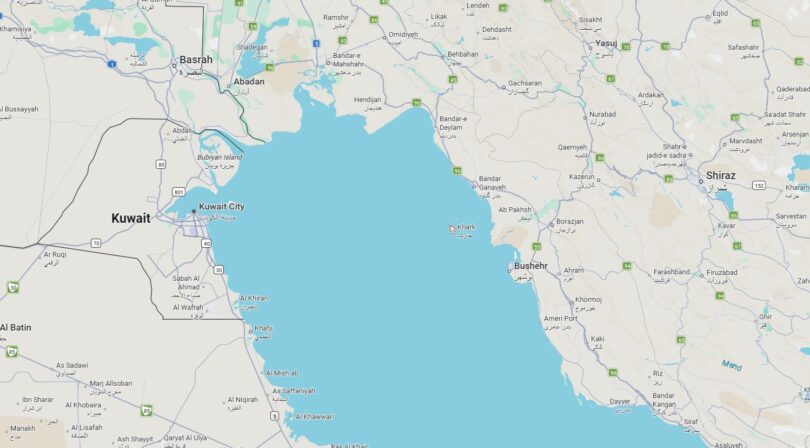
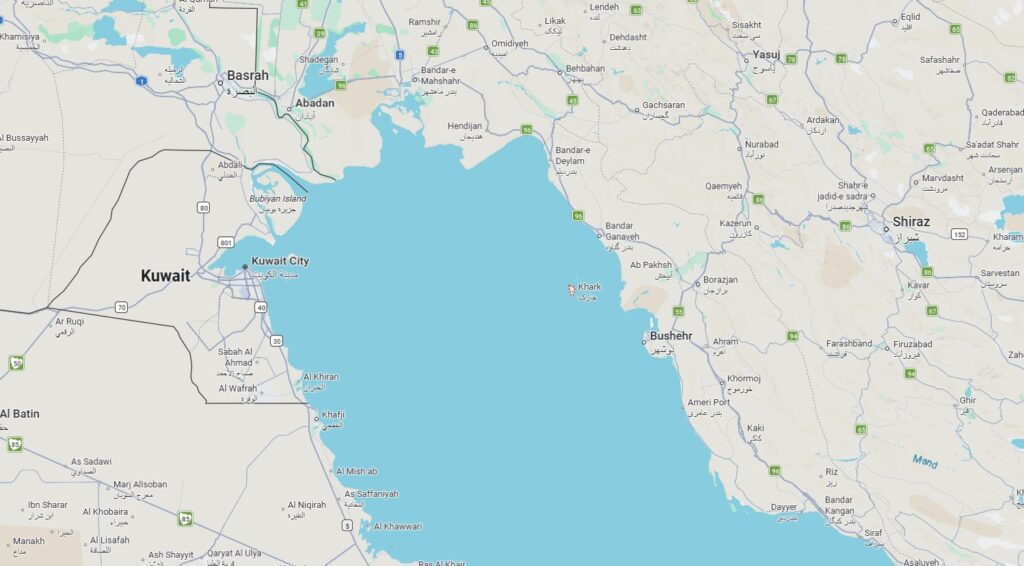
Kharg Island is strategically and economically important hub for Iran. It has acted as Iran’s chief outlet for its oil exports. The island is located offshore with substantially deep waters which aid in loading the product onto tankers known as Very Large Crude Carriers (VLCCs). The VLCCs can accommodate over two million barrels. It is ascertained that 90% of Iran’s oil exports transit through Kharg.
Historically, the island has been frequently attacked due to its importance for Iran. In 1980, at the time of Iran-Iraq war, the island was often targeted by the Iraqi Air Force. On 13 March 2026 the US had claimed to have struck over 90 military targets on the island but evaded any attack on the oil infrastructure.
According to analysts, if US invades the Kharg island, the move may be a temporary measure to build pressure on Iran into relinquishing its chokehold on the Strait of Hormuz and agreeing to US demands.
Kharg Island, besides managing over 90% of Iran’s oil exports, has also large storage facilities capable of holding tens of millions of barrels
If Kharg is disrupted, Iran’s ability to export oil and generate revenue can be hindered dramatically.
Kharg Island’s geographical location also exhibits its strategic importance. Contrasting with Iran’s shallow coastline, Kharg offers deep-water access, which allows very large crude carriers (VLCCs) to dock and load efficiently. This becomes effective in reducing the time required to load and helps in cutting down dependency on multiple smaller ports
Few alternative locations in Iran can match its capacity.
Connection to the Strait of Hormuz Crisis
The importance of Kharg Island is closely tied to the Strait of Hormuz, one of the most critical chokepoints in global commerce. Roughly 20% of the world’s oil supply passes through this narrow waterway.
Since the US-Israel and Iran conflict, tanker traffic through the Strait has reportedly reduced or halted significantly. While Hormuz controls the global flow of oil, Kharg controls Iran’s contribution to that flow. Together, they form a powerful leverage point in the country’s energy system.
Military Value: Energy as Leverage
The reported consideration US seizing Kharg Island reflects a broader strategic approach which can be attributed to control energy infrastructure to achieve military and political goals.
If US targets Kharg, its military force could try to cut off Iran’s main source of export income while draining the funds for military and government operations. This would help US build pressure on Tehran to reopen shipping routes, if it succeeds.
This concept is often referred to as energy denial strategy, where economic assets become key battlefield targets. Since Kharg is so centralized, it offers maximum impact with relatively limited geographic scope.
Operational and Strategic Risks
Despite its importance, any attempt to seize or control Kharg Island would involve serious risks.
- Proximity to Mainland Iran
The island lies close to Iran’s coast, making it highly exposed to missile strikes, drone attacks and Naval counter operations.
- Escalation Potential
US focus on Kharg island could set a scope for a broader regional conflict, drawing in allied forces and causing instability across the Middle East
- Sustained Military Commitment
As for the United States, holding the island would require consistent air and naval protection, long term troop deployment and securing of critical infrastructure. Thus, these challenges factor into an extremely complex and expensive operation.
Broader Geopolitical Implications
The focus on Kharg Island indicates a shift in modern warfare. Instead of targeting only military forces, strategies now focus on critical economic infrastructure.
In this case, oil exports are directly tied to national power. If the energy supply is disrupted, it would certainly affect both domestic stability and international markets. Hence the control of infrastructure becomes as vital as control of territory.
Global Economic Impact
Because Kharg Island is crucial to Iran’s oil exports, any disruption has consequences far beyond the region. This would include the sharp rise in oil prices, followed by oil shortage and inflation in energy-dependent economies.
More on related topics:
The Donroe Doctrine: A Modern Corollary to the Monroe Doctrine in U.S. Foreign Policy: https://www.thestrategicperspective.org/the-donroe-doctrine-a-modern-corollary-to-the-monroe-doctrine-in-us-foreign-policy/
The West Asia War: Its Perspectives & Lessons for India (part 2/3): https://www.thestrategicperspective.org/the-west-asia-war-its-perspectives-and-lessons-for-india-part-2-3/
Operation Rising Lion and the Lessons for India: https://www.thestrategicperspective.org/operation-rising-lion-and-the-lessons-to-india/