

Latest Situation
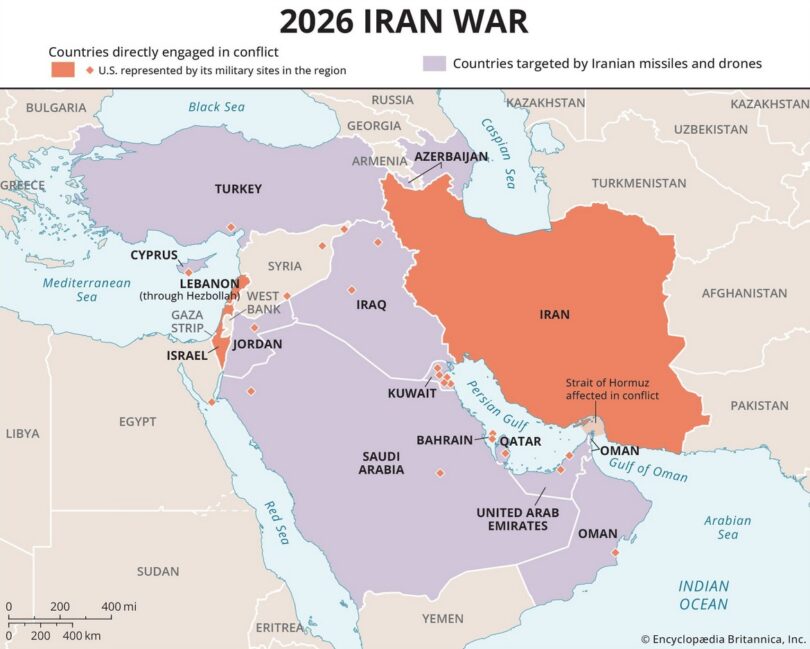
The conflict Op Epic Fury has resulted in the closure of the Straits of Hormuz by Iran, which has led to immediate surges in global oil and gas prices, widespread disruption in aviation routes, and heightened volatility in global financial markets. Gasoline prices have risen by a dollar per gallon in the US. In the meantime, the US has relaxed sanctions on Iranian crude and restrictions on India’s purchase of Russian oil to stabilize international crude oil prices.
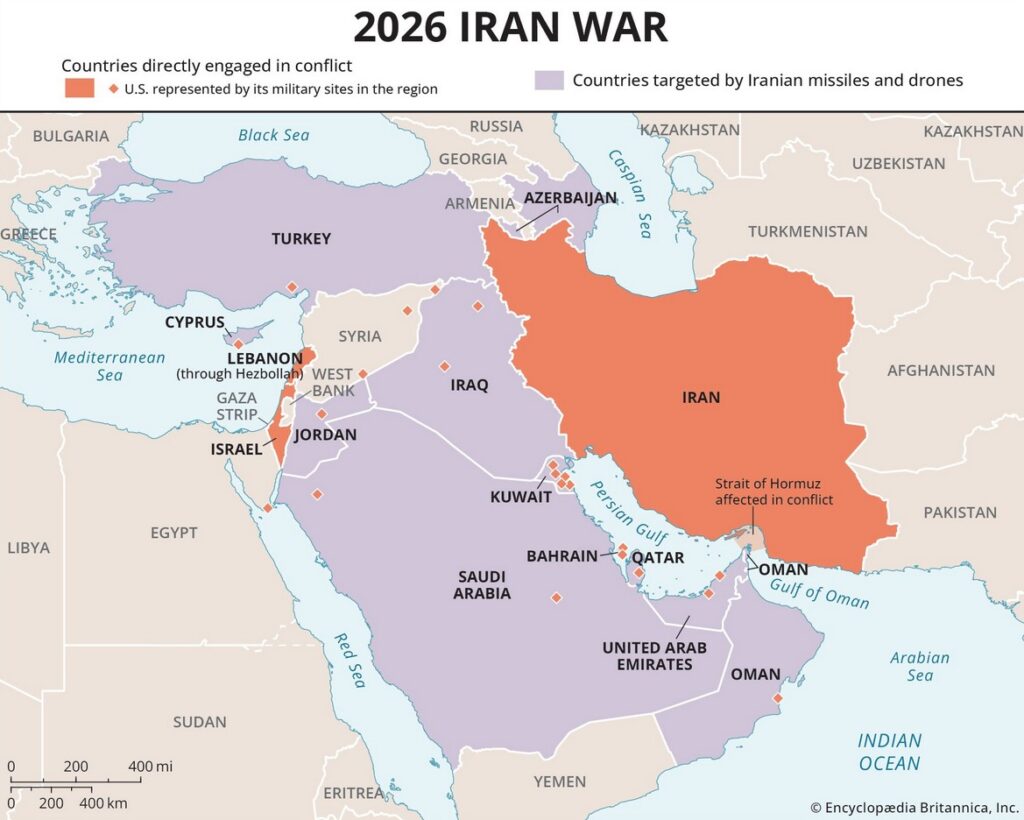
After Iran’s warning to the EU not to provide bases to the US and the retaliation by Iran in the UAE, Saudi Arabia, Bahrain & Kuwait on US bases, all Arab states have been drawn into the conflict. Iran’s ballistic missiles and drones have caused widespread damage to US bases, oil refineries, gas fields, and desalination plants. Israel's strikes have also caused widespread damage to Iranian oil refineries and gas fields in South Pars & in Qatar. The civilian areas in Gulf countries, Saudi Arabia & Israel have not been spared.
The US pursuing unconditional surrender, while Iran is relentless in continuing the war, finds itself in a quagmire of its own to open the Straits of Hormuz with the assistance of 20 other willing nations. The possibility of the Kharag Island, four other islands, and ports like Bandar Abbas being attacked by amphibious / ground troops cannot be ruled out given the battle indicators like the move of the 82nd Airborne Division, two amphibious task forces & Marines from outside the US Central Command.
The sinking of the Iranian frigate, Iris Dena, in the Sri Lankan waters is a clear warning for all outside powers to keep off the Indian Ocean. Russia & China, too, have refrained from any active involvement in the conflict, barring the felicitations to the new Ayatollah and the usual rhetoric of ‘unstinted support.’. The Iran Russia China Axis with North Korea is the lynchpin of intensifying challenge to the existing US led geopolitical order.
Back Channel Diplomacy
The neutral countries like Egypt, Turkey & Pakistan are understood to have made attempts to resume talks for de-escalation. It is unlikely that Iran would accept the US demand of unconditional surrender, even if its fighting potential is considerably degraded. Assuming that all goes well with the US opening of the Straits of Hormuz, Iran's residual capability and the entombed nuclear program could still offer a path to de-escalation. If Iran agrees to move out its stockpile of highly enriched uranium (HEU) outside Iran, we could expect some sort of ‘off ramp’ understanding, in a quid pro quo. The US acceptance of Iran’s new Persian Gulf architecture minus Gulf countries with reduced US presence. viz Iran and the Shia-dominated areas from Yemen, portions of Iraq, and the SE fringes of Saudi Arabia, could then form the new strategic pivot in West Asia without Gulf countries (UAE, Qatar, Bahrain & Kuwait).
The US, China & Russia could jointly provide guarantees to Israel, Saudi Arabia, and the Gulf countries. Conversely, if things do not go well for the US in their quest for opening of the Straits of Hormuz or the ground attack on Kharg Island / Iranian coastline fails, Iran could be expected to announce its achievement of nuclear weapon status, continue its attacks with renewed vigour on Israel & the UAE, and Qatar. Kuwait, Bahrain & Saudi oil refineries and all 21 US bases. International oil prices could skyrocket; sales of Iranian crude via Hormuz to China, Japan, and India, once restored, could instantly diversify into yuan, rials, dirhams, or even gold, leading to the acceleration of de-dollarization.
Cascading Effects on South Asia
Fresh geostrategic alignments preclude both China & Pakistan from benefiting from the ongoing West Asia War. China’s oil supply may be restored, and Pakistan’s economy may recover from the shocks of the oil stoppage. On the high seas, Pak would ensure the safety of Chinese vessels & its own fleet at Gwadar & Karachi. Chinese warships would keep their vigil in the Indian Ocean outside the reach of US submarines. Pakistan’s preoccupations on its western frontier across the Durand line against Afghanistan would continue.
Now that the conflict with the Taliban is out in the open, there is likely to be no let-up on its transgression along the LC with India and the terrorist acts in our major cities. China, too, is busy studying the repercussions of the blockage of the Straits of Hormuz on the oil supply from Iran. Recent statements by the newly elected Japanese PM have imposed caution on any Chinese moves towards the Taiwan Straits. In addition, Xi Jinping’s CMC purges and the economic recession are keeping him occupied.
India continues to have a live Northern & NE border with China along the LAC, intrusions in Eastern Ladakh, Uttarakhand – Tibet border, the areas in the vicinity of Bhutan, India, Tibet trijunction, along Arunachal Pradesh –Tibet border. China’s extensive development of logistics capability, especially road, rail, and air networks improvement, the development of border villages, and the construction of the massive Brahmaputra Dam on the border with India cannot be ignored. Post-elections in Bangladesh, a realistic assessment now could provide the strategy to balance national interests with geopolitics and demographics.
What is alarming is the recent activities of foreign intelligence agencies in India’s North East and destabilization attempts in the tribal areas of Mizoram & Manipur, Chin Hills(Myanmar), and the Chittagong Hill Tract (Bangladesh). This appears to be part of the ‘Deep State’ overall strategy to carve out a Christian State for the acquisition of St Martin’s Island in Bangladesh as a naval base to dominate the Bay of Bengal.
Based on the famous Henry Kissinger’s two pragmatic quotes, “It may be dangerous to be America’s enemy, but to be America’s friend is fatal,” and “America has no permanent friends or enemies, only interests,” India’s policy of strategic autonomy has to change to suit the power dynamics in West Asia. It is all about withstanding pressures in the exercise of choice in the best national interests.
In the era of Economic Warfare, America relies more on the arsenal of economic weapons, chiefly sanctions and tariffs, export controls, and investment restrictions. Its strength also stems from its massive defense budget, use of cutting-edge technologies, and the ability to innovate faster in AI, computers, and other fields.
Part 1 - What brought US to the war with Iran and how they responded