

The reported capture of Venezuelan President Nicolás Maduro by United States forces in January 2026 characterizes an unprecedented conjunction of criminal law enforcement and interstate military force. Compared to prior cases of regime change or leader removal, the operation was vindicated through domestic criminal indictments rather than collective security, armed conflict, or humanitarian intervention. In order to further analyse the current developments, it is imperative to analyse the factual timeline of the operation, official justifications, global reactions, and its legality under international law. While placing the current development in Venezuela within historical precedents such as Panama (1989), Serbia (2001), Iraq (2003), and Libya (2011), Maduro’s case constitutes a destabilizing precedent. It concludes that the US action risks eroding the post-1945 legal architecture governing sovereignty, use of force, and international accountability.
Introduction
On 3 January 2026, the United States announced that it had captured Venezuelan President Nicolás Maduro during a military operation conducted within the Venezuelan territory. U.S. President Donald Trump, justified the action as the execution of long-standing criminal indictments related to narcotics trafficking and “narco-terrorism.” This framing distinguishes the operation from conventional military interventions and raises significant legal and normative questions.
The reported capture of Venezuelan President Nicolás Maduro is being regarded as the most consequential and controversial event in post–Cold War international relations. While Washington has clearly indicated the operation as justice served, critics view it as a fundamental deterioration of international law and sovereignty.
From Escalation to Capture
The Escalation (Late 2025)
By the end of December 2025, U.S.–Venezuela tensions intensified. The U.S. military carried out maritime strikes against vessels supposedly involved in narcotics trafficking associated with the Venezuelan networks, while Washington simultaneously increased the sanctions targeting Venezuelan oil entities and shipping infrastructure. President Maduro blamed the United States of preparing a regime-change operation, citing that Venezuela’s sovereignty was under threat.
3 January 2026: Military Operation
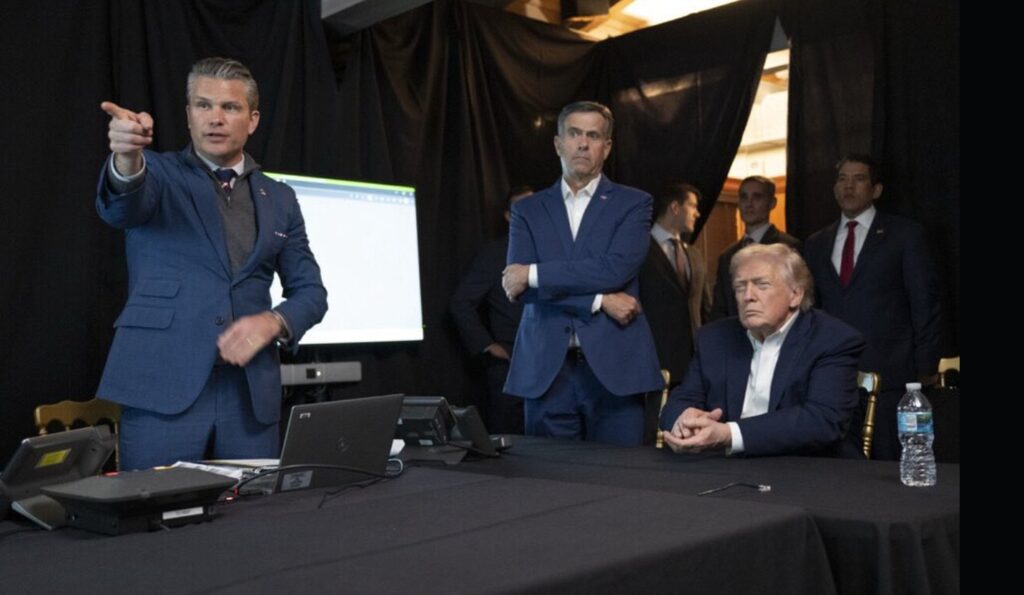
On 3 January 2026, explosions were reported across Caracas and surrounding regions, including near major military installations. Reports of Power outages and smoke across the capital surfaced. Soon after, U.S. President Donald Trump announced that American forces had conducted a “large-scale strike” and that Maduro and his wife, Cilia Flores, had been captured and flown out of the country.
Official U.S. Position
The U.S. Attorney General confirmed that Maduro is expected to face charges in the Southern District of New York, stating long-standing indictments for narcotics trafficking and narco-terrorism. The Trump administration stated that the operation as a law-enforcement action assisted by military assets, and far from an act of war.
Venezuelan Response
Venezuela’s government declared a national emergency and has denied confirmation of Maduro’s whereabouts. The government has demanded proof of life from the US. Officials have declared the U.S. of kidnapping the president and has openly highlighted the violation of the UN Charter.
U.S. Reasoning: Justice or Strategic Enforcement
Washington’s reasoning focuses on two factors. Firstly the U.S. has never acknowledged Maduro as a legitimate head of state, but a criminal leader indicted by American courts and have argued this in regards. Secondly, the US has declared Venezuela had become a potential threat to the regional security through alleged narcotics networks. However, it is also important to note that domestic criminal indictments do not authorize cross-border military force under international law. The conflation of law enforcement with armed intervention represents a legally contested doctrine.
According to Article 2(4) of the UN Charter, facilitation of force against the territorial integrity or political independence of any state is prohibited, with an exception in context to self-defence or unless authorized by the Security Council. Accessing the current capture of Maduro in relation to the UN Charter, it is certain that no evidence has been presented indicating Venezuela as an imminent armed threat to the U.S, nor was UN authorization granted. Hence the US action may be characterized as a prima facie violation of international law.
Also, if US accusations justify military abduction of leaders from sovereign states, then sovereignty of nations will become conditional and at the approval of powerful states.
Global Reactions
Condemnation
Russia has condemned the operation as “armed aggression” and demanded Maduro’s release, warning of destabilizing consequences. China has also described the capture as a “hegemonic act” that undermines international order. Iran and several Global South states echoed similar concerns, urging emergency UN action.
Mixed Latin American Response
Brazil and Colombia condemned the violation of sovereignty. Conversely, some conservative leaders and Venezuelan opposition figures have welcomed the capture as the end of an authoritarian era.
United States Domestic Debate
Within the U.S., Republican officials extensively praised the operation as decisive enforcement of justice. Democratic lawmakers have questioned the constitutionality of the action, citing the lack of congressional authorization under the War Powers Resolution.
International Law: A Clear Breach or Legal Gray Zone
Historical Precedents: How Unprecedented Is This?
Analyst have drawn historical parallels:
Manuel Noriega (Panama, 1989)
The U.S. invaded Panama and captured Noriega, who was later tried in U.S. courts. However, Noriega was not recognized as a legitimate head of state at the time, and the operation involved a full-scale invasion rather than a targeted extraction.
Slobodan Milošević (Serbia, 2001)
Milošević was arrested by Serbian authorities and extradited to The Hague. Crucially, this was done with domestic consent, not foreign military seizure.
Saddam Hussein (Iraq, 2003)
Captured during a U.S. occupation following a declared war, Saddam’s arrest occurred in a context of regime collapse, not peacetime law enforcement.
Muammar Gaddafi (Libya, 2011)
Overthrown and killed during a civil war following NATO intervention authorized under a UN mandate to protect civilians.
Maduro’s case differs fundamentally: an acting president of a country, which US was not formally at war with, seized through unilateral force and justified as criminal enforcement. This combination is historically unprecedented.
Arguing the Criminal Law vs. Sovereign Immunity
Even though the international law limits immunity for serious or heinous international crimes, enforcement actions typically happen through international tribunals or domestic proceedings which is followed by extradition or regime change. This is not conducted through unilateral military abduction.
Conclusion
The capture of Nicolás Maduro constitutes a watershed moment in international relations. While referred to as an act of justice, it represents a profound challenge to the legal and normative foundations of the international order. The potential of long-term consequences likely to extend far beyond Venezuela and reshaping debates on sovereignty, accountability, and the permissible use of force in an increasingly fragmented world are a possibility.
References
United Nations Charter, Article 2(4).
Reuters, U.S. captures Venezuela’s Maduro after large-scale strike, January 2026.
Reuters, World reacts to U.S. seizure of Venezuela’s president, January 2026.
Al Jazeera, Explosions reported in Caracas amid U.S. operation, January 2026.
Guardian, U.S. lawmakers debate legality of Maduro capture, January 2026.