

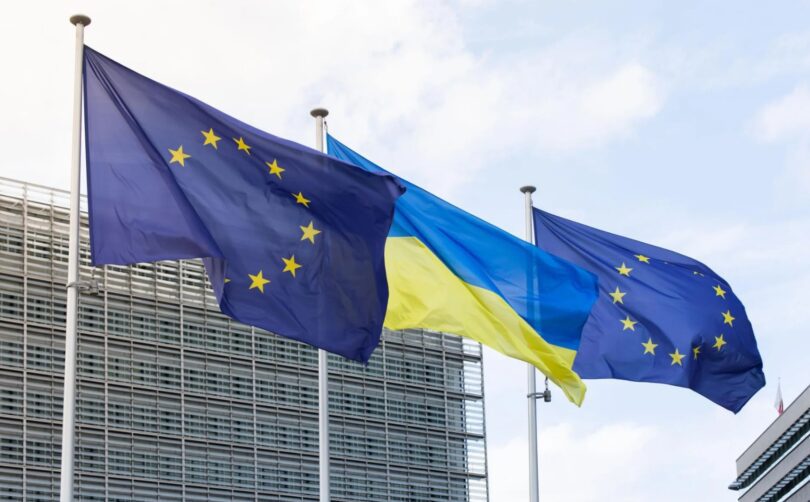

What the Commission is proposing
The Commission is preparing a legal package to allow immobilised Russian central-bank assets — currently held in European depositories. This will serve as the basis for a large, multi-year loan to Kyiv intended to close Ukraine’s projected financing gap for 2026–27. The figure most frequently reported is about €140 billion in lending capacity backed by roughly €180–€210 billion of frozen Russian assets. The proposal aims to be tabled ahead of the EU leaders’ December summit.
EU officials argue the loan would give Ukraine predictable funding for the next two years without immediate recourse to additional EU budget increases, by converting otherwise immobilised assets into a financial instrument that can be legally ring-fenced for Kyiv.
Belgium’s objections — legal risk, market exposure, and peace negotiations
Belgian Prime Minister Bart De Wever sent a strong worded letter to Commission President Ursula von der Leyen stating that the plan is “fundamentally wrong”, admonishing that it could breach international law, expose Belgium (and Euroclear, the Belgian-based custodian) to expensive legal claims, and even jeopardise future peace settlements by removing a bargaining chip. De Wever emphasized, Belgium will be liable to disproportionate risk and demanded stronger legal guarantees and risk-sharing before providing support.
Belgium’s practical leverage stems from hosting Euroclear, where a large portion of the West’s immobilised Russian assets are held — a fact repeatedly highlighted by Belgian officials and analysts. De Wever has also suggested alternatives such as mobilising headroom within the EU’s multi-annual financial framework or limited common borrowing to cover near-term Ukrainian needs.
Alternatives on the table
Policy options that have been discussed publicly include:
- Using “headroom” in the EU’s long-term budget (MFF) to shift unspent or re-profitable allocations toward Ukraine’s civilian budget, as De Wever suggested.
- Targeted EU joint borrowing to raise the sums Kyiv needs (De Wever reportedly suggested a smaller joint-debt package of tens of billions for 2026). Some member states resist large common borrowing because it shifts costs to taxpayers.
- Legal assurances and risk-sharing mechanisms proposed by the Commission to address Belgium’s concerns (amended draft text and guarantee structures).

Reaction from other capitals and likely path forward
Several EU capitals and institutions have been keen to move quickly to secure Kyiv’s finances. The officials are apprehensive about a funding gap which would force strenuous cuts to defence and public services in Ukraine at a critical juncture. Brussels officials are reported to be redrafting legal text and seeking compromises that could include limited liability protections or cross-border risk pools to placate Belgium ahead of the December summit. However, the Belgian objections demonstrate that a single member state with custody of the assets can materially slow or reshape the plan.
Observers suggest the issue will be front and centre at the EU leaders’ meeting scheduled for mid-December, with the Commission hoping to present legal safeguards that win enough capitals to move the proposal into legislative drafting. If Belgium remains unconvinced, the Commission would need to either broaden participation in the scheme, offer deeper legal shields, or pivot to a fall-back blend of MFF reallocations and mutual borrowing.
Legal and economic stakes
Legal scholars and policy shops differ on the plan’s legality: Some argue there are workable legal routes to repurpose immobilised assets for a loan if careful sovereign immunities and custody laws are respected; others warn that creating a bespoke instrument could trigger litigation from Russia or from private claimants and disrupt markets where those assets are recorded. Economically, the move would unlock a funding source without immediate use of taxpayers’ money — but it could expose custodial states to reputational and financial risk if legal claims materialise.
The Commission’s proposal reflects urgency: Kyiv faces a large financing shortfall and EU leaders want a durable two-year planning horizon. But Belgium’s stance shows how legal custody and domestic politics can throttle supranational schemes. Resolving the dispute will require either concrete, legally robust guarantees and shared liability, or a visible political bargain that accepts some fiscal cost inside the EU budget or via limited common borrowing. The December summit is likely to be decisive: either the Commission secures enough concessions to proceed with the Russian-assets-backed loan, or the EU will be pushed toward a blended Plan-B combining MFF headroom and mutual borrowing.
Sources (selected)
Reuters — Belgian PM says using frozen Russian assets could block Ukraine peace deal. Nov 28, 2025.
Bloomberg — EU Prepares Legal Plan to Unlock €140 Billion Ukraine Loan. Nov 26, 2025.
The Guardian — Belgium hits back at EU plan to use frozen Russian assets to aid Ukraine. Nov 28, 2025.
Euractiv — EU plunges ahead with Ukraine loan as Belgium ‘pleads’ for alternatives. Nov 28, 2025.
EUobserver / Euronews reporting on Belgium objections and political context. Nov 27–28, 2025.