

Executive summary
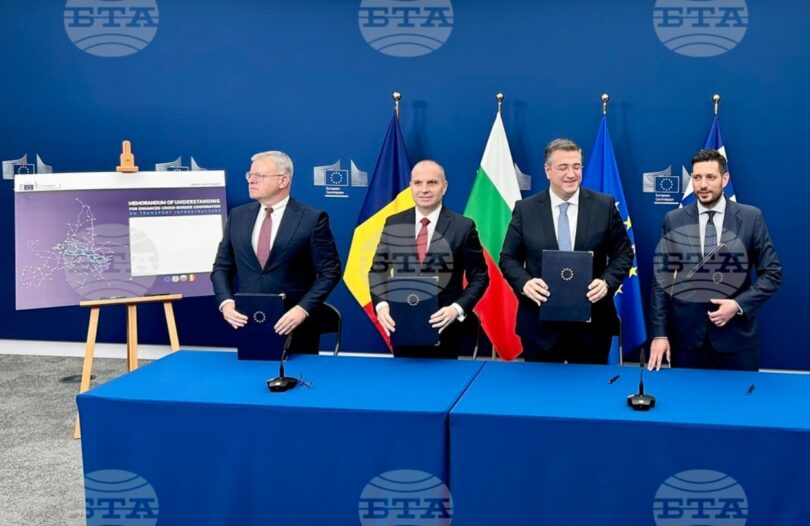
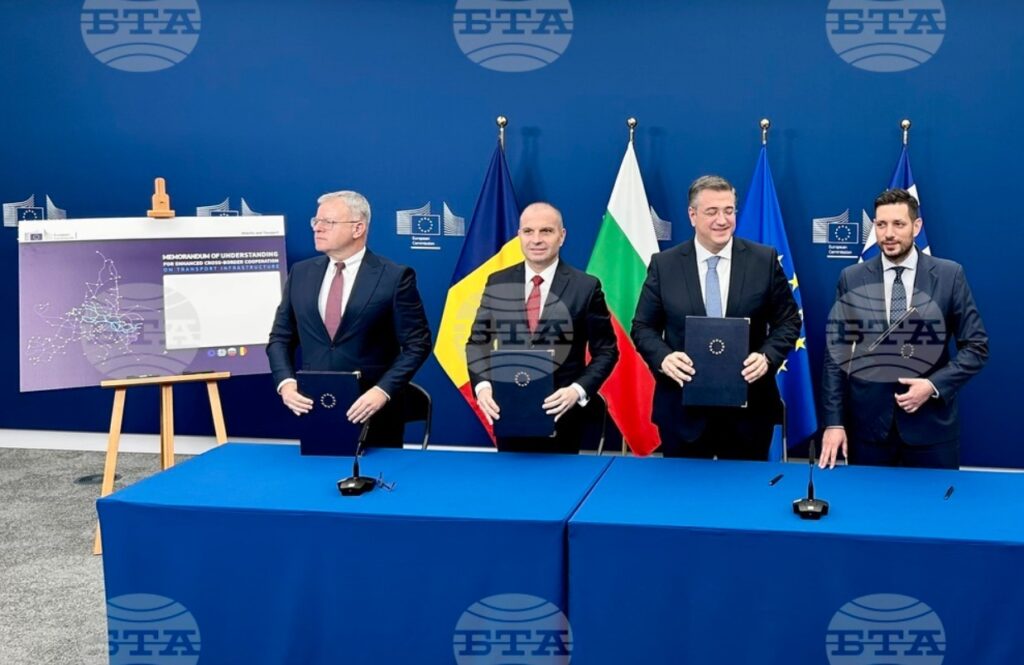
On 3–4 December 2025, a trilateral Memorandum of Understanding (MoU) was signed by Greece, Bulgaria and Romania to launch a coordinated platform called the “ Black Sea – Aegean Sea Corridor Platform (BACP)”— to facilitate the development of a north–south road, rail and inland-waterway axis connecting the Aegean (Greek ports such as Alexandroupoli / Thessaloniki) to Bulgaria and then to Romania (Bucharest/Black Sea ports), with planned extensions toward the Danube, Moldova and Ukraine.
The MoU creates a joint governance and planning mechanism which points to strong support from the European Commission and European Investment Bank for aligning with TEN-T requirements, interoperability, digitalisation and climate resilience.
Core objective: Harmonise planning, timetables, interoperability and financing to modernise rail, road and inland waterway links between the Aegean and Black Sea; support freight and passenger mobility and reinforce regional cohesion.
Platform created: Black Sea–Aegean Sea Corridor Platform (BACP) — ministers of transport to provide strategic guidance and political coordination.
EU involvement: European Commission actively supports the initiative; the MoU references TEN-T objectives and the European Investment Bank is named as a potential finance partner.
Route, infrastructure and pragmatic measures
Core north–south spine (proposed/priority): Thessaloniki / Alexandroupoli (Greece) → cross Bulgaria (improved rail & road links; border crossings) → Bucharest / Romanian Black Sea ports (Constanța / further Danube connections). Press reports repeatedly identify Alexandroupoli–Thessaloniki–Svilengrad/Kulata–Ruse/Bucharest as critical nodes.
Modal mix: upgrades to rail interoperability (electrification, gauge/technical standards, signalling, digital traffic management), road corridor modernization, and better inland waterway / Danube linkages to connect to River transport and onward to Moldova / Ukraine.
Interoperability standards: the MoU explicitly references TEN-T mandatory technical requirements (interoperability, digitalisation, climate resilience) as the standard for design and upgrades.
Governance, coordination & financing
BACP governance: national transport ministers will form the platform to assist with political guidance, strategic direction and an action plan; an implementation timetable and a 2026 master plan were referenced in press reporting.
EU role and finance: the European Commission backs the corridor; the European Investment Bank (EIB) and EU programmes (e.g., TEN-T, Cohesion Policy, CEF-type instruments) are expected sources of finance. The MoU encourages coordinated submissions for EU funding and joint efforts to acquire strategic investors.
National commitments: signatory states committed to harmonising planning, timetables and financing and to identify priority projects (e.g., border crossings, rail upgrades, port-rail intermodal terminals). National-level approvals and action plans have already been adopted or prepared by the three governments.
Strategic implications
Economic & commercial
Freight efficiency & market access: the corridor shortens and streamlines north–south freight flows in South-eastern Europe, thus improving access for Greek ports to Central/Eastern Europe and ensuring quicker routes for goods bound to/from the Black Sea and Danube regions. This will reduce cost and time for exporters/importers across the region and bolster multimodal logistics.
Tourism & regional development
Tourism boost potential: coordinated road/rail links (and marketed “corridor tourism” packages) can Increase cross-border tourism flows between the Aegean and the Black Sea coasts — boost regional tourism revenues. Travel-sector commentators already highlighted tourism as a key benefit.
EU cohesion & resilience
Territorial cohesion: the corridor aligns with EU TEN-T and cohesion objectives by improving connectivity in the EU’s south-eastern periphery, reducing internal fragmentation and supporting supply-chain resilience. The project also strengthens EU strategic autonomy in transportation infrastructure.
Security & military mobility
Military mobility synergies: previous multi-state agreements among the three countries have included military mobility elements (reducing bureaucratic barriers to troop/equipment movements). A connected, standardised corridor increases NATO/EU capacity for rapid reinforcement if required; press background notes link this corridor to prior military mobility initiatives.
Geopolitics — Black Sea context
Black Sea strategic theatre: improved EU-member state transport links to Black Sea ports have implications for regional geopolitics. This will affect trade routes to Ukraine/Moldova causing alterations in transit dynamics vis-à-vis Turkey and Russia. The corridor may provide alternative logistics pathways for Ukrainian export and contribute to regional economic integration. Coverage mentions possible extension toward Moldova and Ukraine.
Risks, constraints & open questions
- Financing gap & competition for EU funds.
The corridor will require substantial capital investment. Currently the competition for limited EU Cohesion / TEN-T funds is intense. Early identification of bankable projects and co-financing models (EIB, national budgets, PPPs) will be required.
- Technical & interoperability challenges.
Upgrading rail to TEN-T standards (electrification, signalling, gauge/axle, digital traffic management) will require complex cross-border engineering coordination and time-consuming permit processes.
- Border and customs friction.
While the MoU promotes harmonisation, practical border procedures, customs digitalisation and customs-union realities (esp. intra-EU vs third-party transit) remain operational obstacles.
- Geopolitical sensitivity.
Extensions toward Moldova/Ukraine and deeper Black Sea engagement may be viewed sceptically by external actors (notably Russia) — the corridor will require careful diplomatic signalling and risk mitigation.
- Environmental / permitting & local opposition.
Infrastructure upgrades can face environmental assessments, land acquisition hurdles and local opposition. TEN-T climate-resilience requirements will raise the bar for sustainable design but also add cost/time.
Timeline & next steps (as reported / implied)
Immediate: signing of MoU (Dec 2025) and launch of the Black Sea–Aegean Corridor Platform (BACP). Ministers to provide political guidance.
2026: preparation and publication of a master plan / action plan with prioritized projects, technical studies and financing proposals (press indicates a master plan scheduled for 2026).
2026–2028: technical design studies, permitting, EU funding requests (CEF/TEN-T/cohesion instruments), EIB/project financing negotiations, and start of priority works (upgrades to border crossings, rail electrification, port-rail terminals).
Medium term (2028–2035): phased construction and interoperability upgrades, with operational multimodal corridors coming online in stages depending on funding and political coordination. (Estimates based on typical TEN-T project timelines.)