



Islamic Emirate Declines Tehran Regional Envoys Meeting, Citing diplomatic strategy
In December 2025, the Islamic Emirate of Afghanistan (IEA) announced that it declined its invitation to a regional meeting of special envoys on Afghanistan scheduled to be held in Tehran, despite having received an official invitation from the host country, Iran. The decision was officially conveyed by Afghanistan’s Ministry of Foreign Affairs and is indicative of a possible deliberate diplomatic calculation rather than disengagement from regional cooperation.
Official Announcement
The official announcement was made on 12 December 2025 by Hafiz Zia Ahmad Takal, Head of Information and Public Relations at the Ministry of Foreign Affairs of the Islamic Emirate.
“The Islamic Emirate has maintained continuous and active engagement with all regional countries through various organizations, regional formats, and bilateral mechanisms,” Takal said.
He additionally stated that these efforts have resulted in “notable progress in promoting mutual understanding and regional cooperation.”
Takal further explained that Kabul favours the bolstering of already existing regional frameworks as the most effective path forward.
The statement underlined that the Taliban decision to not attend the Tehran meeting did not reflect opposition to regional dialogue, nor did it signal deteriorating relations with Iran or other participating countries.
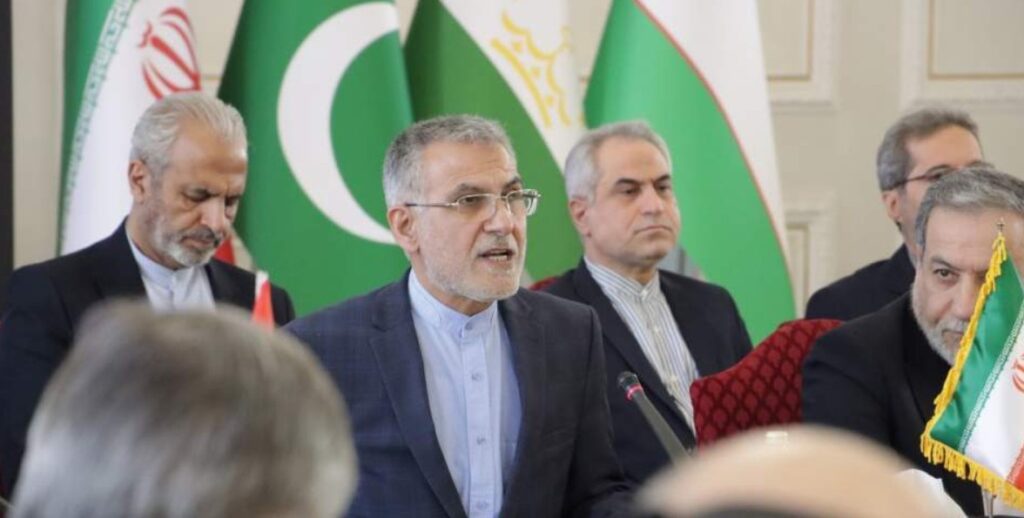
The Tehran Meeting
Iran is set to host the meeting in mid-December 2025 in Tehran. According to Iranian officials, the gathering aims to facilitate discussion on Afghanistan-related political, security, and economic issues among the special envoys and key regional stakeholders from the participating nations.
Special envoys from the Pakistan Tajikistan, Uzbekistan, Turkmenistan, China and Russia are expected to attend this meeting.
It is imperative to mention, the meeting will proceed without direct representation from Afghanistan’s de facto authorities, a factor that has drawn attention from regional observers.
Iran’s Response
On 14 December 2025, Mohammad Reza Bahrami, Director General for South Asia at Iran’s Ministry of Foreign Affairs has stated that Afghanistan’s absence would not harm bilateral relations.
Bahrami stated that Iran respects Afghanistan’s diplomatic choices and continues to support regional dialogue on Afghanistan, stressing that Tehran remains committed to cooperation with Kabul regardless of meeting formats.
Strategic Reasons Behind the Islamic Emirate’s Non-Participation in Tehran
- Preference for Established Diplomatic Frameworks
The IEA consistently has always preferred engagement through existing bilateral and multilateral mechanisms rather than newly convened or ad-hoc formats. From Kabul’s perspective, established forums provide continuity, clarity, and a better chance of achieving concrete outcomes.
- Assertion of Afghan Sovereignty and Agency
Kabul has consistently reiterated that Afghanistan should not be the subject of discussions conducted without its meaningful participation. Meetings on Afghanistan but lacking Afghan representation are often viewed by the IEA as limited in legitimacy and effectiveness. Declining the Tehran invitation reinforces the Islamic Emirate’s insistence on Afghan agency in regional affairs.
- Diplomatic Signalling and Bilateral Prioritization
The decision also displays Kabul’s priority for direct bilateral engagement, particularly with major regional powers such as China and Russia. Both nations have expanded political and economic ties with Afghanistan in recent years. The Islamic Emirate has been reluctant on attending forums where its influence could be diluted by competing regional agendas.
- Assessment of Limited Outcomes from Similar Meetings
Past regional meetings on Afghanistan have often produced general declarations rather than tangible results, such as sanctions relief, formal recognition, or expanded economic access. Afghan officials and analysts argue that participation in such meetings offers limited strategic value if outcomes remain largely symbolic.
Regional Context
The decision has come at a time when there are tensions in the Afghanistan–Pakistan relations, Central Asian security concerns, and differing regional approaches to engagement with the Islamic Emirate. These issues were expected to be brought up at the Tehran meeting.
Additionally, Afghanistan’s international status remains unresolved, with many nations maintaining pragmatic engagement without extending formal recognition.
Conclusion
By declining to attend the Tehran meeting, the Islamic Emirate has reinforced a measured and strategic diplomatic posture that prioritizes existing mechanisms, sovereignty, and tangible outcomes over symbolic participation. While the meeting proceeds without Afghanistan’s presence, both Kabul and Tehran have stressed that the bilateral relations remain unaffected.
More on Afghanistan related topics:
Iran to Host Pakistan–Afghanistan De-Escalation Talks: https://www.thestrategicperspective.org/iran-to-host-pakistan-afghanistan-de-escalation-talks/
India-Afghanistan Reconnect: https://www.thestrategicperspective.org/india-afghanistan-reconnect/
Heavy exchange of fire at the Chaman (Pakistan) / Spin Boldak (Afghanistan) crossing: https://www.thestrategicperspective.org/heavy-exchange-of-fire-at-the-chaman-pakistan-spin-bodak-afghanistan-crossing/
Internet Shutdown in Afghanistan Threatens Women’s Education and Human Rights: https://www.thestrategicperspective.org/internet-shutdown-in-afghanistan-threatens-womens-education-and-human-rights/
Uzbekistan, Pakistan and Afghanistan Sign Agreement on Trans-Afghan Railway: https://www.thestrategicperspective.org/uzbekistan-pakistan-and-afghanistan-sign-agreement-on-trans-afghan-railway/
India-Afghanistan Talks in Dubai set off Alarms in Pakistan: https://www.thestrategicperspective.org/india-afghanistan-talks-in-dubai-set-off-alarms-in-pakistan/