

Background: Evolution of the Italy–India Strategic Partnership
Relations between Italy and India have considerably fortified over the years. In March 2023, during the Italian Prime Minister Giorgia Meloni’s visit to New Delhi and the Raisina Dialogue, the relationship between the two nations evolved into a more pragmatic “strategic partnership”.
This transition projects a broader geopolitical convergence between the European and Indo-Pacific theatres. Rome has increasingly aligned itself with partners that support a “free and open Indo-Pacific”, complementing its traditional Mediterranean focus.
Defence cooperation has been central to this new relationship. The two governments agreed to distend cooperation across military policy, research and development, information sharing, maritime domain awareness, and the co-development and co-production of defence technologies.
Additionally, this partnership is aimed at overcoming the diplomatic strain caused by the 2012 Enrica Lexie incident, which had long hindered bilateral relations prior to their normalization.
This new development is being formulated within a broader strategic framework linking Europe, the Middle East and the Indo-Pacific.
The 2026 Rome Meetings: Key Diplomatic Engagements
26 - 27 February 2026 – High-Level Defence Talks in Rome
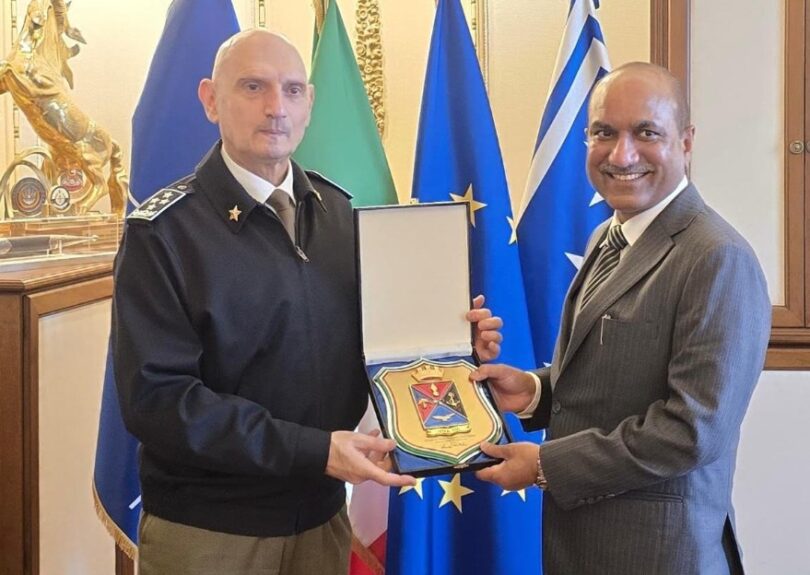
India’s Secretary for Defence Production, Shri Sanjeev Kumar, held meetings with senior Italian defence officials in Rome.
The meetings were attended by:
Italian Undersecretary of Defence Matteo Perego di Cremnago, Italian National Armaments Director Admiral Giacinto Ottaviani and Chief of Italian Defence Forces General Luciano Portolano.
These talks were primarily focused on expanding defence industrial cooperation and bolstering supply chains in critical technologies.
On 27 February 2026, the Indian Government stated that the defence cooperation was “a key pillar of the bilateral strategic partnership.”
Both sides have complied to facilitating industry partnerships to build stronger defence supply chains.
Discussions emphasized creating synergies between the Indian and Italian defence industrial ecosystems
The Indian delegation also included representatives from public sector defence companies, private defence firms, SMEs and the Society of Indian Defence Manufacturers.
At the India–Italy Defence Industry Seminar, Sanjeev Kumar outlined the following:
- India’s defence procurement policies
- Foreign direct investment (FDI) frameworks
- Development of Indian defence industrial corridors.
This initiative was aimed at boosting joint ventures, co-production and technology partnerships between Italian and Indian firms.
Statements by Italian Undersecretary Matteo Perego
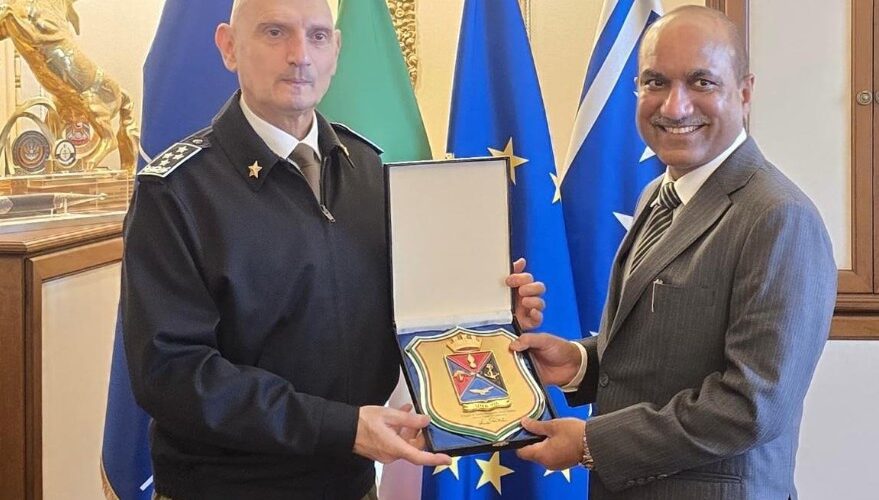
In interviews and statements regarding the Rome meetings, Undersecretary Matteo Perego emphasized the strategic value of the bilateral defence partnership.
Perego described defence cooperation as “one of the fundamental pillars of the strategic partnership” between Italy and India.
He also emphasized that the February discussions represent “a concrete step in the maturation of the strategic partnership”, accentuating the progress in areas such as interoperability, training and industrial cooperation.
According to Perego, the partnership is evolving across several dimensions:
- Military interoperability between armed forces
- Joint training initiatives
- Industrial collaboration
- Joint development of advanced defence technologies
He further highlighted that existing agreements have already provided a framework to expand these initiatives and move toward deeper cooperation in defence manufacturing and capability development.
Areas of Expanding Defence Cooperation
Defence Industrial Collaboration
A primary focus of the new partnership is co-development and co-production of defence technologies which include Aerospace systems, Naval technologies, advanced electronics and sensors, military communications and defence supply chains.
Both governments are seeking to connect their industrial ecosystems and facilitate joint projects involving public and private sector companies.
These efforts also align with India’s “Aatmanirbhar Bharat” (self-reliant India) initiative, which aims to reinforce its domestic defence manufacturing through international partnerships.
Maritime Security Cooperation
Maritime security has become a major dimension of Italy–India defence relations. Joint activities include naval exercises, maritime domain awareness initiatives and protection of sea lanes.
In recent years, the Italian and Indian navies have conducted bilateral exercises involving aircraft carriers and advanced combat aircraft to enhance operational interoperability.
Technology and Innovation
The Rome discussions also stressed on cooperation in high-technology defence sectors, including Space and satellite systems, cybersecurity, Artificial intelligence applications in defence and advanced aerospace technologies.
Strategic Framework: Joint Strategic Action Plan 2025–2029
This plan includes:
- Defence cooperation
- Industrial partnerships
- Critical infrastructure security
- Connectivity initiatives such as the India-Middle East-Europe Economic Corridor (IMEC).
The corridor is expected to connect India, the Middle East and Europe, boosting trade, infrastructure and strategic connectivity.
Wider Geopolitical Context
The strengthening of Italy–India defence ties occurs within several broader geopolitical dynamics:
Indo-Pacific Strategic Competition
Italy has increased engagement with Indo-Pacific partners as part of a wider European effort to support regional stability and protect global trade routes.
Europe–India Security Cooperation
India has also increased its defence dialogue with European partners and the European Union. In January 2026, the EU and India signed a Security and Defence Partnership covering maritime security, cyber defence, counter-terrorism and emerging technologies.
Supply Chain Resilience
Both governments view defence supply chains as strategically vulnerable in the current geopolitical environment. Cooperation aims to reduce reliance on unstable or adversarial supply networks.
Strategic Analysis
The strengthening of the defence partnership between Italy and India reflects several structural shifts in global geopolitics.
Emergence of the “Indo-Mediterranean Strategic Arc”
The new connectivity initiatives like IMEC are linking India in South Asia to the Middle East (UAE, Saudi Arabia, Jordan, Israel) and Europe (Greece, Italy, France, Germany) regions into a single strategic corridor.
Italy occupies an important position in the Mediterranean, while India is a major power in the Indian Ocean. By bolstering this defence cooperation, both nations hope to secure the maritime routes that connect Asia and Europe.
This alignment could create an “Indo-Mediterranean security architecture” where naval coordination, logistics hubs and maritime surveillance systems integrate across two strategic regions.
Defence Industrial Complementarity
The Italy–India partnership is driven by strong industrial complementarities:
Italy possesses advanced defence manufacturing capabilities in aerospace, naval systems and electronics.
India offers a large industrial base, growing technological capacity and significant defence procurement demand.
Together both countries can develop joint defence systems while diversifying supply chains away from single-country dependencies.
For Italy, cooperation provides access to one of the world’s fastest-growing defence markets.
For India, it supports technology transfer and domestic production goals.
Strategic Autonomy for Europe and India
European states are pursuing diversified security partnerships beyond NATO’s traditional structures while India prefers a multi-aligned foreign policy, cooperating with multiple partners while avoiding formal alliances.
The Italy–India defence relationship strengthens bilateral capabilities without requiring formal alliance commitments.
Maritime Security and Sea Lane Protection
Approximately 90% of global trade travels by sea, and the maritime routes connecting the Indian Ocean to the Mediterranean are among the world’s most critical.
Piracy, geopolitical rivalry and instability in the Middle East have heightened concerns over these sea lanes. Joint naval exercises and maritime cooperation between Italy and India help address these risks by improving interoperability and surveillance capabilities.
Symbolic Reconciliation and Strategic Trust
The strengthening partnership also demonstrates how diplomatic disputes can evolve into strategic cooperation. The Enrica Lexie crisis once represented a major obstacle in bilateral relations. The current defence partnership suggests both governments have moved beyond that dispute to focus on shared strategic interests. This transformation highlights the growing importance of pragmatic cooperation in an increasingly multipolar international system.
Conclusion
Italy and India are swiftly expanding their defence partnership through high-level meetings, industrial cooperation initiatives and strategic dialogue.
Recent discussions in Rome between Undersecretary Matteo Perego and India’s defence production leadership have confirmed that defence cooperation is crucial matter for the bilateral strategic partnership. These talks emphasized joint industrial projects, supply-chain resilience and technological collaboration.
Beyond bilateral relations, the partnership reflects broader geopolitical trends linking Europe and the Indo-Pacific through maritime security, economic connectivity and defence industrial cooperation.