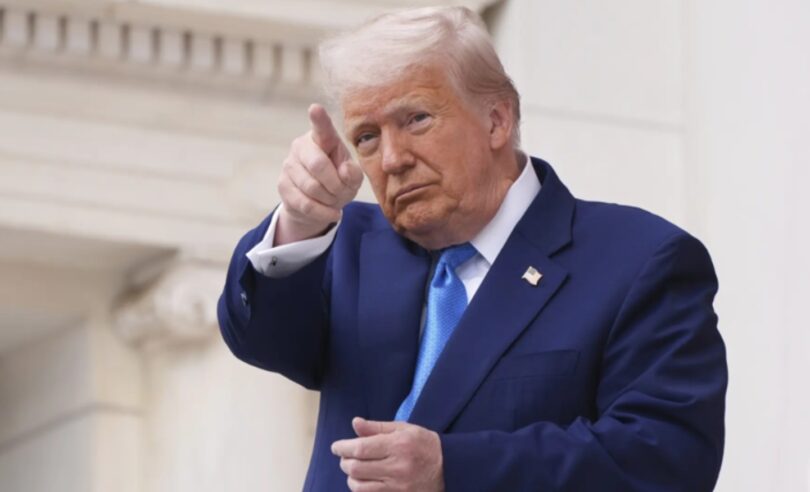
Much has been said about Donald Trump’s new National Security Strategy (NSS). The missive that the US will no longer bear the burden of global order, indicates priorities for border control, industrial strength, and uncontested influence in the Western Hemisphere while approaching the rest of the world with sharper selectivity. The US wants the Western Hemisphere free of hostile foreign incursions, support for critical supply chains and continued access to key strategic locations. The Middle East is no longer considered a theatre for military or political engineering.
The NSS suggests that Europe must regain civilizational self-confidence and assume far greater responsibility for its own security, while the US continues supporting NATO allies as a strategic coordinator. The western media views this as Trump’s goal to end the war in Ukraine. But the fact is that following the two world wars, the US-led West has been waging a 100-year war to “Kill Russa” through different formats, posed an existential threat to Russia, forcing it to launch special operations in Ukraine, and is prepared to continue for another 100-years, as lucidly explained by John Helmer.
Were that not the case, the CIA can easily pull the plug on Volodymyr Zelensky and Washington can sanction Europe for supporting Ukraine, knowing Russia has no intention of fighting or annexing Europe, as has been publicly declared by President Vladimir Putin. But Trump wants expanded access to European markets and strengthening commercial and defence ties with Central, Eastern, and Southern European nations. The statement that resolving the war in Ukraine is essential for rebalancing America’s global posture is more of a hogwash; Trump is as much a puppet of America’s deep state, as his predecessors. On December 10, 2025, the U.S. House of Representatives approved a USD 901 billion National Defense Authorization Act (NDAA) bill, which includes USD 400 million military assistance to Ukraine per next two years and reinforces America’s commitment to European defence. The tally was 312-122 in favour of the NDAA. The US Senate is expected to pass it the coming week. Trump has said he will sign the NDAA into law once it reaches the White House. In May 2025, Trump had asked the Congress for a national defence budget of USD 892.6 billion for fiscal year 2026, flat compared with 2025. The House bill set spending at that level, but the Senate had authorized USD 925 billion.
Trump wants a long-term burden shift that extends from Australia to Japan and South Korea, as well as to other existing and emerging partners in Southeast Asia; preserving a regional military presence for denying aggression in the First Island Chain but emphasizing joint responsibility among allies, not unilateral American coverage. At the same time, the strategy focuses on the combined approach of rebalancing America’s economic relationship with China while maintaining a robust focus on deterrence. It also talks of countering China’s global influence; reducing dependence on Chinese manufacturing, tightening protections on advanced technologies, securing critical mineral supply chains, and expanding economic and security cooperation with Indo-Pacific partners. America’s military commitments in the Indo-Pacific are to remain firm but the strategy calls on US allies to take on far more responsibility for regional defence. Taiwan is recalibrated; acknowledging that America could be overmatched militarily in defending the island.
So, what’s new? When did the US invade/attack a country that could hit back the US mainland, not to talk of the pack of lies that Saddam Hussein was developing WMDs as the excuse to invade Iraq? That is precisely why it has been using Ukraine as its proxy to wage war on Russia, allows Europe to sanction Russia and freeze Russian funds to instigate a Russia-Europe war, while sitting on the fence. Similarly, it wants Japan, India and Australia (the so-called Quad) to fight China along with South Korea, while supplying arms to these countries. But the US won’t attack a nuclear state like North Korea or Pakistan. Same will be the case if Iran goes nuclear or China conducts an Iranian nuclear test in Lop Nor.
The US is pulling out 1,000 troops from the Middle East but pulling out troops from Europe is more of a bogey with the US operating over 750 military bases in more than 80 countries, housing tens of thousands of troops and serving strategic global interests, with numbers fluctuating but generally holding the largest foreign military presence. Yes, some shifting will continue like the present focus on Venezuela and the Caribbean because of Trump’s obsession with oil.
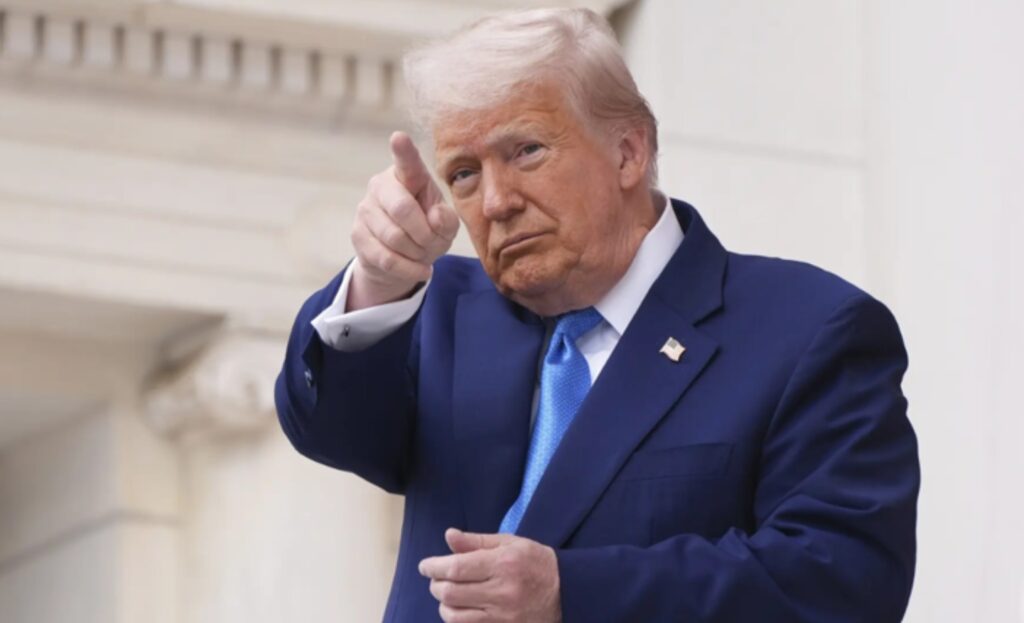
Trump’s NSS affirms China remains the chief long-term competitor of the US; but an economic competitor, not military. For all the propaganda that Chinese President Xi Jinping and the Chinese economy is going down, China is the first country in the world to have posted a USD one trillion trade surplus. The US can neither match China’s hold on rare minerals in the short/mid-term, despite all efforts, nor Beijing’s manufacturing prowess. The NSS admits tariffs first imposed on Beijing in 2017 failed to weaken China, which adapted and strengthened control over strategic industries. Acknowledging America alone cannot dictate outcomes in global competition. That’s why Trump has permitted Nvidia to sell its advanced H200 chips to China (which he barred earlier) and European leaders are making a beeline for Beijing for trade ties. At the same time, recent critical mineral competition between China and the US has made Washington clearly feel ‘controlled’ by China, which Trump abhor. (https://www.scmp.com/news/china/diplomacy/article/3335297/why-china-may-be-better-placed-us-tussle-rare-earths)
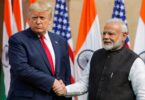
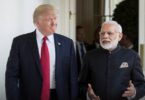
Trump's NSS has just one line for India that says, "We must continue to improve commercial (and other) relations with India to encourage New Delhi to contribute to Indo-Pacific security, including continued quadrilateral cooperation with Australia, Japan, and the USA.” This led Prime Minister Narendra Modi to telephone Trump, in presence of Rick Switzer, Deputy US Trade Representative. Modi tweeted: “Had a very warm and engaging conversation with President Trump. We reviewed the progress in our bilateral relations and discussed regional and international developments. India and the US will continue to work together for global peace, stability and prosperity”. Commerce and Industry Minister Piyush Goyal say if the US is happy, it should sign on the dotted line. But this will unlikely be that easy with Trump’s utterences, the most recent one being against India’s Basmati rice.
Trump no doubt wants a trade deal with India that derives maximum advantage for America, but his anti-India stance is largely because of his embrace of Pakistan, especially with Pakistani army chief Asim Munir who he calls the “best field marshal” and who he has been personally hosing at the White House. The Trump Administration has approved USD1 billion from its Exim Bank to finance Pakistan’s Reko Diq copper-gold mine in Balochistan, in addition to a cryptocurrency partnership with the Trump family-controlled firm World Liberty Financial. Courtesy the US, the IMF recently released USD1 billion from its USD7 billion Extended Fund Facility (EFF) and USD200 million from the Resilience and Sustainability Faculty (RSF) to Pakistan, bringing total disbursement under these programs to USD3.3 billion. Another signal to India is the planned USD686 million US upgrade of Pakistan's F-16 fleet follows the USD450 million F-16 modernization deal under the Biden administration, while simultaneously pressuring India to buy more US weapons. Asim Munir has consolidated his position with 27th Amendment of Pakistan’s Constitution, and further by sending former DG ISI Hamid Faiz to 14-years in prison, with Defence Minister Khawaja Asif saying the attacks on military installations and offices were a "joint plan" of Imran Khan and Hamid Faiz.
How did Pakistan manage all this? Pakistan invested heavily in 2025 this year in a targeted Washington lobbying campaign; hiring two of Trump’s closest confidants — George Sorial of the Trump Organization and former Oval Office Director Keith Schiller. Pakistan also employed effusive flattery, claims of rare-earth reserves (REEs) and sent a ship-load of REEs to the US. So what stopped India, with our economy 10-10.5 times bigger by GDP of Pakistan, from “buying out” Trump? In his neurotic state, it was amusing to see Trump putting the 2025 FIFA Peace Medal around his own neck. Witness how Pakistan prime minister Nawaz Sharif buttressed Trump at Sharm el-Sheikh for a Nobel Peace Prize. But then Modi was the first India PM publicly canvassing for Trump’s second presidential term on US Soil. Were we not aware how Pakistan was quietly bagging Trump in 2025; were our diplomats and intelligence sleuths sleeping?
Trump eyes the Bagram Air base in Afghanistan. Recall the January 2013 speech of the then POTUS Barack Obama, who said “a decade of war having ended, and time having come for reviving economy”. But when Obama wanted to pull out US troops from Afghanistan, General John W. Nicholson Jr, Commander of US-NATO Forces in Afghanistan went and personally briefed Obama on the demerits of such an action. Ultimately, Joe Biden withdrew US forces from Afghanistan, but it was Trump who took the decision at Qatar (proliferator and financier of global terrorism) in consultation with Pakistan.
George Friedman wrote in Stratfor in 2012: a new foreign doctrine is emerging in which US doesn’t take primary responsibility for events, but which allows regional crises to play out until a new regional balance is reached; the US has entered a period in which it must move from military domination to more subtle manipulation; does not mean US will disengage from world affairs; while disengagement is impossible, controlled engagement, based on a realistic understanding of the national interest, is possible. This will upset the international system, especially US allies but constraints of the past decade weigh heavily on the US and will change the way the world works.
Isn’t Trump’s NSS old wine in a new bottle? Where is the question of abandoning Europe when the NSS states that “Europe remains strategically and culturally vital to the United States” and the US cannot “afford to write Europe off as doing so would be self-defeating for what this strategy aims to achieve.” In his first presidency also, Trump was after NATO to pay more and spend more on defence. The bottom line is that Trump wants everyone, Europe included, to become America’s proxy while he makes himself, his family and the US richer.
Trump’s immigration policy has become a joke; genes inherited from his grandfather who migrated from Nazi Germany and calls for deporting Melania Trump who is a migrant from Slovenia, and Trump allergic to calls of Ho Ho Ho. Meanwhile, the trio of German Chancellor Friedrich Merz, French President Emanuel Marcos and British Prime Minister Keir Starmer are falling over each other to appease Trump and continue the war in Ukraine, in league with Ursula von der Leyen, President of the European Commission. The US will continue its Rogue-Based Order, semantics notwithstanding.
The author is an Indian Army veteran. Views expressed are personal.