

Late in 2025, Turkey’s state-owned Turkish Petroleum Corporation (TPAO) signed five hydrocarbon exploration and production agreements with its Pakistani partners in Islamabad, including three offshore and two onshore blocks with commitments exceeding $300 million. This has development has drawn relatively little global media attention despite its broader geopolitical weight.
The Agreements at a Glance
The deals were finalized on 2 December 2025 and were reportedly formalized in the presence of senior energy and government officials from both nations. The deals comprised of:
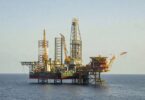
- Offshore exploration, most notably Eastern Offshore Indus Block C, where Turkish Petroleum Overseas Company (TPOC), TPAO’s international arm, is now in operatorship with a 25 % interest alongside Pakistan’s national firms.
- Onshore concessions in promising sedimentary basins of Balochistan and Sindh, with TPAO participating through joint ventures with Mari Energies, OGDCL, PPL, Prime, and GHPL.
The Turkish Interest
- Diversifying Its Energy Profile
For Turkey, the pursuit of hydrocarbon resources internationally is part of a bigger energy diversification strategy. Ankara has been heavily dependent on imports specifically natural gas and is looking to secure access to upstream opportunities beyond its near abroad and North Africa.
- TPAO’s engagement in Pakistan’s offshore basins represents:
A first substantial foray into South Asian waters, expanding TPAO’s footprint beyond the Mediterranean, Black Sea, and Eastern Mediterranean exploration theatres. A move into full-cycle exploration operations, including potential deep-sea drilling — a technologically demanding area that bolsters Turkey’s global energy credentials. Turkey’s Energy and Natural Resources Minister Alparslan Bayraktar has underscored that these agreements are part of a package that will see Turkey work in both onshore and offshore fields and even assist Pakistan’s first deep-sea drilling project.
- Foreign Policy and Bilateral Synergy
Besides the economic interest, the Pakistani cooperation, aligns with Ankara’s long-standing diplomatic goal of deepening cooperation with fellow Muslim-majority states outside its own region. Turkey’s Foreign Minister Hakan Fidan highlighted this cooperation as part of an effort to “institutionalize our brotherhood into a strategic partnership” noting expanded cooperation in energy, defence, and trade.
Thus, the hydrocarbon deals serve dual purposes:
- Economic expansion into emerging upstream markets.
- Geopolitical outreach that reinforces Ankara’s presence in South Asia at a time of shifting global alignments.

The Pakistan Interest
- Reviving Offshore Exploration After Decades
After almost two decades without meaningful offshore exploration activity, Islamabad’s Offshore Bid Round 2025 awarded 23 offshore blocks, covering roughly 53,500 km² to consortiums including local and foreign partners.
The participation of TPAO through joint ventures especially in Indus Block C — is important because:
- Pakistan has struggled to yield commercial discoveries despite exploratory wells since the 1960s.
- TPAO brings deep-sea expertise, rigs, and technical capacity that local firms have lacked, raising the possibility of unlocking that offshore potential. As PPL’s Managing Director Sikandar Ali Memon described it, the partnership could mark a “new chapter” in Pakistan’s offshore energy ambitions — potentially accelerating exploratory drilling and investment.
- Attracting Foreign Investment & Commercial Confidence
Islamabad sees this as a confidence-building signal to international markets. Involving a seasoned operator such as TPAO which is already active in multiple global basins, helps assure other potential investors regarding the practicality and governance of Pakistan’s upstream framework.
Strategic Implications in a Shifting Energy Landscape
- Regional Balance and Energy Corridors
The Turkey-Pakistan hydrocarbon cooperation should be read against broader shifts in regional energy dynamics: South Asia’s energy demand continues to grow, especially for natural gas, even as pipeline geopolitics and LNG markets become more competitive. Pakistan, for example, still grapples with chronic energy shortfalls and import dependency. Turkey itself is pursuing energy diversification while maintaining traditional import sources (including continued purchases from Russia) even as it expands international upstream activity. In this context, Turkish participation in Pakistani exploration adds a new axis of bilateral collaboration that might, over time, impact broader energy corridors, regional supply networks, and investment flows.
More on Turkey’s expansion policy:
Turkey’s Transnational Jihad: Proxy Warfare, SADAT and Terror Financing: https://www.thestrategicperspective.org/turkeys-transnational-jihad-proxy-warfare-sadat-and-terror-financing/
Turkey Extends Syria and Iraq Military Mandate to 2028: https://www.thestrategicperspective.org/turkey-extends-syria-and-iraq-military-mandate-to-2028/
US Blocks Engine Exports for Turkey’s KAAN Fighter Jet: https://www.thestrategicperspective.org/us-blocks-engine-exports-for-turkeys-kaan-fighter-jet/
Turkey-Egypt Agreement to jointly produce VTOL drones in Cairo: https://www.thestrategicperspective.org/turkey-egypt-agreement-to-jointly-produce-vtol-drones-in-cairo/
Pakistan-Turkey Strategic Talks: https://www.thestrategicperspective.org/pakistan-turkey-strategic-talks/
Iran to Host Pakistan–Afghanistan De-Escalation Talks: https://www.thestrategicperspective.org/iran-to-host-pakistan-afghanistan-de-escalation-talks/