
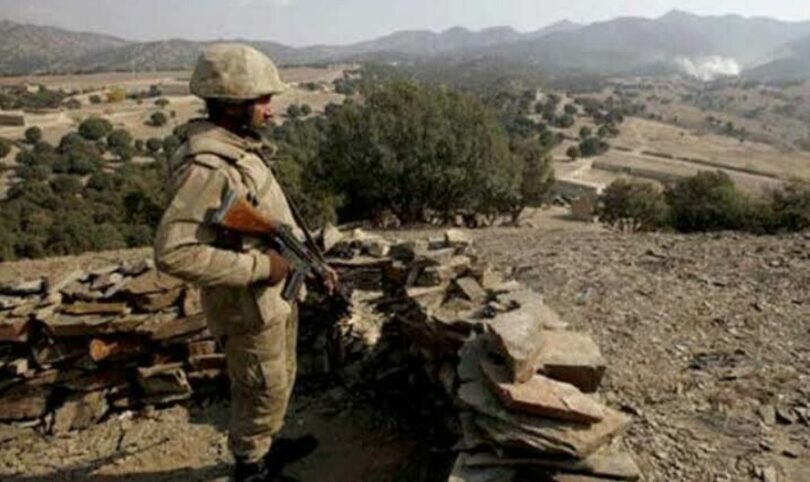

In July 2025, Pakistan launched Operation Sarbakaf, a military operation to counter militancy in the Bajaur, Khyber Pakhtunkhwa. So far, the offensive has involved gunship helicopters and artillery, with a specific focus on the Loe Mamund tehsil. According to reports the tehsil is an active hotspot for militant activity.
On 29 July 2025, three-day curfew was imposed on 16 villages in the Loe Mamund tehsil. This order was decreed upon the recommendation of the District Intelligence Coordination Committee, which had been monitoring the militant activity.
On 30 July 2025, the operation was launched. The imposition of curfew was ordered bearing the public safety in mind during the course of the targeted operation. According to Local sources, four militants were killed, 12 wounded and 10 captured. It is imperative to mention that the statements were not confirmed officially. The same day, the operation was briefly halted for peace talks after local elders from the jirga intervened.
On 12 August 2025, the operation kick-started post the failed peace talks. Upon the commencement of it, the provincial government imposed a curfew in the restive areas. It is reported that the curfew has been placed for three months.
The operation has had significant impact on local civilians residing in the area.
Several reports of civilians being killed and injured during the initial stages of it with some homes being targeted after being used as shelter by militants.
Reports of civilians fleeing the operation targeted areas to evade the conflict have surfaced. The displaced civilians were reported to have been housed in public schools. Apart from the consequences of the ongoing operation and conflict, the inhabitants of the targeted areas have been faced with hardship due to floods and a lack of support from authorities.
The provincial government in the northwest said it would compensate with 50,000 rupees ($175) to each displaced family in Bajaur, where volunteers from the Al-Khidmat Foundation, a charity, were also seen distributing food among displaced families.
It has been reported that most homes in Mamund district were destroyed during the previous military offensive in 2009, this has bred doubt amongst many.
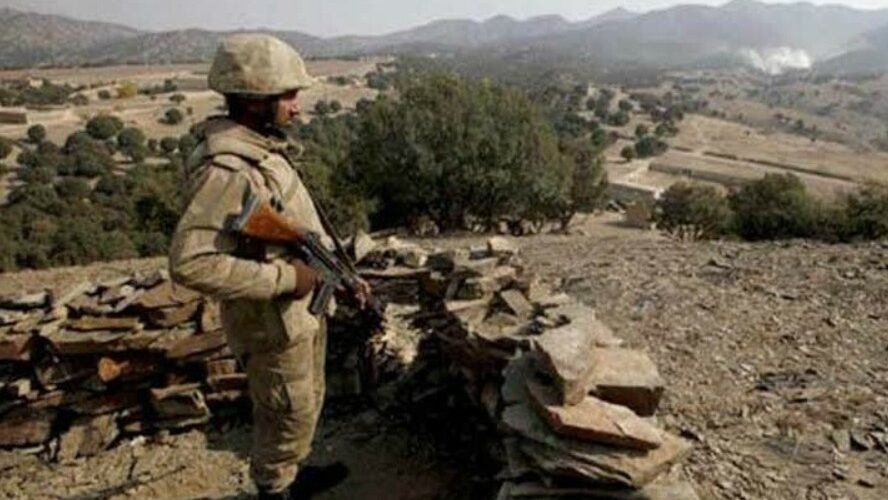
It is imperative to mention that Pakistan had carried out a major military operation in Bajaur before against Pakistani and foreign militants in 2009. This had led to thousands of citizens being displaced. Despite it all, Pakistan claimed victory in 2010 against the militants, with many unable to return to their homes.
The Khyber Pakhtunkhwa police chief Zulfiqar Hameed said the current operation was ongoing.
There is no official information available about any casualties among troops or insurgents to verify the exact numbers. However, most data about the casualties has been obtained from open sources or reported media.
Due to the ongoing development and the military action, protests have erupted while the political leaders have also condemned the operation and the imposed curfew.
There have been multiple bombings in Pakistan’s Bajaur district in 2025.
On 2 July 2025 an attack was orchestrated, targeting government officials. At least four people, including senior provincial government officials, were killed and 11 were left injured in the roadside bomb blast. The vehicle targeted was carrying two senior government officials, including an Assistant Commissioner, prior to being struck by an IED. Later, an off-shoot faction named Usood-ul-Harb of the Tehreek-e-Taliban Pakistan (TTP) claimed responsibility for the attack.
However, Islamic State (ISIS) later claimed the attack through its Amaq news agency, stating the use of a motorcycle bomb to orchestrate the attack.
On 20 August 2025, an attack was orchestrated on Pakistani army convoy in Inayat Kalle, Bajaur’s largest commercial center. The Initial reports suggested multiple casualties among security personnel, with intense firing following the blast.
It was inferred that the incident was a part of the uptick in the militant activity in the region. On 22 August 2025, Pakistani security forces retaliated by blowing up a mosque in Charmang, allegedly killing 30 TTP militants.
A day after, a militant was killed and three others were injured after a bomb they were planting in the hilly Zagai area of Lowi Mamund went off prematurely.
A significant development in August 2025 was the failed negotiations between the Bajaur Amn Jirga and militant leaders.
An attempt to de-escalate the tensions, a jirga, comprising of tribal elders and political representatives, was initiated to mediate between the TTP and the government. Their main objective was to prevent a repeat of mass civilian displacement, experienced during the Pakistan-led military operation in 2009. However, the breakdown in negotiations have prompted the Pakistani military to continue their ongoing operation.
Apart from Bajaur, several tribal districts in KP are attempting to make similar efforts for mediation such as North Waziristan and Tirah valley in Khyber.
The regional/local jirgas are offering militants propositions to protect civilian populations from the type of displacement and destruction witnessed in 2009 and during Operation Zarb-e-Azb in 2014.
The elders of jirgas from several tribal districts met with KP Chief Minister Ali Amin Gandapur in Peshawar. All the leaders from the jirgas had denounced form of military operations and mass displacement, calling such measures by the Pakistani military unacceptable. On the contrary, they proposed the creation of a jirga consisting of representatives from both federal and provincial governments, tribal elders, and other key stakeholders. The jirga, they believe, should have a direct dialogue with the Taliban administration in Kabul to establish long-term peace.
The same was attempted in 2022. There were series of talks, mediated by the Afghan Taliban. The talks took place between Pakistani officials and TTP leaders based in eastern Afghanistan. Despite a ceasefire in June, the negotiations collapsed by November over differences, including the TTP’s refusal to disarm or accept Pakistan’s Constitution.
CM Gandapur has been warned by the Pakistan Tehreek-i-Insaf (PTI), against allowing any military operation in KP, including its former tribal areas. This can lead to further disturbances in the area given that the military operations have commenced in KP again.
Recently, the Pakistani government has admonished the provincial authorities in KP and Balochistan and has ordered them to comply with assisting the government in combating terrorism, stating that continued “irresponsible conduct” would no longer be tolerated.
Talal Chaudhry, Minister of State for Interior at a Youm-e-Shuhada ceremony at the Islamabad Police Headquarters stated that “Security forces are fulfilling their responsibilities, but I want to tell the provincial governments of KP and Balochistan, where terrorism is on the rise, to fulfil their political responsibility”.
The Global Terrorism Index (GTI) 2025 now ranks Pakistan as the world’s second most terrorism-affected country, after Burkina Faso. According to the report, terrorism-related deaths surged by 45 per cent in 2024 to 1,081, while attacks more than doubled from 517 to 1,099.
The main factor for not reaching any agreement with militants stem from the ideological differences between the outfits and factions and their reluctance to abide by the terms of what Pakistan thinks is just.
Certain outfits operating in the southern regions, specifically North Waziristan, and those affiliated with the Deobandi school of thought, have adhered to peace accords. This is done through local arrangements facilitated by local clerics or JUI-F leaders, such as the case of Hafiz Gul Bahadur group (HGB). The group had maintained a peace agreement with the government until 2014. However, after the Pakistani government targeted HGB during Operation Zarb-e-Azb, the group called off their peace deal and emerged as one of the anti-state militant groups.
In contrast, the outfits operating in Bajaur, Mohmand, and Swat often follow a mix of Salafi and Panjpiri ideologies. These outfits are known to be averse towards democratic and Islamist political parties and often disagree with state policies.
Earlier, TTP’s Rahbari Shura released a document accepting certain demands from the Bar Qambar Khel elders of the Afridi tribe, which refrained them from militant activities unless provoked by security forces, and ending extortion, kidnapping, and torture of locals accused of harming TTP militants.
It would be hard to determine if Pakistan’s military operation in KP would serve its purpose, given its fallout with Afghanistan Taliban and its relentless support for ISIS Khurasan (ISKP). At the moment, the uncertainty and the fear of displacement in the civilians in KP may prove to be another dilemma Pakistan will be forced to face, who remain against the ongoing military operation Sarbakaf.