
The media is overloaded with news about the Multi-Role Fighter Aircraft (MRFA) deal India is likely to make for the French Rafales or the Russian Su-57, the US F-35 having been relegated to the back seat. News reports mention IAF wants this or that, but the decision necessarily is always political. One report says that the IAF is deeply interested in the Su-57E stealth fighter jet for a specific deep-strike role and Russia is scrambling to assemble a next-generation weapon package that could swing the deal in its favour. Another news report of January 19, 2026, states that Hindustan Aeronautics Limited (HAL) is awaiting Russia’s cost offer for the Su-57, to arrive at any decision. Meanwhile, Rostec has told Indian media that the Su-57E package for India could cost about 50% of what India would pay for the Rafale MRFA Deal. Russia has also said that the deal would include complete transfer of technology (ToT), and the existing Su-30 facilities in India, can already accommodate bulk of the Su-57E production under Make-in-India.
According to news reports of January 17, 2026, Colombia has gone in for 16 Swedish Gripen fighter jets under a €3.2 billion jet fighter deal, overlooking the cheaper €2.9 billion offer by Dassault Aviation for 16 Rafale jets. In the case of India, geopolitical considerations, primarily the US threat of sanctions and tariffs for a defence deal with Russia, rules out the MFRA deal in favour of the Russian Su-57E. The fact that no Indo-Russian defence deal was announced during the recent visit of Russian President Vladimir Putin to India for the 23rd India-Russia Summit, is indication enough.
As India prepares to acquire additional 114 French Rafales under the MRFA program, costing around INR 3,25 lakh crore (USD 39-40 billion), it is significant to note that we will be paying almost double the cost of what was originally envisaged in the Medium Multi-Role Combat Aircraft (MMRCA) tender in 2012; INR 1.86 lakh crore for 126 Rafales in 2021 versus INR 3.25 lakh crore for 114 Rafales now. The deal in 2012 had envisaged 18 Rafales in fly-away condition, followed by the remaining fighter jets manufacture by HAL in India with full technology transfer.
On April 10, 2015, when Prime Minister Narendra Modi on a state visit to France announced the purchase of 36 Rafale fighters in Paris, both the Indian defence and foreign ministers were taken by surprise, because no approval had been taken from the Cabinet Committee on Security (CCS). With Anil Ambani part of Modi’s delegation, his 10-day old company Reliance Defence Limited (RDL), with no experience in jets manufacturing, was made the “offset partner” with Dassault. Former French President Francois Holland told French media that Anil Ambani’s RDL was given the Indian government as offset partner.
Speaking to the television channel ‘Headlines Today’, the then Defence Minister Manohar Parrikar said that the Su-30MKI offered a viable alternative, especially given that Hindustan Aeronautics Ltd (HAL) was upgrading and overhauling the fighter and equipping it with state-of-the-art electronic warfare systems. Parrikar pointed out that a Rafale would cost anywhere between Rs 600 and Rs 750 crore each and a Sukhoi 30 and Tejas can be bought together at the same price. However, the 36 Rafales cost about €7.25 billion without armaments; this works out to about Rs 1,500 crore per aircraft. It is obvious that the largest ever defence deal of 114 Rafales will lead to a whopping amount of kickbacks; with the government adept at handling audits and appeals, as was done in the case of the previous deal.
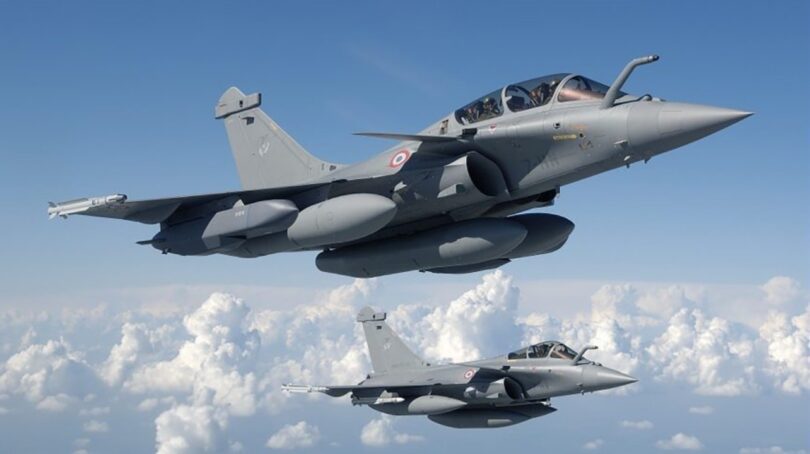
The IAF presently flies 36 Rafale jets while 26 Rafale (M), naval versions of the same jet, have been ordered for the Indian Navy. A Rafale flight training and maintenance, repair and overhaul facility is functioning at the IAF base at Ambala. Tata Advanced Systems Limited and Dassault Aviation signed an agreement in June 2025 to manufacture Rafale fuselage sections at a new facility in Hyderabad, with the plant expected to deliver its first units during the 2028 financial year. Also, in September 2025, Dassault increased its shareholding in Dassault Reliance Aerospace Limited from 49% to 51%, making the joint venture a majority-owned subsidiary of the French company.
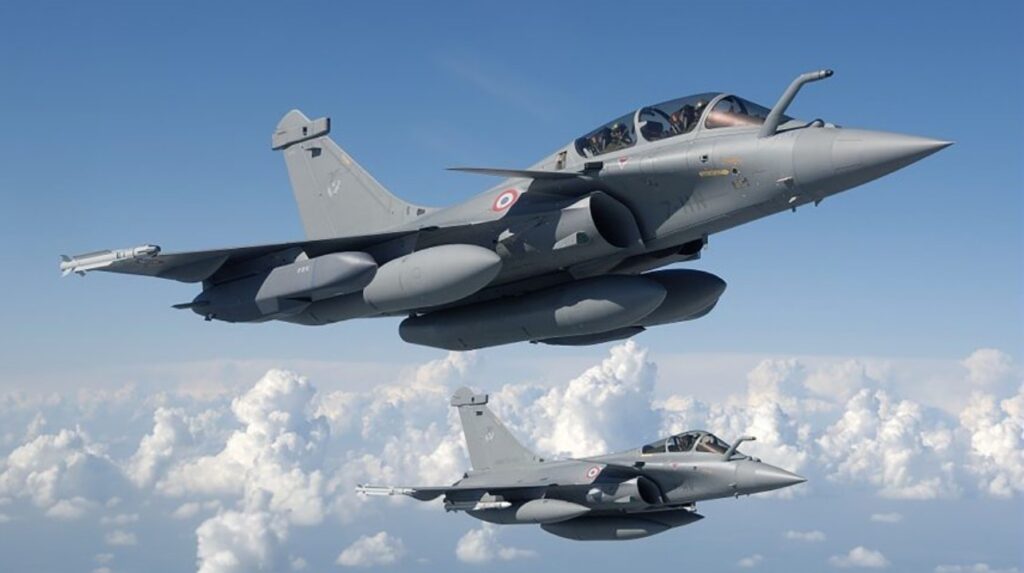
As India prepares for the largest ever defence deal of USD 39-40 billion for 114 Rafales, ostensibly through a government-to-government deal, with the Defence Procurement Board (DPB) reportedly having cleared the proposal before being forwarded to the Cabinet Committee on Security (CCS) for final clearance, the proposed deal envisages import of 12-18 Rafale jets in fly-away condition, while the remaining aircraft would be assembled in India with involvement from local aerospace partners. Under the Make in India initiative, indigenous components are expected to account for more than 30% of the total content, supporting government’s aims to expand domestic defence manufacturing. India is also wanting France to integrate domestically developed weapons systems and mission electronics into the Rafale platform. However, source codes for the aircraft’s core software would remain under French control. French officials have indicated interest in establishing a maintenance, repair and overhaul (MRO) facility, potentially in Hyderabad, to support M88 engines powering the Rafale fleet.
India has reportedly specified that Indian weapons, missiles and ammunition must be integrated on all 114 jets, while Dassault will provide secure data links to allow digital integration of the jets with Indian radars and sensors. For this, Dassault will need to make changes in the software of the onboard computing system of the jet to weave in a seamless command system for weapons and data transmission. Dassault will also be providing ToT for making airframes, as well as arranging participation in technology transfer by Safran and Thales providing the engine and avionics respectively.
According to a report in the French media, France is preparing a comprehensive Rafale package to Include F4 Upgrades for IAF Fleet; going beyond the 114 additional Rafale deal; to also include 35 Rafale 3FR-standard jets already in service with the IAF to the latest F5 configuration, bringing the bulk of IAF’s Rafale fleet to a common advanced baseline. Also, at least 24 jets of the additional 114 Rafales being ordered could be of the future Rafale F5 standard, which is expected to enter service after 2030, however, these 24 Rafale F5 would be manufactured in France, not in India under the Make-in-India initiative. This would make India one of the largest and most advanced Rafale operator in the world, with the IAF equipped with a fleet of F3R, F4 and F5 Rafales.
The French media report indicates that the upgrade of 35 Rafale 3FR fighters to F4 standard would be a major leap in combat capability in avionics, sensors, weapons integration, connectivity and maintenance architecture; the RBE2 AESA radar already installed in the F3R would receive new operational modes, including Synthetic Aperture Radar, Ground Moving Target Indicator and Tracking – generating high-resolution radar imagery at long ranges and track moving ground targets with greater precision. The Front Sector Optronics is also upgraded with a new-generation infrared search and track sensor, improving passive detection of low-observable and low-signature targets, including stealth aircraft. The F4 helmet mounted display inside the cockpit enables the pilot to cue weapons and sensors simply by looking at the target, reducing the reaction time considerably. In addition, the cockpit has larger and high-resolution side displays, improving data fusion and situational awareness in multi-domain missions.
The IAF’s Jaguar fleet, slated for phased retirement, is expected to be withdrawn completely by 2025. The Mig-29UPG fighters are scheduled to exit service in the late 2030s, and the Mirage 2000 will likely be retired shortly after, between 2038 and 2040. Currently, 200 Su-30MKI of the IAF are undergoing upgrades to feature advanced radars and electronic warfare suits. The indigenous Advanced Medium Combat Aircraft (AMCA), India’s fifth-generation stealth fighter, is to eventually replace the oldest Su-30MKIs. The Tejas Mk2 production is targeted to begin not before 2033, with majority induction (of the 120 jets ordered) happening after 2035.
With the acquisition of additional 114 Rafale jets, India’s total Rafale fleet, including 26 Rafale-M jets ordered for the Indian Navy in 2025 to operate from aircraft carriers like INS ‘Vikrant’ (VT-XX), would rise to 176 aircraft. This, including 12-18 Rafales in fly-away conditions would address a sustained deficit in fighter squadrons of the IAF. Plugging this gap is an urgent operational necessity looking at the rising threats and two-front war. But the issue to note is that even if the deal is signed today, Rafale F4 deliveries under Make-in-India are expected to commence only from 2030. Also, the last delivery of the 114 Rafales is unlikely before 2038. Most importantly, the source codes for the aircraft’s core software would remain under French control; implying France will have the upper hand for every future upgrade. With such a massive USD 39-40 billion deal, did we bargain enough for full technology transfer?
The author is an Indian Army veteran. Views expressed are personal.
More on India Air Force:
India’s military tri-service exercise Trishul: India’s military tri-service exercise Trishul - The Strategic Perspective
India’s Air Power Ranking Ascent: Strategic Brief 2025: https://www.thestrategicperspective.org/indias-air-power-ranking-ascent-strategic-brief-2025/
Dassault contracts JVs with Tatas for Rafale fuselage and Ambanis for Falcon jet to be made in India: https://www.thestrategicperspective.org/dassault-contracts-jvs-with-tatas-for-rafale-fuselage-and-ambanis-for-falcon-jet/
Aerial Surveillance: https://www.thestrategicperspective.org/aerial-surveillance/