

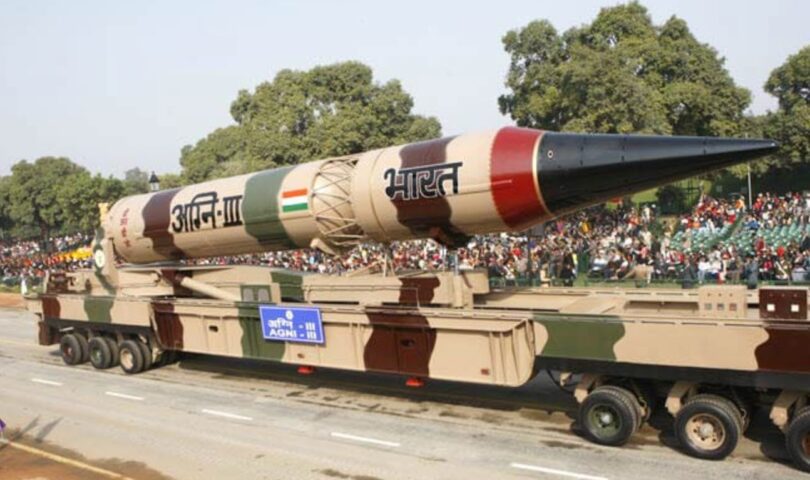

On 6 February 2026, India demonstrated its advancing strategic missile capabilities with the successful test-firing of the Agni-3 intermediate-range ballistic missile (IRBM). The launch occurred from the Integrated Test Range (ITR) at Chandipur, located off the Odisha coast in eastern India.
Mission Overview
The missile was launched under the supervision of the Strategic Forces Command (SFC)—the Indian Armed Forces unit responsible for managing and operating the country’s strategic and nuclear delivery systems. As part of a routine user training exercise, the Agni-3 was selected randomly from the production lot and test-fired from a mobile launcher.
According to officials, the launch validated all operational and technical parameters of the missile system. The two-stage solid-propelled missile followed its planned trajectory and accurately homed in on a pre-designated target area over the Bay of Bengal, with data tracked in real time by coastal radars, telemetry systems, and down-range shipping assets.
Officials from the Defence Research and Development Organisation (DRDO) — the lead agency for missile design and development in India — confirmed that the mission successfully achieved all objectives and validated the continued operational effectiveness of the system.
Technical Capabilities of Agni-3
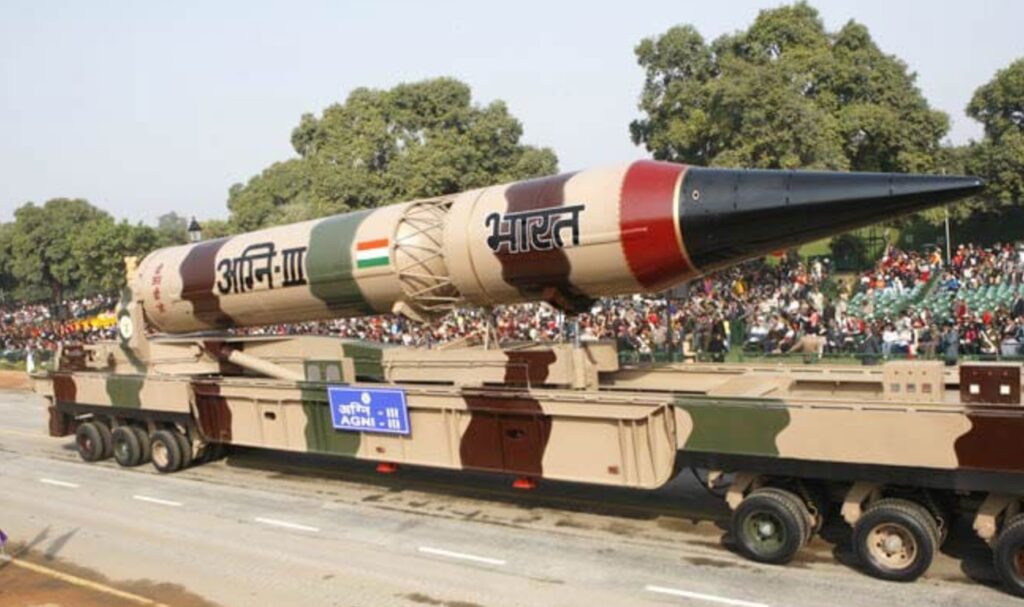
The Agni-3 is an Indian indigenously developed intermediate-range ballistic missile.
Range: It is capable of striking targets over 3,000 kilometres away, placing significant parts of the region within reach.
Payload Capacity: Designed to carry a nuclear or conventional warhead, with payload estimates of up to 1.5 tonnes.
Design: Roughly 17 metres long, with a two-stage solid propellant configuration for reliable and rapid deployment.
Guidance: Equipped with modern inertial navigation systems and advanced guidance controls that help deliver high accuracy during flight.
The missile has been in service with India’s Strategic Forces Command since 2011, forming an integral part of the country’s credible minimum deterrence strategy that aims to discourage aggression while maintaining strategic stability.
Strategic Context and Significance
The Agni ballistic missiles, developed under India’s Integrated Guided Missile Development Program (IGMDP), stretches from short to intermediate and long-range systems. The series includes missiles like Agni-I, Agni-II, Agni-3, Agni-4, Agni-5, and newer variants such as Agni Prime. Collectively, they provide layered strike capabilities and underpin India’s long-term security objectives.
This recent test underscores India’s commitment to operational readiness and the robustness of its strategic forces, reaffirming the reliability of its indigenous ballistic missile systems.