
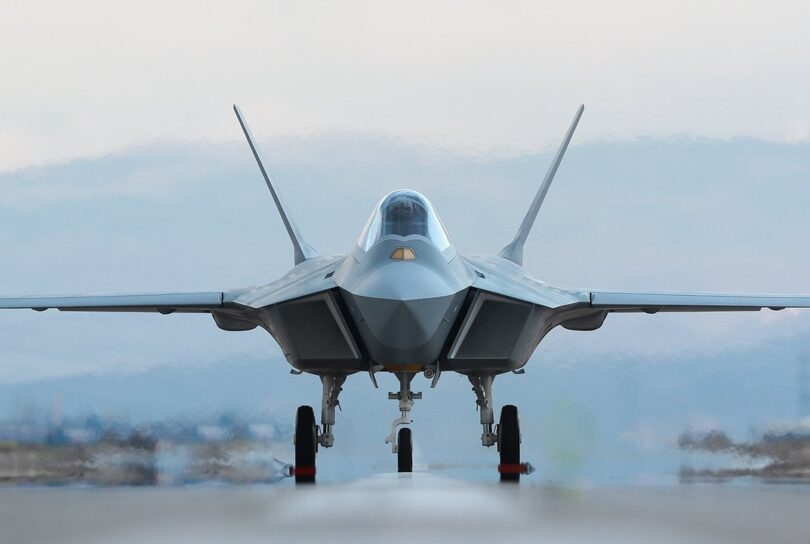

Turkey’s indigenous fifth-generation fighter program, KAAN (formerly TF-X/MMU), has entered a critical phase. Turkish Aerospace Industries (TAI) expedites the prototype production and flight-testing activities ahead of a broader test campaign expected prior to 2027. This program is considered to be the most ambitious undertaking in Turkey’s aerospace history and is central to Ankara's long-term plans for strategic autonomy in advanced defence technologies. After the aircraft's maiden flight in February 2024, Turkish officials have outlined plans for multiple additional prototypes, expanded flight testing, and eventual induction into the Turkish Air Force.
The KAAN program may be viewed as a geopolitical statement indicating Turkey’s determination to reduce reliance on Western defence suppliers, bolster its domestic military-industrial base, and emerge as a competitive exporter in the global combat aircraft market.
Origins of the KAAN Program
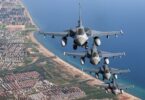
The KAAN project originated from Turkey’s need to replace its aging fleet of F-16 Fighting Falcons while developing sovereign capabilities in advanced aerospace engineering. The program gained additional momentum once Ankara removed the US-led F-35 Joint Strike Fighter program in 2019, following the acquisition of Russian S-400 air defence systems.
Designed and manufactured by Turkish Aerospace Industries (TAI), with support from domestic Turkish defence firms such as ASELSAN and Turkish Engine Industries (TEI), KAAN is intended to serve as an important element of Turkish airpower well into the mid-21st century.
Development Milestones
The program has swiftly progressed than what many analysts anticipated:
Major Achievements
2016 - TF-X development formally accelerated.
March 2023 - First prototype was showcased publicly.
May 2023 - Aircraft officially named "KAAN".
February 2024 - Maiden flight successfully completed.
2025–26 - Additional prototype construction also expedited.
Before 2027- Expanded flight-testing campaign planned.
2028–29 -Initial deliveries targeted.
Early 2030s-Full operational capability expected.
The first prototype completed its maiden flight from Mürted Air Base near Ankara on 21 February 2024, remaining airborne for approximately 13 minutes. The aircraft was powered by two General Electric F110 engines, the same power plant family used by Turkish F-16s.
Subsequent prototypes are anticipated to incorporate design refinements, improved avionics, and expanded mission systems as testing progresses. Reports indicate that multiple prototypes are being assembled simultaneously to support a more intensive flight-test program through 2026 and beyond.
Technical Characteristics
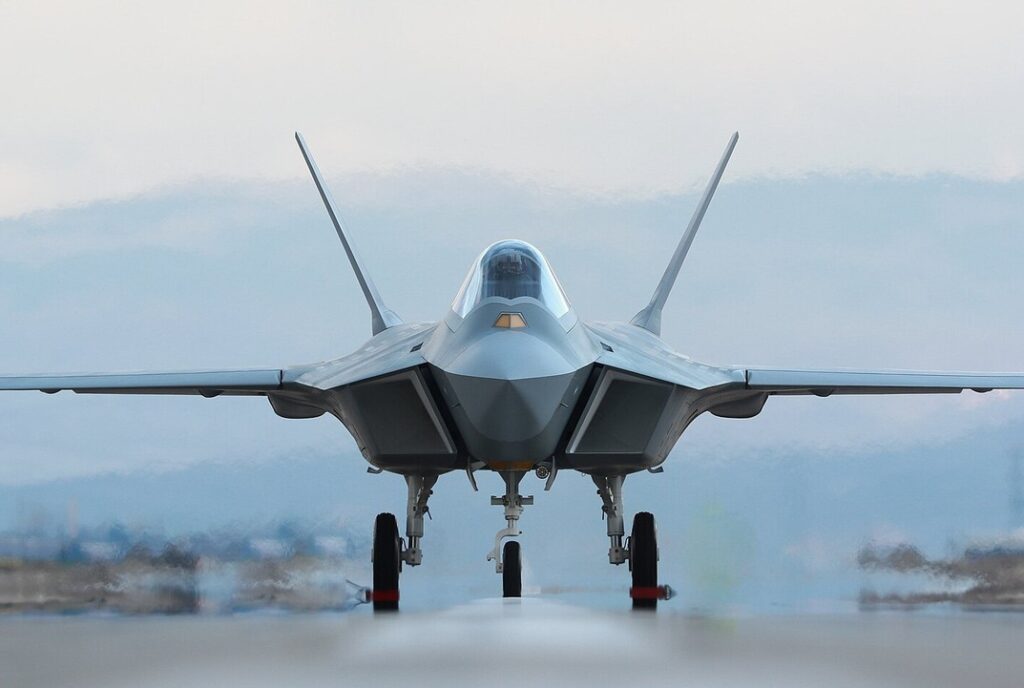
Although full specifications remain classified, according to public information, KAAN is being developed as a true fifth-generation multirole combat aircraft.
Expected Features
- Low-observable stealth design
- Internal weapons bays
- Advanced AESA radar
- Sensor fusion architecture
- Network-centric warfare capability
- High-performance twin-engine configuration
- Air superiority and strike missions
- Manned-unmanned teaming capability
The aircraft is intended to perform missions currently undertaken by advanced Western platforms such as the F-35 and F-22 while incorporating Turkish-developed subsystems wherever possible.
The Engine Challenge
Despite the progress, propulsion remains one of the biggest challenges for the KAAN program.
Current prototypes rely on imported GE F110 engines, providing a practical solution for early testing. However, Ankara's long-term objective is to field the aircraft with an indigenous engine.
In order to achieve this goal, Turkish Engine Industries (TEI) has launched development of the TF35000 turbofan engine, envisioned as the future power plant for production aircraft. According to Turkish industry statements, the indigenous engine is not likely to be integrated before the early 2030s.
This engine reliance remains a strategic weakness because future export approvals and supply chains could still be influenced by foreign restrictions.
Export Ambitions and International Interest
Even before entering operational service, KAAN has generated considerable international attention.
Indonesia became the first announced export customer, signing an agreement for 48 aircraft and industrial participation in the program. Reports have also point to other nations such as Pakistan, Azerbaijan, Saudi Arabia, and the United Arab Emirates as potential future customers.
Several factors explain this interest:
- Limited access to Western fifth-generation fighters
- High acquisition costs of U.S. platforms
- Growing demand for advanced combat aircraft among middle powers
- Interest in technology transfer arrangements
- Political flexibility compared with Western suppliers
*If successful, KAAN could significantly reshape defence export dynamics across the Middle East, South Asia, and parts of Africa.
Strategic Significance for Turkey
- Defence Autonomy
The project clearly indicates Ankara's intention to reduce dependence on foreign suppliers for critical defence capabilities. The experience of sanctions, procurement restrictions, and the F-35 dispute confirms the importance of indigenous military production.
- Industrial Transformation
KAAN serves as a catalyst for broader aerospace development, driving advances in:
- Radar technologies
- Electronic warfare systems
- Composite materials
- Engine development
- Artificial intelligence applications
- Mission computing
- Regional Power Projection
Having a domestically produced fifth-generation fighter would place Türkiye among a small group of nations capable of designing and manufacturing advanced combat aircraft.
Implications for India
India's Advanced Medium Combat Aircraft (AMCA) happens to be in the development phase, while Turkey has already conducted flight testing of its prototype. Although the two programs differ in design philosophy and timelines, KAAN demonstrates the advantages of sustained political commitment, industrial coordination, and rapid prototyping.
At the same time, India possesses strengths in aerospace research, combat aviation experience, and a significantly larger defence-industrial base. The AMCA program will ultimately be evaluated not by its development speed alone but also by its operational effectiveness, survivability, and long-term sustainability.
The emergence of KAAN nevertheless highlights the increasingly competitive landscape among middle powers seeking indigenous fifth-generation capabilities.
Challenges Ahead
Despite its momentum, several hurdles remain:
Technical Risks
- Indigenous engine development
- Stealth validation
- Sensor integration
- Software maturation
- Weapons certification
Financial Risks
- Rising development costs
- Sustaining long-term funding
- Production scalability
Geopolitical Risks
- Export control restrictions
- Supply-chain dependencies
- Regional security tensions
Many fighter programs worldwide have experienced delays during the transition from prototype testing to operational service. KAAN is unlikely to be immune from similar challenges.
Conclusion
The successful maiden flight in 2024 and the preparation of additional prototypes for expanded testing before 2027 indicate that Turkey has moved beyond concept development and into the demanding phase of flight validation.
The question if KAAN may achieve its goals will depend on overcoming propulsion challenges, validating stealth and mission systems, and sustaining political and financial support over the next decade. Yet even at its current stage, the program represents a significant milestone in Turkey’s pursuit of aerospace self-reliance and its emergence as a serious player in the global defence aviation market.
More on related topics:
US Blocks Engine Exports for Turkey’s KAAN Fighter Jet: https://www.thestrategicperspective.org/us-blocks-engine-exports-for-turkeys-kaan-fighter-jet/
Turkish Defence Giant ASELSAN Secures $171 Million International Sales Deal: https://www.thestrategicperspective.org/turkish-defence-giant-aselsan-secures-171-us-dollar-million-international-deal/
Turkey’s TPAO Enters Pakistan’s Hydrocarbon Frontier: Strategic Stakes Beyond Headlines: https://www.thestrategicperspective.org/turkeys-tpao-enters-pakistans-hydrocarbon-frontier-strategic-stakes-beyond-headlines/
Turkey Extends Syria and Iraq Military Mandate to 2028: https://www.thestrategicperspective.org/turkey-extends-syria-and-iraq-military-mandate-to-2028/