

Executive Summary
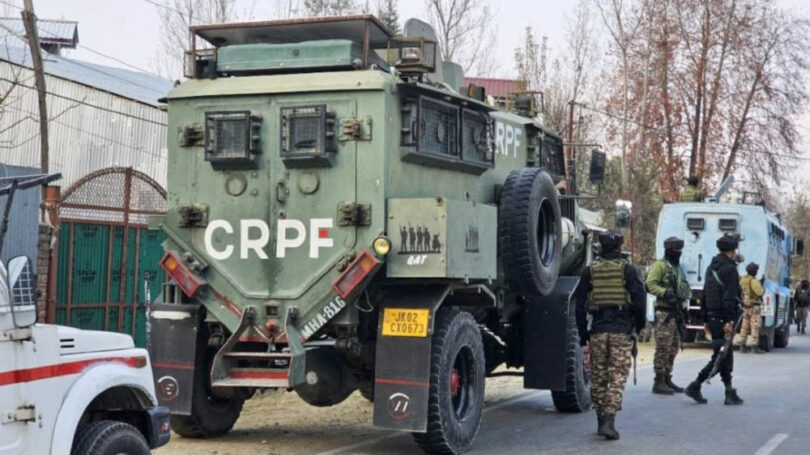
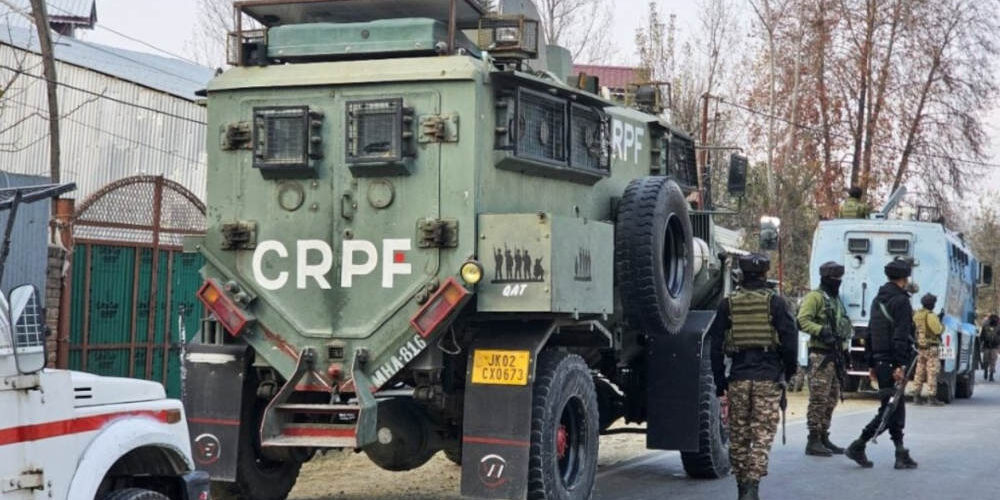
Since the 11 November 2026 attack on a Central Reserve Police Force (CRPF) checkpoint at Akhran, near Mir Bazar in South Kashmir’s Kulgam district, the investigations into the incident have widened considerably. From the initial possibility of a targeted firing incident, the investigation quickly swerved into further probe on the plausibility of Lashkar-e-Taiba (LeT) support network involving local operatives, foreign militants and overground facilitators.
According to reports published by The Daily Pioneer and NDTV on 14–15 November, security agencies questioned more than 500 people across South Kashmir, with approximately 20 detained for further interrogation. Three individuals reported are suspected of functioning as overground workers (OGWs). At the moment, there are no formal arrests in connection with the attack had been reported at the time of these publications.
The current status remains same with Investigators pursuing Mohammad Lateef Bhat, a 22-year-old from Kulgam, alongside three wanted individuals from North Kashmir’s Baramulla district: Bilal Ahmad Mir, Mohammad Umar Mir and Abid Qayoom Lone.
It is ascertained that the alleged effort by Pakistan’s Inter-Services Intelligence (ISI) to rebuild militant capabilities through local networks, reducing the visibility of direct cross-border involvement or maintain deniability is established.
The emerging investigation can be read in two dimensions: identifying those directly responsible for the Kulgam attack and establishing whether a wider local support architecture is being developed across Jammu and Kashmir.
The Investigation: More Than 500 Questioned, 20 Detained
As of 11 November, the security operations have undeniably intensified.
The Daily Pioneer reported more than 500 individuals being interrogated across South Kashmir. Post interrogation, 20 remained detained for further questioning.
NDTV separately reported that investigators suspected a Lashkar-e-Taiba module involving local operative Abdul Latief and two Pakistani militants.
Investigators are probing into the plausibility of local support provided to the attackers with shelter or safe haven prior to the operation, followed by the subsequent assistance with regards to their escape.
Probable logistical support, hideouts, movement and the local connections of suspected militants is being examined.
Three individuals are reportedly suspected of acting as OGWs for LeT.
The distinction between questioning, detention and formal arrest is important. The 20 individuals detained for further interrogation have not thereby been established as participants in the attack.
Mohammad Lateef Bhat: The Principal Local Suspect
The investigation has placed Mohammad Lateef Bhat, a 22-year-old resident of Kulgam, possibly a carpenter by profession, under particular scrutiny.
Police have previously identified Bhat as the only active local militant remaining on their radar in the Valley. Security agencies are investigating whether he has established links with foreign LeT operatives operating in the Pir Panjal region or recruited additional local members.
He is also linked to two attacks in Anantnag and Kulgam in July 2026 which were responsible for the death of a Police officer and two workers from Chhattisgarh. Investigators are examining his digital footprint and probing the involvement of two foreigners. Evidence suggests the attackers escaped through a marshy area after firing AK-47 rifles at close range.
Police have questioned three suspected LeT workers to establish whether they provided shelter and conducted reconnaissance of the attack site However, the precise operational role attributed to him in the 11 November CRPF attack remains a matter for investigation and should be distinguished from allegations concerning his previous activities.
The Baramulla Connection: Three Additional Wanted Operatives
An important development is the inclusion of three Baramulla residents in the wider security investigation.
The individuals identified in reporting are:
Bilal Ahmad Mir – Baramulla district.
Mohammad Umar Mir – Baramulla district.
Abid Qayoom Lone – Baramulla district.
These names also appeared in wanted posters circulated by Jammu and Kashmir Police in November.
Bhat was active in the Valley, while the three Baramulla individuals were believed to be operating from Pakistan-occupied Jammu and Kashmir (PoJK).
This points to an important geographical distinction. The three individuals should not automatically be described as local operatives physically operating in Baramulla.
Their inclusion alongside Bhat indicates the possible coordination between operatives based in different locations and the suspected support structures within Kashmir.
The Alleged ISI Strategy: Localising Terror Operations
The most significant strategic allegation in the latest reporting concerns Pakistan’s Inter-Services Intelligence.
An IANS report republished by City Air News describes an alleged effort to rebuild militant capabilities in Jammu and Kashmir through local recruitment and grassroots mobilisation.
According to officials quoted in the report, the approach involves relying more heavily on local operatives to conduct smaller attacks while reducing the visibility of direct cross-border links.
The reported strategy has several elements:
Local recruitment: Developing a pool of local operatives who can support or execute militant activities.
Overground networks: Using local facilitators to provide logistical assistance and other forms of support.
Reduced external visibility: Employing local personnel in ways that could make it more difficult to establish direct cross-border operational links.
Sustained low-intensity activity: Conducting smaller attacks to maintain an operational presence and demonstrate continued capabilities.
Longer-term mobilisation: Attempting to rebuild grassroots resources that could potentially support more substantial operations.
The LeT–TRF Dimension
The reporting refers to both Lashkar-e-Taiba and its proxy, The Resistance Front (TRF).
The Daily Pioneer and NDTV reports focus primarily on the suspected LeT network. The IANS report discusses TRF and the alleged role of local commanders and external handlers.
The distinction matters because organisational attribution requires evidence. The available reports do not establish that every individual named in the investigation belongs to the same operational cell or that the Kulgam attack was formally claimed or directed by TRF.
It is important to highlight, on November 3, 2026, PM Modi taking to social media the praised the Central Reserve Police Force (CRPF) for completing 12 consecutive months without a single operational fatality, marking the first time the force achieved this milestone in 47 years. The November 11, 2026, followed after. This was backed by CRPF Director General Gyanendra Pratap Singh stating that the force’s previous operational death occurred on October 30, 2025. Completing a full year without a fatal loss in active duty had not happened since a period ending in January 1979.
The 11 November attack post the PM’s acknowledgement may be viewed as a signalling by perpetrators to discredit the CRPF establishment and render Modi’s speech as dubious lacking credibility. A process to mock authority and gain momentum or recognition in anti government or anti India networks whether political or militant. It is also raises the questions on the funding of the perpetrators. When viewed as an isolated incident it reflects on the desperation of a group or individual seeking attention of bigger networks to gain donorship. When assessed as a part of a wider network, the evidence and links of the perpetrators with the geographical locations of the operations conducted suggest a plausibility of a larger support for ISI with local assistance.
The investigations are ongoing, the precise modus operandi or the intent of the operatives can be speculated on, however it would be premature to ascertain or confirm without the official statements from the law enforcement agencies involved.
More on the topic:
Kulgam CRPF Attack -11 November 2026: https://www.thestrategicperspective.org/kulgam-crpf-attack/