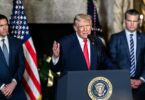

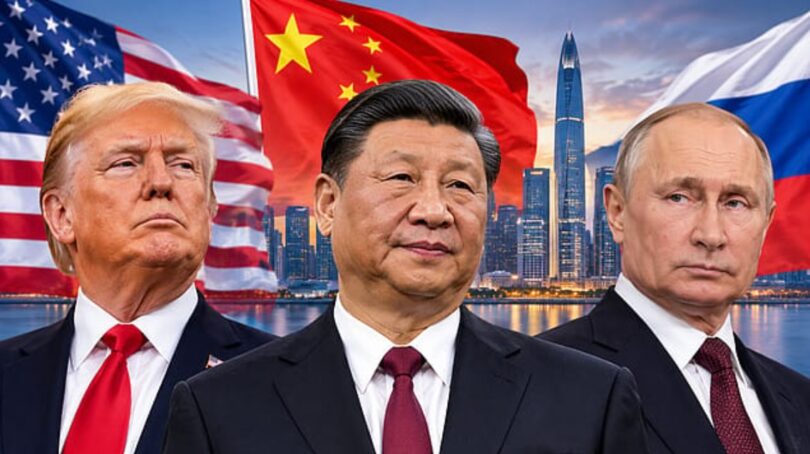
The first-ever meeting between Presidents Donald Trump (US), Xi Jinping (China) and Vladimir Putin (Russia) on November 19, 2026, on the sidelines of the APEC Summit in Shenzhen, China will be watched globally. According to the White House, Trump requested this joint meeting with Xi and Putin primarily for a new trilateral nuclear arms control agreement and to discuss the ongoing conflict with Iran.
Meanwhile, development on the global stage includes the following:
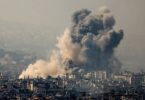
- US forces struck Iranian naval bases along Iran's southern coast and on Qeshm Island in the Straits of Hormuz. The IRGC claimed multiple oil tankers caught fire (November 11-15), striking sea mines in Hormuz transiting without Iranian authorization. Iran launched drone attacks at the military base in Bahrain. Trump says he doesn't need a deal with Iran and he would launch larger attacks on Iran only if necessary. However, media reports indicate the US-Israel have discussed plans for a broader resumption of strikes if tensions continue to rise.
- The Mossad Chief met Director CIA in the US; acting PM Netanyahu appears desperate to resume attacks in Iran, while Israel continues to strike Gaza, but his rival Eisenkot wants Bibi out without further delay.
- Ukraine and Russia continue to strike each other. Ukrainian President Volodymyr Zelenskyy said on November 15 that Ukraine has neutralized more than 55% of Russia’s oil refining capacity. This helps the aim of the US-led NATO to strategically defeat Moscow by weakening the Russian economy.
- The US wants Kiev to cede Donbas to Russia in exchange for entering NATO; achieving NATO deployment in Ukraine at Russia's doorstep from this direction as well.
- As EU sanctions against Russia continue, the EU is proposing a new €45 billion ($50 billion) loan to help cover Ukraine's projected €70 billion financing gap in 2027. This is in addition to a separate €45 billion tranche scheduled for 2027 from an existing €90 billion support loan. Zelensky also secured a €645 million defence package and a €20 million energy package from Denmark, while the UK introduced new sanctions targeting Russia's oil sector
- Houthis advance is some 40-60 km from Aden. Their full control of the Gulf of Aden appears some weeks away. With Iran already controlling the Straits of Hormuz, Iran will also gain full control of the Bab al-Mandab Strait at the Gulf of Aden – a direct challenge to US naval supremacy.
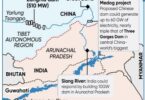
- China continues its usual practice of signalling India. With Prime Minister Narendra Modi heading for the ASEAN-China Summit in Manila, a Chinese military aircraft entered Indian airspace and hovered over Sikkim for 20-22 minutes despite warnings by the Indian Air Force.
- The latest US-China hiccup is the Jensen-Alice Huang NVIDIA affair. Interestingly, Elon Musk is heading a campaign to reinstate Jensen, who contributed $26 million for Trump's new ballroom in the White House, as the CEO of NVIDIA.
- US air travel is still recovering from a massive nationwide disruption; over 17,000 flights were cancelled across the weekend, marking the worst outage for US aviation in 35 years. Concurrently, Europe continues to suffer cyberattacks.
While Pakistan is providing extra security to its terrorist leaders fearing "unknown gunmen", it is very amusing to see multiple US officials moved into military bases fearing attacks by IRGC. These include: Secretary of State Marco Rubio, Secretary of War Pete Hegseth, Treasury Secretary Scot Bessent, White House Chief of Staff Stephen Miller and Attorney General Todd blanche, plus former officials including Pam Bondi (former Attorney General), Kristi Noem (former Homeland Security Secretary) and Tulsi Gabbard (former Director of National Intelligence).
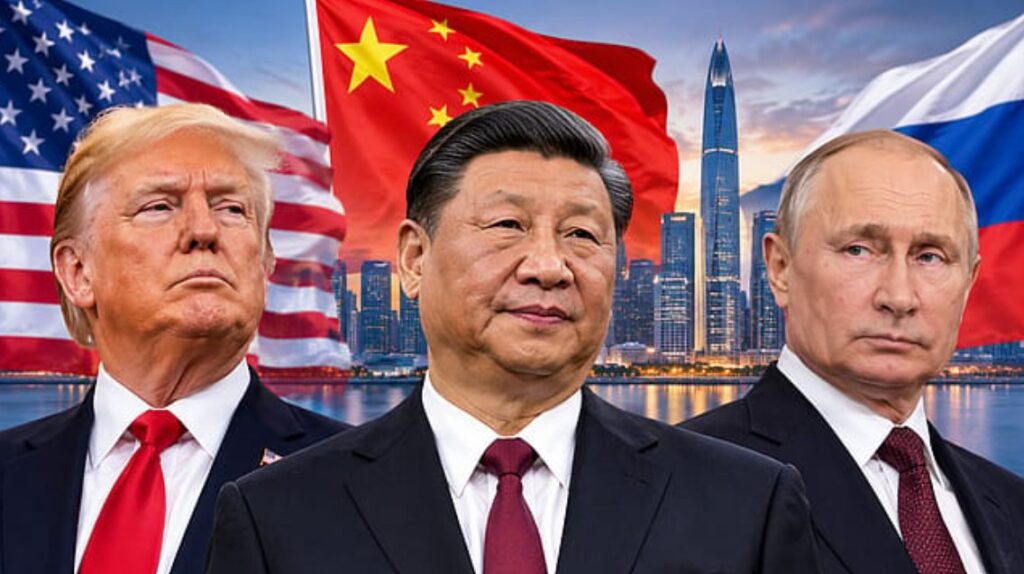
According to the White House briefings and media reports, Trump is largely bypassing formal APEC multilateral sessions to focus on the following issues in his meeting with Xi and Putin:
- Nuclear Arms Control. The US–Russia New START treaty having expired in February 2026, Trump wants to bring China and Russia into a new trilateral nuclear three-way treaty.
- The Iran War. Leverage China and Russia (who have close diplomatic and military ties with Tehran) to pressure Iran into capitulating to US demands as Washington enforces a naval blockade and land cutoff against Tehran.
- US-China Trade Truce. Trump wants stable US-China economic relations stable and to continue the pause on Chinese export restrictions covering critical rare-earth minerals until their December G20 meeting in Florida, plus decide whether to extend the current trade truce past its January 2027.
- Advancing Indo-Pacific Agenda. Trump plans to advance his Indo-Pacific agenda through a combination of alliance-building beforehand and negotiations with Xi-Putin, including: advance regional partnerships and demonstrate US commitment to the Indo-Pacific through Quad and ASEAN Coordination at Manila; visit the Philippine to secure commercial and defence investments, plus sign a trade deal with Thailand. Washington is pushing to operationalize a bilateral communication hotline on AI and strengthen military crisis communications to prevent accidental escalation in the Indo-Pacific.
- Project Global Statesmanship. Use the summit's high-profile optics to present himself as the global statesman after suffering losses in the midterm elections; this after periodically crying for not being awarded the Nobel Peace Prize.
As the host of the APEC Summit themed "Building an Asia-Pacific Community to Prosper Together," Xi is promoting regional economic integration, digital innovation, and open trade to position China as a stable anchor for the global economy. His agenda at the trilateral meet with Trump-Putin is likely to be:
- Trilateral Nuclear Arms Control Treaty. Resist Trump's push for a trilateral nuclear treaty, as Beijing has historically refused to join arms-reduction talks due to its smaller nuclear arsenal compared to the US and Russia.
- Taiwan. Xi is focused on keeping US-China trade and tech ties steady without making major concessions, while reinforcing Beijing's hardline stance on Taiwan. Speaking on November 12 to commemorate the 160th birth anniversary of revolutionary leader Sun Yat-sen, Xi framed the Taiwan issue as an "unwavering historical mission" of the Chinese Communist Party while omitting any direct mention of military force.
Putin has faced years of Western diplomatic isolation and continues to face EU sanctions. His agenda at the trilateral summit is likely to include:
- Iran War. Leverage Trump's demands related to the Iran war, to point out western support to Ukraine, unacceptability to Western forces presence in Ukraine, leave aside Ukraine's NATO membership. In addition, the free-hand given to Zelensky for attacking Moscow, temporary restrictions on Starlink notwithstanding.
- Deepening China–Russia Strategic Ties. Alongside the trilateral talks, Putin is holding dedicated bilateral meetings with Xi to further cement their "comprehensive partnership," which relies heavily on Chinese energy purchases and high-tech industrial supplies to sustain the Russian economy.
To what extent will Trump succeed at Shenzhen, or will it be as disastrous as his visit to Beijing in May 2026 accompanied by a posse of billionaires, including Jensen Huang and Elon Musk? The upcoming trilateral summit needs to be seen in the following context:
- Trilateral Nuclear Arms Control Treaty. Trump has little to offer to persuade Xi for China to enter into a new trilateral arms control treaty. Why should China agree to join in the first place with the global clout it has as the world's second-most powerful nation and primary challenger to US global primacy, wielding unmatched manufacturing scale, the largest diplomatic network on earth, and a rapidly modernizing military. While it trails the US in global military reach and alliance networks, Beijing exercises decisive leverage over global supply chains, developing economies, and major geopolitical crises.
- Taiwan. After the midterm elections, US lawmakers are moving to constrain Trump using Taiwan's security as a bargaining chip during his talks in Shenzhen; having informally already cleared the $14 billion arms package for Taiwan in early 2026.
- Iran War. What can Trump offer to Xi and Putin in exchange for having his way in Iran – going slow on sanctions and continuing existing trade deals? Don't China and Russia hold significant diplomatic leverage in relation to Iran? Why would they alter their core strategic alignment, given that the US (and Israel) are responsible for changing free transit through the Straits of Hormuz to its current state.
- Ukraine War. Senior US officials have stated that Trump will not discuss Ukraine because Zelensky will not be present. But then how is he discussing Iran without any Iranian officials? With Xi present, Putin would be in a position to forcefully push through his concerns about the war in Ukraine. as mentioned above.
- Allies' Concerns. American media reports that US allies in Europe and the Indo-Pacific view the closed-door Shenzhen Summit with caution; concerned that a transactional deal could weaken collective security commitments without resolving underlying disputes.
Finally, no agreements are expected to be signed at the trilateral summit nor any joint statement issued. While results of the summit will be visible to all on November 19, there is little scope of any breakthroughs in fundamental differences over Iran, Taiwan and the proposed trilateral nuclear arms control treaty. Bipartisan scepticism in the incoming US Congress anyway limits Trump's ability to offer lasting concessions. Afterwards, we may see memes and video clips about the meeting centred on Trump, as was the case following his visit to Beijing in May 2026. Trump should be expected to continue his whimsical ways.
The author is an Indian Army veteran. Views expressed are personal.