
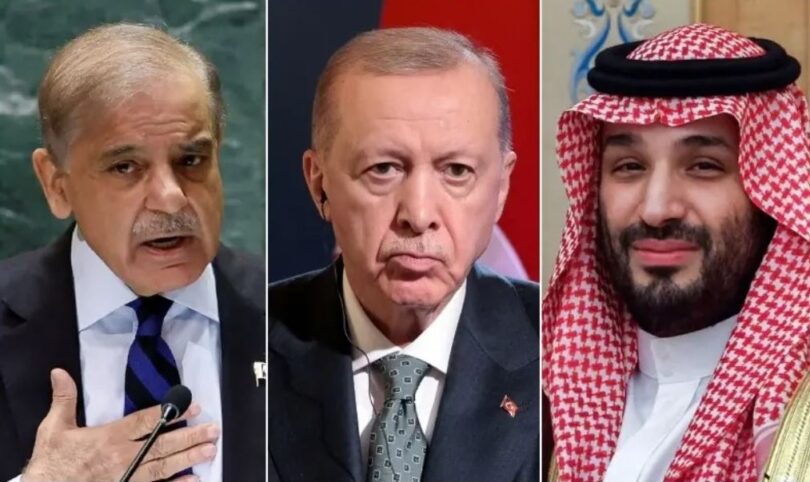

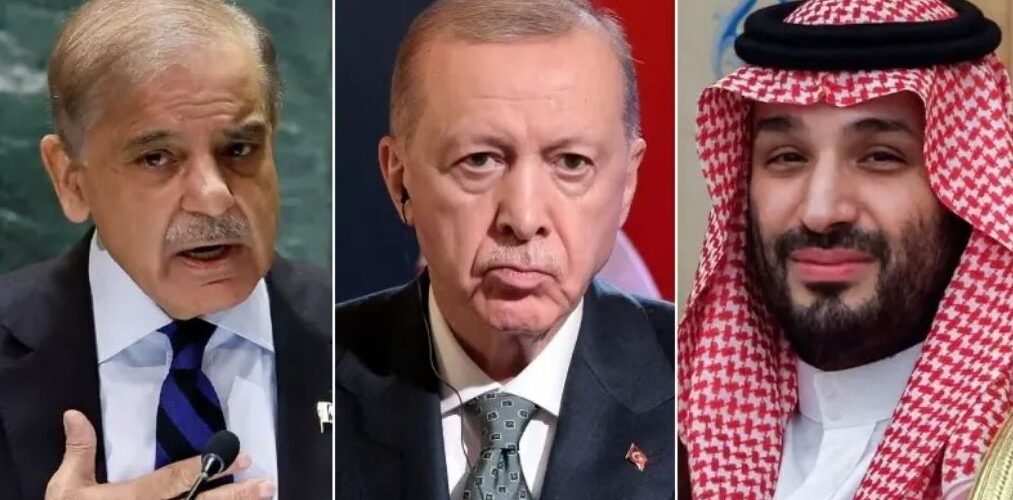
Turkey is reportedly seeking membership in the Strategic Mutual Defence Agreement (SMDA) signed between Saudi Arabia and Pakistan in September 2025. It is expected that this move that could transform security alignments across the Middle East, South Asia, and the broader Indo-Pacific region. Although no government has formally confirmed the negotiations, multiple reports suggest Ankara is in advanced discussions with Riyadh and Islamabad to join the pact.
Timeline: Saudi–Pakistan Defence Pact and Key Developments
September 2025 – Pakistan and Saudi Arabia signed the Strategic Mutual Defence Agreement in Riyadh. The pact ensures that any aggression against one member would be considered an attack on both nations. It is described as a security and deterrence framework focused on regional stability.
October 2025 – Both governments hold follow-up meetings to coordinate joint exercises, intelligence sharing, and defence industry collaboration, signalling operationalization of the pact.
November 2025 – Analysts note Pakistan and Saudi Arabia began coordinating on missile defence and air force cooperation, laying groundwork for possible third-party accession.
December 2025 – Reports surface that Turkey is exploring joining the pact, marking the first potential expansion of the bilateral agreement. Discussions focus on strategic interoperability, collective deterrence, and regional security coordination.
January 2026 – Media reports from Bloomberg, Middle East Eye, and other outlets describe Turkey’s accession as “very likely,” though all governments involved declined to comment officially.
Turkey’s Strategic Motives
Turkey’s reported interest in joining the Saudi–Pakistan pact may be due to several factors:
Shared Security Interests
Ankara, Riyadh, and Islamabad share overlapping concerns, including political instability in the Middle East, terrorism, and geopolitical competition in the Indo-Pacific region. A trilateral defence pact would allow Turkey to engage in collective deterrence and regional crisis management.
Complementary Military Capabilities
Saudi Arabia brings financial resources, while Pakistan contributes manpower and nuclear capability, and Turkey would likely provide combat experience and advanced defence industry capacity, including drones and naval power.
Hedging Against U.S. and NATO Uncertainty
Turkey remains a NATO member, but its government perceives value in diversifying strategic partnerships, particularly amid perceived uncertainties in U.S. policy commitments. Participation in a regional pact provides autonomy and flexibility in defence planning.
Deepening Defence Cooperation
Turkey and Pakistan already maintain strong bilateral military links including shipbuilding, fighter-jet upgrades, and drone collaboration, which provide a foundation for deeper integration if Ankara joins the wider pact.
Official Statements
Saudi Arabia: Officials emphasized that the original pact with Pakistan is focused on regional security and deterrence and does not target any third party. Riyadh has not publicly addressed Turkey’s reported interest.
Pakistan: Government sources reaffirmed the pact’s defensive and stabilizing purpose and highlighted that the framework does not threaten other states. Islamabad has declined to comment on Turkey’s potential accession.
Turkey: Ankara has not confirmed reports of its accession. Foreign and defence ministries have remained silent, consistent with Turkish practice regarding early-stage sensitive negotiations.
Regional and International Implications
Security Architecture Shift
If Turkey joins, the pact would transform from a bilateral framework into a regional collective security arrangement, enhancing the deterrence capacity of its members. Analysts liken it to a NATO-style framework adapted for regional contingencies.
Impact on NATO and Western Powers
Turkey’s potential participation reflects Ankara’s strategy of hedging balancing its NATO obligations with independent regional partnerships that extend influence and autonomy.
Effect on Other Regional Actors
Nations such as Iran, India, and Gulf states will likely recalibrate their security strategies in response. The inclusion of Turkey adds a new military and political dimension that could influence South Asian and Middle Eastern balances of power.
More on Pakistan policies:
Saudi–Pakistani Defence Pact: Operationalizing Hedging and Deterrence in 2026: https://www.thestrategicperspective.org/saudi-pakistani-defence-pact-operationalizing-hedging-and-deterrence-in-2026/
Pakistan and Egypt Strengthen Defence Cooperation as Pakistan Army Chief Asim Munir Visits Cairo: https://www.thestrategicperspective.org/pakistan-and-egypt-strengthen-defence-cooperation-as-pakistan-army-chief-asim-munir-visits-cairo/
Policy Analysis: Pakistan–Taliban Relations and the October 2025 Ceasefire — Strategic Fracture or Diplomatic Reset? https://www.thestrategicperspective.org/policy-analysis-pakistan-taliban-relations-and-the-october-2025-ceasefire-strategic-failure-or-diplomatic-reset/
Arab-Islamic NATO https://www.thestrategicperspective.org/arab-islamic-nato/