


Executive summary
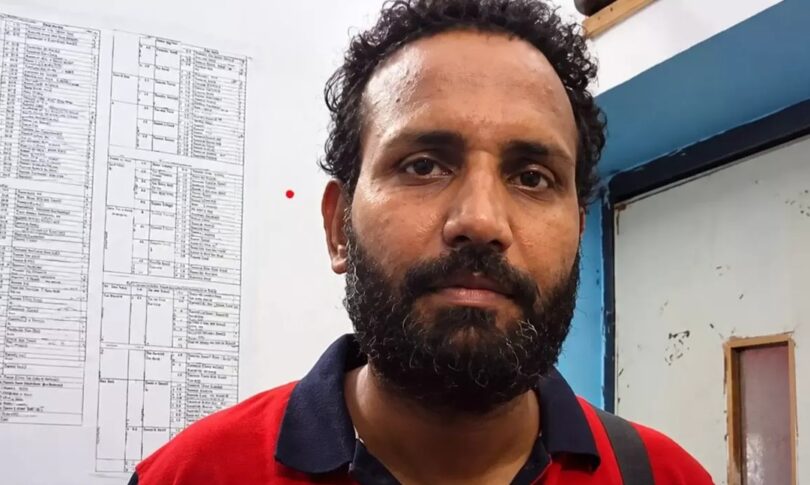
On 20 November 2026, 37 year old gangster Naseem alias Rizwan alias Durrani, with alleged ties to Dawood Ibrahim’s D-Company was killed in an encounter in an operation conducted by Delhi Police Crime Branch–Uttar Pradesh Special Task Force (STF) in Bulandshahr. The incident exposed an important intersection between India’s internal organised-crime networks and the alleged residual remnants of the D-Company’s operational structure.
Durrani was wanted in connection with recent murders in northeast Delhi and an attempted-murder case in Ghaziabad. Police also attributed to him to alleged assassination assignments linked to D-Company operative Chhota Shakeel.
The most consequential allegations are pertaining to two intended targets: gangster Chhota Rajan, who was imprisoned in Tihar Jail, and Canadian journalist Tarek Fatah. According to Police accounts, Durrani had allegedly been recruited for these tasks when he was affiliated with Shakeel.
His killing followed the 16 November murder of Sameer alias Bhoora in northeast Delhi, an incident that investigators link to a continuing gang conflict involving Haroon Saifi’s criminal network.
The encounter of Durrani must be viewed from two dimensions: the swift elimination of a wanted gangster involved in a violent domestic rivalry, and the loss of an alleged intermediary whose previous associations extended to D-Company’s transnational underworld network.
The important question is whether Durrani represented an operational link between an older D-Company network and contemporary Delhi-based criminal groups, or whether his association with Shakeel was largely historical.
Naseem Durrani
Naseem, also known as Rizwan or Durrani, was a resident of New Mustafabad in northeast Delhi. Police identified him as a 37-year-old gangster who had developed his own criminal network in the trans-Yamuna region.
According to the authorities, his criminal activities can be traced to 2010. Police subsequently have connected him to a murder registered that year, another murder case in Ghaziabad in 2012, and robbery and dacoity cases in 2013. Durrani had cases registered across several Delhi police jurisdictions, including Gokulpuri, Bhajanpura, Daryaganj, Khajuri Khas, Jafrabad and Dayalpur.
However, there appears to be some discrepancy in the reported number of cases. Delhi Police’s Crime Branch cited 22 cases, while the UP STF’s statement, carried by PTI, referred to more than 26 cases, including four murder cases. He carried a bounty of ₹50,000 reward. These figures should be referred to on the basis of respective agencies rather than combined.
The D-Company connection: Chhota Shakeel’s alleged assignments
Durrani shared a close affiliation with Chhota Shakeel, a senior operative in Dawood Ibrahim’s D-Company.
According to UP STF ADG Amitabh Yash and Delhi Police Crime Branch officials, Durrani had been in communication with Shakeel and allegedly accepted assignments involving targeted killings.
The Chhota Rajan assassination plan
In 2016, Durrani was recruited by Chhota Shakeel to eliminate Chhota Rajan, who was lodged in Delhi’s Tihar Jail.
Rajan’s rivalry with Dawood Ibrahim had been one of the defining conflicts of India’s organised-crime landscape. After their split, Rajan’s network became a major adversary of D-Company.
The reported recruitment of Durrani for an assignment inside a high-security prison is important. It revelead the nature of the conscious targeting and the readiness of the handlers to employ local criminal operatives for high-profile assignments.
However, based on the available information, it is hard to establish that Durrani personally gained access to Rajan or that an operational attempt inside Tihar was executed.
The Tarek Fatah assassination conspiracy
The second high profile assignment was the targeted Pakistani-Canadian journalist and writer Tarek Fatah.
According to the authorities, Shakeel released a hit after Fatah’s criticism of Sharia law and allegedly commissioned his assassination.
Durrani and an associate, identified as Junaid, were presumably recruited for the assignment. According to reports, Shakeel provided information about Fatah’s movements and instructed the shooters to target him during his visits to Delhi.
Investigators reportedly established that Durrani had conducted reconnaissance at Film City, Sector 16-A, Noida, where Fatah was expected to attend a television programme.
It was reported that ₹1.5 lakh had been transferred to Durrani. He and Junaid were arrested in 2016 in connection to the alleged conspiracy, while his connection with Shakeel emerged more visibly during the interrogation in 2017.
Fatah passed away in 2023.
JOINT OPERATION BY CRIME BRANCH, DELHI POLICE & UP STF NEUTRALISES WANTED GANGSTER IN ENCOUNTER
— Crime Branch Delhi Police (@CrimeBranchDP) November 20, 2026
❖ Wanted in multiple heinous cases, including two murders; carrying a reward of ₹50,000.
❖ 20–25 rounds exchanged during a fierce gun battle near Jat Chowk, Bulandshahr, UP.
❖… pic.twitter.com/MSxG5wAEjh
🚨A joint team of ARSC @CrimeBranchDP & UP STF neutralised a wanted gangster carrying a reward of ₹50,000 near Jat Chowk, Bulandshahr, UP
— Delhi Police (@DelhiPolice) November 20, 2026
🔹When intercepted and challenged to surrender, the accused opened fire at the police team, triggering an intense exchange of 20–25 rounds.… pic.twitter.com/GRNdbEppYN
The Robin Sharma contract: An additional criminal link
Robin Sharma, a Delhi-based Bajrang Dal activist was another targeted individual by Durrani.
According to the Crime Branch account, Durrani and associates were supposedly tasked with eliminating Sharma.
Police divulged that an operative identified as Tariq was tasked with carrying out the hit on Sharma but mistakenly shot Sharma’s brother, Deepak, in Dwarka in 2005. Tariq was later terminated in a police encounter in 2006.
It is imperative to point out that Durrani’s assignments were not limited to the Chhota Rajan and Tarek Fatah conspiracies. It indicates the plausibility of a larger wider network of intermediaries, shooters and logistical facilitators allegedly operating around or with him.
These allegations remain police-reported accounts, the underlying case records and judicial findings would be necessary to establish the precise responsibility of each individual.
The domestic gang war: From Raja Mewati to Sameer
While Durrani’s D-Company relation has drawn attention, his immediate criminal activities were centered on northeast Delhi.
Police described him as the head of his own gang, competing with the network associated with Haroon Saifi. The conflict reportedly involved control over drugs, extortion and illegal betting operations.
- 26 May 2026: Raja Mewati, alias Akki Don and maternal uncle of Haroon Saifi, was killed in Khajuri Khas. Police confirmed that Durrani had ordered the killing.
- June 2026: Rashid alias Pani Wala, reportedly a close associate and financier of Durrani, was murdered. Investigators suspected retaliation by Saifi’s associates.
- 16 November 2026: Sameer alias Bhoora, 26, was shot dead in northeast Delhi. Police alleged that Durrani and an associate fired more than 20 rounds at him.
The authorities believe that the November killing may be linked to Sameer’s involvement in plotting an attack on Durrani. Police also cited an earlier attack on Durrani’s brother Fasil in Ghaziabad’s Loni area as part of the escalating feud.
This suggests that the local gang conflict had become increasingly vindictive and personal, with retaliatory violence driving successive attacks.
The Bulandshahr encounter: Joint Delhi-UP operation
On the night of 19–20 November, Delhi Police Crime Branch received intel regarding Durrani’s movements in Bulandshahr. A joint team involving Delhi Police personnel and the Noida unit of the UP STF moved to intercept him.
According to the police account, the operation took place around 12:25 AM near Sukh Lalpur village in the Sikandrabad area.
Durrani was reportedly travelling on a scooter when the team attempted to stop him. Police said he accelerated, lost control while turning towards an unpaved road and fell.
The STF stated that he opened fire despite being asked to surrender. The police team retaliated leaving him injured. He was taken to hospital, where he succumbed to his injuries.
More than 25 rounds were reportedly fired during the exchange.
Police recovered two .32-bore pistols, an empty magazine, three live cartridges, 16 empty cartridges, a scooter, helmet and a bag containing clothes.
An FIR was registered at Sikandrabad police station under Section 109(1) of the Bharatiya Nyaya Sanhita and Sections 3, 25 and 27 of the Arms Act.
The digital footprint: ‘Live to Kill’
According to the Crime Branch account carried by PTI, he operated an Instagram account named ‘Live to Kill’. Police alleged that the account was utilized to publish threats and recruit individuals towards criminal activities.
Investigators are examining who managed the account and whether it was used to recruit associates or expand his network.
Hindustan Times separately reported that his social-media profile carried a description glorifying criminal activity and included photographs and videos apparently recorded during court appearances.
Durrani’s elimination is significant for two reasons, first for his alleged association with Dawood Ibrahim, second for how he played a role in facilitating the potential merge of international organized crime and domestic criminal networks.
The intermediary model
Organised-crime networks can operate through local associates who provide reconnaissance, weapons, financing and manpower. Such intermediaries need not occupy senior positions within the parent organisation. The allegations against Durrani point towards this possibility, although his precise position within D-Company remains unverified.
The persistence of older underworld relationships
The reported assignments involving Chhota Rajan and Tarek Fatah date back approximately a decade. They reveal that investigators have examined Durrani’s alleged connections to Shakeel over an extended period. They do not, by themselves, demonstrate that he remained under Shakeel’s active directives in 2026.
The surviving network
Durrani’s death removes one alleged shooter and local gang leader. However, it does not establish that his associates, financiers, weapons suppliers or overseas contacts have been identified or neutralised.
The most important investigative task now is to reconstruct the network around him rather than treat the encounter as the conclusion of the case.
Conclusion
Naseem Durrani’s killing brings an end to the activities of a gangster whom Indian police have described as an alleged D-Company operative and associate of Chhota Shakeel. His reported involvement in assassination conspiracies targeting Chhota Rajan and Tarek Fatah gives the case significance beyond the ordinary cycle of gang violence in northeast Delhi.