

Europe may be indicating a shift in its industrial strategy and defence priorities as reports of Volkswagen exploring a potential partnership with Rafael Advanced Defence Systems to manufacture components for the Iron Dome have surfaced.
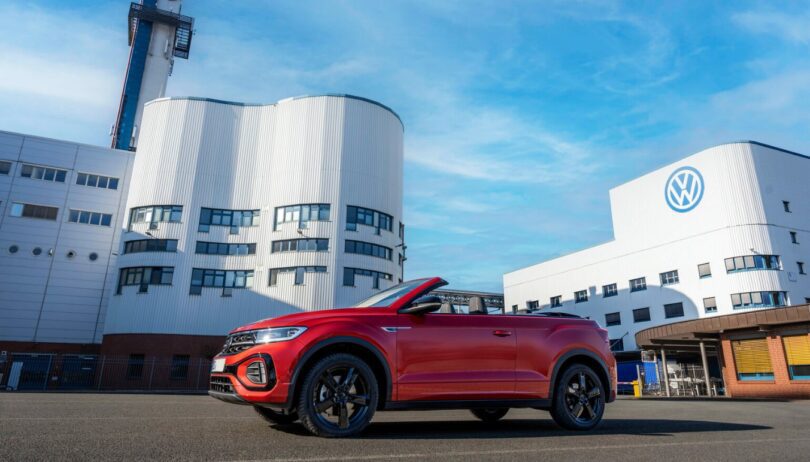
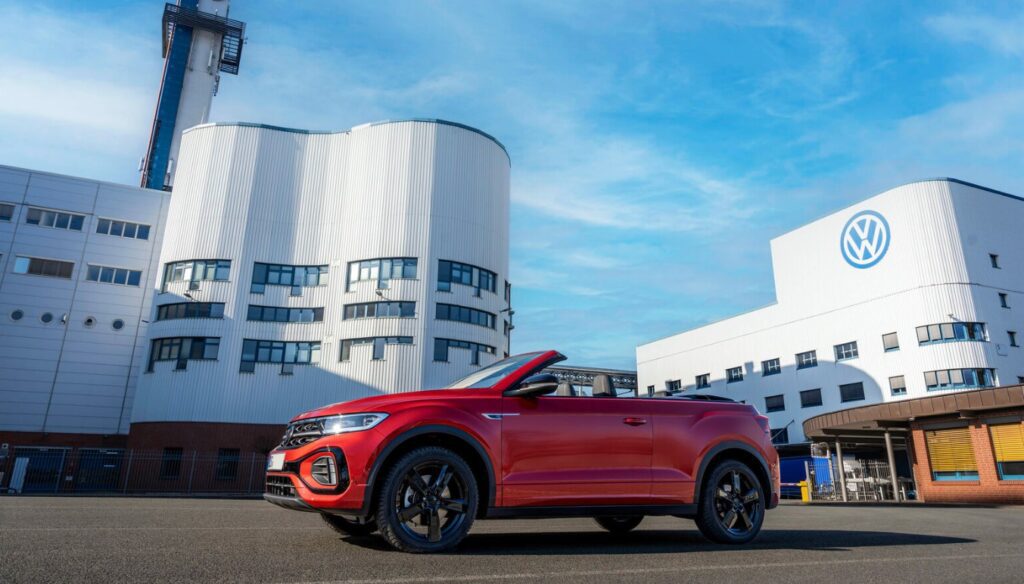
The talks centre on Volkswagen’s plant in Osnabrück. It is believed to have an uncertain future as the plant has no clear long-term role. Hence the proposition to utilize it for manufacturing Iron Dome parts. According to reports, the production of the T-Roc Cabriolet is expected to end around 2027, which is the primary factor for the uncertainty of the plant. Instead of shutting it down, Volkswagen has been looking for alternative uses to preserve employment of the workers and maintain industrial capacity.
According to the proposed arrangement, the factory would not produce missiles but instead manufacture components for the Iron Dome system. These could include military transport vehicles, launcher platforms, and power supply units. This approach allows Volkswagen to be involved in the defence supply chain while not being directly included in production of offensive weapons.
The potential move presents the growing challenges within Europe’s automotive sector. Companies like Volkswagen are struggling with declining profits, high production costs, and the transition to electric vehicles. As demand patterns transition, some manufacturing plants have become less pragmatic in their current form.
However, defence expenditure across Europe has exorbitantly increased in response to the geopolitical tensions, particularly following the Russian invasion of Ukraine. Governments are encouraging industries to support defence production, creating new opportunities for companies with advanced manufacturing capabilities.
In case of Volkswagen, entering this sector could be a saving grace for the struggling facilities. It is also more cost-effective to modify a plant than to build q new defence manufacturing infrastructure from scratch.
The Iron Dome
It was developed by Rafael Advanced Defence Systems. it is one of the world’s most advanced short-range air defence systems. Designed to intercept rockets, artillery shells, and other aerial threats, the system has been effective in securing civilian areas against external threats.
The system operates by detecting incoming projectiles, calculating their trajectory, and launching interceptors only when a threat is likely to hit populated or strategic locations. This makes it both efficient and highly effective in combat scenarios.
However, whether this system would be an answer to European defence needs remains yet to be seen. Unlike the short-range threats commonly faced in the Middle East, Europe must contend with longer-range missiles, drones, and advanced aerial systems. As a result, Iron Dome may form only one layer of a broader, multi-tiered air defence architecture.
Geopolitical Implications
The potential collaboration underscores deepening defence ties between Germany and Israel. Germany has been a key partner in defence cooperation with Israel and has boosted its military investments in recent years.
If finalized, the deal could also indicate a wider European trend toward integrating civilian industrial capacity into defence production. Most nations are seeking to strengthen their domestic defence industries and reduce the dependency on external suppliers.
The proposal has sparked mixed reactions in Osnabrück. Those in support of the deal believe that converting the plant would preserve jobs and sustain the local economy while others expressed concerns over the transformation of a civilian automotive production to defence-related manufacturing plant.
Labour unions and local authorities are expected to play a crucial role in determining whether the project moves forward.
Ethical and Historical Context
The discussions have also revived debate over Volkswagen’s historical legacy, which was founded in Nazi era and was involved in wartime production during World War II.
Despite the potential benefits, several obstacles remain before any agreement can be finalized. The talks are at preliminary stage with no confirmation ascertained.
Conclusion
The possibility of Volkswagen producing components for the Iron Dome represents a notable convergence of economic necessity and strategic realignment.
In regards to Volkswagen, the development could secure jobs and repurpose existing infrastructure.
More on Irom Dome related topics:
Turkish Steel Dome to rival Israel’s Iron Dome: https://www.thestrategicperspective.org/turkish-steel-dome-to-rival-israels-iron-dome/
The “Golden Dome” Missile Defence Initiative: Ambitions, Components, and Challenges: https://www.thestrategicperspective.org/the-golden-dome-missile-defense-initiative/
Israel Moves High-Tech Defence Manufacturing to India: https://www.thestrategicperspective.org/israel-moves-high-tech-defence-manufacturing-to-india/
America Launches Space Aircraft Carriers: https://www.thestrategicperspective.org/america-launches-space-aircraft-carriers/
Lockheed Martin and Diehl Defense Partner to Enhance PAC-3 MSE Interceptor Supply Chain: https://www.thestrategicperspective.org/lockheed-martin-and-diehl-defense-partner-to-enhance-pac3-mse-interceptor-supply-chain/