
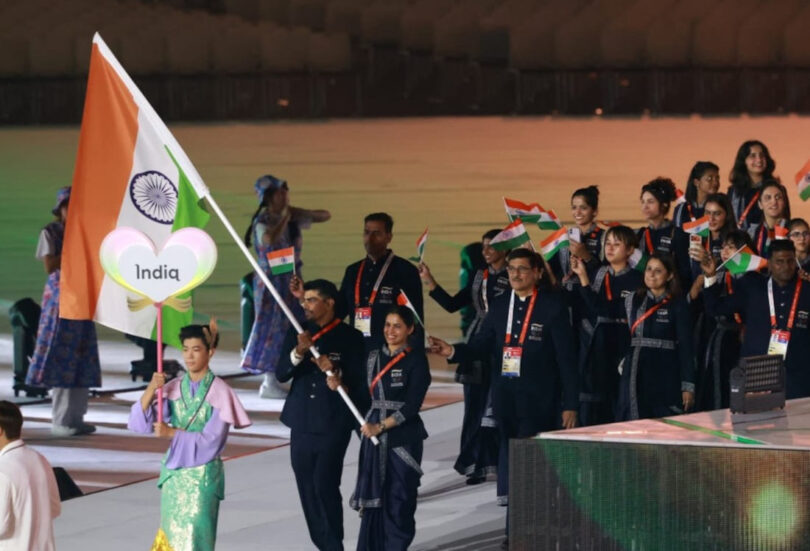
India won a total of 9 medals on the final day (October 3) at the 2026 Asian Games in Aichi-Nagoya, Japan, wrapping up its overall campaign in 4th place on the medal leaderboard, matching Uzbekistan with 21 Golds but taking the higher rank due to a superior silver-medal count. India's final tally stands at 21 Gold, 27 Silver and 37 Bronze medals – an overall count of 85 medals.
India enjoyed a spectacular finish, securing 9 medals in a single day (October 3), which included 5 golds. Key highlights from this final surge included the men's hockey team defending their crown against Malaysia, the men's cricket team defeating Pakistan for the Gold, and standout gold medal victories in wrestling (Aman Sehrawat) and archery. Heading into the final day, India's tally stood at 76 medals on October 2.
While India fell short of its record 106 medals at the 2022 Asian Games (held in 2023 due to Covid-19) at Hangzhou (China), the late-stage surge powered by team sports and historic individual performances stabilized the tally as under:
- Archery – 5 Gold, 2 Silver, 2 Bronze (total 9), swept all 3 compound team titles. Kumkum Mohod won historic Recurve Gold. Overall, Kumkum has won 2 Gold and 1 Silver in the 2026 Asian Games.
- Shooting – 3 Gold, 8 Silver, 4 Bronze (total 15). Neeru Dhanda won individual trap Gold and mixed trap Gold.
- Boxing – 3 Gold and 3 Bronze (total 6). Lovlina Borgohain and Praveen Hooda clinched top honours.
- Wrestling – 2 Gold, 1 Silver, 3 Bronze (total 6). Both Aman Sehrawat and Sujeet Kalakal took Gold.
- Cricket – 2 Gold. Both Men's and Women's teams successfully defended / won Gold.
- Hockey – 2 Gold. Dramatic double gold. Women's team won their first Asiad title since 1982.
- Kabaddi – 2 Gold. Both Men's and Women's teams secured a flawless golden double.
- Golf – 1 Gold, 1 Silver (total 2). Pranavi Urs won India's first individual women's golf gold in 24 years.
- Athletics – 1 Gold, 9 Silver, 14 Bronze (total 24). Highest overall contributor with Gold in the Women's 4x400m relay. Seema Kumari won a historic Bronze in the women’s 10,000m final.
Indian women delivered a phenomenal performance, serving as the definitive driving force behind India’s Gold rush. While a strict gender split for all 85 medals across multi-athlete or mixed events is distributed, women won or co-won 13 out of India's 21 Gold medals. In key sports, the women outperformed their male counterparts: Athletics - India's solitary gold medal came from the Women’s 4x400m relay team; Golf - Pranavi Urs scripted a historic individual gold, whereas the men's side went medal-less in individual golf; Hockey – the women's hockey team broke a 44-year gold drought by defeating China 1-0, while Neeru Dhanda became the first Indian woman to win an individual Asian Games shotgun (trap) Gold.
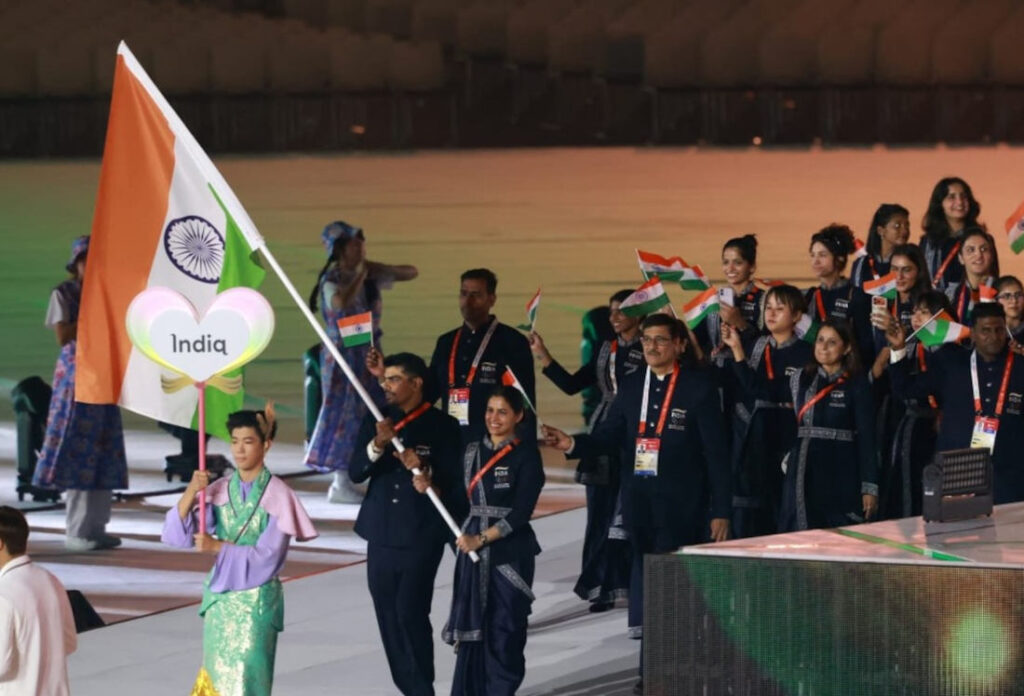
The overall dip from 106 at Hangzhou to now 85 medals can be explicitly attributed to three main sports, which India must analyse to institute corrective measures:
- Shooting - 3 Gold versus 7 Gold in 2022. Total medals dropped from 22 to 15.
- Tennis (0 Medals versus 3 Medals in 2022) - first historic tennis medal drought in 40 years.
- Badminton (1 Bronze versus 3 Medals in 2022. Shuttlers managed just one men's team bronze, drawing an absolute blank in individual categories for the first time in 12 years.
The official list of military athletes across all team and individual events has not yet been released by the Services Sports Control Board (SSCB), yet Indian Armed Forces participants heavily anchored India’s success. Under the Army’s "Mission Olympics" wing, military personnel clinched several of India’s most monumental podium finishes, dominating in boxing, athletics, and shooting. The most prominent, documented medals won by individual military participants include:
- Gold Medals. Havildar Ankush Panghal of the Indian Army created history on his debut by defeating South Korea's Kim Minseong 4-0 (80-kg Boxing), becoming the first Indian male boxer to win an Asiad gold since 2018. Major heavy-lifters, shot-putters and track pacers from the Services pool contributed immensely to India's athletics gold and relay dynamics.
- Silver Medals - Distance runner Gulveer Singh (Indian Army) delivered a stunning double-silver performance on the track in Men's 10,000m and 1,500m). High jumper Sarvesh Kushare (Indian Army) cleared an impressive 2.25m to win Men's High Jump. Veteran thrower Tajinderpal Singh Toor clinched the silver medal in Men's Shot Put. Niraj Kumar (Indian Army), alongside Aishwary Pratap Singh Tomar and Rudrankksh Patil, secured a Silver in Men's 50m Rifle 3P Shooting team.
- Bronze Medals. Satnam Singh and Salman Khan scripted a historic Bronze, marking India’s first-ever Asian Games medal in the double sculls category. Kapil Pokhariya won Bronze medal in Boxing Men's 90kg. Beyond these individuals, multiple service personnel formed the backbone of the Gold medal-winning Men's Hockey and Men's Kabaddi teams.
Finally, India needs to analyse not only the drop in the medals tally compared to performance in the 2022 Asian Games, but more importantly, achievements of much smaller countries in size and population. Perhaps 'Khelo India' and the training schedule of athletes need a review – beyond merely allotting funds and individual sports federations chaired by politicians. Good luck to India for future sports events, including the LA Olympics in 2028.
The author is an Indian Army veteran. Views expressed are personal
More on related topics:
Indian Military in Commonwealth Games: https://www.thestrategicperspective.org/indian-military-in-commonwealth-games/
Colonial Cacophony: https://www.thestrategicperspective.org/colonia-cacaphony/