
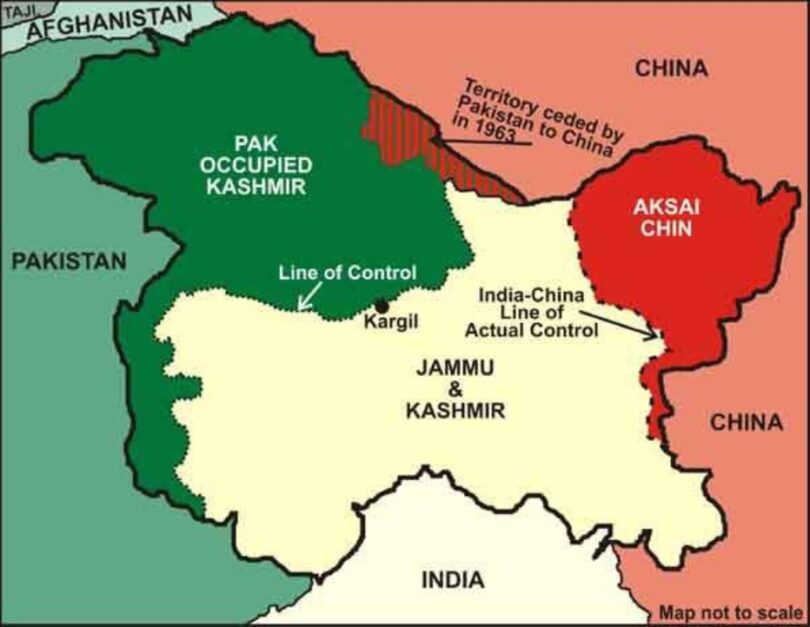
Pakistan occupied Kashmir (POK) is afire amid recent clashes and firing leading to and during the recent regional Legislative Assembly elections held from July 27 to August 10, 2026. Amnesty International and media trackers say at least 40 deaths have been documented; 34 protesters and 6 police/paramilitary personnel.
Local residents/activists and the Joint Awami Action Committee (JAAC) report total death surpassed 50, while India's Ministry of External Affairs MEA) places at least 90 civilians killed since regional crackdown intensified in June 2026. The violence erupted due to intense clashes, long marches, and police firing over governance reforms, daily sustenance, rising prices, high electricity bills, and election-related tensions. Amid internet shutdowns, protesters voiced bullets cannot silence them (https://www.moneycontrol.com/world/burst-of-bullets-can-t-silence-our-screams-brave-kashmiris-challenge-pakistan-army-s-brutality-videoshow-13996946.html).
Facts that led to the creation of POK and China occupied Kashmir (COK) can be read here (https://www.spslandforces.com/story/?id=691&h=Facts-that-Led-to-the-Creation-of-Pakistan-Occupied-Kashmir-West-of-LOC-and-China-Occupied-Kashmir-East-of-LAC).
During a debate in India’s Parliament on August 6, 2019, Union Home Minister Amit Shah said, "When I talk about Jammu and Kashmir, Pakistan-Occupied Kashmir (POK) and Aksai Chin are included in it... Jaan de denge iske liye - we will give our lives for this land” (https://timesofindia.indiatimes.com/india/we-will-sacrifice-our-lives-for-kashmir-amit-shah/articleshow/70549004.cms). In the 2019 pre-election campaign, Uttar Pradesh Chief Minister Yogi Adityanath talked of ending terrorism and revoking Article 370, asserting POK would return to India. On May 18, 2024, during a pre-election rally in Maharashtra, Adityanath said, "It has become difficult for Pakistan to save POK. Let PM Modi become Prime Minister for the third time and within six months POK will become part of India."
Digest this shocking number: ₹2,586 crore
— Saket Gokhale (@SaketGokhale) June 19, 2026
THIS is the amount spent by the Modi govt's own ad agency promoting itself in just 5 and a half years through TV, radio, print, hoardings and digital.
I obtained the full break-up under RTI.
Here’s where ₹2,586 cr of public money… pic.twitter.com/UJqXs3BP6e
Covering response to a RTI, a post on X brings out: the Indian government own ad agency spent INR 2,586 in five and a half years promoting through TV, radio, print, hoardings and digital; digital ad spending increased 10-times from INR 14 crore in 2020-21 to INR 131 crore in 2025-26; print ad spending increase 4-times to INR 338 crore in 2025-26 compared to 2024-2025. This was just one agency of the government.
TV news channels show maximum ads of development schemes featuring Modi and Yogi together; same as national dailies showing full-page ads every day. Many believe Yogi will eventually succeed Modi. But the inside news is Amit Shah is the designated successor of Modi as next prime minister, as and when that happens; whether India switches to presidential form of government and Modi becomes President, or whatever.
In Gilgit-Baltistan (GB), which is part of POK, Shia population plummeted from 80-85% in 1947 to roughly 50% by 2014, reducing further to around 39% by 2025. This systematic decline is attributed to:
- Deliberate Ethnic Flooding. Local human rights advocates and regional think-tanks describe the influx as systematic demographic engineering designed by Pakistan to dilute the region's unique Shia-plurality status. It included shifting Sunni-terrorist camps into GB.
- State Subject Rule Abolished. In 1974, Pakistan revoked the traditional state subject citizenship laws in GB permitting wealthy outsiders (mostly Sunnis from Punjab and KPK) to buy land and settle permanently in GB.
- Sectarian Demarcation. While certain districts like Skardu remain predominantly Shia, heavy non-local migration has successfully turned districts like Gilgit into highly contested, mixed-population zones.
Ironically, none of the Indian governments (Congress and BJP included) took proactive steps to assist a revolt in POK-GB to rejoin India. Pakistan’s state-sponsored targeting of Shias was an ideal situation for India, but our intelligence agencies perhaps didn’t even know or never bothered to contact the leaders of the Shia population, to support them.
Shias form about 10-15% of the Muslim population in Kashmir Valley; unofficial estimates place their numbers around 1.2 to 1.5 million. Shias didn’t join militancy in J&K – same as in Shia-predominant Kargil Sector in Ladakh. During the 1999 Kargil Conflict, Pakistani troops on Ladakh Range in Siachen Sector conveyed they were Shias, India had good relations with Iran and they did not want to fight with India. Still, India did nothing to exploit this even after the conflict was over
Shias in Kargil today are cross with the Centre because: India’s pro-Western stance and intransigence towards Iran; joined Buddhist-majority Leh district to demand implementation of the Sixth Schedule of the Constitution (promised by BJP in 2019) - seeking safeguards to protect tribal land, culture, jobs, and natural resources, demographic influx and land given to corporates without reference to local population; solidarity of Kargil Democratic Alliance (KDS) with the Ladakh Buddhist Association (LBA) against police firing live ammunition in Leh on September 24, 2025 (on protesters demanding Sixth Schedule and local job reservations) killing 4 (including Havildar Tsewang Tharchin of 3 Ladakh Scouts and three youth aged 20, 23 and 25) and injuring 69-70 - face-saving inquiry ordered but none held accountable.
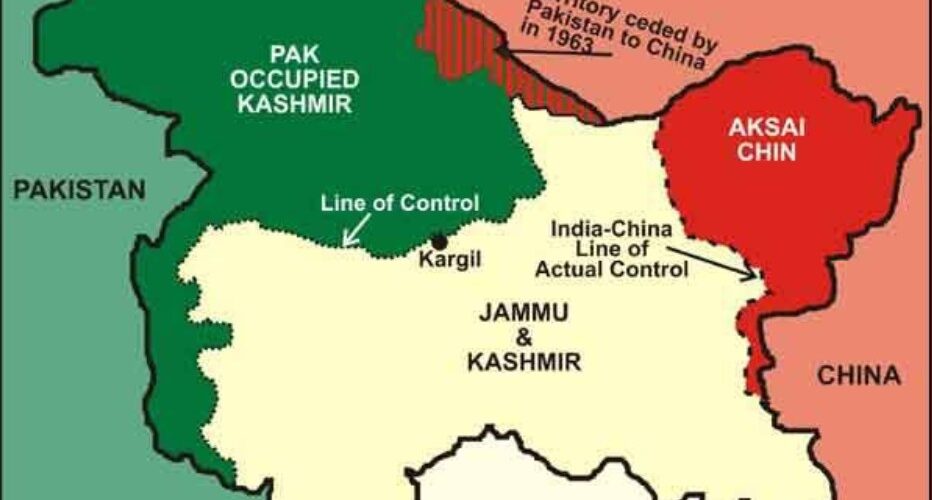
India has been raising Pakistan-sponsored terrorism at every opportunity and every forum. But Pakistan is supported by China, USA, Britain and Turkey. The POTUS Donald Trump calls Pakistan’s army chief Asim Munir his favourite field marshal. India also keeps comparing India with Pakistan, although the World Bank, which classifies 218 global economies every July, bypassing overall GDP size and uses Gross National Income (GNI) per capita calculated via the Atlas method, has classified India in the Lower-Middle-Income tier since 2009 to-date - same category as Pakistan, Nigeria, Bangladesh and Kenya.
India comparing itself with a small country like Pakistan is to showcase a sense of superiority. The focus on Pakistan is also hoping it will disintegrate due to economic fragility – has Afghanistan disintegrated because of this? We fail to acknowledge that both China and the US will not allow the implosion of Pakistan. The US-Iran War has brought Pakistan closer to Iran. Then there is the Saudi Arabia-Pakistan Defence Agreement (SPDA). No doubt Pakistan's total external debt and liabilities stand at USD 138 billion; core Government Debt being about USD 92 billion. The country is running under a USD 7 billion Extended Fund Facility (EFF) alongside a USD 1.4 billion Resilience and Sustainability Facility (RSF). Pakistan expects friendly nations like China, Saudi Arabia, and the UAE to extend the maturity date of approximately USD 12-15 billion in existing loans. Also, foreign remittances brought in a record USD 41.6 billion, serving as the ultimate cushion against expanding fiscal deficits.
We must look deeper into India’s GDP growth termed “massive”; top 1% Indians hold some 40% of the nation's wealth; richest 10% capture about 58% of national income; bottom half of the country lives on 13%. When 1% of the population holds 40% wealth, aggregate demand becomes heavily skewed toward luxury goods, high-end real estate, and capital investments; starving the broader consumer base of the purchasing power needed to drive organic, bottom-up growth. Extension of free foodgrain scheme to over 800 million citizens is an explicit admission of widespread structural distress. GDP adds up all private consumption, government spending, investments, and net exports. It does not measure economic well-being or equity. If a billionaire earns USD 100 million more in a year while 10,000 workers lose USD 1,000 each, the GDP increases by USD 90 million; the economy grows on paper, but the financial security of 10.000 families collapses. Here one is not even talking about undernourishment in India standing at 9.8% of the total population, according to the United Nations' State of Food Security and Nutrition in the World (SOFI) 2026 report; 142.5 million individuals are chronically hungry in India. Chronic undernutrition also means 32.9% of children under five are stunted.
Instead of comparing ourselves with a small country like Pakistan, India should compare itself in the real GDP sense with countries like China and Japan if we want real development. In the World Bank’s country income classifications, Japan stands as a High-Income Economy, whereas China is classified as an Upper-Middle-Income economy.
Pakistani security forces are no doubt facing severe international outrage for using live ammunition resulting in many deaths. Global human rights watchers have asked for independent investigations into the use of excessive force. Politicians in India are saying these are our people and it is time we integrate POK with India. India’s Defence Minister Rajnath Singh has been singing for the past several months, “POK will fall into our lap automatically”, drawing comments he is the Indian version of Newton; sitting under a tree waiting for the apple to fall.
Lack of forethought and spine have been quoted in the past why India failed to retake POK, but the following are among what confronts the Indian hierarchy now:
- Dragon Dilemma. China’s PLA and enterprises have a dual-use military-civil footprint in POK-GB, driven by the USD 65 billion CPEC - military units disguised as engineering troops/security guards. PLA troops have been assisting Pakistani Army (constructing heavy-bunker networks, installing communication arrays and setting up SAMs) opposite J&K. China-Pak military assets in GB are a unified front – complicating the situation for India along the LoC and the LAC. China could open a second front if India’s move to retake POK targets the CPEC/Chinese assets in POK.
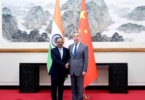
- Diplomatic Default. EAM Jaishankar assured China’s Foreign Minister Wang Yi of India respecting China's sovereignty (Tibet and Taiwan), according to the official Chinese readout. Asked specifically about the assurance on Tibet-Taiwan, MEA evaded the query. Why so when Beijing doesn’t respect India's territorial integrity and sovereignty, asks Brahma Chellaney. Jaishankar is cat’s whiskers in India media but did he speak to Wang Yi that he was misquoted, did the MEA take up the issue officially – obviously no?
- Administrative Void. Like all militaries, the Indian Military would also have offensive plans – including for POK-GB. But has the politico-bureaucratic set up worked out how these areas will be administered after capture – Mr Defence Secretary in-charge of defence policy both in peace and war?
- Polarised Reckoning. Veteran Major General Yash Mor points out that hyper-nationalism, not patriotism, has become India’s the core strategy and foreign policy. But with polarization sweeping across India and maintaining only non-Muslim migrants are acceptable, will the government now accept 6.04 million Muslim population (2023 Census) or more of POK (1.71 million of GB included) while sloganeering these are our people?
Well said 👏
— Gabbar (@Gabbar0099) July 31, 2026
Listen...thank me later pic.twitter.com/IifkhzBFCC
Finally, it appears that India’s Jaishankar-led foreign policy for POK is not much different from the Cockerel Dance at the border with Pakistan. Yet, we may still have another Dhurandhar movie and Xi Jinping is having sleepless nights.
The author is an Indian Army veteran. Views expressed are personal.