
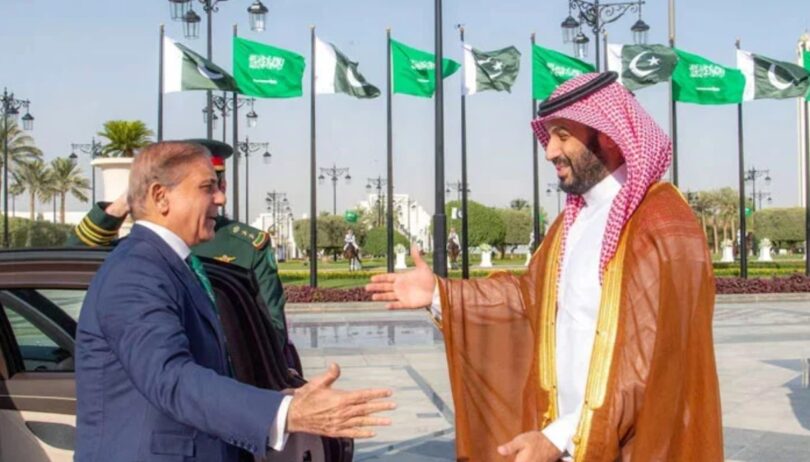

A shift in Saudi Arabia’s foreign policies, risk tolerance and global stance was made evident when Riyadh’s silent intervention to halt Pakistan’s planned $5.5 billion arms deals with African partners came to light.
Two major defence agreements comprising of a $1.5 billion weapons package for Sudan and a separate $4 billion deal linked to eastern Libya, which was expected to cement Pakistan’s emergence as a competitive arms exporter to developing markets came to a halt. These have been held in abeyance post withdrawal of Saudi Arabia’s financial backing and projection of strong opposition.
The Sudan agreement, which has been reported to have reached an advanced stage, included fighter aircraft, drones, and air defence systems. However, since Riyadh’s reluctance to financially back Pakistan, Islamabad is unable to proceed with the deal.
A Pakistani security source summarized the situation, noting that Riyadh had “signalled that Pakistan should terminate the deal after it dropped the idea of financing it.”
With the absence of Saudi funding, the agreement collapsed almost immediately. A similar development may be expected in case of Libya arrangement, which is also under review as Riyadh reassesses its regional commitments.
The following developments project a critical reality: modern arms deals, particularly in emerging markets, are rarely just about supplier and buyer and rely heavily on a complex web of financing, political guarantees, and strategic alignment—factors that Saudi Arabia decisively controls in this case.
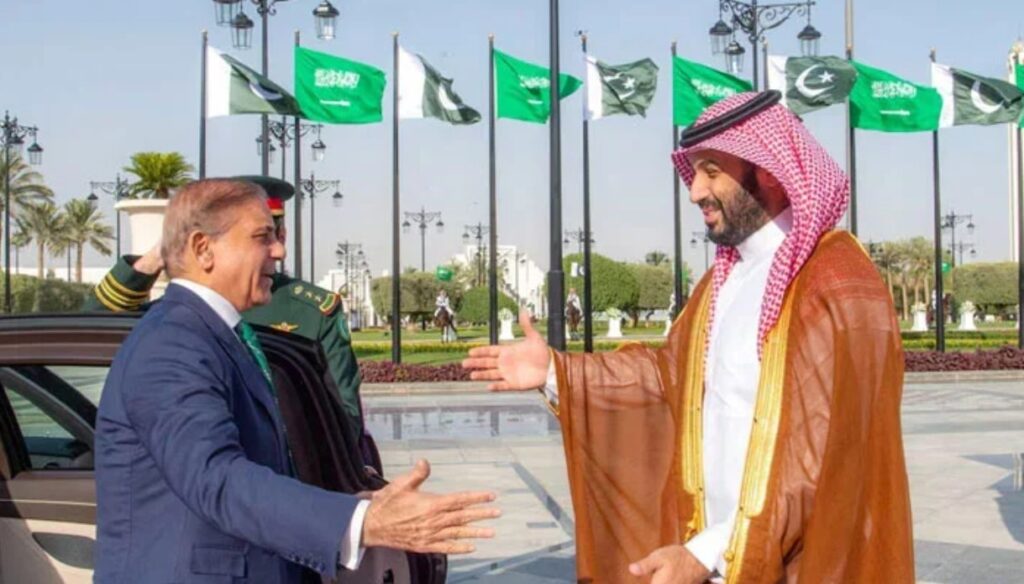
According to reports, even though Saudi officials have not issued a formal public statement, the strategic logic behind the move is becoming increasingly clear.
First, Sudan’s civil war has become extremely volatile with several complex conflicts. The power struggle between the Sudanese Armed Forces and the Rapid Support Forces has drawn in multiple external actors, turning Sudan into a proxy battleground. For Riyadh, deeper involvement with regards to indirect arms transfers will carry significant political and reputational risks.
Western governments have reportedly urged Saudi Arabia to avoid fuelling conflicts in Africa. The kingdom, which has been working to position itself as a stabilizing global actor, appears to have taken that advice seriously.
Second, the decision is also indicative of the growing rivalry between Saudi Arabia and the United Arab Emirates. The two Gulf powers have backed opposing sides in Sudan’s conflict, and further militarization could have escalated tensions into a more direct confrontation. Riyadh’s decision to step away reduces the risk of entanglement in a costly proxy struggle.
Third, Sudan’s position along the Red Sea corridor and its natural resources, specifically gold, makes it a high-value but high-risk arena. Saudi Arabia appears to be processing just how much instability it is willing to tolerate in pursuit of influence.
Finally, ideological and security concerns cannot be ignored. Reports suggesting that elements within Sudan’s military leadership may be leaning toward Iran. This is also a possible factor in raising alarms in Riyadh. These factors can ascertain the shift in Riyadh’s foreign policies.
Given the history of Saudi’s global or diplomatic interactions, Riyadh in the past was eager to utilize its financial backing to execute its influence in the Middle East and beyond. However, in view of the recent development, it is apparent that its approach has transformed to a restrained and more selective one. Riyadh is highly focused on managing risk, avoiding open-ended conflicts, and prioritizing domestic transformation under its long-term economic plans.
With ongoing tensions involving Iran, fluctuating oil markets, and major infrastructure and economic diversification projects at home, Saudi Arabia has bean treading carefully avoiding unnecessary, expensive and uncertain external commitments.
For a cash strapped Pakistan, the implications are significant. Islamabad has been promoting its defence industry as a cost-effective alternative to Western and Chinese suppliers, particularly in markets across Africa and the Middle East. It tried to project the Sudan deal as a breakthrough opportunity, showcasing platforms such as the JF-17 fighter jet, armed drones, and integrated air defence systems.
The collapse of the deal not only represents a financial setback but also makes Pakistan lose its face before potential partners. It clearly points to Pakistan’s dependency on external financing and geopolitical alignment especially with key partners like Saudi Arabia.
The episode also points to Pakistan’s broader economic constraints. Without the ability to independently finance large-scale defence exports, Pakistan is left to the whims of its defence partners or allies to achieve its over ambitious goals.
Besides Pakistan, the ripple effects will also be felt in Africa.
In Sudan, the cancellation of the arms deal could delay efforts by the national army to modernize its air capabilities, potentially affecting the balance of power in its conflict with the Rapid Support Forces. While it may reduce the immediate influx of advanced weaponry, it could also extend the conflict by limiting decisive advantages for either side.
In Libya, uncertainty surrounding the $4 billion deal may alter the calculations of eastern factions, potentially affecting their position or forcing them to seek alternative suppliers.
More broadly, the situation illustrates how external actors continue to shape African conflicts not only through direct involvement but also through financial leverage and arms supply decisions.
Beyond the immediate actors, the episode sends a wider message about the evolving nature of the global arms trade.
Final remarks
Saudi Arabia has emerged not just as a buyer of arms but as a gatekeeper who influences how and where military power is distributed.
Riyadh’s shift away from expansive, interventionist policies has transitioned as a result of a strategic approach focused on stability, risk management, and long-term interests.
In the case of Pakistan, it is a reminder that defence exports are as much about geopolitics as they are about technology.
It is also imperative to mention that in an interconnected world, even bilateral agreements can hinge on the calculations of a third party as seen in the case of Pakistan.
Pakistan’s impecunious state has limited its ability to finance large-scale defence deals.
More on Saudi policies:
Saudi–Pakistani Defence Pact: Operationalizing Hedging and Deterrence in 2026: https://www.thestrategicperspective.org/saudi-pakistani-defence-pact-operationalizing-hedging-and-deterrence-in-2026/
TUSAS Expands Southeast Asia Strategy Through Malaysia Partnerships: https://www.thestrategicperspective.org/tusas-expands-southeast-asia-strategy-through-malaysia/
“Get Your Own Oil”: Trump Blasts Allies as NATO Splits over Iran War: https://www.thestrategicperspective.org/get-your-own-oil-trump-blasts-allies-as-nato-splits-over-iran-war/
Turkey Explores Joining Saudi–Pakistan Defence Pact: https://www.thestrategicperspective.org/turkey-explored-joining-saudi-pakistan-defence-pact/