

The proposed Indo-French Rafale deal for 114 additional Rafale fighter jets costing USD 39-40 billion, covered in these columns earlier (https://www.thestrategicperspective.org/next-indp-french-rafale-deal/) highlighted the following:
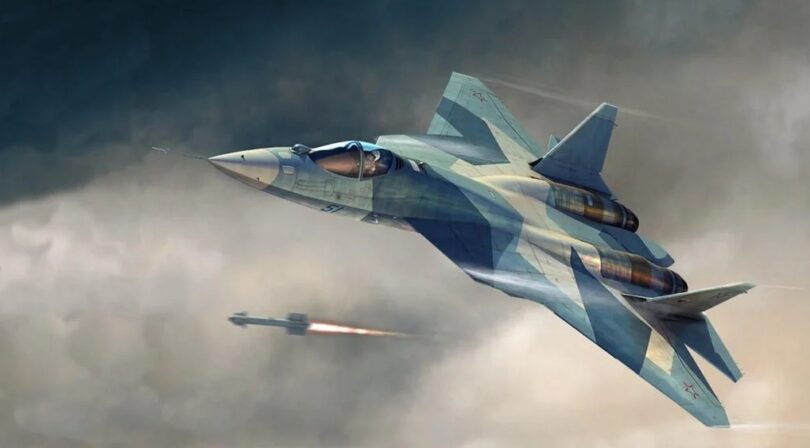
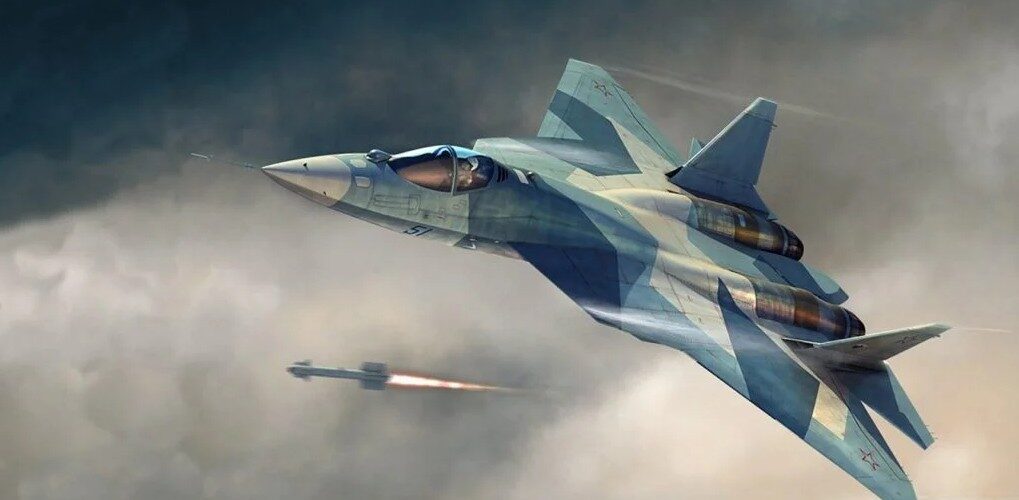
- The India Air Force (IAF) is very much interested in the Su-57 stealth fighter jet for deep-strike roles.
- Russia has said: Su-57 package for India with 100% technology transfer could cost about 50% of what India would pay for the Rafale Multi-Role Fighter Aircraft (MRFA) Deal and existing Su-30 facilities in India can accommodate bulk Su-57E production under Make-in-India.
- India will be paying almost double the cost of what was originally envisaged in the Medium Multi-Role Combat Aircraft (MMRCA) tender in 2012; INR 1.86 lakh crore for 126 Rafales in 2021 versus INR 3.25 lakh crore for 114 Rafales now.
- In 2015, when India signed for 36 Rafales, India’s Defence Minister Manohar Parrikar said Su-30MKI offered a viable alternative, one Rafale costing INR 600-750 crore while a Su-30 and Tejas bought together for the same price. But 36 Rafales cost about EUR 7.25 billion without armaments - about INR 1,500 crore per aircraft.
- The Defence Procurement Board (DPB) has cleared the proposal for 114 Rafales before forwarding it to the Cabinet Committee on Security (CCS).
- The proposed deal envisages importing 12-18 Rafales in fly-away condition and the remaining under Make in India with indigenous components accounting for more than 30% of total content.
- India wants indigenous weapons, missiles and ammunition integrated on all 114 Rafales with Dassault providing secure data links to allow digital integration of Indian radars and sensors; Dassault to make software changes in the onboard computing system.
- According to the French media the package would include: F4 upgrades for 35 Rafales in service with the IAF; at least 24 of 114 Rafales could be F5 standard (expected to enter service after 2030) but these 24 would be manufactured in France, not in India.
The French media mentions F4 upgrades for 35 Rafales in service with the IAF – not 36 Rafales, less the one lost in Op ‘Sindoor’? India is now set to issue a Request for Proposal (RFP) in May 2026, including a mandatory Made in India clause requiring localized production and technology transfer - 18 jets imported and 96 manufactured domestically. This follows approval of the Defence Acquisition Council (DAC) on February 12, 2026.
However, the French have intimated that source codes for the aircraft’s core software would remain under French control - a possible kill switch and upper hand for every future upgrade? Should we accept this? For integration of indigenous weapons in the Rafales, the Ministry of Defence (MoD) plans to include an Interface Control Document (ICD) without access to the source code; it doesn’t look like this will give independent full control to India.
In the above backdrop, D K Sunil, Chairman and MD of HAL made a surprise announcement on April 6, 2026 of license production of the Su-57 in India, saying, “I think presentations have been made regarding the Su-57 to the IAF by the Russian team regarding capabilities of the aircraft. We have had one estimation of the capacity of our plants for the Russian equipment. A committee of Russians has also studied and said that roughly 50% of the facilities can be used for producing this aircraft, but some new investments will be required.” He further said, “We are awaiting the Russian quotation about the investment. Then we will approach the Air Force that these are the kind of numbers required to produce these aircraft and these are the timelines.”
In June 2025, Russia’s Defence Ministry offered India full access to the aircraft’s source code as part of a license production deal, which would place Indian Su-57s in the same league as the Russian military – allowing the same levels of customisation and degree to which they can integrate indigenous technologies. In February 2026, local media reported MoD considering near-term procurement of 40 Su-57s, followed by license production in India; the deal mirroring an earlier one to procure 50 Russian Su-30MKI fighters before deliveries from local production could commence.
According to a former IAF Group Captain, “When you combine the exceptional aerodynamics of Su-57 and the Indian avionics and software to it, you have an airplane much better than the F-35.” It is also believed that a miniaturised variant of the indigenous ‘Virupaksha’ AESA radar currently under development for the Su-30MKI could be integrated onto a local variant of the Su-57.
It is abundantly clear that the Su-57 offer is by far better than the Rafales but there is speculation that negotiations for the Russian Su-57E deal was deliberately delayed to push through the additional Rafales costing USD 39-40 billion. The Rafale, deal no doubt, would offer better kickbacks and enable political machinations; for example. Anil Ambani’s 10-day old company Reliance Defence Limited (RDL), with no experience in jets manufacturing, was made the “offset partner” with Dassault in the first deal. Indian media said Dassault chose RDL but former French President Francois Holland told media that the Indian government wanted RDL as offset partner. Anil Ambani, mentioned in Epstein Files, is adept in establishing multiple companies and then declaring an odd one bankrupt.
India should have gone directly for the Su-57E, which is a far better deal than the Rafales, but for the fear of American sanctions / tariffs. No Indo-Russian defence deal was announced even during the recent visit of Russian President Vladimir Putin to India for the 23rd India-Russia Summit, fearing America’s Donald Trump administration. But by choosing the Rafales instead of the Su-57E, India is ignoring the operational requirements of the IAF amid mounting national security threats, and the serious drawback of Dassault controlling the source codes of Rafales forever. Many nations, including small ones like Spain, have stood up to the US in the current geopolitical environment.
In the case of India, despite all efforts to appease the US, Trump’s blockade of the Straits of Hormuz will damage the Indian economy immensely. Prime Minister Narendra Modi has tweeted that he received a telephone call from his “dear friend” Donald Trump and both discussed the bilateral relationship, as well as the situation in West Asia. But shouldn’t India ask the US to not block Indian ships entering and exiting the Straits of Hormuz because the blockade harms India more than Pakistan and China? US Secretary of State Marco Rubio is visiting India next month to discuss Quad but what about Indian interests being harmed by the US blockade?
Even if the Rafale deal is signed today, F4 deliveries under Make-in-India are expected to commence only from 2030. Additionally, the last delivery of the 114 Rafales is unlikely before 2038. To cover this up, the spin doctors are saying that Russia can offer two squadrons of the Su-57E only after 2030 – in the post Trump era? But they are brushing under the carpet the fact that Russia began Su-57 deliveries to Algeria, the aircraft’s first client, in late 2025, with the aircraft having already entered active service in the Russian military.
But there are poignant questions that must be addressed. Why are we spending USD 40 billion of taxpayer’s money on Rafales (with a better deal at half the price at hand) when the West Asia war shows America’s military might handicapped by Iran’s asymmetric war, and 2020 proved we lack the political will to use force against China?
If this isn’t enough, the government has moved a bill to raise Lok Sabha seats from 543 to 816, and all State Assemblies and Union Territories (UTs) expanding by 50%. This, despite sloganeering ‘Minimum Government, Maximum Governance’ since 2014? A conservative 5-year additional amount costing the taxpayers is INR 40,000–50,000 crore as direct cost, which does not include the MPLAD fund, rent-free bungalows, free train + air travel for life, for self + family, free medical for self + family, INR 31,000/month pension after just one term, dedicated staff, security, vehicles, you name it. Based on analysis of affidavits for the 2024 Lok Sabha elections by Association for Democratic Reforms (ADR), 251 of 543 newly elected MPs (about 46%) face declared criminal cases - 55% increase in MPs with criminal records since 2009. It is on record that all corruption cases against politicians who switch parties to join the political party are dropped altogether. But does India deserve the politician-parasite fraternity to expand exponentially in the manner described above?
The author is an Indian Army veteran. Views expressed are personal.