US Secretary of State Marco Rubio’s visit to India was in interesting times. Rubio had just revealed his strategic wisdom by announcing that Cuba is a national security threat for the US; despite Cuba being 1/80th the size of America and the Cuban Revolution 67 years ago in 1959. Did Rubio smell Cuba developing nukes? Of course, he was buttering the POTUS Donald Trump who dreams of installing Rubio as Cuba’s President - like Reza Pahlavi in Iran and María Corina Machado in Venezuela?
Rubio earned the nickname “Big Boots” wearing oversized $145 Florsheim shoes gifted by Trump, thinking not doing so would displease his boss. There was speculation Rubio was sent to India with the mission to reset relations with India (and reset Quad) after the treatment Trump and his entourage (Rubio and a planeload of billionaires included) received in China by President Xi Jinping – a subtle but firm snub.
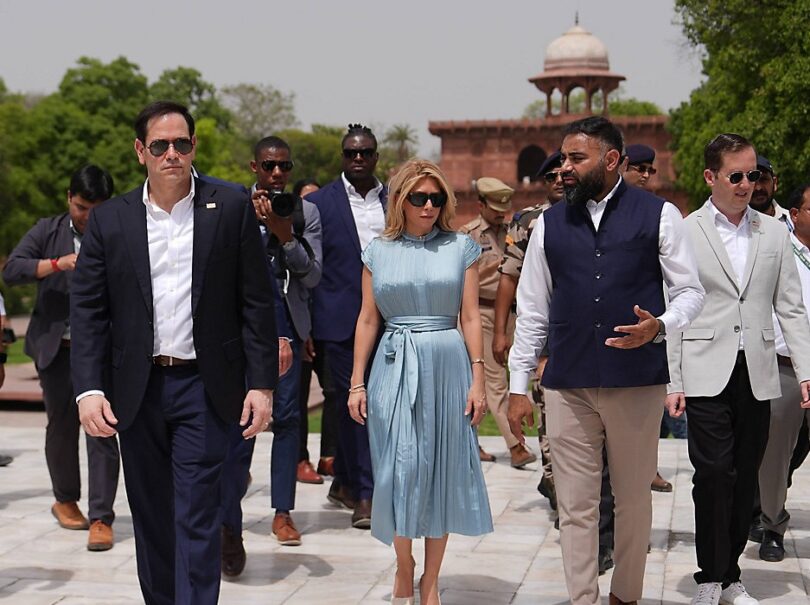
Instead of New Delhi, Rubio first landed in Kolkata, where he was received by US Ambassador to India Sergio Gor, who journalist Seema Sirohi describes as “mini-Trump”. Accompanied by his wife and Gor, Rubio visited two sites connected to the ‘Missionaries of Charity’ in Kolkata; Mother House (global headquarters and tomb of Saint Teresa) and Nirmala Shishu Bhavan (specialized orphanage and children's home), spending over an hour engaging with the nuns and children at these locations.
What the Rubio-Gor duo was signalling to India from Kolkata is not difficult to fathom: cut hate crimes against Christians (https://www.thestrategicperspective.org/modis-christmas-outreach/), stop killing Christians (in Manipur?), don’t hype conversions, don’t pressure missionaries and NGOs - allow them funds by easing FCRA, don’t eye properties and lands of Churches and missionaries, allow construction of churches sanctioned by previous governments, treat Christians at par with other Indian citizens – don’t look down upon them. Rubio’s Christian allies in the US, including Rep. Chris Smith, had urged him to press New Delhi to ease restrictions under the FCRA, which American conservatives claim constrain the flow of foreign funds to Christian charities and churches in India. Rubio may have conveyed this personally to Prime Minister Narendra Modi also.
The NGOs and Christian Missionaries will start playing their game on #FCRA now !
— Adit (@IndicSociety) May 23, 2026
This is the time for the Indian gov to reveal facts about Missionaries of Charity and Saint Teresa, something that was exposed decades ago by Christopher Hitchins pic.twitter.com/8EXyC4H38L
Rubio was also doing damage control for master Trump with mid-term elections coming up; after Trump’s snub to the Pope, Trump dressing up as the Pope, and his pooch, Secretary of War Pete Hegseth saying the Pope shouldn’t interfere in Trump’s policies. But votes matter; about 51 million to 71 million Catholic Christians in the US represent 19% to 22% of the adult population - largest single Christian denomination in the country.
Investigative journalist and author Scott Carney in conversation with Doctor Mike reveals Calcutta (now Kolkata) was the world's largest provider of human skeletons for medical programs until 1980, exporting 60,000 skeletons every year with the largest hospice and orphanage in Calcutta run by Christian missionaries
Calcutta was the world's largest provider of skeletons for medical programs until 1980, exporting 60,000 human skeletons yearly.
— Rishi Bagree (@rishibagree) May 23, 2026
Guess who ran the largest hospice and orphanage in Calcutta at that time?pic.twitter.com/1FYkyOPOzk
It wouldn’t be surprising if the British East India Company engineered the “Black Hole of Calcutta’ incident on June 20, 1756 to export human skeletons. But we have short memories; Britain looted USD 47 trillion from India but today enjoys FTA with us and India is part of the Commonwealth – or rather Common Looted Wealth, while the government selectively harps against colonialism.
Western plans to establish a Christian nation in South Asia by carving parts of India and Myanmar have been circulating. But India has apparently been facilitating Western mercenaries entering Myanmar (with arms and drones) to train and support anti-military junta forces. Then, there was a view that US mercenary Matthew VanDyke, arrested along with six Ukrainians, was also on a mission to assassinate Modi. However, Union Home Minister Amit Shah said these seven are no threat to India. They may have been released since Gor was desperately seeking VanDyke’s release, as was Kiev for the six Ukrainians.
After Kolkata, Rubio reached New Delhi and held discussions with Modi lasting over an hour with EAM S Jaishankar and NSA Ajit Doval in attendance. Since Rubio was on a 4-day visit to India, not a short trip, he should have first held discussions with Jaishankar protocol-wise, which should have been worked out by Jaishankar. But Jaishankar has been spending hours in Gor’s office and residence. As India’s Ambassador to the US. Jaishankar got the ban on Modi’s travel to the US lifted, for which the CIA would have helped him. He was rewarded by being appointed EAM within short-time of retiring as foreign secretary, breaking all norms. His leaning to Washington is obvious notwithstanding overt public show-offs and pretenses.
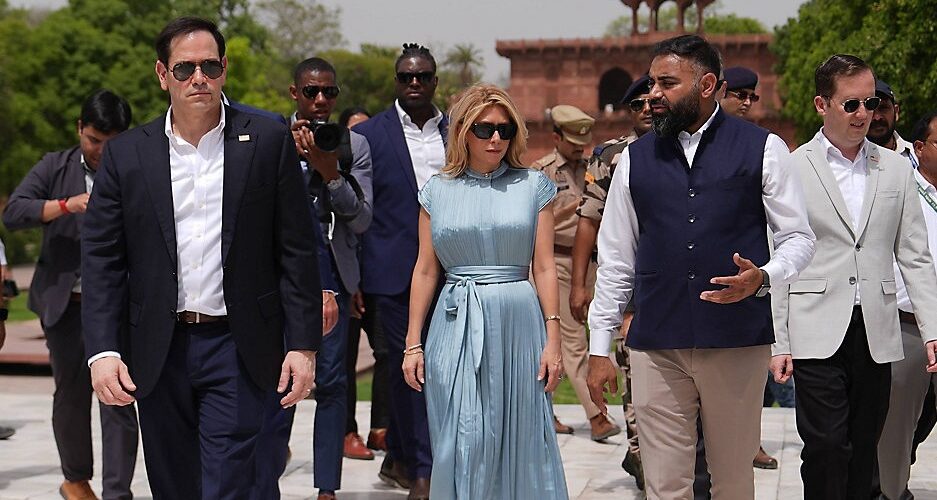
Modi and Rubio discussed the India-US Comprehensive Global Strategic Partnership, issues related to regional and global peace and security and managing international relations. Rubio briefed him on the West Asia crisis and bilateral cooperation in defence, strategic technologies, trade and energy security. He also invited Modi on behalf of President Donald Trump to visit the White House in the near future, according to Gor. Rubio’s visit was amid strained Indo-US relations due to Trump’s tariff policies, targeting specific Indian exports and deliberately prolonging the conclusion of a bilateral trade pact. In his discussion with Jaishankar, Rubio highlighted that the US will give diplomacy every chance in the Iran conflict but stressed that international waterways must remain unconstrained. Jaishankar outlined India’s five-point approach on major regional and global issues: one, India advocates dialogue and diplomacy to address conflicts; two, India supports safe and unimpeded maritime commerce; three, India demands respect for international law; four, India against weaponization of market shares and resources; five, India believes in trusted partnerships and resilient supply chains to de-risk the global economy. But Trump’s game plan is to delay the peace deal (if at all) with Iran, squeezing global energy supplies, force India to primarily import US/US-controlled oil, and giving piecemeal sanctions to India for importing Russian oil.
Rubio and Jaishankar held a joint press briefing after their talks. Rubio said that India is one of the most important strategic partners of the US, expressed optimism about finalizing a bilateral trade deal soon, and said, "I don't view our relation with any country in the world (signalling US-Pakistan strategic ties) as coming at the expense of our strategic alliance with India." He stressed that the Trump administration's trade decisions were of a global perspective to serve the US economy, rather than targeted at New Delhi. Jaishankar said the US-India strategic partnership exists because of a convergence of national interests in multiple areas. He said that Trump’s foreign policy outlook is America First, while ours is India First; not mentioning how India First is malleable under US pressure - reduced to a slogan like our ‘Neighbours First’ policy.
Jaishankar also said India seeks dependable, multiple and cheap energy sources for its 1.4 billion people. He said, "The US fits the bill in many respects. So do some other countries. So, we will continue to diversify and maintain multiple sources of supply at the most reasonable cost." India has been buying American oil at prices Trump wants, oil from Venezuela routed through US channels, and seek US approval to import Russian oil, official denials notwithstanding. Where there is talk of Oman laying a pipeline for India, rest assured the US will sabotage such effort.
Key takeaways from Rubio’s discussions with Modi and Jaishankar include: Rubio stressed that the US and India are not just allies, but strategic allies; America is pushing to support India’s diversification of crude oil and LNG imports to prevent price shocks (bordering strangulation?); despite US tariffs, both sides are discussing the groundwork for potential trade agreements and joint supply chain resilience. Nothing new in all this but when will the Indo-US trade deal be signed with US Treasury Secretary Scott Bessent’s periodic diatribe against India. With Bessent leading a delegation to India shortly, will the US come down from its high horse?
Two howlers brough amusement to Rubio’s visit. While describing the US and India as great democracies and strong strategic personal connection between Modi and Trump, Rubio said India's media is free and independent that is essential for a healthy democracy; this, while India ranks 157th out of 180 countries in the 2026 World Press Freedom Index - drop of six places from its 2025 ranking of 151st. Some buttering by Rubio one must admit. The second howler was Trump’s telephone call to Gor (with Gor holding the speakerphone) during America’s 250th Independence Day celebrations in New Delhi, declaring he is a big fan of Modi, he loves India and India can count on the US 100%
A night to remember! Celebrating America’s 250th birthday with @SecRubio pic.twitter.com/9Pl5dpcUAM
— Ambassador Sergio Gor (@USAmbIndia) May 25, 2026
For many it confirmed Trump’s duality as he had reported a comment on X calling India a racist hellhole just last month
What a SHOCKING U-TURN! 😱😂
— World updates (@itswpceo) May 24, 2026
Trump Called India a “HELLHOLE” Just Last Month…
Now He’s Saying: “I LOVE India! PM Modi is GREAT – he’s my friend!”❤️
Now He’s Declaring: “India can count on me and our country 100%. If they need… pic.twitter.com/Y8c9WgrW6f
and CIA operations/American in India’s immediate neighbourhood, including Nepal, Myanmar, Bangladesh and Sri Lanka.
Interestingly, the “Hellhole” remark pushed Rubio into a corner. Responding to a foreign journalist at the press conference, Rubio said, “Every country in the world has stupid people who say dumb things.” US State Department officials quickly deleted a social media post featuring Rubio response in New Delhi – describing Trump as one of the” stupid people” who say “dumb things” (https://timesofindia.indiatimes.com/world/us/state-department-scrubs-rubios-every-country-has-stupid-people-remark-as-critics-wonder-if-it-applies-to-trump/articleshow/131313181.cms).
Rubio attended the Quad Foreign Ministers’ Meet along with FMs of Australia, India, and Japan on May 26, 2026. The meeting had many firsts: one, it lasted just over an hour because Rubio had set the scheme in advance; two, no date was announced for the Leaders’ Summit; three, the four FMs did not address the press directly after the meeting as has been the convention. Overall, Rubio scored very high on the following counts that would endear him to Trump:
- Rubio signed a major agreement with India to secure supplies of critical minerals and rare earths, including their mining and processing.
- Trump is known to even sell his conscience for REEs, oil and gold.
- India committed to purchase USD 500 billion in US goods over the next five years.
- India committed to the Quad Port Project in Fiji – part of the US plan to convert small Pacific nations into Western outposts against China. What strategic advantage does it give India?
Trump’s attitude towards India in his second presidency has perplexed many. Before Modi went to attend the last Quad Leaders’ Summit chaired by the then POTUS Barak Obama, Trump had announced Modi will meet him. But Modi avoided him despite earlier publicly canvassing for Trump’s second term in Houston.
The author is an Indian Army veteran. Views expressed are personal.