

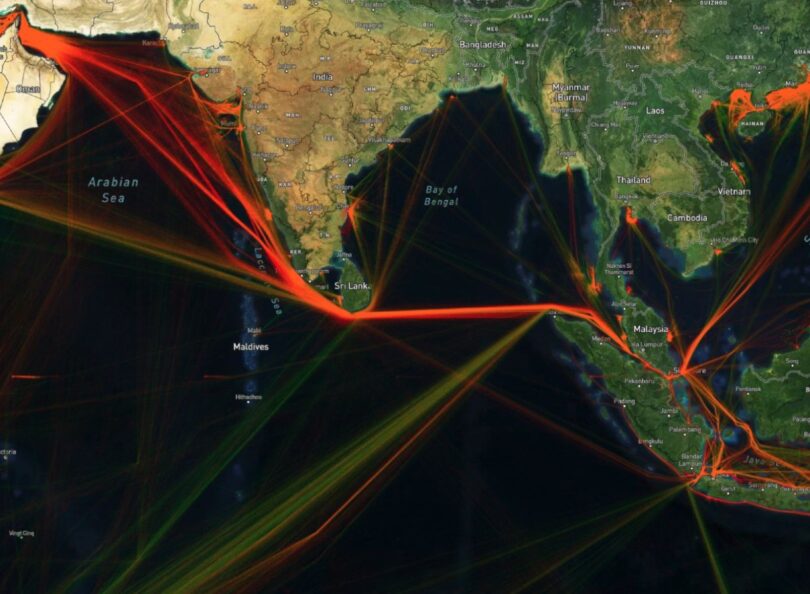

India's strategic response to Chinese pressure with regards to India’s upstream water security on the Brahmaputra can be inferred from its growing focus on the Strait of Malacca. It can be ascertained from the Great Nicobar Island development project, the militarisation of Campbell Bay and Car Nicobar, and the new port partnership at Sabang in Indonesia's Aceh province. These projects are increasingly being read as an asymmetric response to Chinese threats.
The threat comes as a Chinese retaliation against India’s decision to hold the Indus Waters Treaty in abeyance post the April 2025 Pahalgam terror attack. Chinese commentators known to be close to Beijing, most notably Victor Zhikai Gao of the Center for China and Globalization, decided to publicly push the idea that China could retaliate by restricting the Brahmaputra's flow into India, invoking Beijing's position as Pakistan's "all-weather friend."
It is imperative to mention that India cannot easily answer a threat on the Brahmaputra with a symmetrical threat of its own. This heavily depends on two factors, i.e. China's downstream exposure to Indian rivers is minimal, and no treaty binds Beijing on transboundary waters as in comparison to the 1960 treaty which binds India and Pakistan on the Indus.
In that regard India can be expected to build its leverage elsewhere, such as the Strait of Malacca, the chokepoint through which roughly 80 percent of China's oil imports and a large share of its overall seaborne trade must pass. Since India cannot mirror the Chinese threat directly, the Andaman and Nicobar build-up and the new Sabang foothold may be seen as an asymmetric counter-lever against Beijing.
China's Water Warning
Following the 22 April 2025 Pahalgam terror attack, India declared the Indus Waters Treaty in abeyance, with Indian Prime Minister Narendra Modi stating that "blood and water cannot flow together" and Home Minister Amit Shah adding that the treaty would not be restored.
This struck a nerve with Islamabad as Pakistan’s agricultural backbone was susceptible to this threat; approximately 80 percent of its 16 million hectares of farmland depends on Indus basin irrigation, and vital reservoirs like Tarbela were already critically low.
Pakistan's response was to look to Beijing. Victor Gao, Vice President of the Centre for China and Globalization, highlighted this geopolitical vulnerability in an India Today interview. Gao stated that hydro-weaponization, historically observed in rivers flowing from India to Pakistan, could similarly be applied by China against India, directly implying a threat to the Brahmaputra basin.
Gao was explicit in stating that India should conform to reciprocal standards in its regional relations. He indicated that Beijing could leverage its hydropolitical control over India’s north-eastern water systems to support its strategic partnership with Pakistan.
Additionally, China has not shared hydrological data on the Brahmaputra with India since 2022. This cessation of data transmission aligns with a broader strategy of using asymmetrical upstream information as a political tool during heightened bilateral tensions, including the period following the 2020 border escalation.
Beijing broke off even the limited Brahmaputra-related MoU mechanism during the Doklam standoff in 2017. Construction began on the Medog (Great Bend) dam on the Yarlung Tsangpo (Brahmaputra) in July 2025.
As reported, the project is considered among the largest hydropower projects in the world, at a planned 60,000 MW capacity and an estimated cost of roughly $167 billion. It is located close to the area where Brahmaputra river crossing into Arunachal Pradesh comes to be known as the Siang river.
India Cannot Mirror the Threat
The Indus River basin operates under a highly formalized, legally binding treaty the Indus Waters Treaty (IWT), an international instrument brokered and guaranteed by the World Bank. It was signed in 1960 while the Brahmaputra River basin remains a volatile legal vacuum governed only by ad-hoc, voluntary agreements. The IWT establishes exact, quantitative water-sharing allocations, mandates permanent bilateral communication via the Permanent Indus Commission, and then provides structured, multi-tiered dispute resolution mechanisms.
In comparison, the Brahmaputra River basin lacks any multilateral or bilateral treaty framework. The hydropolitical relationship between India and China relies entirely on voluntary instruments. These are restricted primarily to periodic Memorandums of Understanding (MoUs) governing seasonal hydrological data sharing and emergency flood management alerts.
Without any institutionalized or formalized mechanism to resolve conflicts or regulate water volumes, the Brahmaputra basin is vulnerable to unilateral state actions and shifting strategic agendas. Furthermore, China is not a signatory to the 1997 UN Watercourses Convention. Hence China was able to withhold data or flow with limited consequences.
Additionally, the Brahmaputra is reliant on monsoons, so the majority of its flow volume collects from rainfall and tributaries inside Indian territory, specifically in Arunachal Pradesh and Assam, after crossing the Chinese border. The plausibility of Beijing jeopardising the normalisation in India-China relations purely to extract a concession for Pakistan's benefit seems a bit far-fetched, but the scenario threatened by Victor Gao cannot be disregarded either.
Geographically, India is also situated upstream on other rivers into Pakistan. This also mirrors China’s position on the Brahmaputra.
India's actual policy response appears to be silently proceeding by accelerating downstream countermeasures on the Brahmaputra itself such as flood forecasting, the Upper Siang hydropower project, and dam-for-dam infrastructure while building leverage in a theatre where India, not China, holds the geographic advantage - the Strait of Malacca.
While China's leverage over India runs through an upstream river Beijing controls, India's leverage over China runs through a chokepoint India will now sit astride. The Strait of Malacca is a 930-km passage between the Malay Peninsula and Sumatra through which an approximate of 40–50 percent of global trade and 80 percent of China's crude oil imports transit. Chinese strategists have often referred to this structural vulnerability as the "Malacca Dilemma" since former Chinese President Hu Jintao first named it publicly in 2003. Beijing has consistently strived for two decades to build alternatives, which included proposals for a Kra Canal through Thailand and overland pipeline routes through Pakistan and Myanmar.
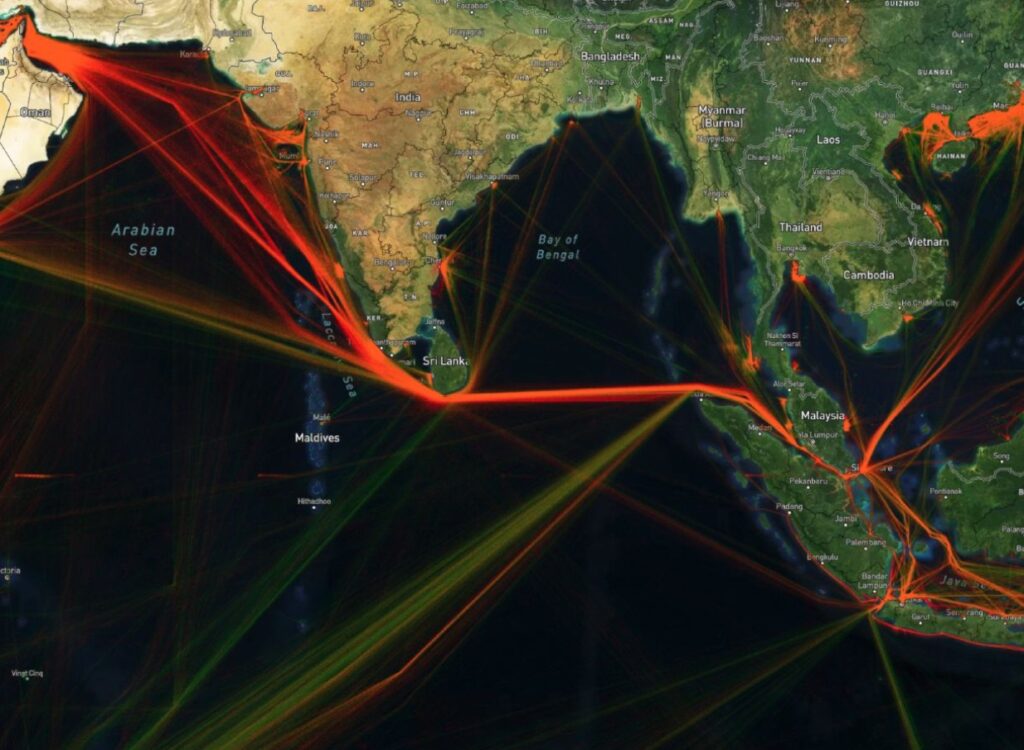
Great Nicobar: the forward operating base for India
India’s $10 billion Great Nicobar Island development project displays a major paradigm shift from a localized economic initiative into a regional forward-defence strategy. The project is located 150 km from the northern gateway of the Malacca Strait. Geographically it is closer to the Indonesian landmass of Sumatra than to the Indian mainland. While the initial blueprint focused on civilian-commercial drivers such as deep-water international container transhipment terminal at Galathea Bay, a greenfield dual-use airport, a power plant, and a comprehensive township, the initiative has taken on an explicitly militarized trajectory.
This is evident through the infrastructural expansion of INS Baaz, India’s southernmost air station at Campbell Bay. The construction of a secondary military-grade airfield, deployment of advanced, long-range radar networks, installation of sophisticated underwater surveillance arrays to monitor sub-surface choke points and the extensive modernization of naval and inter-service communications architectures point to the militarization of the Great Nicobar island.
According to several analysts the 700-km long Andaman and Nicobar archipelago may not merely be viewed as an island territory, but can certainly be conceptualized as an unsinkable aircraft carrier structurally.
The militarization of Great Nicobar Island serves as counter to China’s “String of Pearls” strategy. Beijing has expanded its maritime influence across the Indian Ocean Region (IOR) through its investments in Gwadar in Pakistan, Hambantota in Sri Lanka, Kyaukpyu in Myanmar, and Mongla in Bangladesh. These help China in encircling mainland India and secure Chinese Sea Lines of Communication (SLOCs).
Sabang: the Forward Outpost on the far shore
This week the Modi-Prabowo agreement was formalized to develop Sabang Port on Indonesia's Weh Island. This strategic development will help to extend India's reach to the opposite bank of the Malacca Strait's western approaches. Sabang is located approximately 170 km from India's Indira Point and under 100 miles from Great Nicobar.
This translates to India having a planned infrastructure on both sides of the Strait's mouth. On the basis of the arrangement between India and Indonesia in 2018, there are provisions for Indian naval and coast guard vessel visits, real-time intelligence sharing and joint patrols alongside civilian shipping and connectivity investment. This development swiftly transformed from a commercial port project into a shared maritime security anchor.
Deterrence, Not Escalation
It is crucial to mention that India has not made any official linkage between the Great Nicobar build-up or the Sabang agreement and the Brahmaputra water dispute. New Delhi has indicated that the project in Jakarta supports freedom of navigation and a "free, open and inclusive Indo-Pacific," approach and not as a retaliation against China.South Asians & Diaspora.
Even though not specified, the strategic comprehension of connecting the two theatres is increasingly clear. This frames India's Andaman and Nicobar posture as a structural answer to Chinese upstream leverage rather than a coincidence of geography.
The timeline of developments in Great Nicobar's timeline are evidentiary to India’s strategy which has been steady and consistent, such as environmental clearance in 2022 and the accelerated construction through 2024–2026. These developments can easily be tracked with the deterioration in India-China border relations after 2020 and the emergence of explicit Chinese water threats after April 2025.
India has been cautious and has also avoided provoking a formal Chinese protest over the militarisation of Great Nicobar. Similarly, Beijing has also resorted to silent counter-moves such as port investment across the Indian Ocean from Gwadar to Hambantota to avoid public objection. After the June 2026 disruption at the Strait of Hormuz, the United States has displayed its own operational interest in Malacca, seeking arrangements for a contested overflight clause with Indonesia which would allow it to impose economic pressure on China in a Taiwan contingency without firing a shot. Indonesia, Malaysia and Singapore have consistently resisted subordinating the strait to any single external power's strategic agenda, which is why India's approach in building bilateral infrastructure and quiet naval cooperation rather than seeking basing rights or a formal military pact has gained approval in Jakarta compared to Washington's overt stance.
India's New Strategic Response
India's geographic position is not contestable; the Great Nicobar and now Sabang presents New Delhi with a physical presence at the Strait's most sensitive western approach, backed by expanding naval aviation, radar and submarine-detection infrastructure.
Great Nicobar's port is targeted to handle initial capacity by 2028 while the Sabang arrangement remains closer to an MoU-and-Joint-Task-Force stage than an operational base and has moved slowly since it was first floated in 2018.
India's position offers influence and monitoring, not sovereign control of the Strait, while Indonesia, Malaysia and Singapore remain the littoral states with final say.
As a response to an implicit water threat, the Malacca build-up is not a like-for-like retaliation. The development cannot restore Brahmaputra flow data or physically constrain a Chinese dam; however it does raise the cost of Chinese coercion by presenting India’s structural leverage over Beijing’s unfixable vulnerability.
India's Malacca strategy functions less as a direct counter to Victor Gao's Brahmaputra remarks and more as the maritime component of Indian strategic effort to gather leverage against Chinese coercive tools wherever it can. This adds a new dimension to a cordial but contested relationship which will reflect the outcome based on how quickly Great Nicobar's military infrastructure matures, whether Sabang moves from agreement to operational reality, and whether China responds by accelerating its own alternatives such as the Kra Canal, CPEC's overland route through Pakistan, or expanded port access elsewhere in the Indian Ocean.
The article was first published in South Asia Monitor on 11 July 2026 and can be accessed here.








[…] China’s Water Threats, India’s Malacca Leverage and Growing Indo-Pacific Contestation: https://www.thestrategicperspective.org/chinas-water-threats-indias-malacca-leverage-and-growing-ind… […]