
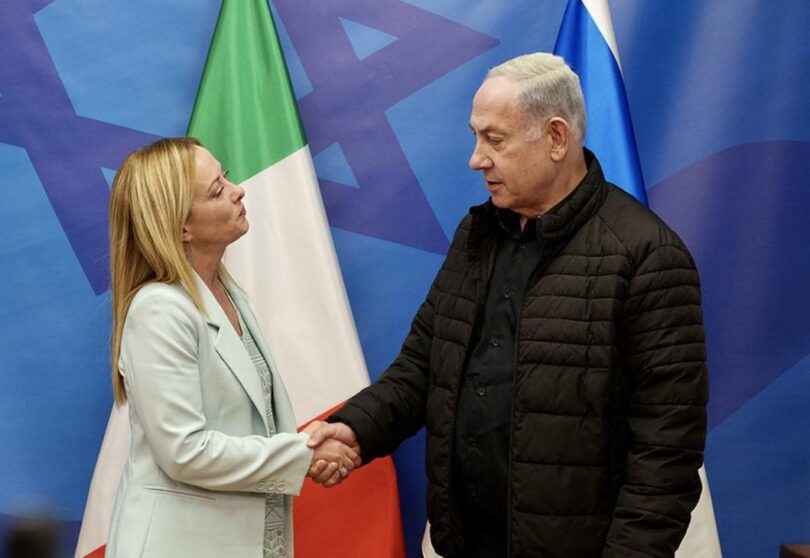

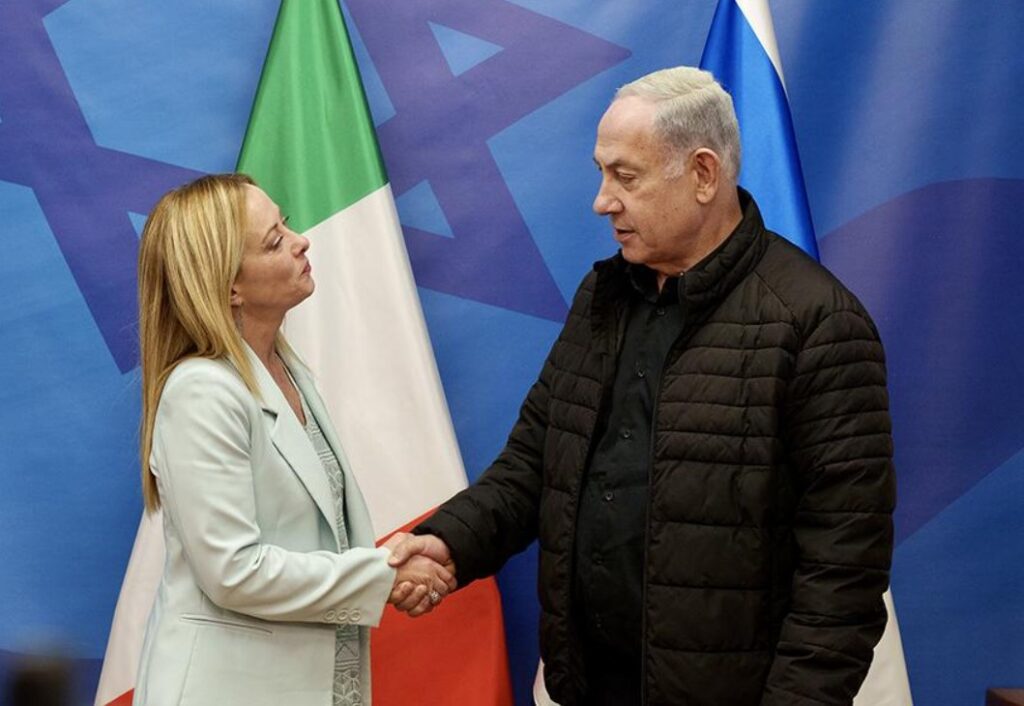
On 14 April 2026, in a decisive measure, Italy suspended the renewal of its 20 year old defence cooperation agreement with Israel. This has become a turning point in European–Middle Eastern security relations.
Prime Minister Giorgia Meloni stated that the “current situation,” involving the Israeli military actions in Lebanon and attacks near Italian UN peacekeeper (UNIFIL) bases as reasons for the discontinuation of the agreement.
In response to Meloni, Israel’s Foreign Ministry downplayed the move, stating that the agreement was an “outdated memorandum” and that its security would remain unaffected.
Additionally, the Italian reaction arrived at the time when a public dispute between Meloni and US President Donald Trump over regional policy and Trump’s criticism of the Pope came to light.
The deterioration of Israel and Italy’s relations projects a possible recalibration of alliances in an agitated volatile geopolitical environment.
A Partnership Built Over Decades
The diplomatic relations between Italy and Israel were established in 1949. Since then, the two nations gradually expanded their cooperation into defence and security. In 2003, the two countries signed a formal defence cooperation agreement that institutionalized collaboration in military training, procurement, and technological development. Following the signing of the agreement, the agreement was periodically renewed. Regular joint exercises, officer exchanges, and coordination between the Italian Armed Forces and the Israel Defense Forces (IDF) were conducted. This agreement allowed both nations to symbiotically reap benefits — Italy’s aerospace and naval manufacturing capabilities, and Israel’s advanced missile systems and defence electronics.
Defence Trade and Industrial Interdependence
Italy supplied Israel with training aircraft such as the M-346, helicopters, and naval systems, while Israel exported advanced missile systems like the Spike anti-tank missile, as well as cutting-edge surveillance and cybersecurity technologies.
Even though the financial scale of this trade appears modest in comparison to global arms markets, its strategic value has been significant. Italy successfully managed to enhance its defence industry’s technological edge and reinforce its role within NATO. In case of Israel, Italy provided a reliable European partner and a portal to EU defence frameworks. The alliance expectedly has been crucial and has served multiple strategic purposes.
The collaboration contributed to regional security, specifically in the Mediterranean, where both countries share mutual interests with regards to stability, counterterrorism, and maritime security. The alliance could be viewed as a convergence of technological, military, and geopolitical interests.
From Strain to Suspension
According to analysis and various reports, the suspension of the agreement on April 14, 2026, did not occur randomly. It can be ascertained that the culmination of unsurmountable tensions since late 2023 had eventually led to it.
The Gaza war, which began after the heinous October 7, 2023 attacks, significantly altered European perceptions of Israel’s military strategy. As reports of civilian casualties in Gaza rose (whether perception or factual) the public and political pressure in Italy intensified. The Italian government decided to react by restricting new arms exports to Israel, signalling its discomfort with the trajectory of the conflict.
In January 2026, a confrontation involving Israeli forces and Italian diplomatic personnel in Jerusalem raised several Italian eyebrows with respect for diplomatic norms. In April, the situation exacerbated when Israeli fire struck a UN convoy in Lebanon which included Italian peacekeepers. Since Italy has long contributed troops to UN missions in the region, this created a rather tense situation.
Hence the response from the Italian leadership led to the current evolving circumstances. Prime Minister Giorgia Meloni stressed that the suspension reflects the seriousness of the situation, while Foreign Minister Antonio Tajani condemned attacks affecting civilians and international personnel.
Israel’s response was relatively restrained.
Conclusion:
It can be concluded that Italy’s move suggests a broader European trend toward asserting independent foreign policy positions, even when they diverge from traditional allies. It can also be comprehended that the defence cooperation is no longer insulated from political and humanitarian considerations or so as it may seem. It may be possible that such a stance by Italy may encourage other EU states to reconsider their own defence alliance with Israel, especially in cases where the domestic public opinion may persist in pressuring governments.
The Italy – Israel relation breakdown clearly displays that defence agreements can become politically contingent, especially when conflicts involve high civilian costs and international scrutiny.
Although Israel is not a NATO member, it is a key partner in the alliance’s Mediterranean dialogue. Italy’s decision could complicate coordination in areas such as intelligence sharing, joint exercises, and regional security planning.
Simultaneously, Italy may seek to reposition itself as a mediator in the Middle East, leveraging its diplomatic credibility after distancing itself from Israeli military actions.
For Israel, the suspension highlights the risks of overreliance on Western partners during prolonged conflicts. It may amplify efforts to diversify defence partnerships, particularly with non-European actors, and to bolster domestic production capabilities.
Defence industries in both nations could face disruptions. Joint projects may be delayed or cancelled, and companies involved in bilateral contracts could experience financial losses. Over time, this could weaken the technological synergies that had developed between the two defence sectors.
It is highly unlikely that there may be a complete breakdown in the relations between both nations despite the suspension of the Italy – Israel defence agreement. Since both countries maintain strong economic and diplomatic ties, it is possible that there may be some room for future cooperation.
It remains yet to be determined if this is a temporary pause driven by immediate tensions, or the beginning of a longer-term realignment in Europe’s approach to Israel.
More on Italy’s diplomacy:
Italy and India Deepen Strategic Defence Ties: https://www.thestrategicperspective.org/italy-and-india-deepen-strategic-defence-ties/