
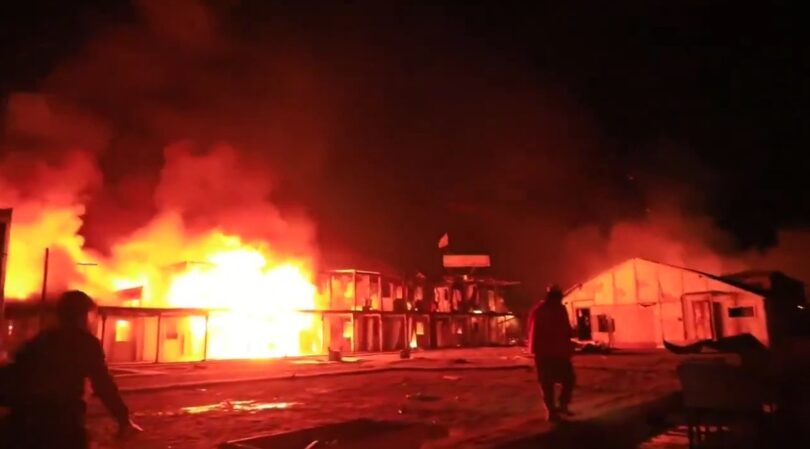

As the tensions between Afghanistan and Pakistan intensified since early 2026, the ongoing conflict between the two nations have transitioned from a proxy war scenario to what Islamabad’s officials have described as an “open war.”
Pakistan has consistently accused Taliban of providing safe haven to anti Pakistan elements such as the Tehrik-i-Taliban Pakistan (TTP) — a militant group waging an insurgency inside Pakistan. Kabul has also systematically denied this, while outlining Pakistan’s incessant strikes on Afghan posts at Durand line as violations of its sovereignty.
There has been tense cross-border conflict in decades, marked by airstrikes, drone warfare, insurgent attacks, and sharply conflicting narratives. The refoulement of the Afghan refugees from Pakistan to Afghanistan have also exacerbated the already brewing tensions between the two nations.
The other factor to be noted is the evolving relation between the Taliban and Pakistan’s arch-rival India. India – once a staunch opponent of the Taliban – has started rebuilding ties with the very regime it had long resisted.
Even though the relationship between the two has not taken the form of a formal alliance or treaty, its depth, timing, and strategic implications have triggered growing alarm in Pakistan, which has started to view India–Taliban engagement as a key factor behind its deteriorating security environment and worsening relations with Afghanistan.
Timeline of Major Strikes and Attacks (2026)
January 2026 – Insurgency Escalation Inside Pakistan
Jan 23 – Dera Ismail Khan (Pakistan), Fidaheen attack kills 7 civilians, injures 25. Pakistan suspects TTP.
February 2026 – Trigger Phase
Feb 6 – Islamabad Mosque Bombing, killing 30 killed in the attack. Pakistan claims links to Afghanistan-based militants; however, Kabul denies any form of involvement.
Feb 16 – Bajaur Attack (Pakistan), Vehicle bombing along with assault on checkpoint. According to reports 11 Pakistani soldiers and 1 civilian was killed. In turn Pakistan has stated to having killed 12 militants. The attack was claimed by TTP.
Feb 22 – Pakistani Retaliatory Airstrikes
Pakistan launches strikes inside Afghanistan claiming to targeting militant infrastructure.
Feb 21–23 – Nangarhar, Paktika, Khost,
Pakistan launches airstrikes on alleged TTP/ISIS-K hideouts
According to Taliban, civilian house hit with 23 killed.
Pakistan claimed to have obliterated multiple militant camps.
Feb 27–28 – “Open War” Phase Begins
Pakistan launches Operation Ghazab Lil Haq with deep strikes in Kabul and Kandahar.
According to Pakistan over 274–297 Taliban fighters were killed while 2–12 Pakistani soldiers killed.
In opposing claim, Taliban has stated that 55–110 Pakistani soldiers were killed in conflict with 8–13 Taliban fighters killed.
March 2026 – Full Escalation
March 7 – Wana Bombing (Pakistan), a roadside bomb kills 4 (including police), leaving dozens injured. TTP are likely perpetrators of the attack according to Pakistani officials.
March 12 – Khost Province (Afghanistan), Pakistani shelling reported with 4 civilians killed, 3 injured.
March 13 – Kabul & Kandahar, Pakistani airstrikes expand to residential areas (Taliban claim), fuel depots (reported targets), killing 6 civilians.
March (ongoing) – Taliban Drone Attacks
Taliban deploy drones against Pakistani targets, signalling technological adaptation and escalation.
Pakistan retaliates with further strikes.
Taliban claims to have attacked army camp in South Waziristan, destroying the Pakistani Command centre. Pakistan has not confirmed the attack.
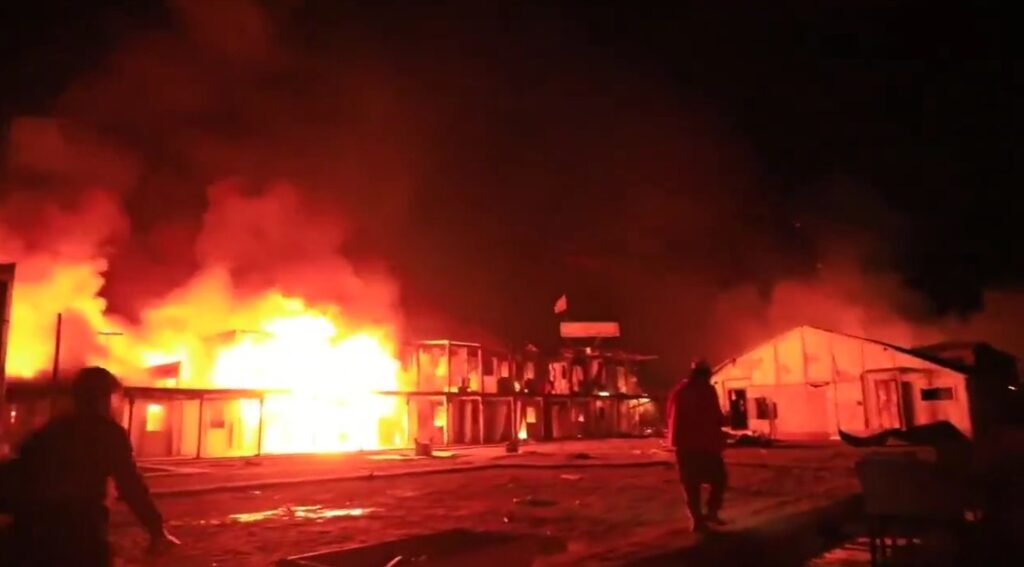
March 16 – Kabul Hospital Airstrike (Major Event)
Pakistani airstrike attacks a drug rehabilitation hospital.
According to Taliban/Afghan authorities 408 individuals killed with 265 injured. According to UN estimate approximately 143 killed.
Pakistan has denied targeting hospital while claiming to strike only militant infrastructure.
Pakistan game plan
Compared to the Taliban, Pakistan boasts of its air superiority and deep precision strikes into Afghan territory. It has stated its objective to target types alleged TTP bases and Taliban military infrastructure. It has claimed to have killed over hundreds of militants, while simultaneously destroying border posts and logistics networks.
Taliban’s Strategy
The Taliban strategy relies on Asymmetric warfare, cross-border raids, fidayeen attacks via TTP or affiliates (as claimed by Pakistan if true) and Drone attacks (new capability).
According to Taliban the Pakistani troops have suffered heavy casualties while there are several civilian casualties owing to Pakistan on the Afghan soil.
Pakistan justifies its Narrative on basis of counterterrorism operations, meant to target TTP infrastructure within Afghanistan. However, its conduct to infiltrate and attack Afghanistan is viewed as aggression and war crime against another nation.
Despite of Pakistan claiming precision on military structures in Afghanistan, satellite imagery suggests that even though many Pakistani strikes hit military-related sites, civilian damage is also documented.
It can be comprehended that conflict has transitioned into state vs. regime warfare with insurgent overlap.
Conclusion
The 2026 Taliban–Pakistan war indicates a bigger rupture in regional alliances, transforming a proxy relationship into direct confrontation.
Unlike the previous Taliban-Pakistan tensions, the current round of conflict has drawn active diplomatic intervention, driven by fears of regional instability, refugee flows, terrorism spill over and disruption of trade corridors.
This pressure may have contributed to a temporary pause in hostilities, though the underlying conflict remains unresolved. Saudi Arabia, Qatar, and Turkey have appeared as primary mediators in trying to facilitate backchannel communication between Pakistan and the Taliban, which may have contributed to a temporary ceasefire during Eid al-Fitr. China has urged restraint to avoid destabilizing a key regional partner bearing in mind the security of Belt and Road (BRI) investments and militancy spilling into Xinjiang
The UN has issued calls for immediate ceasefire, protection of civilians and has provided independent casualty estimates (notably for Kabul strike).
Iran has opposed escalation near its borders expressing concern over refugee influx, instability affecting eastern provinces.
Russia has focussed on Quiet diplomatic engagement in an effort at preventing spread of extremism into Central Asia.
India, though not a mediator but a political influencer, has condemned Pakistani strikes, emphasizing Afghan sovereignty.
Even though both Pakistan and Taliban have agreed to a temporary cease fire, it is understood that both sides have managed to buy time to regroup. The ceasefire is tactical, not strategic.
Taliban seeks recognition of its legitimacy while Pakistan seeks justification hence both may seek adjustments in their narratives and limit certain action to appease the international players.
The major powers do not seek to “solve” the conflict but to contain it.
Final remarks- Despite intense strikes on both sides, no decisive advantage is accomplished by either side. Instead, the conflict is settling into an equilibrium which is determined by retaliation, denial, and an expanding cycle of violence which is potentially expected to threaten the stability of the region.
More on the conflict between Pakistan and Afghanistan:
Heavy exchange of fire at the Chaman (Pakistan) / Spin Boldak (Afghanistan) crossing: https://www.thestrategicperspective.org/heavy-exchange-of-fire-at-the-chaman-pakistan-spin-bodak-afghanistan-crossing/
Iran to Host Pakistan–Afghanistan De-Escalation Talks: https://www.thestrategicperspective.org/iran-to-host-pakistan-afghanistan-de-escalation-talks/
India-Afghanistan Reconnect: https://www.thestrategicperspective.org/india-afghanistan-reconnect/