

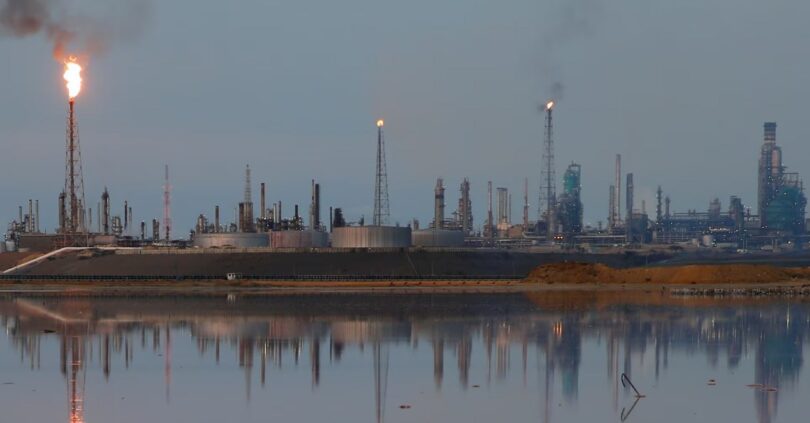

According to recent reports, Venezuela has unexpectedly suspended 19 production-sharing agreements with private oil companies, indicating a major shift in the country’s management of its energy sector as it pursues tighter oversight and renewed foreign investment.
According to the sources cited by Reuters, the suspended agreements cover projects in strategically critical areas, including Lake Maracaibo, the Orinoco Belt, and several mature oilfields.
The contracts involve a wide mix of operators — Chinese, US, South American and domestic Venezuelan firms, a large number of which entered the market during years of US sanctions.
Some of these companies are described as relatively unknown or registered in offshore jurisdictions, raising questions about their credentials and operational capacity.
Joint Review by Caracas and Washington
The suspension may be temporary and not necessarily be permanent. Officials in both Venezuela and the United States are now conducting a joint review of the agreements, with the possibility that some could ultimately be revoked.
“Caracas and Washington would review the contracts and may recommend revoking some of them,” sources told Reuters.
The review is part of an effort to reassess deals signed under sanctions, when Venezuela had limited access to major international oil companies and turned to smaller or less established partners.
No Immediate Impact on Production
Venezuela’s oil output has remained stable at roughly 1 million barrels per day.
State oil giant PDVSA continues to market and sell crude produced under the suspended agreements, ensuring continuity in exports for now.
This suggests the measure is more administrative and strategic than operational at least in the short term.
Legal Reform: Opening the Door to Private Control
The suspension comes just weeks after Venezuela passed reforms to its hydrocarbon law aimed at attracting foreign investment.
Under the new framework:
- Private companies can fully manage oil operations at their own risk and expense
- They must submit business plans proving technical and financial capability
- The Venezuelan state retains ownership of the resources
importantly, the reforms allow foreign operators to control production and sales, effectively weakening the long-standing monopoly of PDVSA.
This represents one of the most significant structural changes in Venezuela’s oil sector in decades and potentially transforming it from a state-dominated system into a hybrid model with strong private-sector participation.
US Backing and Revenue Expectations
The policy shift is taking place alongside increased US involvement in Venezuela’s oil sector.
US Energy Secretary Chris Wright recently indicated that oil revenues could surge in the near term:
“Sales today are over a billion dollars… agreements over the next few months will bring in another $5 billion.”
He also stated that both crude oil and natural gas production could increase significantly as early as this year.
Why Suspend Deals While Seeking Investment?
On the surface, freezing contracts while promoting foreign investment seems contradictory but in practice, the two moves are closely linked.
The suspension allows authorities to:
- Vet companies that entered during sanctions
- Remove underperforming or opaque operators
- Consolidate projects under more credible partners
- Align existing deals with the new legal framework
Due to expropriation risks and sanctions, the attempts to attract investment through production-sharing agreements had limited success, as major oil firms largely avoided Venezuela.
Hence, it may be inferred that with legal reforms and partial normalization, Venezuela may be trying to reset the playing field.
The government has up to six months to review and potentially restructure the suspended agreements under the new law.
At the moment, discussions are ongoing with established international players to expand production in existing joint ventures. This also indicates that Venezuela is prioritizing scale, reliability, and credibility over ad hoc partnerships.
Conclusion
Venezuela’s decision to suspend 19 oil production agreements is about redefining control over its most important industry. By freezing questionable contracts while simultaneously opening the sector to greater private participation, Caracas is attempting a balancing act which is expanding its regulatory control while inviting capital.
More on Venezuela and its oil:
Lessons from the Venezuela Takeover: When Laws Are Irrelevant Without Enforcing Mechanism: https://www.thestrategicperspective.org/lessons-from-the-venezuela-takeover-when-laws-are-irrelevant-without-enforcing-mechanism/
US Capture of Nicolas Maduro and Erosion of Sovereignty: https://www.thestrategicperspective.org/us-capture-of-nicolas-maduro/
US National Defense Strategy and Iran: https://www.thestrategicperspective.org/us-national-defense-strategy-and-iran/