



On 24 July 2025, India and the United Kingdom signed a Comprehensive Economic Trade Agreement (CETA) on during Prime Minister Narendra Modi’s visit to the U.K.
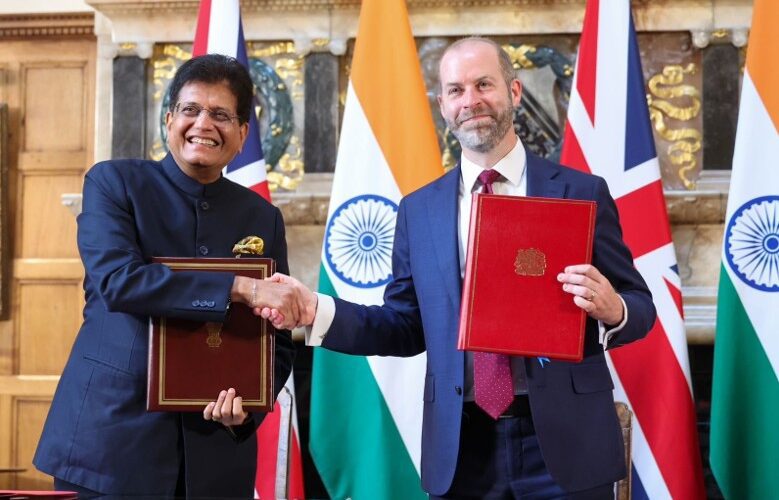
The deal was signed by Commerce Minister Piyush Goyal and his British counterpart Jonathan Reynolds. Both sides have released a reworked and extended cooperation framework, which has replaced ‘Roadmap 2030’ with the ‘India-U.K. Vision 2035’ framework.
The talks with PM Keir Starmer were outstanding, particularly in the wake of the successful signing of the Comprehensive Economic and Trade Agreement. In addition to economic cooperation, this agreement sets the stage for boosting shared prosperity. @Keir_Starmer… pic.twitter.com/PQD1f2zu2M
— Narendra Modi (@narendramodi) July 24, 2025
At Chequers, PM Keir Starmer and I saw an exhibition which gave a glimpse of the strong economic linkages between India and the UK. With the signing of CETA, these linkages will rise manifold.@Keir_Starmer @10DowningStreet pic.twitter.com/lFuvJOIDt6
— Narendra Modi (@narendramodi) July 24, 2025
Bilateral trade currently stands at Rs. 4,83,784 crore (US$ 56 billion), with the expectation to be doubled by 2030.
- CETA will provide duty-free access for 99% of India’s exports to the UK, offering significant benefits for labour-intensive industries such as textiles, leather, toys, marine products, and gems and jewellery. Fast-growing segments like engineering goods, auto components, and organic chemicals are also expected to benefit.
- The services sector, a major contributor to India’s economy, will gain broader market access in Information Technology (IT) services, finance, education, legal services, and digital trade.
- Simplified visa procedures and liberalised entry rules will facilitate the movement of Indian professionals across categories such as chefs, engineers, yoga instructors, and architects.
- Notably, the Double Contribution Convention will exempt Indian workers and their employers from UK social security contributions for three years, enhancing talent competitiveness.
- CETA also promotes access for MSMEs, startups, farmers, women and youth entrepreneurs, and artisans into global value chains.
- It encourages sustainability, innovation, and reduces non-tariff barriers.
- The deal will act as a catalyst for ‘Make in India’, boosting job creation and export growth while preserving India’s core economic interests. With this agreement, India positions itself for a more resilient and expansive role in global trade.