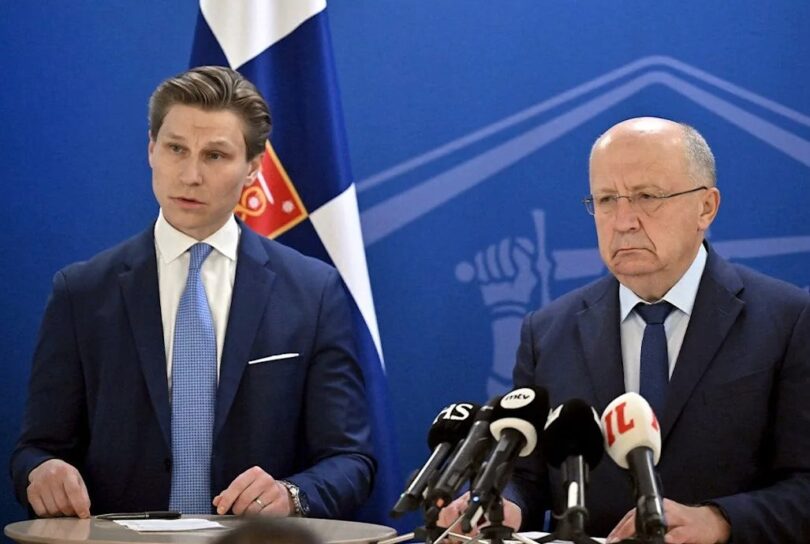

Finland’s decision to repeal its decades-old legal ban on nuclear weapons has disassembled a fundamental pillar of its post-Cold War policy. This transition displays two large developments, transformation in Finland’s defence posture since joining the NATO and secondly Finland’s response to the severe threats and geopolitical developments since the Russia-Ukraine war.
The legislation, approved by Finland’s parliament, removes longstanding restrictions that banned the import, transport, possession, and transit of nuclear weapons through Finnish territory.
It is certain that even though the lift of the ban may not translate to immediate stationing of nuclear weapons on the Finnish soil, it certainly removes any legal obstacles that could have limited NATO operations during a crisis.
Finland has, for decades, systematically balanced deterrence and diplomacy while maintaining military non-alignment despite sharing an 830-mile (1,340-kilometer) border with Russia. The recent development has signalled a fundamentally different strategic direction which seems to be centred on NATO membership, collective defence, and an acknowledgement for Europe’s security environment.
Transition from Neutrality to NATO
During the Cold War and most of the post-Soviet era, Finland sought a policy of military neutrality while maintaining one of Europe’s most capable reserve-based defence forces. The decision helped Helsinki preserve its independence while avoiding any direct alignment with either East or West.
It is apparent that the strategy needed reassessment according to Finland, since the strain from Russia-Ukraine war in 2022.
The conflict seemed to have dissipated the long-held assumptions about European security and triggered a shift in Finnish public opinion. Support for NATO membership increased almost overnight, ending decades of political caution surrounding alliance membership.
In April 2023, Finland officially joined NATO, becoming the alliance’s 31st member and extending NATO’s border with Russia by more than 1,300 kilometres.
The move, according to many analysts, may have been one of the significant geopolitical setbacks for Moscow. Rather than reducing NATO’s footprint near Russia, the war in Ukraine resulted in a major expansion of the alliance along Russia’s north-western frontier.
Removal of the Nuclear Ban
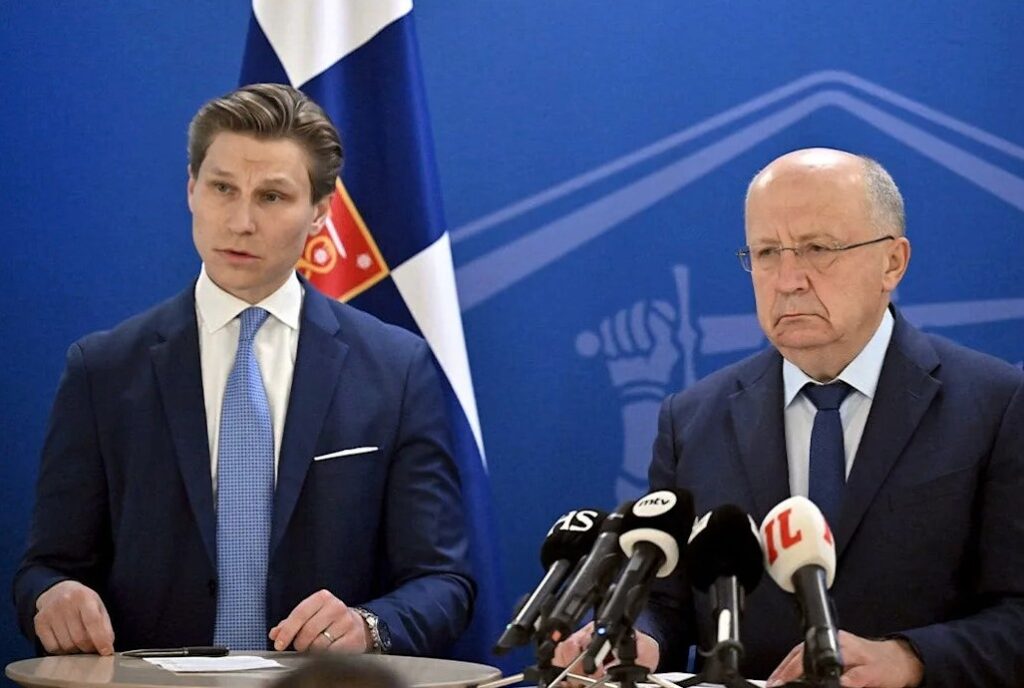
The legislation at the centre of the debate dates back to 1987, when Finland imposed strict controls on nuclear weapons as part of its security doctrine.
According to the Alliance military planners the restrictions on the transit or potential deployment of nuclear assets could create possible complications in regards with collective defence operations. Finnish officials also concluded that maintaining the ban created unnecessary legal uncertainty during a potential crisis.
Defence policymakers have emphasized that the reform is focussed more on strategic flexibility rather than nuclear deployment.
With the removal of the prohibition, Finland is able to ensure that NATO military planning can operate without legal constraints imposed by domestic legislation. In support of the change, many point that deterrence would remain strongly cemented when potential adversaries will be posed with uncertainty about alliance capabilities and responses.
However, the conflicting opinion stresses that abandoning the ban risks increasing regional tensions which could make Finland a more susceptible target in a confrontation between NATO and Russia.
What the Law Actually Changes
The legislation does not authorize a permanent nuclear basing, nor does it require Finland to accept nuclear weapons on its territory. However, it removes legal barriers that previously prevented such possibilities.
President Alexander Stubb and senior government officials have sought to reassure the public that the country’s defence posture remains fundamentally defensive. However, the law does create options that previously did not exist.
NATO now can potentially move nuclear-capable assets through Finland or integrate the country into alliance deterrence planning without running against the Finnish law.
Russia’s Reaction
Moscow has censured Finland’s evolving defence policies. Russian officials have repeatedly criticized Finland’s NATO membership and admonished that any future deployment of nuclear weapons near Russia’s borders would require countermeasures.
Kremlin views NATO’s influence into Northern Europe as part of a broader encroachment on what it considers its own strategic sphere of influence.
The Finnish border lies relatively close to critical Russian military infrastructure, including facilities connected to its Northern Fleet and strategic nuclear forces in the Arctic region. As a result, even symbolic changes in Finland’s security posture have attracted a strong reaction from Moscow.
In reaction to Kremlin, Finnish officials pointed out that Russia’s own actions created the conditions for the policy shift.
The invasion of Ukraine, they stated, fundamentally altered the threat environment and forced Finland to reassess assumptions that had guided its security policy for decades.
The Broader European Nuclear Debate
Finland’s decision is part of a much wider discussion unfolding across Europe.
Since 2022, European governments have largely focused on questions around deterrence, strategic autonomy, and the future of NATO’s nuclear umbrella.
Several countries have increased defence spending, expanded military cooperation, and reassessed policies that were developed during a more stable period.
French leaders have promoted discussions about Europe’s independent deterrence capabilities, while NATO members continue to rely heavily on the United States’ nuclear arsenal as the foundation of alliance deterrence. Several differences were also visible during the Israel, US and Iran war.
Finland’s policy shift highlights this broader trend of a growing willingness among European nations to revisit long-standing assumptions.
More on related topics:
Italy and India Deepen Strategic Defence Ties: https://www.thestrategicperspective.org/italy-and-india-deepen-strategic-defence-ties/
India–EU “Mother of All Deals”: https://www.thestrategicperspective.org/india-eu-mother-of-all-deals/
Investigation ‘Calypso’: EPPO strikes criminal networks flooding EU with fraudulent Chinese imports: https://www.thestrategicperspective.org/investigation-calypsoi-eppo-strikes-criminal-networks-flooding-eu-with-fraudulent-chinese-imports/
Turkey’s Incirlik and NATO security arrangement: https://www.thestrategicperspective.org/turkeys-incirlik-and-nato-security-arrangement/