
India is slated to get three Theatre Commands (TCs) designed to handle geographical and adversary-specific threats; the existing 17 single-service operational commands are to be merged into these TCs. The blueprint, originally drafted under former CDS General Anil Chauhan, is being presented by the current CDS General NS Raja Subramani to Defence Minister Rajnath Singh, following which, it will go for approval to the Cabinet Committee on Security (CCS) headed by Prime Minister Narendra Modi. It is quite possible that PM Modi may announce the formation of Theatre Commands from ramparts of the Red Fort on August 15, 2026. Each TC will bring Army, Navy, and Air Force assets under a single four-star commander to enhance coordination, resource sharing, and multi-domain readiness.
The three Theatre Commands are: Northern Theatre Command (led by an Army officer) – to focus on border challenges with China along the Line of Actual Control (LAC); Western Theatre Command (led by an Air Force officer) - oriented towards the Pakistan border for swift response options and unified deterrence; Maritime Theatre Command (led by a Navy officer) – focussing on India's coastlines, blue-water assets, and Andaman and Nicobar Command (ANC) to protect interests across the Indian Ocean.
Many questions have arisen in the above context. Why are Theatre Commanders service-specific, not rotational as in the ANC – is this a politico-bureaucratic decision? Is Western Theatre Commander from IAF because of Op ‘Sindoor’ and recovering POK appears distant? Does the Northern Theatre Commander from the Army signal lack of intent to use IAF against China? Above all, why have all three Chiefs of Defence Staff (CDS) been from the Army? Why were the 2nd and 3rd CDS appointees retired three-star officers elevated to four-star – to ensure they are under obligation from day one?
The Theatre Commanders are to be on par with the Service Chiefs. A four-star Vice Chief of Defence Staff (VCDS) is a new addition but whether this will be a rotational post is not known. The Theatre Commanders are to have full operational control over all combat forces, The Service Chiefs (heads of the Army, Navy, and Air Force) will shift to a Raise, Train, and Sustain (RTS) role, focusing exclusively on long-term modernization, recruitment, and procurement. This model separates the responsibility of fighting a war from the responsibility of preparing for it. The CDS is to provide strategic coordination across all theatres to align with national priorities. The Theatre Commanders are to report to the Prime Minister and Defence Minister through the CDS. The overall plan is to be implemented in phases over the years – timetable for which has not been announced as yet. The functional divisions (Cyber, Space, and Logistics) will act as cross-cutting enablers integrated directly into theatre operations. Instead of operating in separate single-service silos, these critical specialized divisions are being built out as centralized, integrated service providers via the Headquarters Integrated Defence Staff (IDS).
The proposed TCs fundamentally differ from the US and China. The US focuses on global power projection; dividing the world into six geographic commands (AFRICOM, CENTCOM, EUCOM. PACOM, NORTHCOM and SOUTHCOM), and four commands dedicated to functional missions (SPACECOM, CYBERCOM, SOCOM and STRATCOM) to advance US national interests.
China’s five TCs are oriented toward internal stability and immediate periphery threats; for example, the Eastern TC handles Taiwan/South China Sea and the Western TC handles India. The TCs report directly to the Central Military Commission (CMC) chaired by President Xi Jinping. While ground, naval, and air forces are assigned to TCs, several strategic branches report directly to the national CMC, like the PLA Rocket Force (PLARF), Joint Logistics Support Force (JLSF), Information Support Force (ISF), Aerospace Force (ASF) and Cyberspace Force (CSF).
India’s tri-service Integrated Rocket Force (IRF), for handling non-nuclear, conventional weaponry; to prevent accidental nuclear escalation in crises, is still in the making. The Army has already raised its initial localized rocket force units to extend artillery ranges up to 1,000-km. However, planners are still debating whether the IRF should mature into a tri-service agency (like Cyber and Space) or if its missile batteries should be distributed in the Northern and Western TCs.
A two-star scholar writes: Theatre Commands are not for borders alone – they should to look at threats and interests beyond immediate borders, being an instrument of power projection; the Theatre Commanders should be designated Commander West & Central Asia Theatre (CO-WACA) Commander North & East Asia Theatre (CO-NEA) and Commander Indo-Pacific Theatre (CO-INPAC) – covering an arc of 360 degrees around a circle of 5000-kms from Delhi.
We are told that we are now at the brink of setting up Integrated Theatre Commands. Finally.
— Maj Gen (Dr) Mandip Singh (@Kutch2Kibithu) July 15, 2026
My quarrel is with the way they are being projected in the media.
Western Theatre Command - Pakistan
Northern Theatre Command - China
Southern Theatre Command - Maritime borders…
There is merit in what the General writes, especially when India claims the Global South leadership and championing issues like equitable representation, climate justice, and debt relief for developing nations. Also, India is a global actor through several strategic initiatives and has launched its campaign for a non-permanent seat on the UN Security Council for the 2028–29 term. Suffice to say, we need to start looking beyond our borders in terms of the military.
In the above context, we must get the ball rolling for a full-fledged Tri-Service Special Operations Command. The Armed Forces Special Operations Division (AFSOD), established in September 2018, at best is a stopgap arrangement, which also has not been optimally employed by the political hierarchy; a case of lack of resolve? Ironically, when the first CDS was approached by a military official suggesting reforms in the AFSOD, his response was, “Relax, no one is going to use them.” We need to take on the threats – like holding the bull by its horns.
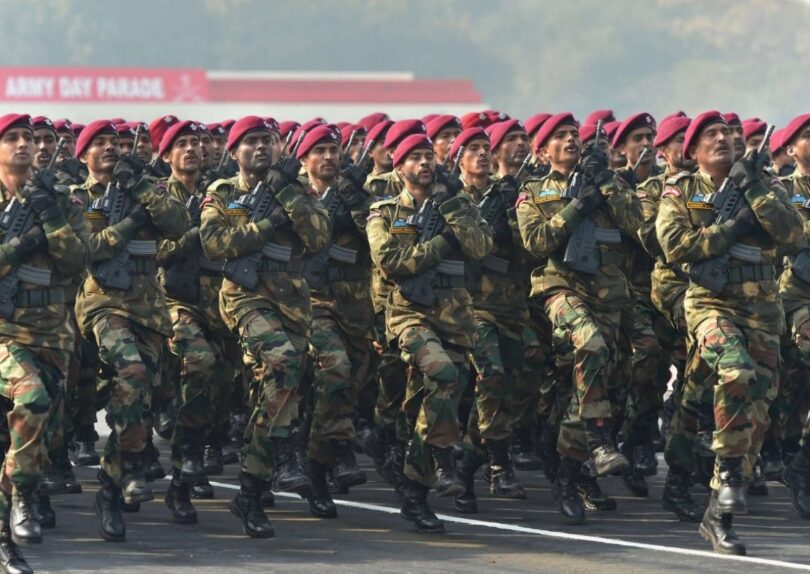
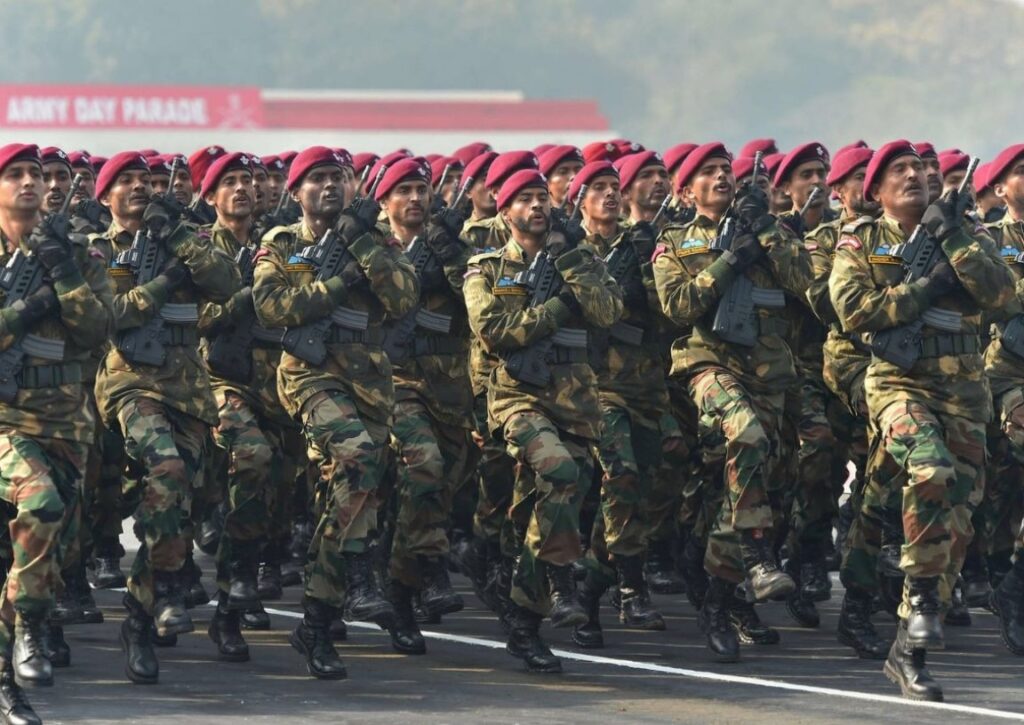
Following receipt of formal government sanction on July 1, 2026, the Indian Army has announced the beginning of establishing Integrated Battle Groups (IBGs). Piloted under the 17 Mountain Strike Corps (Brahmastra Corps), the five new IBGs and a Fire Support Group (FSG) are deploying to enhance rapid response capabilities along the Line of Actual Control (LAC) with China. Key details of IBGs include: Command and Structure - each IBG is a self-contained, brigade-sized combat formation of over 5,000 troops, consisting of 12 to 13 units, with the IBGs commanded by officers of the Major General rank; Integrated Capabilities - unlike traditional brigades that await support and reinforcements, IBGs organically combine infantry, armour, artillery, engineers, air defence, signals, and logistics under a single commander; Rapid Deployment - designed for fast-paced modern conflicts, the units are capable of mobilizing and launching offensive or defensive operations within 12 to 48 hours; Operational Focus – this first batch of IBGs are to bolster operations in sensitive mountainous sectors across the northern and eastern frontiers, with a strong focus on the LAC. These five IBGs and a FSG (also commanded by a Major General) constitutes a major organizational reform designed to eliminate logistical delays and enhance operational speed. By integrating infantry, armour, and artillery into permanent, self-sufficient units, these IBGs aim to provide rapid, precision strike capabilities; while acting as a pilot for broader military modernization – a future-ready force.
The Army has introduced Brigadier-level Chief Operations Officer (COO) for coordinating planning, intelligence, logistics, firepower and battlefield execution. The FSG is to combine long-range artillery, rocket systems, precision strike capabilities and surveillance assets under a single commander; to ensure concentrated firepower in support of IBGs. The overall reforms aim at more agile formations, greater jointness with other services, integration of drones and loitering munitions, expansion of network-centric warfare and decentralisation of command.
Ironically, the pace of India’s military modernization is extremely slow, which reflects poor political decision making, as can be gauged from the following:
- The 1999 Kargil Review Committee had recommended establishment of TCs and appointment of a CDS, which was endorsed by the Group of Ministers in 2001. The TCs are still to be established.
- But the first CDS. General Bipin Rawat, assumed office only on January 1, 2020.
- After Gen Rawat died in a helicopter crash on December 8, the next CDS, General Anil Chauhan assumed office on September 30, 2022 – after a gap of 9 months and 22 days; indicating how important or unimportant the CDS is to the political hierarchy.
- The gap between the 1st and 2nd CDS was used to stop regular recruitment altogether and thrust politically-motivated short-term recruitment upon the military ignoring operational drawbacks and using the media to target military pensions in isolation.
- Establishment of the 17 Mountain Strike Corps was approved by the government on July 17, 2013, but the raising was stalled in 2018 due to budgetary constraints and rethink whether a manpower-heavy corps was suited along the LAC. The project was revived and fast-tracked following the 2020 standoff with China in Eastern Ladakh.
- The Indian Army recognized the necessity of IBGs following the delayed mobilization during Operation Parakram (2001–2002), when it took three weeks to mobilise and lost the window of opportunity and advantage of first moving against Pakistan. But the concept was formally conceptualized and formalized as a distinct doctrine in 2018 by the then Army Chief General Rawat. Eight years later, the first batch of IBGs are coming up. As pointed out by Lt Gen HS Panag, former Northern Army Commander, India is implementing a brigade-centric model nearly two decades after the US Army and about a decade after the PLA.
IBGs of the Brahmastra Corps (having 23 and 57 Divisions) are to roll out in a phased manner; 23 Division will first transform into two IBGs, followed by 57 Div in about two years’ time. This is to ensure there are no gaps in case of any operational need, since the Brahmastra Corps is an active Corps having a very significant mandate. All IBGs will be terrain and sector specific; resources, in terms of equipment, will be determined by terrain, enemy threat and the task. The FSB will be established concurrent to establishment of the IBGs of 23 and 57 Divisions.
IBGs are to form the backbone of the Indian Army’s future operational strategy across all Strike Corps and the refined model would then be extended across the Army’s 42 Infantry, Mountain, Rapid, Armoured, and Artillery Divisions, and 12 Independent Armoured/Infantry Brigades. No date for completing all this has been announced but the speed of rollout and adoption of state-of-the-art technology will be crucial; integral Intelligence, Surveillance and Reconnaissance (ISR), fire support must be integrated into a real-time sensor network, an AI-enabled battlefield management and decision support systems, logistics redesign with predictive maintenance, autonomous resupply, distributed ammunition dumps, and digital inventory management.
Finally, there are several issues that need consideration, some of which are as under:
- Wlii the above military transformation be earlier than or only 2047, as announced during the 2025 Chanakya Defence Dialogue, by then Army Chief General Dwivedi, just because Prime Minister Narendra Modi announced ‘Viksit Bharat’ by 2047 when India completes 100-years of Independence?
- Does a National Security Strategy (NSS) figure anywhere in this transformation? The 2nd CDS Gen Anil Chauhan publicly said. “We don’t need a written NSS.” Was he competing with his predecessor Bipin Rawat publicly calling the IAF a “support service”. Doval was officially tasked in 2019 to chalk out a NSS but more remains to be heard.
- It is being said that IBGs will be primed to strike in less than 24 hours. This needs to be viewed in the context of micro-management and speed of decision-making by the political authority. Our response to the Pahalgam on April 22 was on the night of May 6–7. Following the Galwan clash, Defence Minister Rajnath Singh held an 8-hour meeting at his residence before approaching the prime minister. Allowing IBGs to take the initiative against China to get a slice of territory for political bargaining is good but appears utopian considering our pusillanimous response in Ladakh during 2020. Will IBGs facing Pakistan be reactive considering US-China support to Pakistan, the CPEC, and the and slow-paced territorial gains in the Ukraine War? Is this why we haven’t made any effort to regain POK?
- China’s Western TC has all border forces under command. In our case, the ITBP deployed in the show window of Eastern Ladakh was not under the command the Army before the PLA advanced in 2020 and continues to be the same. Rajnath Singh was the home minister before becoming the defence minister but appears powerless to address this issue. All international borders must be placed under the military. Can the prime minister do so?
The author is an Indian Army veteran. Views expressed are personal.