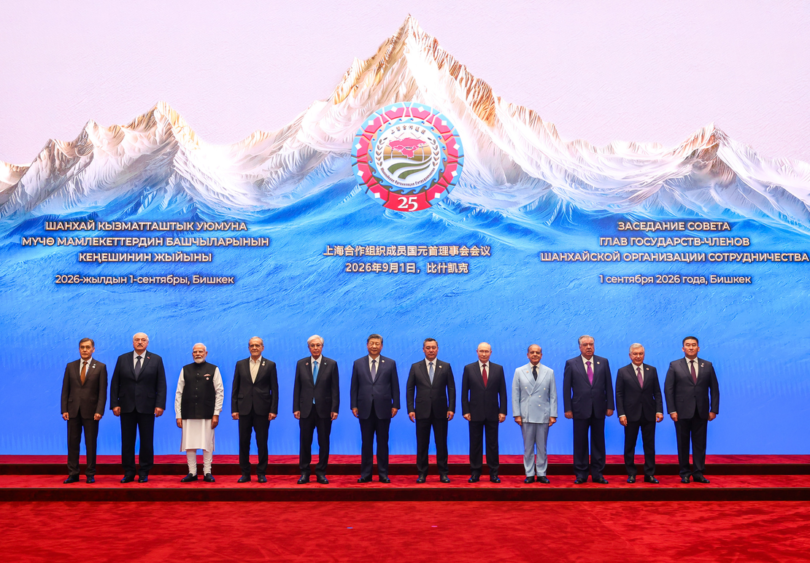
The 26th SCO Summit in Bishkek, Kyrgyzstan, held from August 31 to September 1, 2026, brought together all 10 full member states: Belarus, China, India, Iran, Kazakhstan, Kyrgyzstan, Pakistan, Russia, Tajikistan and Uzbekistan. In addition, an expanded ‘SCO Plus’ session featured the observer states of Mongolia, 16 dialogue/partner states (including Turkey, Azerbaijan, Armenia, and several ASEAN nations), and the UN Secretary-General António Guterres.
Pakistan officially assumed the one-year rotating chairmanship of the SCO Council of Heads of State on September 1, 2026. The transition from Kyrgyzstan to Pakistan took place at the conclusion of the Bishkek Summit; Pakistan will steer the bloc's regional agenda for the 2026–2027 term and host the next Heads of State Summit in Islamabad in 2027.
Chinese President Xi Jinping, addressing the summit, urged promoting the Shanghai Spirit’, heavily targeting Western geopolitical influence. He slammed unilateralism, hegemonism, and Western economic protectionism, stating that they go against the historical trend. Concurrently, he championed the rise of the Global South and called for an equal and orderly multipolar world where global governance is more just and equitable. He urged SCO member states to drive higher-quality regional development and pushed for institutional upgrades to make the bloc more efficient at executing decisions. Xi expressed China's readiness to address both the symptoms and root causes of international hotspots like the Middle East, Ukraine, and Afghanistan through political settlements.
Addressing the summit, Prime Minister Narendra Modi focused primarily on security, terrorism, and diplomacy. With Pakistan’s Prime Minister Shehbaz Sharif seated at the same table, Modi stated that the entire ecosystem of terrorism must be dismantled, including its financing, recruitment networks, and safe havens. He asserted that there is zero room for double standards and that terrorism can never be accepted as a strategic asset or state policy. Modi reiterated India's consistent stance that all modern conflicts and wars must be resolved through dialogue and diplomacy, noting that there is no solution on the battlefield. Modi supported regional economic ties but emphasized that infrastructure and connectivity projects must fully respect the sovereignty and territorial integrity of all nations.
Russian President Vladimir Putin focused on the shifting global order and the fallout from Western pressure. Putin declared that the global shift toward a multipolar world order is now irreversible and framed the SCO as an increasingly powerful pillar of international cooperation. He strongly backed an expanded UN Security Council to grant much greater representation to the nations of the Global South and Global East. Meeting separately, with key partners like Iran's President Masoud Pezeshkian, Putin expressed deep solidarity against Western sanctions and geopolitical pressure, pushing for closer economic and strategic alignment. Also, following sideline discussions with Modi, Putin briefed the media and indicated that Moscow remains open to political negotiation and dialogue to settle regional conflicts.
In his address to the summit, Pakistan PM Shehbaz Sharif warned against weaponizing water for political purposes – in a direct jab at India's management of the Indus Waters Treaty. Pakistan will likely use its 2026-2027 chairmanship of the SCO Council of Heads of State to push narrative changes on regional disputes.
Key highlights of the SCO Summit include: leaders condemned military strikes on Iranian territory alongside Western economic sanctions imposed on some member nations; member nations rejected "double standards" in counter-terrorism efforts and approved setting up a new Universal Centre for Countering Challenges and Threats to the Security of SCO Member States; Xi Jinping announced creation of an AI cooperation centre and committed to 100 joint science projects over the next 3-years; leaders signed a protocol to amend the 2002 SCO Charter, officially adding English as one of the working/official languages; the bloc approved the 2026–2030 Action Plan for the Development of Ports and Logistics Centres; Pakistan’s Lahore City was declared SCO Tourism and Cultural Capital for 2026–2027.
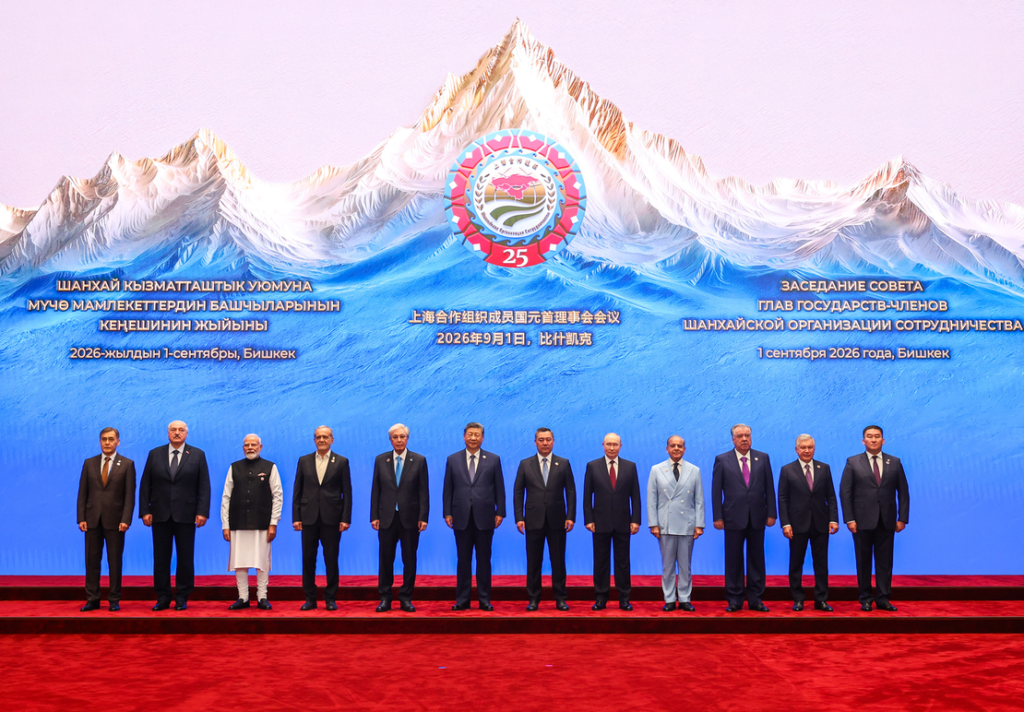
The SCO Heads of State formally signed the ‘Bishkek Declaration’ along with 27 other joint outcome documents detailing regional security, artificial intelligence, climate cooperation, and economic ties, focussed on:
- Members committed to fighting terrorism, separatism, and extremism, rejecting their use for selfish purposes or to discredit official state structures.
- The text condemns terrorism in all forms, rejects double standards and calls for action against the cross-border movement of terrorists.
- The declaration establishes the Universal Centre for Countering Challenges and Threats and an SCO Anti-Drug Centre.
- SCO maintains a non-military stance, excluding bloc-based approaches to regional issues.
- The text addresses recent tensions, including condemnation of strikes on Iranian territory, support for Iran's sovereignty, and expressions of condolence regarding leadership casualties.
- The declaration urges global governance reform for equal state participation and strongly opposes unilateral economic sanctions bypassing the UN Security Council.
- Members emphasized international cooperation to prevent the misuse of digital networks by terrorist groups and coordinate against online extremism and cybercrime.
- Leaders approved adding English as an official SCO language, adopted the 2026–2030 Ports and Logistics Action Plan, and named Lahore, Pakistan, the 2026–2027 tourism capital.
During their bilateral meeting on the sidelines of the SCO Summit, Modi and Iranian President Masoud Pezeshkian primarily discussed the West Asia conflict, maritime trade security, and the expansion of India-Iran bilateral economic ties. This was their first face-to-face interaction since military strikes involving Iran escalated earlier in the year. Modi expressed deep concern over the high tensions in the West Asia region, reiterating that regional conflicts must be resolved through dialogue and diplomacy. He strongly pushed for safeguarding international shipping and freedom of commerce, raising concerns about merchant vessel transit through the Strait of Hormuz, stressing that civilian infrastructure, commercial shipping, and seafarers shouldn’t be harmed. Pezeshkian blamed US-Israel for generating obstacles to regional stability; and reportedly requested Modi to help facilitate a ceasefire and dialogue process. Both leaders committed to expanding their economic ties and agreed to further diversify their bilateral trade.
During their bilateral meeting on the sidelines of the SCO Summit, Modi and Putin primarily discussed the Ukraine conflict, bilateral economic growth, and the upcoming BRICS summit. Modi urged Putin to transition from an endless war to the end of war, asserting that every day of war sets humanity back, reiterating that India stands firmly for peace through dialogue and diplomacy. Both leaders reviewed the expansion of their ‘Special and Privileged Strategic Partnership’, noting a 2.6% growth in bilateral trade, 16% surge in tourism between both countries and discussed welfare of the roughly 40,000 Indian students currently in Russian institutions. They aligned plans ahead of the upcoming BRICS Summit in New Delhi, where Putin will visit India to participate in forum chaired by India. Both travelling together in Putin’s official armoured ‘Aurus Senate’ limousine to the opening ceremony of the World Nomad Games, revived memories of their 15-minute ride together at Tianjin on September 1, 2025, where according to Indian sources Putin saved Modi from an assassination attempt?
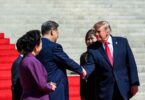
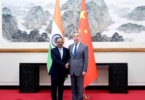
No bilateral Modi-Xi Jinping bilateral meeting took place, and no Russia-India-China (RIC) trilateral meeting was held either. Dispensing with his penchant of huglomacy (hugging-diplomacy), Modi shook hands with both Xi and Putin simultaneously, and had a brief conversation with Xi Jinping. But the dichotomy at the summit and bilateral discussions was more than visible, as under:
- The addresses by Xi Jinping, Putin and Modi highlighted distinct national priorities, balancing counter-terrorism, anti-Western rhetoric, and pushes for a new multipolar world order.
- SCO and other global forums discuss terrorism and denounce double standards, but terrorism has become the currency of power for global powers, particularly for the US that also indulges in economic terrorism. In the instant case, discussing terrorism with Pakistan on the same table, having Chinese, American, British and Turkish support, was more of a mockery.
- Modi’s repeated message that dialogue and diplomacy should replace war is in the backdrop of: US-Israel faking they want peace – neither do; US-NATO-EU using Ukraine as proxy to wage war on Russia; Putin has ruled out talks with Volodymyr Zelensky, calling him a terrorist.
- Modi, emphasizing infrastructure and connectivity projects must fully respect the sovereignty and territorial integrity of all nations, was an obvious dig at the CPEC passing through Pakistan occupied Kashmir. But China cares two hoots. Pezeshkian requested Modi to help facilitate a ceasefire and dialogue process, knowing India’s foreign policy is tilted towards US-Israel and Trump favours Pakistan mediation.
- In 2027, Pakistan will be obligated under SCO protocol to officially invite Modi for the SCO Heads of State Summit in Islamabad. Will Modi attend? Sending a lower-level ministerial delegation could be viewed by Russia and China as India diluting its commitment to the SCO. Can India afford to step back from the SCO, when it relies on the on the group to maintain its deep strategic equities with Russia, protect its security interests in Central Asia, and counter growing Chinese dominance in the Eurasian landmass?
Following the Modi-Pezeshkian bilateral meeting in Bishkek, US Secretary of State Marco Rubio sought to draw a redline between India's right to conduct its own diplomacy and Washington's determination to prevent Iran from rebuilding the economic lifelines strangled by US sanctions. Rubio warned that countries should not help Tehran develop mechanisms to generate revenue that could finance terrorism or its nuclear programme, and those that do could themselves be subjected to US sanctions. This big-booty honcho of Trump was directly signalling Modi. But he had no bellyache when Iran's Foreign Minister Abbas Araghchi attended the BRICS Foreign Ministers' Meeting chaired by Indian External Affairs Minister S Jaishankar in New Delhi in May 2026. Is this because US Ambassador Sergie Gor has posted on X that Jaishankar and Commerce and Industry Minister Piyush Goyal are his favourite ministers – because both are bending backwards to appease him and the Trump Administration any which way?
Jaishankar's visit to Ukraine (and Poland) on September 3-5, 2026 is ostensibly to review trade, economic ties, and infrastructure reconstruction opportunities, focusing heavily on expanding long-term India-Ukraine bilateral relations. More important is carrying Modi's message of replacing war with dialogue and diplomacy. But conveying this to Zelensky, geopolitical prostitute of NATO-EU (through Ukraine's foreign minister) is laughable. Equally amusing is Jaishankar trying to convince this NATO's pooch that stopping purchases of Russian oil would not bring an end to the Ukraine war. The bottom-line is that neither Trump, nor Zelensky want the war to end.
Putin has reiterated his offer to India of the Su-57E jet fighters under Make-in-India, in addition to offering five S-400/S-500 AD missile systems. But the Indian government is scared of US sanctions if it opts for the Su-57E which is superior to Rafale fighter jets and is 50% cheaper. Rafale pilots acknowledge that the aircraft could face serious challenges against genuine 5th-generation stealth fighters like the Su-57E. The hype in Indian media that India will mount the BrahMos-NG on the Rafales of the IAF stands debunked as France is unwilling to release the protected source code and unrestricted interface data governing the aircraft's combat systems. But a post on social media says: "This being the biggest defence deal (Rafale), biggest will be the kickbacks as well."
The next biggest geopolitical event will be the 18th BRICS Head of States Summit chaired by India in New Delhi, India, on September 12-13, 2026. The event will be watched with an Eagle Eye by the Trump Administration. A Modi-Xi bilateral on the sidelines appears a possibility. But will there be a Russia-India-China Heads of State Summit on the sidelines or will India opt to avoid it fearing Trump?
The author is an Indian Army veteran. Views expressed are personal.