

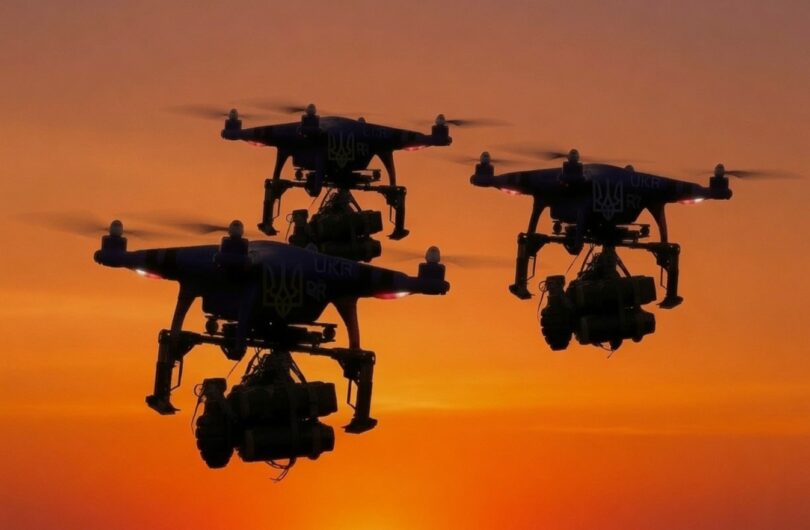

On September 30, 2026, US Secretary for War, Pete Hegseth announced America’s Autonomous Warfare Command (AUTOWARCOM) during his 'State of the Force' address at Marine Corps Base Quantico, Virginia. This newly planned four-star functional combatant command is dedicated to leading the joint US military force in unmanned and autonomous warfare.
With its operational launch date projected as October 1, 2027, the Autonomous Warfare Command is designed to scale, procure, test, and deploy autonomous systems, robotics, and artificial intelligence (AI) capabilities across all branches of the US military. Hegseth described it as a mechanism to drive "the fastest peacetime shift in modern military history" bypassing slow Pentagon procurement cycles.
Until full integration of the Autonomous Warfare Command, Pentagon launched Project 'Agincourt' on September 30, 2026, as a preparatory organizational phase to lay the groundwork, map out command relationships, and develop specialized military career pathways for unmanned systems.
Hegseth appointed Elon Musk to co-lead Project 'Meridian', a closely linked advisory initiative that will heavily influence the strategic direction and technologies used by AUTOWARCOM. Under Pentagon's Chief Technology Officer Emil Michael, Musk and his co-leads are tasked with identifying the exact AI, robotics, drone-swarming, and autonomous technologies the US military must master to maintain global dominance. However, Musk's positioning has drawn public scrutiny over potential conflicts of interest, given that Musk's companies (like SpaceX) hold extensive active Department of Defence (DoD) contracts.
India's approach to autonomous warfare is undergoing an overhaul, having a mix of Israeli Herons, Hermes, and American MQ-9B drones employed for operational-level surveillance. The Indian Army has introduced a layered structural hierarchy: Ashini Platoons; Baaz Battalions; Divyastra Batteries; Shaktiban Regiments; Rudra All-Arms Brigades & Tactical Control Centres - to execute offensive operations while simultaneously coordinating counter-UAS shields against hostile threats.
Unlike the US creating a standalone AUTOWARCOM, India apparently believes that unmanned systems must be deeply woven into existing conventional combat platforms rather than split into an isolated, independent force, as recently articulated by the Chief of the Air Staff, Air Chief Marshal AP Singh. However, the question of whether service-by-service procurement is fast enough is already triggering policy reforms and debate:
- Under the 'Defence Forces Vision 2047' roadmap, India is transitioning toward a dedicated tri-service Drone Force agency overseen by HQ IDS (Integrated Defence Staff) to enforce a unified joint doctrine.
- Disadvantages of uncoordinated drone procurement by the Army, Navy and Air Force. The Delegated Financial Powers to Defence Services (DFPDS-2026) has given procurement powers to regional Command Headquarters across all three services, bypassing long bureaucratic backlogs.
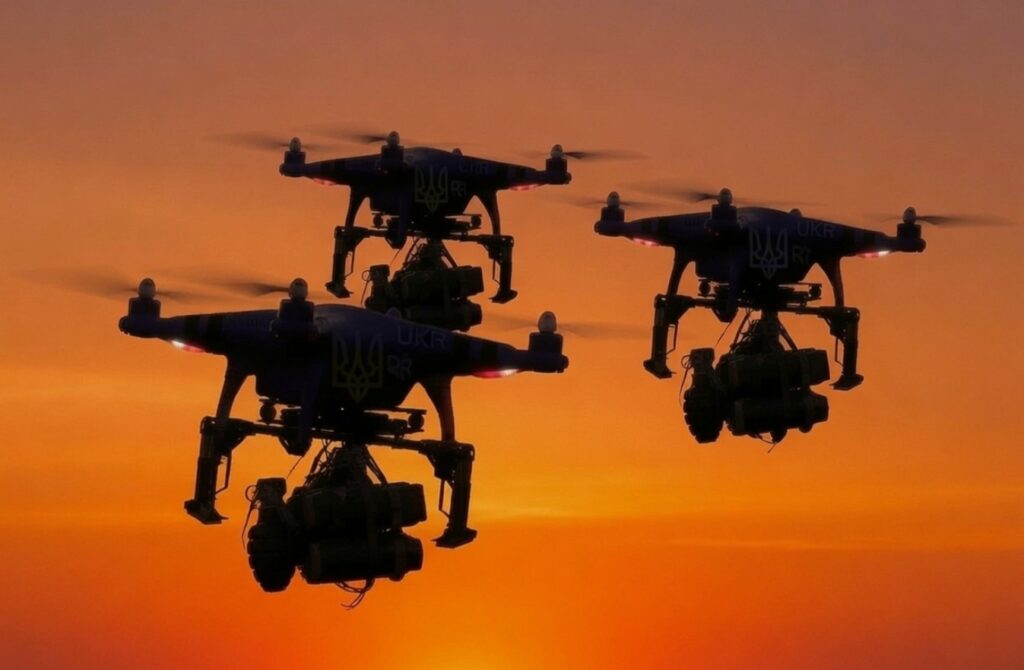
Ukraine is the first nation in global military history to establish an independent, exclusive branch solely dedicated to uncrewed and autonomous warfare. In early 2024, Ukraine officially launched the Unmanned Systems Forces (USF), operating as a distinct branch of the Armed Forces of Ukraine alongside the Army, Navy, and Air Force. The Kiev headquartered USF manages dedicated drone brigades and regiments (like the 414th and 412th Unmanned Systems Brigades) spanning aerial, maritime, and ground robotic systems. The branch accounts for over 35% of all verified Ukrainian military engagements. Ukraine's autonomous edge is rapid, soldier-feedback loop, dirt cheap AI terminal guidance modules.
China views AI and automation as the foundation of future combat - a concept they term 'Intelligentized Warfare'; under which the PLA is rewiring its existing branches and educational structures. As part of restructuring military academies, China has established the 'College of Unmanned and Intelligent Engineering', designed to institutionalize autonomous tactics and train specialized drone commanders. China focuses heavily on AI-driven swarm intelligence and automated task allocation. State-run defence firms have been holding public demonstrations of swarm drone systems. China's autonomous edge is its massive commercial manufacturing base and large-scale autonomous AI-enabled drone swarms.
Russia manages autonomous warfare by directly embedding AI capabilities into its traditional Reconnaissance-Strike Complex (RSC), rather than separating them into an exclusive branch. Russia tests and refines its uncrewed systems by embedding them within standard combat echelons. To bypass western tech sanctions and battlefield jamming, Kremlin has prioritized 'supervised autonomy', wherein loitering munitions (like the upgraded Lancet and Gerbera platforms) use onboard machine vision to navigate GPS-denied zones and autonomously identify and strike targets without needing direct human input during the final attack phase. Russia's autonomous edge is its high-powered electronic warfare and automated targeting in GPS-denied spaces.
India faces a multi-front threat across completely divergent topographies; from the ultra-high-altitude ranges of Ladakh and Arunachal Pradesh to the plains and maritime reaches of the Indo-Pacific. India's Autonomous Warfare Doctrine, therefore, must encompass a Multi-Front Autonomous Strategy with the following three tiers under it:
- High-Altitude Tailoring. Systems designed for the plains fail in the thin air of the Himalayas. Recent successes, such as testing the indigenous Vijay-Z1 UAV at 14,000 feet and deploying specialized FPV drones via domestic robotics firms in Ladakh, show how sub-zero, low-density air requirements must dictate the hardware architecture. India must mandate continuous rigorous high-altitude trials.
- Algorithmic Counter Warfare. To counter China’s massive manufacturing superiority, India cannot simply match them drone for drone. Instead, India must prioritize an interconnected AI-powered kill-chain, wth an early completion date (2027) where localized, automated sensor-to-shooter loops detect, track, and neutralize adversary swarms using low-cost Directed Energy Weapons (DEWs) and hard-kill counter-UAS networks before they breach the border.
- Sovereign Technology and Testing. As formalized by the recent Ministry of Defence (MoD) drone security frameworks, India must mandate full access to the source code, firmware, and flight controllers of every deployed drone. To prevent geopolitical adversaries from leveraging backdoors in imported sub-components, India must maintain an entirely Indian-controlled orchestration layer. AI decision-making models must be stress-tested in localized digital twin simulations before equipping frontline soldiers.
Finally, India is obviously monitoring the changing geopolitics and the increasing autonomous capabilities that can threaten India. Managing autonomous warfare would naturally be what suits India, but we could still learn lessons from the following:
- Success does not lie simply in buying the best drone, but in building an institutional ecosystem that connects frontline operators, software engineers, and private manufacturers to rapidly build, iterate, and deploy cheap systems at scale. Institutionalised pacing is why the US is going for an Autonomous Warfare Command.
- On a heavily jammed battlefield, radio and GPS control links are immediately severed. Drones cannot rely on foreign cloud architectures. India could adopt China’s advanced swarm algorithms and Russia's terminal onboard machine-vision autonomy so that the drones can autonomously navigate, target, and strike even when entirely air-gapped and jammed.
- In modern conflicts, 'mass' becomes a capability of its own. India must foster a commercial-military pipeline (similar to Ukraine's 'Brave1' marketplace) to manufacture millions of cheap, expendable FPV drones, preventing sophisticated, million-dollar air defence missiles from being bled dry, with massive drain on economy and production.
The author is an Indian Army veteran, Views expressed are personal.
More on drone warfare:
Turkey-Egypt Agreement to jointly produce VTOL drones in Cairo: https://www.thestrategicperspective.org/turkey-egypt-agreement-to-jointly-produce-vtol-drones-in-cairo/
MoD clears big arms deals, including BrahMos, armed drones, worth Rs 67,000cr: https://www.thestrategicperspective.org/mod-clears-big-arms-deals-including-brahmos-armed-drones-worth-67000cr/
The Nag, Spike, Javelin Triangle: https://www.thestrategicperspective.org/the-nag-spike-javelin-triangle/
BrahMos Fire Control Systems and Launchers for the Indian Navy: https://www.thestrategicperspective.org/brahmos-fire-control-systems-and-launchers-for-the-indian-army/
The AI-Human Mashup: https://www.thestrategicperspective.org/the-ai-human-mashup/