
Speaking on India’s SpaceTech Lift-Off And The Race To 2047 at the IndiaAt100 Summit on August 21, 2026, Pawan Goenka, Chairman IN-Space said that the Indian Space Research Organization (ISRO) would no longer manufacture routine launch vehicles (rockets) or routine satellites; instead, this production work would completely move over to the Public Sector Undertakings (PSUs) and private companies (https://www.businesstoday.in/india-at-100/video/indiaat100-dr-pawan-goenka-on-indias-spacetech-lift-off-and-the-race-to-2047-550682-2026-08-21). Goenka's statement raised serious concerns among ISRO employees and staff of the Department of Space (DoS). Nine employee associations representing roughly 5,000 ISRO wrote a formal joint letter to ISRO Chairman V Narayanan, demanding a written clarification over the government's aggressive privatization of ISRO; worried that ISRO’s hard work and taxpayer-funded technology were being handed over, potentially shrinking ISRO into a small research-only lab and threatening jobs. Employees expressed deep anxiety that transferring core manufacturing and technology rights for rockets like the SSLV, PSLV, and LVM3 will dismantle the agency’s operational capabilities, shrinking it into a minor “residual R&D boutique”. While the DoS staff clarified they do not oppose private sector participation, they expressed deep concern that phasing out core engineering and launch operations will freeze career advancements, stall promotions, and halt future recruitment.
Preceding the above development, 100–120 scientists resigned and left ISRO in June-July 2026, raising concerns over the loss of specialised institutional expertise. The reasons being cited were private aerospace startups offering double or triple the remuneration, plus lucrative corporate benefits and stock options; bureaucratic project delays, centralised decision-making and restricted senior roles creating workplace frustration in ISRO; senior researchers expressing innovative ideas could be executed and commercialised much faster in private-sector environments. But this is not all; forced dislocations to places like Lucknow and Chennai, etc., disrupted niche expertise and family lives causing frustration. The most affected reportedly are the UR Rao Satellite Centre (URSC) in Bengaluru and the Vikram Sarabhai Space Centre (VSSC) in Thiruvananthapuram.
In response to losing top-tier project directors and engineers from flagship programmes, including the Gaganyaan human spaceflight mission, Chandrayaan-3, and SpaDeX, the Department of Space (DoS) has issued instructions that resignations or voluntary retirements from scientists on flagship missions of ISRO must now route through DoS for final review. But the ironic part is that this was allowed to happen in the first place – where is the accountability? ISRO functions directly under DoS, which in turn is under the Prime Minister's Office (PMO), with the PM assisted by Jitendra Singh, Union Minister of State (MoS) for the DoS. Jitendra Singh is the same minister who, while cutting out the Army component from the Survey of India (SoI), publicly said, "Army officers are useless." Incidentally, SoI has never conducted surveys of areas along the Line of Actual Control (LAC).
ISRO suffered consecutive, high-profile failures of its Polar Satellite Launch Vehicle (PSLV) in May 2025 and in January 2026. NSA Ajit Doval's report on these twin failures, after visiting the Vikram Sarabhai Space Centre (VSSC) to personally review quality logs, manufacturing pipelines, and rule out possibilities of external interference or insider sabotage, were not made public; indicating all was not well in ISRO even as government ruled out sabotage. This was perhaps also because making the report public could expose manufacturing vulnerabilities or strategic capabilities to adversaries. The immediate fallout was: grounding of the PSLV fleet; destruction of back-to-back Earth Observation (EOS) satellites creating an immediate gap in India's sovereign data capabilities - increasing India's reliance on leasing data and imagery from foreign satellite constellations for military intelligence. ISRO's susceptibility to sabotage needs to be seen in backdrop of DRDDO scientist Pradeep Kurulkar chatting with a Pakistani female intelligence operative about various projects, including SAMs, BrahMos-Agni missile launchers and UAVs (https://www.thehindu.com/).
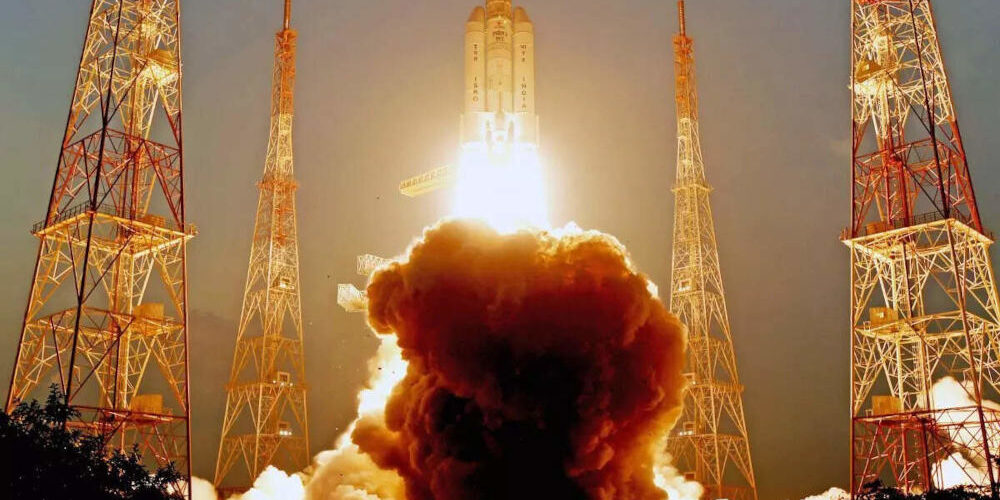
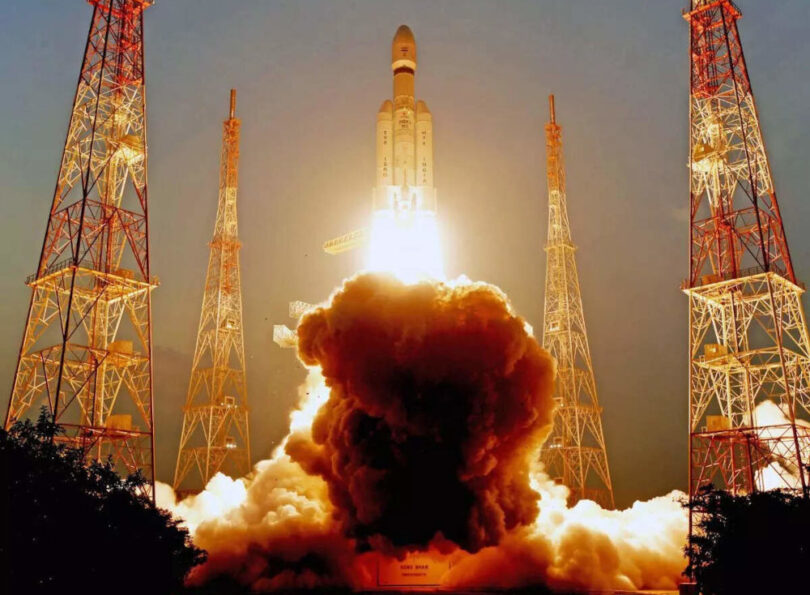
On September 4, 2026, ISRO successfully launched India’s first imaging satellite EOS-05 in geosynchronous orbit - marking ISRO’s maiden success of the year. ISRO’s GSLV-F17 rocket was used to place EOS-05 into a higher-than-planned orbit. ISRO chief V Narayanan noted that this was the 107th launch from Sriharikota and the 19th mission of the GSLV series. The EOS-05 mission is seen as a replacement for the unsuccessful GSLV-F10/EOS-03 mission of 2021, which was aborted due to a cryogenic stage anomaly. The success of EOS-05 marks a redemption for ISRO, restoring confidence in its launch program. It also comes after a gap of nearly eight months, following the failure of PSLV-C62 in January 2026, which was unable to place 16 satellites into orbit due to a third-stage anomaly. ISRO's PSLV fleet, however, continues to remain grounded.
In response to the internal uproar and media speculation about ISRO's privatization, ISRO issued a formal statement on September 6, 2026, calling reports of privatisation "completely baseless and incorrect". The statement said that; ISRO remains a 100% government organisation under the DoS and the critical infrastructure and strategic assets will stay strictly under government control, ISRO is not shrinking - in fact, its tasks are expanding. IN-SPACe Chairman Pawan Goenka also clarified his stance, stating that ISRO will always remain the "bedrock" and central anchor of India's space program.
As for privatization of ISRO, guided by the Indian Space Policy 2023, which focuses on commercialisation and outsourcing (privatization?), the government is essentially following the NASA-SpaceX model in the US. Focus areas of ISRO will be cutting-edge research, next generation technology and deep-space missions. Concurrently, PSUs and private sector will focus on scaling up mature, pre-existing technologies to bulk manufacture established rockets like the PSLV and SSLV under licenses, aimed at building up India's commercial space economy from USD 8.4 billion to a targeted USD 44 billion by 2033.
Earlier, Indian private firms manufactured roughly 75% to 80% of the individual components used in ISRO’s launch vehicles. However, ISRO still had to do the final assembly, testing, and integration. Now under a new model driven by ISRO's commercial arm, NewSpace India limited (NSIL), private industry consortiums have taken over end-to-end manufacturing. For example, in 2022, NSIL signed a INR 860-crore contract with a HAL-L&T a consortium to manufacture five PSLVs end-to-end. L&T handles the heavy precision engineering, structural systems, and solid propellant rocket motor casings while HAL focuses on the aerospace structures, aluminium alloy platforms, and electronic systems integration. This privately-built rocket is undergoing rigorous checks at ISRO’s facilities to ensure it meets strict quality baselines. It is scheduled to launch an Earth observation satellite (like Oceansat) by early 2027.
The process works via Technology Transfer Agreements. ISRO shares detailed engineering drawings, proprietary metallurgy formulas, and manufacturing process files. The consortium initially uses ISRO’s high-tech testing and launches facilities (like the Satish Dhawan Space Centre in Sriharikota) because building massive rocket test stands is too expensive for private companies starting out. Eventually, private firms absorb the technical expertise, allowing them to manage their own local supply chains and component sourcing independently. The HAL-L&T PSLV project was just the pilot program. Rocket manufacturing across multiple categories is moving to the commercial sector:
- In 2026, IN-SPACe facilitated a 10-year transfer of complete SSLV technology to HAL. HAL will fully own, build, and operate commercial launches for this rocket - with a maiden launch targeted for September 2027.
- The LVM3, India's heaviest rocket, is next in line, with conglomerates like L&T, Adani Group, JSW, and Mahindra lining up to bid for end-to-end technology transfer.
- Private startups like Skyroot Aerospace (with their Vikram rockets) and Agnikul Cosmos (with Agnibaan) are designing and printing their own 3D-printed rockets.
However, while ISRO is to focus on cutting-edge research, next generation technology and deep-space missions, how are we to ensure retention/upgrading of expertise in niche technologies, given that: private aerospace startups offer double/triple the remuneration, lucrative corporate benefits and stock options? Is merely stipulating that resignations must be approved by DoS the solution? What about bureaucratic project delays, centralised decision-making, restricted senior roles creating workplace frustration in ISRO and senior researchers expressing innovative ideas could be executed and commercialised much faster in private-sector environments? Will all this improve given that the hierarchal setup remains the same?
Notably, on June 16, 2026, China launched its Shijian-31 spy satellite, into an unprecedented vantage point to monitor every satellite (including GSAT, NavIC, Starlink) in the geostationary belt every 23 days, mapping their capabilities, technology and even communications.
The most crucial question is what are the priorities of the Indian government? Amid all the noise about manned missions to the Moon, plans for the indigenous Space Station, exploring Mars, Venus and the like, isn't it a shame that India cannot provide an exclusively indigenous GPS system to its military, which has adverse fallouts for India's national security.
The Indian Regional Navigation Satellite System (IRNSS), with an operational name of NavIC, was born directly out of a bitter lesson from the 1999 Kargil War, when the US denied India access to vital military-grade GPS data over the conflict zone. Why was it allowed to fail despite spending over INR 4,000 crore (roughly USD 525 million on it (https://www.spsmai.com/experts-speak/?id=1833&q=Failure-of-NavIC)? Speaking at the DefSpace Symposium, former IAF Chief Air Chief Marshal RKS Bhadauria said NavIC will be remembered more for its failures and promises that were not delivered more than anything. The failure of indigenous NavIC forces reliance on foreign navigation systems, which can be denied, spoofed, or degraded during conflicts.
Because the Indian military must now look to a multi-constellation approach (mixing NavIC signals with American GPS, Russian GLONASS, or European Galileo), they face an increased risk of foreign signal jamming or spoofing in a conflict zone. Relying entirely on foreign global systems means their satellites might not be directly overhead in the Indian subcontinent. Signals hitting the region at sharp angles can result in low penetration and higher latency (delays), which is highly dangerous for split-second military logistics and mapping.
Moreover, it must be understood that even if India builds a new "indigenous" system but collaborates with foreign entities for technology or manufacturing, significant security gaps remain: India will face the risk of supply chain blockades or hard-to-detect backdoors (hardware Trojans) built into the electronic chips; if relations sour with a collaborating nation, that country can legally stop exporting spare parts, testing equipment, or software updates - instantly freezing India's space launches or leave orbiters unfixable, sabotaging its defence self-reliance; shared development means sharing proprietary code, frequencies, and encryption methods - foreign partners could intentionally or accidentally leak the structural blueprints of the system, making it far easier for adversaries (like China or Pakistan) to hack, intercept, or jam the restricted military signals.
Lack of an exclusively indigenous GPS for military operations should have been the prime concern of Defence Minister Rajnath Singh. But he is more interested in securing his own seat; dubbed "washerman" on social media for whitewashing issues like own losses in Op 'Sindoor' and China's salami-slicing territory. Unconcerned about hundreds of Generals seeking justice for being paid less than Brigadiers, why would he bother about soldiers, rank and file, issues like NFU denied exclusively denied to the Armed Forces (https://www.thestrategicperspective.org/nfu-denial-to-armed-forces-polpicy-failure-or-systemic-neglect/), with the case already adjourned in the Supreme Court 83 times in a 10-year period? Expecting him to raise the criticality of an indigenous GPS for military operations, which he hasn't to-date, is pointless. It is an issue that the prime minister needs to address himself.
The author is an Indian Army veteran. Views expressed are personal.
More on ISRO related topics:
ISRO’s invaluable contribution to Op Sindoor in its year of the 101st satellite: https://www.thestrategicperspective.org/isros-invaluable-contribution-to-op-sindoor-in-its-year-of-the-101st-satellite/
Communication Security versus Insecurity: https://www.thestrategicperspective.org/communication-security-versus-insecurity/
Cyber Insecurity: https://www.thestrategicperspective.org/cyber-insecurity/
Fiascos in Space: https://www.thestrategicperspective.org/fiascos-in-space/