
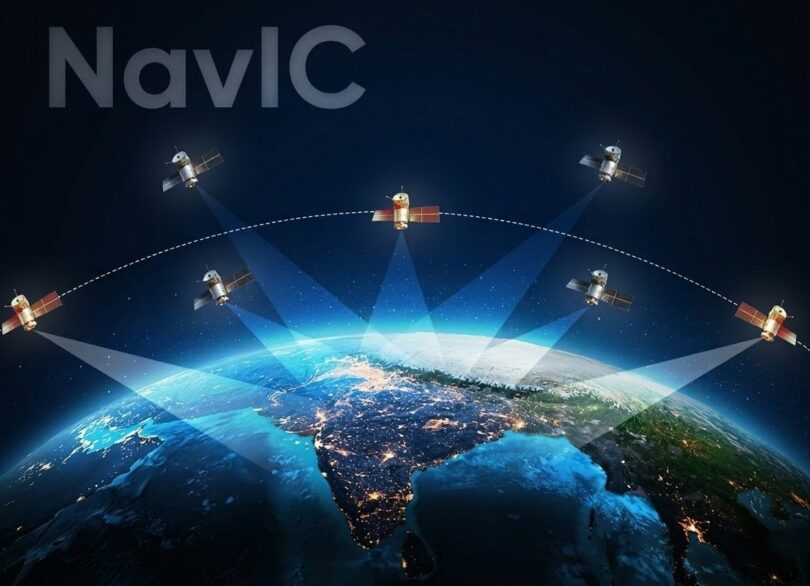
Prime Minister Narendra Modi named and dedicated the NavIC (Navigation with Indian Constellation) system to the nation on April 28, 2016. The naming coincided with the successful launch of the seventh and final satellite (IRNSS-1G) of the Indian Regional Navigation Satellite System (IRNSS) program. NavIC was to cover India and a region extending 1,500 km (930 mi) around it, with plans for further extension up to 3,000 km. It was designed to offer a similar level of reliability as America’s GPS, Russia's GLONASS, and Europe's Galileo; fully independent, indigenous navigation capability.
NavIC’s estimated cost was INR 14.2 billion (USD 168 million); ground segment INR 3 billion (USD 35 million), each satellite INR 1.5 billion (USD 18 million) and the PSLV rocket INR 1.3 billion (USD 15 million). The seven rockets cost INR 9.1 billion (USD 108 million), but with two replacement satellites, and PSLV-XL launches, the cost rose to INR 22.46 billion (USD 266 million). Later, the Department of Space (DoS) in its 12th 5-Year Plan (FYP) (2012–17) increased the number of satellites in the constellation from 7 to 11 to extend coverage.
Failed atomic clocks in IRNSS satellites prompted the Indian Space Research Organisation (ISRO) to adopt indigenous atomic clocks for second generation NVS satellites. But in March 2026, only three satellites were functional against the minimum four satellites required for accurate navigation. Reasons being cited were failed atomic clocks of first-generation satellites and launch delay of second-generation satellites.
This state is with ISRO under Department of Space (DoS) and DoS functioning under Prime Minister. Jitendra Singh, Minister of State in DoS, reports directly to the Prime Minister. Jitendra Singh is the same guy, who while announcing reversion of all army personnel from the Survey of India (SoI) publicly said with a smirk on his face, “Army officers are useless”; leading to a debate in social media about who he was bootlicking.
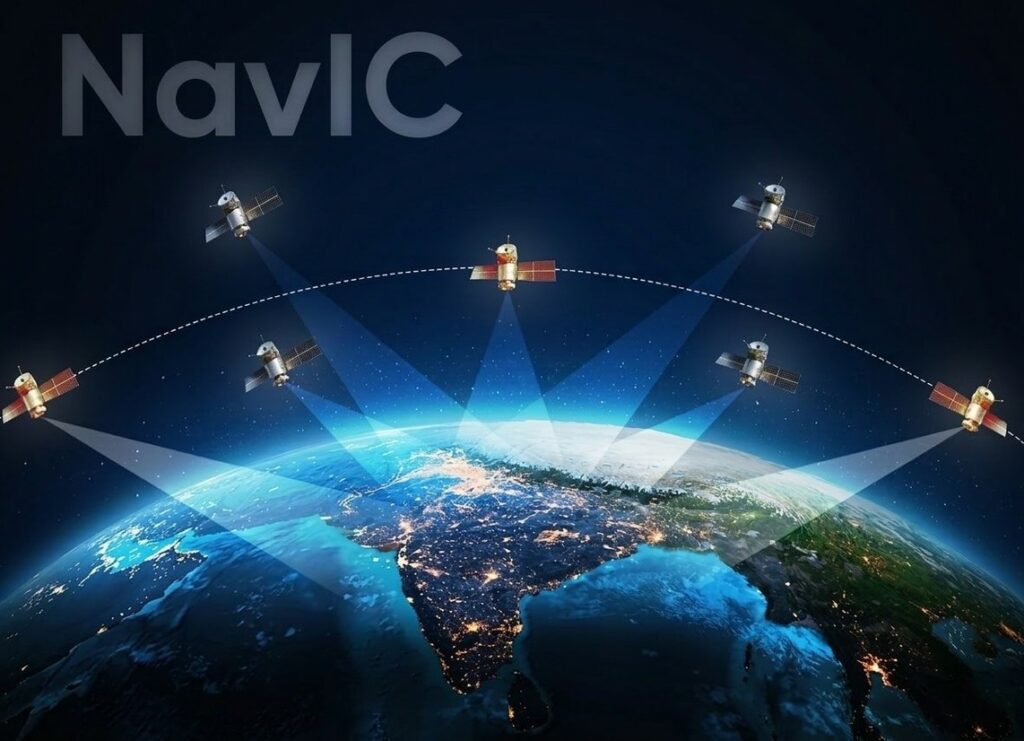
During the Indian DefSpace Symposium in New Delhi on April 23, 2026, former Chief of Air Staff, ACM RKS Bhadauria said, “NaVIC will be remembered more because of its failure and promises that were not delivered rather than anything. It is high time that NaVIC-type capabilities are redrawn completely.” None would accept responsibility for satellite failures, delays, operational shortcomings, strategic security implications, and concerns surrounding ISRO's execution, resource management, and technology transfer policies; that culture is long gone. Witness the hypocrisy over the NEET paper leaks, including transferring the designated judge to hear paper leak cases, collapsing infrastructure (roads/bridges/tunnels) and private vehicles damaged with ethanol-blended petrol forced on public without trials, while fibbing this mixture is cheaper.
Judge Anu Grover Baliga, who had been designated to hear paper leak cases in Delhi’s fast-track court, has been transferred as part of a major reshuffle in the Delhi Higher Judicial Service (DHJS). Special Judge Ajay Gupta, who was earlier hearing the NEET-UG 2026 paper leak… pic.twitter.com/fTInrLy4NO
— The Indian Express (@IndianExpress) August 3, 2026
Everyday vehicle owners are paying out-of-pocket for damaged fuel pumps and injectors due to faulty supply chain infrastructure and unmonitored blending. The Society of Indian Automobile Manufacturers (SIAM) has flagged severe fuel contamination to the Government but the response from Nitin Gadkari and Hardeep Puri on social media offer pure petrol at INR 125 per litre. Even before ethanol blending was introduced, Indian petrol pumps were selling Regular Petrol, as well as Premium Petrol. What these fellows are offering is Premium Petrol at even higher price and E20 in place of Regular Petrol – public can lump it.
Reports about India considering satellite internet coverage for Starlink first appeared in Indian media in 2021, following formal registration of Starlink in November 2021. Speculation was ripe that NavIC was allowed to fail for facilitating Starlink cover and kickbacks would have been huge with Elon Musk the richest.
Modi first met Musk touring the Tesla Motors factory in San Jose, California in 2015. Their second meeting was in New York on June 20, 2023 during Modi’s state visit to the US. Their most recent meeting was on February 13, 2025 at Blair House in Washington DC during Modi’s state visit to the US; a sit-down meeting to discuss SpaceX partnership with India.
While Starlink cover for India was being considered, both Reliance Jio and Bharti Airtel were proposing satellite constellations in collaboration foreign entities. Starlink cover for India, needs to be viewed in the following context:
- During the 1999 Kargil Conflict, US switched off the GPS, forcing the Indian Navy to return to base instead of blockading Karachi harbour.
- During the Ukraine conflict in late 2022, Musk admitted denying Ukraine's request to expand Starlink cover to Crimea; implying SpaceX can regulate Starlink cover, as required.
- Starlink already covers Bangladesh and Starlink-linked communication equipment has been recovered in India’s northeast, which has implications.
- Recent credible reports indicate a massive, highly coordinated underground network operating tens of thousands of unsanctioned Starlink terminals inside Iran. Both the US and Israeli governments, alongside clandestine domestic smugglers, use Starlink as a ‘Plan B’ communications weapon against Tehran.
- Pakistani terrorists in Jammu and Kashmir have been using satellite phones linked to China’s BeiDou Navigation Satellite System (BDS); allowing cross-border coordination, bypassing local telecom networks.
- Starlink cover will endanger our national security and can be shut down or regulated in critical situations.
In July 2025, IN-SPACe, India’s space regulator, authorized Starlink to operate the Gen1 low Earth orbit constellation over India for 5-years. The Department of Telecommunications (DoT) gave Starlink the Global Mobile Personal Communication by Satellite (GMPCS) license, and Internet Service Provider (ISP) Category-A status. SpaceX has established initial on-the-ground infrastructure, including a centralized hub in Mumbai and plans for 10 physical gateways. Final commercial rollout was slowed down in mid-2026 due to concerns over data sovereignty, SpaceX compliance with local interception norms, and reports of unsanctioned Starlink terminals operating in Iran. However, SpaceX maintains Starlink is fully operational globally and is only awaiting final India deployment clearances.
The latest news is that IN-SPACe has technically green-lighted Reliance Jio’s proposal to deploy approximately 1,600 low Earth orbit (LEO) satellites at an altitude of about 650-km above the Earth, for broadband and mobile services. The proposed system offers fixed satellite broadband, cellular backhaul, and direct-to-device (D2D) connectivity, and 4.5 to 5 terabits per second pan-India. Estimated cost of the project is USD 10-15 billion. Commercial rollout is expected in 2-3 years. But for the project to kick off final spectrum allocation and filings for international orbital slots via the International Telecommunication Union is needed. Jio will focus its entire 4.5–5 terabits constellation throughput directly over the Indian subcontinent, offering the highest capacity planned by any operator in the region.
Jio is to deploy 20-22 dedicated earth stations across India; managing its upcoming fleet and anchor partner networks, ensuring no data has to route through foreign gateways. Jio's D2D model is built to disrupt traditional telecom infrastructure by turning satellites into "cell towers in the sky" removing the physical barriers of remote geography. The network beams standard commercial cellular frequencies directly to existing mobile phones and laptops. Consumers will not need a specialized dish or terminal like Starlink. Phones will automatically hand over traffic between traditional ground-based mobile towers and the LEO satellite network when moving into rural, forested, or mountainous dead zones. Because the system operates entirely separate from terrestrial towers, it provides backup mobile data and calling capabilities during natural disasters such as cyclones, floods, or landslides.
Jio forces aggressive, hyper-affordable consumer pricing in India. Starlink operates as a premium, standalone global service. Consumers must purchase or lease proprietary, high-cost terminal dishes to access the satellite network directly. It has over 10,000 active satellites globally placed 550-km above the Earth in LEO, offering 600 gigabits per second (Gbps). Starlink is awaiting final India deployment clearances. Although Starlink distributes its massive bandwidth globally across a shifting mesh network (Inter-satellite laser links), Its current approved capacity limit dedicated specifically to India is significantly lower at 600 Gbps.
Jio’s planned LEO satellite constellation directly challenges Elon Musk’s Starlink. While Starlink currently dominates global skies, Jio’s new indigenous project aims to beat it locally on capacity, regulatory backing, and structural integration with India's mass telecom market. Jio’s planned rollout is through a mix of international launch partnerships, heavy sovereign regulatory support, and a cellular-integrated D2D network that beams connectivity straight to standard unmodified smartphones. This dual approach bypasses the need for consumer satellite dishes while ensuring the infrastructure remains entirely under Indian jurisdiction.
Reliance Jio holds an edge with home-court backing from Indian regulatory and defence bodies; the project is viewed critical for India’s sovereign communications and strategic autonomy. But the decision rests with the government, who appears prostrating to the US, since the US-Israel War on Iran, plus the fear of sanctions, tariffs and the yet to be inked framework of the India-US trade deal – even though the final bilateral trade deal may be months or years away, depending on Donald Trump’s idiosyncrasies. If Musk has lined some pockets, that would be another factor, but the US can be expected to exert maximum pressure; be it Indians named in Epstein Files or prominent Indian officials who champion nationalism but whose wards hold foreign citizenship and live abroad, like External Affairs Minister S Jaishankar, National Security Advisor Ajit Doval and Commerce and Industry Minister Piyush Goyal. During a press conference at White House on October 15, 2025, Donald Trump had said, "Modi is a great man. He loves Trump. I don't want you to take that any different. I don't want to destroy his political career."
Finally, the question is will New Delhi clear Starlink cover for India, despite all the security implications bowing to US pressure, as an interim arrangement till the Reliance Jio constellation becomes operational or drop Starlink and go directly for Reliance Jio, providing the requisite acceleration? Prudence demands that India should go directly for the Reliance Jio constellation even if its full operationalisation takes 2-3 years. Can we learn from the fallout of trying to show off double-engine development (space technology), including in fragile mountainous areas resulting in avoidable losses, potholed new highways, collapsing roads, bridges and tunnels with no accountability, making us a laughing stock? Will Starlink cover still be adopted at whatever excuse, or not to annoy Donald Trump?
The author is an Indian Army veteran. Views expressed are personal.