

India’s proposed three tri-service Theatre Commands (TCs) was covered in these columns earlier: Northern TC facing China; Western TC facing Pakistan; Maritime TC safeguarding maritime domain and projecting power in Indian and Pacific Oceans (https://www.thestrategicperspective.org/transforming-indian-military/). CDS was to present the plan to Defence Minister, followed by approval of Cabinet Committee on Security (CCS), and Prime Minister Narendra Modi could announce this while addressing the nation on August 15.
On March 10, 2026, Defence Minister Rajnath Singh released ‘Defence Forces Vision 2047: A Roadmap for a Future-Ready Indian Military’, aligned with Modi’s Viksit Bharat 2047 (100-years of Independence). The military vision envisages 3-phase execution: Transition up to 2030, Consolidation 2030-2040, and Excellence 2040-2047.
Concurrently, then Army Chief General Upendra Dwivedi announced ‘Indian Army Strategic Guidelines 2047’: Phase 1 (up to 2032) accelerated transition, capability development, force restructuring; Phase 2 (2032-2037) consolidation; Phase 3 (2037-2047) complete transformation. If India’s 100-years of Independence was 2040, would the Army Strategic Guidelines and Defence Minister’s Roadmap for a Future-Ready Indian Military conform to 2040? Conversely, if the 100-years Independence was 2050, would these conform to 2050?
The Army’s manpower is the largest of the three services. But the CDS always from the army goes against the core philosophy of theaterisation, jointmanship, and multi-domain warfare. Integrated militaries don’t appoint top military commanders on service size. If the CDS is always army, defence planning risks defaulting to a continental, land-heavy mindset – recall 1st CDS General Bipin Rawat calling IAF a support service. Threat appreciation demands equal focus on maritime and aerospace domain. Domain expertise of an IAF and Naval CDS helps prevent dangerous strategic blind spots, assuring smaller services their core capabilities are protected and strategically utilised, not merely supporting land forces.
Government allowed any serving/retired 4-star/3-star officer under 62 to be appointed CDS; facilitating 3-star-retiree General Anil Chauhan becoming 2nd CDS for political advantage. Chauhan publicly announced India doesn’t need a written national Security strategy (NSS). Lack of NSS allows the political apex avoid accountability in geopolitical crises and hide lack of political resolve, especially against China. Chauhan’s books ‘Ready, Relevant and Resurgent’ invited strategic-cum-political controversy; aligning the historically apolitical military with partisan ideological narratives of the ruling clique. His admission of India suffering combat jet losses in Op ‘Sindoor’ led to questions why the military was publishing self-congratulatory ‘blueprints’ for 2047 but keeping the public in the dark about operational mistakes. According to analysts Op ‘Sindoor’ exposed glaring gaps in cross-domain synergy and intelligence sharing.
India urgently needs an indigenous GPS; certainly not foreign and not with foreign collaboration either, for obvious reasons. But NavIC is dead for two years by design; politico-bureaucratic nexus compromised sans accountability. If that were not the case, the double-engine government would have doubly ensured NavIC remained always operational. That’s why the CDSs were too scared to speak up despite indigenous GPS critical for the military. Post-retirement Chauhan says Pakistan begged for ceasefire during Op ‘Sindoor’ but we delayed it. Why didn’t he demand Pakistan first release former Indian Navy officer Kulbhushan Jadhav from prison?
The present 3-star retiree CDS General NS Raja Subramani is to implement the three TCs blueprints designed by Chauhan. But this, together with Army’s Strategic Guidelines 2047 and Rajnath’s Roadmap for a Future-Ready Indian Military, risks building the military without a politically validated NSS defining what that military is ultimately supposed to achieve. The military is designing structural updates, but operating in a strategic vacuum implies critical operational vulnerabilities, institutional disconnects, and financial inefficiencies; reduced to making assumptions about adversaries without a formalized long-term threat appreciation.
A formal NSS would balance the threat matrix between a primary maritime threat and traditional land border friction, without which, individual services can over-index their individual doctrines. Tools like a cognitive warfare force and specialized drone fleets, without clear, politically mandated objectives don’t guarantee true system-wide mission capabilities. Defence budgeting remains an exercise in incrementalism over the previous year's allocation based on immediate operational demands. The much-hyped 15% defence budget increase is diluted by ‘spectrum charges to pay for DoT’s past expenditures - starving acquisition of drone swarms, AI nodes, and quantum equipment.
Modern multi-domain conflicts (encompassing grey-zone operations, supply chain chokeholds, and cognitive warfare) cannot be fought/won by militaries alone. Moreover, India’s military doesn’t have institutional lien to compel civilian ministries (External Affairs, Home Affairs, Electronics & IT, or Finance) to align their policies with military goals; the ‘Future-Ready’ timeline risks being a military ambition isolated from India's diplomatic alignment, economic strategies, and domestic intelligence frameworks.
Reactive postures forcing militaries into formulating strategy after a crisis (like China’s 2020 aggression in Ladakh) creates structural fragility when planning long-term defence (up to 2047), as a single border escalation can derail a decade of force optimization. China and Pakistan have publicised national defence strategies. India’s theaterisation without a NSS implies major structural risks bypassed just to meet political timelines. International partners remain confused about India’s ultimate strategic boundaries, making it harder to lock down definitive, technology-sharing.
The IAF is short of 13 fighter squadrons, operating roughly 29 operational squadrons against the authorized 42 to manage a two-front war. India’s AMCA is at least a decade away from entering service while China has deployed 18 J-20 stealth fighter jets at Hotan, Damxung and Shigatse. China’s existing J-20 fleet of 500 is set to double by 2030. China has signed a deal with Pakistan to supply 40 J-35A 5th-generation stealth fighters, with first batch arriving in coming months – much before India’s AMCA.
None of the 114 additional Rafale India plans to procure will be 5th-generation - Rafale platform is not built with a 5th-generation low-observable (stealth) airframe. Deliveries are projected to begin in late 2029 or 2030, stretching through mid-to-late 2030s. China has every detail of Rafales since 2018-2019, including how to down them (https://www.thecitizen.in/opinion/pseudointellectual-intelligence-1336920).
A study by the French Institute of International Relations (IFRI) in 2025 concluded that non-stealth platforms like Rafale would face severe attrition within 3-days of high-intensity combat against 5th-generation jets; like Russia’s Su-57 and China’s J-20. Russia has offered India 5th-generation 57E stealth fighters but India is dead-scared of US sanctions (https://www.thestrategicperspective.org/hedging-the-su-57/). Witness JD Vance telephoning Modi after US imposed 100% tariffs on India-China for Russian oil imports, conveying indirectly: review FCRA Bill; switch totally to US-Venezuela energy imports: handover Indian skies to Elon Musk (https://www.thestrategicperspective.org/communication-security-versus-insecurity/); talk to Pakistan? Most amusing is China’s response that readers must view.
This is ABSOLUTE CINEMA 🔥
— China Times (@ChinaTimesX) August 1, 2026
🇺🇸Trump at 1:00 PM: "We are going to put sanctions on China for buying Iranian oil."
🇨🇳China at 1:10 PM: "Fućk off. We do not recognize US sanctions on Iranian oil purchases and will not comply with them. We have trade agreements with 🇮🇷 Iran and… pic.twitter.com/6v3kJ72F6y
The IAF is deeply concerned about shortages of fighter squadrons. Without a national doctrine defining priority theatres, air assets would be pooled on a temporary/ cooperative basis rather than permanently stripping them from single-service commands. If air assets are permanently locked into three independent TCs, it becomes incredibly difficult to rapidly pool and swing air power from the Western Front to the Eastern Front in a fluid crisis.
There is no clear legal/operational framework detailing who holds absolute command authority during a crisis; Theatre Commander, CDS or politico micro-management? The Andaman & Nicobar Command (ANC), meant to be the tri-service prototype for the Maritime TC, remains largely dysfunctional and starved of assets.
Asymmetric threats can’t be separated from external threats. Over 200 incidents of drone sightings reported in 2025 over defence zones across India (naval bases in Mumbai and Visakhapatnam to air bases in the north) could have carried EW, cyber, bio weapons. In modern multi-domain warfare, adversarial big powers weaponize domestic vulnerabilities of India’s neighbours to encircle, distract, and deplete Indian military and economic resources. Did we anticipate Covid-19 was a bio-weapon of the US? US orchestrated regime changes in Bangladesh and Nepal, and the Trump Administration has made it clear it will not allow India to grow the way Nixon allowed China. Asymmetric threats to India are deeply intertwined with external backing:
- Bangladesh. The country presents severe non-traditional security risks. Safehouses for Northeast militant groups are re-emerging in the Chittagong Hill Tracts (CHT) and Sylhet forests. Growing local neo-fundamentalism and anti-India rhetoric drive systematic demographic displacement of minorities near India’s borders. Dhaka's is upping defence arrangements with China, Pakistan and the US. Its defence agreements with Turkey for long-range air systems and co-produced drones creates a complex, multipolar web on India's eastern flank.
- Myanmar. the border strip spanning Rakhine State and Bangladesh is a lawless corridor where transnational insurgencies, arms-running, and drug syndicates converge. Prolonged instability forces mass civilian displacement into India, triggering ethnic friction.
- Pakistan. Conventional military threat is economically constrained, but its asymmetric posture remains lethal. The focus has shifted from high-visibility valley infiltration to deploying drone networks across the international borders of Punjab and Jammu – dropping narcotics, cash, and standalone weapons. Deepening friction inside Pakistan creates volatile power vacuums where rogue elements/terror factions can deploy specialized cyber-sabotage or localized border provocations against India. Pakistan enjoys the support of China, the US and Britain. The Pakistan-Somalia defence agreement could boost terrorism. Similarly, the Turkey-Pakistan-Saudi Arabia defence agreement signals heightened hybrid threats to India.
- Nepal. The open 1,751-km land border remains an active vulnerability, frequently exploited by hostile third-party intelligence networks for counterfeit currency circulation, human trafficking, anti-India psychological operations, and selective sabotage.
- Sri Lanka. Extreme maritime economic fragility forces Colombo to hedge strategically; opening doors for hostile dual-use research vessels and intelligence collection platforms to anchor directly off India’s southern maritime underbelly.
India faces a 2.5-front war; needing a structural shift toward a 3-front war due to expanding geopolitical alliances and adversary collusively leading to asymmetric regional vulnerabilities weaponized by external powers. A 3-front war would include: Turkey-Pakistan-China-Bangladesh Axis - manifesting diplomatically, technologically, or through proxy logistics supported from the Mediterranean/Middle East; Maritime Encirclement - China deploying its dual-use tracking vessels, attack submarines, and naval fleets using footholds in Hambantota (Sri Lanka) and Gwadar (Pakistan).
Can three proposed TCs meet India’s long-term security requirements in a multi-front, multi-domain conflict? Northern and Western TCs simplify geographical borders, but create rigid, geographic silos ill-equipped to counter borderless asymmetric warfare. A 2.5 or 3-front war relies heavily on cross-domain synergy, where an action in one theatre requires an immediate response in another. Real security in a volatile neighbourhood requires seamless coordination between the military and civilian border and internal intelligence/security forces. Rigid military theatre boundaries do not automatically integrate these civilian intelligence and policing networks: India’s government is loath to even place central armed police forces deployed on borders under Army. Has India analysed how cyberattacks hitting critical infrastructure in New Delhi can or cannot be countered since satellite communication, and space-based intelligence do not stop at geographical command borders.
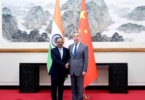
EAM S Jaishankar committed India’s support to China’s sovereignty (Taiwan and Tibet) in a recent meeting with his Chinese counterpart, despite China not respecting India’s sovereignty (sic). China benefits USD 100-billion annually from India-China bilateral trade. China isn’t deceived by Jaishankar’s mollycoddling.
It views India in the US camp and acting against Iran’s interests (https://www.thestrategicperspective.org/outwith-sinking-of-iris-dena/). India isn’t promoting and upgrading the Russia-India-China (RIC) Dialogue, fearing the US (https://www.thestrategicperspective.org/op-eds/the-russia-india-china-troika/), while China would want India to join its BRI. Why will China wait for Indian military transformation to destabilize India and seize more territory?
In a high-intensity clash with China in Ladakh/Arunachal Pradesh, requiring Northern TC Commander to focus fully on conventional operations, a simultaneous asymmetric flare-up in Bangladesh/Myanmar or both can easily become a secondary issue, leaving India's flanks exposed. Also, Siachen being the geopolitical intersection where territorial interests of Pakistan and China physically meet, a collusive 2-front land assault could cut off Ladakh, where standard border deployments will not suffice. Hence, special arrangements are required to ensure: Siachen region is never compromised; threats from Myanmar and Bangladesh are adequately countered despite confrontation along the entire LAC. India must create a unified Karakoram-Siachen Sub-Theatre Command explicitly reporting to both Western and Northern Theatre Commanders simultaneously; preventing bureaucratic blind spots where the Western TC assumes the Northern TC is monitoring the Chinese flank, and vice versa.
Air Chief ACM AP Singh has emphasised that drone threats target a critical vulnerability in India’s defensive architecture. The Army, Navy, and IAF independently buying different drone systems from various global/domestic vendors, creates a logistical nightmare. Centralizing procurement under a single joint defence acquisition body would ensure technological interoperability. Drones must have decentralized execution, while conventional air assets must remain centrally controlled even in a theaterised command structure.
To operationalise Strategic Guidelines 2047 in true sense, India must look beyond three geographic borders and establish overarching commands that are functional to effectively deal with conventional and asymmetric threats in integrated fashion. Joint Cyber and Space Commands are required, having overarching authority to protect national networks and strike back at adversaries, independent of regional land or sea commanders. A Unified Strategic Logistics Command is needed, including for moving troops, drone swarms, and heavy armour across the Indian landmass, under a single national logistics authority to eliminate inter-service supply delays. The need for a full-fledged Tri-Service Special Operations Command has already been emphasized in these columns earlier.
Finally, a CCS-approved NSS must precede military transformation. Three border-specific TCs may help break down single-service rivalries, but they are an incomplete long-term solution. If India stops at three geographic TCs, it will leave doors wide open for adversaries (aided by external forces) to exploit legal, electronic, and asymmetric gaps between those borders. India needs commands that are functionally fully integrated with internal forces to deal with both conventional and asymmetric threats, together with special arrangement to cope with threats to Siachen region, threats emanating from Myanmar-Bangladesh, and China-Pak maritime threats in a multi-front, multi-domain war. To expect a rethink by Defence Minister Rajnath Singh is futile, but will the CDS bid for a formalised NSS, indigenous GPS and review the proposed military transformation, or join dancers on the tin-roof singing we equalled China’s Theatre Commands?
The author is an Indian Army veteran. Views expressed are personal.