
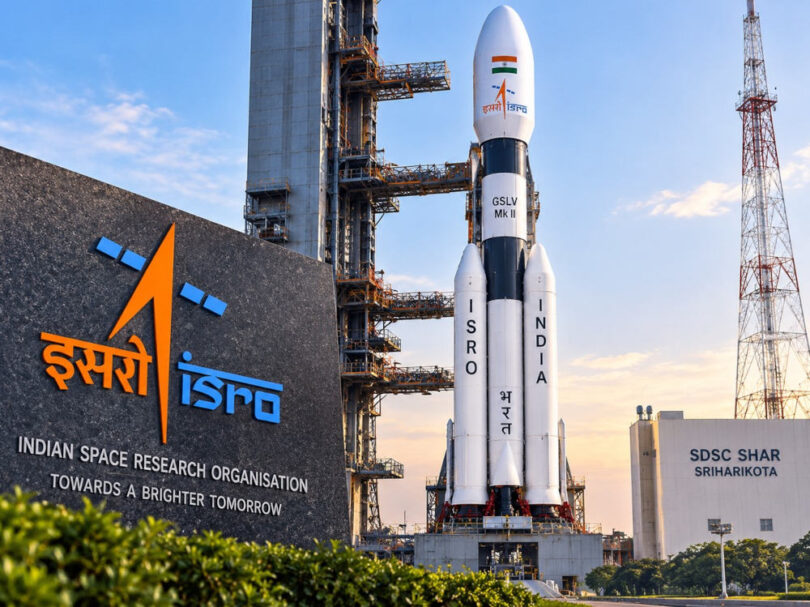

According to news reports of September 28, 2026, Indian Space Research Organisation (ISRO) is targeting the launch of its navigation satellite NVS-03 between October 15 and 20, a mission that could reactivate India’s Navigation with Indian Constellation (NavIC), formerly known as the Indian Regional Navigation Satellite System (IRNSS): NavIC's standalone positioning service and provide a major boost to India’s security forces.
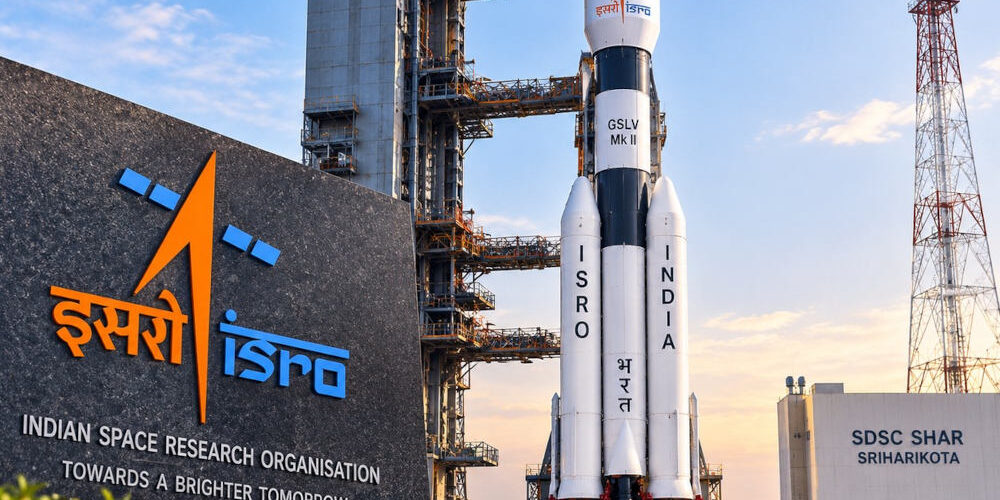
NavIC currently has only three operational satellites: IRNSS-1B, IRNSS-1I and NVS-01. The constellation requires at least four operational satellites to provide a standalone positioning service. As a result, NavIC’s positioning capability is presently unavailable, although its timing service remains functional. This limitation affects the Armed Forces’ ability to use an indigenous navigation network for missile navigation, precision positioning, warship coordination, troop movement and combat-aircraft operations. NVS-03 is the next satellite in NavIC’s second-generation constellation, which is expected to be launched aboard a GSLV Mk II rocket from the Satish Dhawan Space Centre in Sriharikota.
The launch campaign of NVS-03 began on September 14, with the first stage of the GSLV MK-II already stacked. NVS-03 is also understood to be ready and positioned at the spaceport, reducing the possibility of a delay caused by satellite readiness. ISRO hasn't succeeded in successfully launching a navigation satellite since May 29, 2023, when NVS-01 was placed in orbit. The subsequent NVS-02 mission, launched aboard GSLV-F15 on January 29, 2025, failed to reach its designated orbit. The satellite was injected into an elliptical transfer orbit measuring approximately 170 km by 37,785 km, with an inclination of 20.8 degrees. After separation from the launch vehicle, NVS-02 successfully deployed its solar panels and stabilised its attitude. However, its orbit-raising manoeuvre could not be carried out because the propulsion system failed to ignite.
An investigation by ISRO's apex committee traced the problem to the pyro system. The drive signal did not reach the pyro valve in the oxidiser line of the engine intended for orbit-raising operations. The committee concluded that at least one contact in each of the main and redundant connector paths had probably disengaged. Consequently, the electrical command needed to activate the pyro valve did not reach the engine, despite the system’s built-in redundancy. ISRO says that corrective measures recommended by the committee have been implemented to improve redundancy and reliability in future pyro-system operations. The measures were also incorporated and tested in subsequent spacecraft systems.
A successful NVS-03 mission would restore NavIC’s basic stand-alone positioning service by taking the constellation back to the minimum strength of four operational satellites. A navigation receiver generally needs signals from at least four satellites to determine its precise three-dimensional position and correct the timing error in its internal clock. Three satellites can theoretically determine a position if the receiver already knows its altitude, but ordinary phones, vehicles and navigation devices do not carry the highly accurate atomic clocks needed to eliminate clock-error calculations, while the encrypted Restricted Service is reserved for authorised strategic users, including the armed forces and security agencies. NavIC is designed to cover India and an area extending up to 1,500 km beyond the country’s borders, with signals in the L5 and S bands.
At first glance this looks good, but far from being very good. The moot question is when ISRO has demonstrated the capability of launching multiple satellites simultaneously periodically over the years, why the launch of one solitary navigation satellite, merely to meet the basic need of four navigation satellites of NavIC; when NavIC was originally planes as a seven-satellite constellation and later the Department of Space (DoS) in its 12th Five Year Plan (FYP) (2012–17) increased the number of satellites in the constellation from 7 to 11 to extend the coverage India and the region up to 3,000 km.
Is the planned launch just one more navigation satellite because of lack of funds allotted to ISRO? NavIC was originally designed as a 7-satellite system with three atomic clocks each, which was achieved with the first generation of IRNSS satellite launches spanning 2013-2018. The total cost of the NavIC project was expected to be INR 14.2 billion (USD 168 million), with the cost of the ground segment being INR 3 billion (USD 35 million), each satellite costing INR 1.5 billion (USD 18 million) and the PSLV-XL version rocket costing around INR 1.3 billion (USD 15 million). The planned seven rockets would have involved an outlay of around INR 9.1 billion (USD 108 million). However, the necessity for two replacement satellites, and PSLV-XL launches, altered the original budget, with the cost rising to INR 22.46 billion (USD 266 million). As mentioned, DoS increased the number of satellites in the constellation from 7 to 11 for extended coverage.
It was reported in these columns on August 12, 2026, that IN-SPACe has green-lighted Reliance Jio's proposal to deploy Low Earth Orbit (LEO) satellites, with 20-22 dedicated ground/earth stations across India over the next 2-3 years; for satellite broadband, cellular backhaul, direct-to-device connectivity, and 4.5 to 5 terabits per second pan-India, at an estimated cost of USD 10-15 billion.
Interestingly, social media points out the following: the launch vehicle for placing Reliance Jio's LEO satellites into designated is on waitlist; other private agencies like Sanyark and Vyomic have already booked slots on SpaceX vehicle; ISRO will take time in making the next GSLV; Skyroot and Agnikul are next options. But most important is the fact that the Reliance Jio project is in collaboration with Luxembourg-headquartered SES (Société Européenne des Satellites); under a 51:49 joint venture named Jio Space Technology Limited (and its affiliate entity Orbit Connect India), serving both SES’s global medium-Earth orbit (MEO) satellite constellations and anchoring Jio's upcoming LEO network.
Admittedly, the Jio-SES collaboration addresses some of the core disadvantages typically associated with relying on a foreign entity for critical satellite infrastructure, but not all. In high-stakes national security or geopolitical emergencies, collaborating with an overseas company creates distinct structural vulnerabilities, even as Jio has structured this venture to mitigate several of these risks. But despite these structural safeguards, the structural architecture relies on foreign-owned hardware, preserving baseline risks in critical situations, as under:
- Hardware Off-Switch. The physical satellites (such as the SES-12 and O3b mPOWER constellations) belong to SES. If a geopolitical rift occurs, the foreign parent entity still retains the fundamental technological capability to cut off or throttle beam capacity from space.
- Sanctions. If Luxembourg or its Western allies impose sweeping economic sanctions on an allied entity or target region, SES could be legally forced to cease its technological support or software updates, paralyzing the JV's technical evolution.
This brings us back to the issue of reviving the NavIC. By launching just more navigation satellites to meet the basic standalone positioning service of NavIC, which hopefully is not by design, aren't we failing to acknowledge entities that are interested to see continued failure of NavIC? This would not only include rivals like China, but also those who want an indigenous GPS with foreign collaboration, enabling its degradation when required, including the positioning, navigation and timing network for ballistic missiles, precision-guided munitions, military aircraft, naval vessels and encrypted operational networks. We should acknowledge that space has already been weaponized – targeting or capturing satellites is very much possible.
Finally, we need to understand the criticality of an indigenous GPS for the Armed Forces much more seriously, which in turn affects India's national security. The number of satellites in NavIC must cater for adequate redundancy. The NavIC constellation should be expanded to 7 and then 11 satellites at the earliest.
More on related topics:
ISRO Cacophony: https://www.thestrategicperspective.org/isro-cacaphony/
Dissecting Military Transformation: https://www.thestrategicperspective.org/dissecting-military-transformation/
Communication Security versus Insecurity: https://www.thestrategicperspective.org/communication-security-versus-insecurity/
Voices from Beijing: https://www.thestrategicperspective.org/voices-from-beijing/
IAI DIAMOND Naval Warfare System: https://www.thestrategicperspective.org/iai-diamond-naval-warfare-system/
Future Submarines: https://www.thestrategicperspective.org/future-submarines/
Indian Defence Review and Policy of Hedging: https://www.thestrategicperspective.org/indian-defence-review-and-policy-of-hedging/
US – Greenland Strategy Under Trump: https://www.thestrategicperspective.org/us-greenland-strategy-under-trump/