

Executive Summary
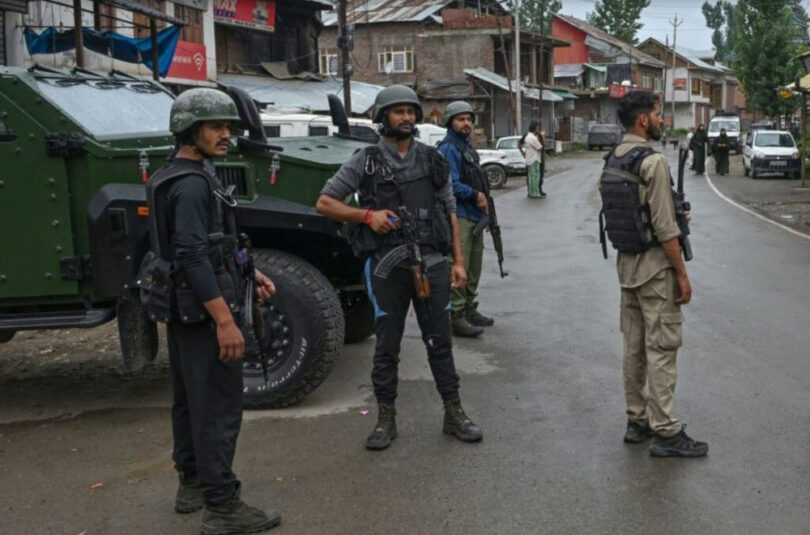
On 11 November 2026, Three personnel of the Central Reserve Police Force (CRPF), including a Head Constable, were injured when armed assailants opened fire on a CRPF checkpoint at Nowpora Akhran, near Mir Bazar, in south Kashmir's Kulgam district. The checkpoint was manned by personnel of the CRPF's 46th Battalion and formed part of a bridge-security deployment.
The attack took place at approximately 14.15 hrs.’ Security personnel retaliated. According to reports an injured jawan continued to engage the attackers, who withdrew from the scene. Joint search operations have been launched by police, Army and paramilitary personnel.
The incident is indicative of the residual armed terror networks which are trying to retain the ability to mount sudden attacks against relatively small security deployments. It also reveals the vulnerability of static checkpoints and the continuing requirement to translate intelligence inputs into practical protective measures.
Date and Incident Clarification
The reported attack occurred on Wednesday, 11 November 2026, at approximately around 1400 hrs. The date is important because some initial references to the incident may describe it imprecisely as a 10 November event. The available contemporaneous reporting consistently places the attack on 11 November.
The location confirmed is Nowpora Akhran, near Mir Bazar, in Kulgam district. The CRPF checkpoint was reportedly manned by the 46th Battalion and situated roughly two kilometres from the National Highway, according to reporting citing police sources.
Reconstruction of the Attack
The attackers opened fire on the CRPF deployment in the afternoon and then escaped. Early media accounts described the assailants as motorcycle-borne. However, police subsequently clarified that a specific motorcycle registration number circulated on social media was not linked to the attack. Since it is a developing story, the clarification should not be expanded into a definitive conclusion about the modus operandi of the assailants.
Kashmir News Observer, citing a senior police officer, reported that security deployments had been made with accordance to received intelligence inputs pertaining to a suspected terrorist movement. The report further described the prompt retaliation of fire by security personnel in an effort to stop a more serious attack.
NDTV reported that CCTV footage captured a rapid burst of gunfire, estimating that around 30 rounds were fired in approximately 15 seconds, followed by further shots. Since this is a media description of the footage, it cannot be adequately gauged as it is not an independently released forensic count.
The precise sequence of movement, firing positions and escape route requires confirmation from the official investigation. CCTV, forensic examination, ballistic evidence and witness accounts will be important in reconstructing the incident.
Casualties and Medical Response
The three injured personnel were identified in contemporaneous reporting as Constable Rakesh Dass, Constable Santosh Chandru and Head Constable Somveer Singh, all belonging to the CRPF's 46th Battalion.
Constable Rakesh Dass is stable and had a Bullet injury to leg. Constable Santosh Chandru received gunshot wounds to abdomen and spine. He was critical, later airlifted to 92 Base Hospital, Srinagar. Head Constable Somveer Singh received a Firearm injury to his left arm and is also stable.
All three CRPF personnel were initially evacuated to Government Medical College, Anantnag. Santosh Chandru was subsequently airlifted to the Army's 92 Base Hospital in Srinagar for advanced treatment. Media reports differed on the timing and description of the medical condition; the latest official CRPF or hospital bulletin should be checked before publication.
Security Response and Search Operations
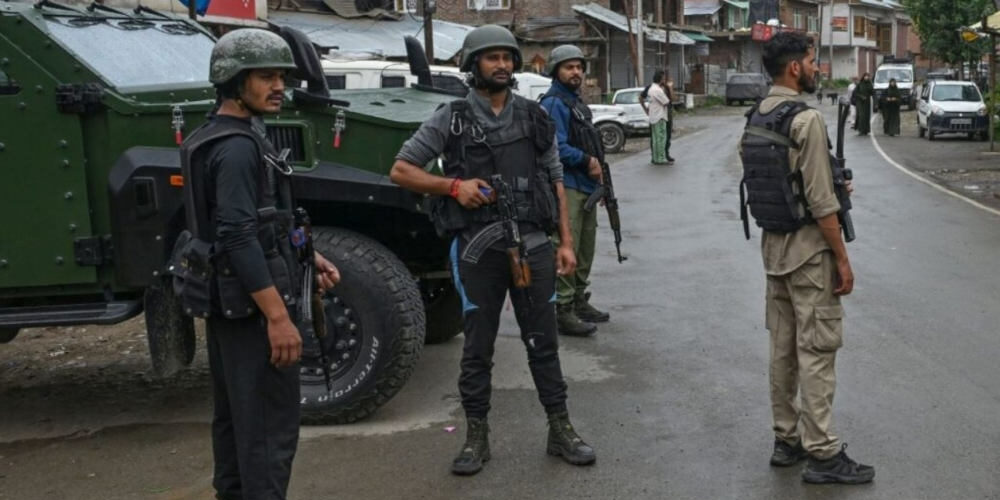
Police, Army and paramilitary personnel mobilized to the area, established a cordon and initiated joint search operations. Quick Reaction Teams have been reportedly deployed, additional forces were brought in, and barricades and vehicle checks have been bolstered in the surrounding vicinity.
Senior security officials, including the Inspector General of Police for the Kashmir Zone and senior CRPF officers, visited the site and assessed the situation. Investigators were reported to be examining CCTV footage and collecting forensic material.
Reporting on 12 November indicated that search operations continued into a second day. The attackers' escape remained a central investigative concern.
Suspected Militants
According to reports at the moment, agencies in Jammu and Kashmir have intensified a manhunt for the suspected militants who are believed to be linked to Lashkar-e-Taiba (LeT) and its offshoot, The Resistance Front (TRF). Posters featuring the suspects are being displayed across Srinagar, including Lal Chowk and Pratap Park.
Key Suspects Identified
- Mohammad Lateef Bhat (alias Abdul Latief Bhat), 22-year-old resident of Kulgam in South Kashmir. Bhat is identified as a key LeT/TRF operative and handler. He has been identified as the last surviving local militant active in the Kashmir Valley. A ₹15 lakh cash reward has been issued for any information on him
- Bilal Ahmad Mir. Initially a resident of Brath Kalan in Sopore, Baramulla district. He is currently operating across the border from Pakistan-occupied Jammu and Kashmir (PoJK).
- Mohammad Umar Mir. Also a resident of Brath Kalan in Sopore, Baramulla district. Like Bilal Ahmad Mir, he is suspected of coordinating operations from PoJK.
- Abid Qayoom Lone. A resident of Pattan in Baramulla district. Security officials report he is also hiding in PoJK and issuing instructions to local sleeper cells.
Investigation Context & Recent Incidents
Recent Attack Linkage. The CCTV footage and forensic evidence, indicate Bhat's involvement in the 11 November 2026 "shoot-and-scoot" attack on a Central Reserve Police Force (CRPF) post in Kulgam. Cartridge casings recovered from the site matched those from earlier attacks linked to him.
Previous Charges. Bhat absconded from his home in November 2025 before joining militancy. He evaded a five-day security encounter in Shopian in July 2026 and is also suspected of orchestrating the July 22 killing of a police constable in Anantnag and the July 31 killing of two non-local labourers in Kulgam.
Public Appeal. According to NDTV and The Uttam Hindu, Jammu and Kashmir Police have appealed to citizens to share any credible information regarding the movements of these individuals, guaranteeing strict confidentiality for informants.
Information Environment and Misinformation
Information of a supposed motorcycle used by the militants, bearing registration number JK18A-5431 was being circulated on social media. Greater Kashmir later reported that Kulgam Police verified the claim and found that the motorcycle was not utilized in the attack.
This misinformation clearly indicates the risks of circulating unverified vehicle registrations, names or photographs during an active counterterrorism investigation. Incorrect identification can expose civilians to suspicion and undermine public confidence. Official clarification should be prompt, specific and carefully worded.
Strategic Context: Why Kulgam Matters
Kulgam’s proximity to the Jammu–Srinagar National Highway and its linkage with Anantnag, Qazigund and Shopian makes the district vital for security-force mobilization and regional connectivity. Mir Bazar is located close to important transit corridors.
The protection of bridges, checkpoints, road-security elements and small static deployments is therefore operationally consequential. These posts provide security presence and help protect and monitor movement, but their limited manpower and predictable responsibilities can create expected vulnerabilities. The perimeter protection and reinforcement arrangements also remain inadequate.
The district's topography, including forested upper reaches provides a complex challenge with regards to search and surveillance operations.
The priority is not only to identify the shooters but also to establish their reconnaissance, movement, communications, weapons supply and possible local support.
Implications for India's Counterterrorism Strategy
- Harden vulnerable posts: review bridge guards, road-security details and isolated checkpoints for observation, cover, communications and rapid reinforcement.
- Connect intelligence to deployment decisions: translate threat reporting into proportionate surveillance, posture changes and targeted protection measures.
- Exploit forensic and digital evidence: integrate CCTV, ballistic examination, communications analysis and verified movement information.
- Coordinate joint response: maintain clear command relationships among police, Army and paramilitary units during cordon-and-search operations.
- Protect the information environment: discourage unverified circulation of names, vehicle registrations and alleged affiliations; publish corrections where necessary.
- Measure trends carefully: assess whether this was an isolated attack or part of a wider operational pattern before drawing conclusions about militant resurgence.
More on Kashmir:
After Article 370: Security and Change in Kashmir: https://www.thestrategicperspective.org/after-article370-security-and-change-in-kashmir/
The “Azad” Kashmir Myth: PoJK’s Protest Movement and Pakistan’s Rights Record: https://www.thestrategicperspective.org/the-azad-kashmir-myth/
From Gaza to Kashmir: Jihadist convergence of Hamas and Pakistan based Terror groups: https://www.thestrategicperspective.org/from-gaza-to-kashmir-jihadist-convergence-of-hamas-and-pakistan-based-terror-groups/
Integrating Pakistan Occupied Kashmir: https://www.thestrategicperspective.org/integrating-pakistan-occupied-kashmir/
Intensified Anti-Narcotics operations and stronger surveillance in Kashmir: https://www.thestrategicperspective.org/intensified-anti-narcotics-operations-and-stronger-surveillance-in-kashmir/
AQIS and Lashkar Suicide Bombers prepping for Mission Kashmir: https://www.thestrategicperspective.org/aqis-and-lashkar-suicide-bombers-prepping-for-mission-kashmir/