
In March 2026, European Union announced the Industrial Accelerator Act (IAA). The announcement projects a crucial shift, rather a consequential one in European industrial policy in decades. This decision focuses on building Europe’s manufacturing base especially in strategic sectors such as electric vehicles (EVs), batteries, and clean technologies. However, this proposal also poses implications for China. It targets China which is a dominant global player in these industries. The significant strategy behind this proposal is the requirement for foreign companies to partner with European firms and transfer technology to operate at scale within the bloc.
The IAA is aimed at reversing Europe’s long-term industrial decline while reducing the dependencies on external actors. It is evident that the European Commission has explicitly framed the initiative as a response to vulnerabilities exposed by global supply chain disruptions and the rapid rise of state-backed industrial competitors.
At the core of the proposal are “Made in Europe” provisions that tie public subsidies, procurement rules, and regulatory support to local production. These requirements apply across key sectors, including batteries, EVs, renewable energy systems, and critical raw materials.
When summarising the goals of the policy, it can be ascertained that it aims to create:
- reindustrialization by Increasing manufacturing’s share of EU GDP toward 20% by 2035,
- Gain technological sovereignty by reducing reliance on foreign actors especially Chinese.
- Also provide support for domestic production of low-carbon technologies.
IAA is expected to provide a more interventionist approach. It does not merely encourage domestic production but it conditions market access and financial support on alignment with European industrial goals.
It is imperative to note that even though IAA is framed in neutral regulatory language, its clearly indicates the concerns with regards to China’s dominance in EVs and battery supply chains. China controls a substantial share of global production capacity in these sectors, including roughly three-quarters of lithium-ion battery manufacturing and a dominant position in critical raw material processing.
This obviously points to significant cost advantages, where the Chinese manufacturers can produce EVs at lower cost due to economies of scale, integrated supply chains, and state support.
As a result, the European policymakers may be comprehended as identifying the Chinese dominance as an economic and strategic risk. Concerns include:
- Market distortion from subsidized overcapacity and low-priced exports
- Dependence on external supply chains for critical technologies
- Loss of industrial competitiveness in emerging green sectors
The IAA addresses these concerns but disproportionately affecting the Chinese firms in return. One mechanism is a new foreign investment screening regime which targets sectors where a single country controls more than 40% of global capacity and this indirectly applies to China.
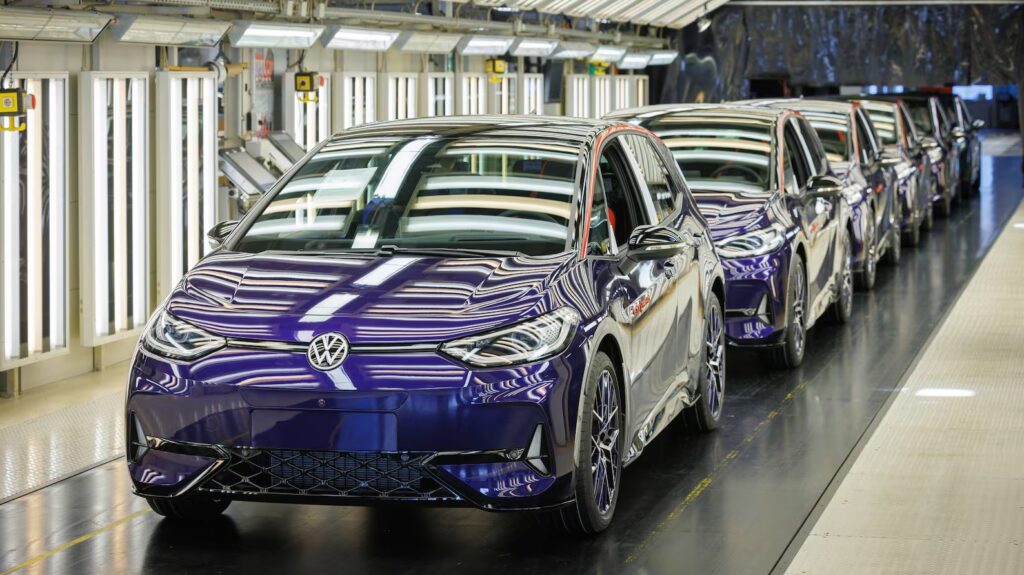
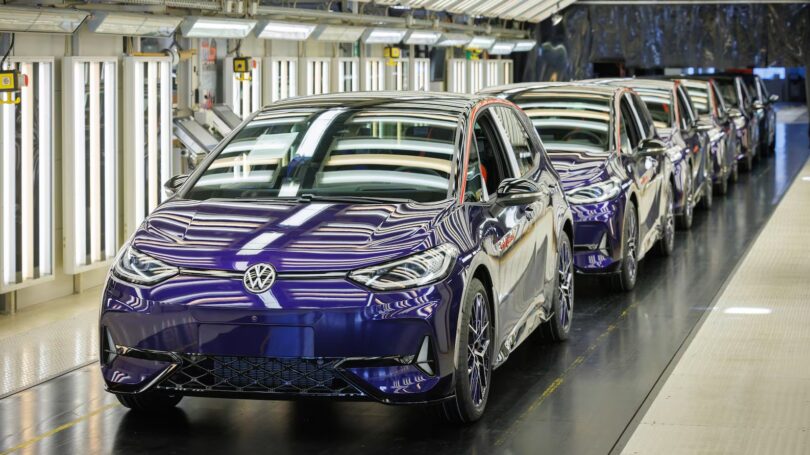
Additionally, under the proposed framework foreign firms seeking to establish manufacturing operations in the EU specifically in batteries and EVs are expected to form joint ventures or partnerships with European entities.
From a European perspective, this shift is justified as a means of “levelling the playing field” and ensuring reciprocity in global economic relations.
Implications for Chinese EV and Battery Firms
For Chinese companies, the IAA presents a structural challenge rather than a marginal regulatory adjustment.
In the past, Chinese firms expanded into Europe through exports, leveraging cost advantages and scaling production at home. Currently, they have started to invest in local manufacturing to circumvent tariffs and trade barriers.
According to industry analysis, the traditional “export first, localize later” strategy is becoming increasingly impractical and not conducive under the new framework.
Chinese firms are now expected to accept partnership conditions and share technology with European counterparts, limit investment in the EU and focus on alternative markets. They may be expected to restructure global supply chains to comply with local content requirements. It is evident for China, the options seem unviable and appear as trade-offs. Technology transfer could erode competitive advantages, while reduced investment risks losing access to one of the world’s largest EV markets.
China’s Reaction: Accusations of Protectionism
China was swift and critical in its response. The Chinese officials and analysts have characterized the policy as protectionist, censuring it as discriminatory against foreign firms while undermining the principles of free trade.
According to various reports, Chinese authorities have expressed “indignation” at the proposal and expressed that it could lead to reduced Chinese investment in Europe.
This new development indicates a growing rift in EU-China economic relations. Even though China remains one of the EU’s largest trading partners, several crevices have emerged in their partnership over matters with regards to trade imbalances, subsidies and market access.
The crosspoints
Both China’s and EU’s reactions are understandable in their own context as the access to those big markets, both EU and China, clearly offers significant opportunities for either side. China is not just a producer for Chinese EVs, such as BYD, SAIC Motor (MG/Roewe), Geely, NIO, etc. It is a big producer of Chinese made foreign brands, such as BMW and Mercedes Benz. As such, the EU regulation would put imports into the EU from those brands (BMW, Mercedes Benz, etc) under scrutiny and would decrease the margins, thus affecting their performance and shareholder sentiment. This would result in political pressure and it is likely that Germany will exert the greatest pushback, likely supported by France as another big auto producer.
The requirement for co-ownership and technology share brings another problem. EVs are extensive data collectors by design. While the Chinese are less likely to be worried about stolen technology, the main concern might be exposing the data transfer and storage protocols, likely done in China. EU has already pushed back to US companies doing that even though the US is strategically considered the closest ally and aligned ideologically closest to the European values. In the case of China, where their lobbies are significantly weaker and have openly declared that a change in the world order will be sought (as per Xi Jinping’s speeches at the CCP National Congresses in recent years), data outflow and storage in China might be considered a strategic risk.
The Broader Geopolitical Context
In the United States, the Inflation Reduction Act (IRA) introduced similar local content requirements and subsidies aimed at boosting domestic manufacturing. It can be inferred that the European IAA can be seen as a response to U.S. policy and to China’s industrial rise.
This convergence displays a new paradigm shift in Europe’s global economic governance, where it has transitioned from efficiency to resilience, providing conditional access to foreign actors while also bearing industrial competition in mind.
Anticipated Consequences for the EU
While the IAA aims to strengthen Europe’s industrial base, it carries potential risks.
First, rigid conditions on foreign investment could reduce inflows of capital and slow the deployment of new technologies. Chinese firms, in particular, have been major investors in battery manufacturing and EV production.
Second, local content requirements may increase costs. European production remains more expensive than Chinese manufacturing, and rapid scaling could prove challenging.
Third, there is a risk of retaliation. China could respond with its own restrictions on European companies or redirect investment to other regions, such as Southeast Asia or the Middle East.
Final remarks:
The controversy surrounding the Industrial Accelerator Act showcases a deeper transformation in global economic relations.
Once criticized as “forced technology transfer” in China is now being reconsidered in Europe and implemented as a legitimate tool of industrial policy. This reversal underscores the extent to which strategic competition has transformed economic thinking.
The EU’s message is crystal clear, access to its market specifically in critical sectors will no longer be unconditional. Instead, it will be utilized for bolstering Europe’s industrial and technological base.
Ultimately, the IAA illustrates a defining feature of the emerging global order where the economic interdependence continues, but it is increasingly governed by strategic considerations.
More on China:
Huawei: China’s Long Reach Strategy: https://www.thestrategicperspective.org/huawei-chinas-long-reach-strategy/
Huawei’s 5G Networks – Good Deal or Unacceptable Risk: https://www.thestrategicperspective.org/huaweis-5g-networks-good-deal-or-unacceptable-risk/
China’s 2049 plan a big challenge before the world: https://www.thestrategicperspective.org/chinas-2049-plan-a-big-challenge-before-the-world/