
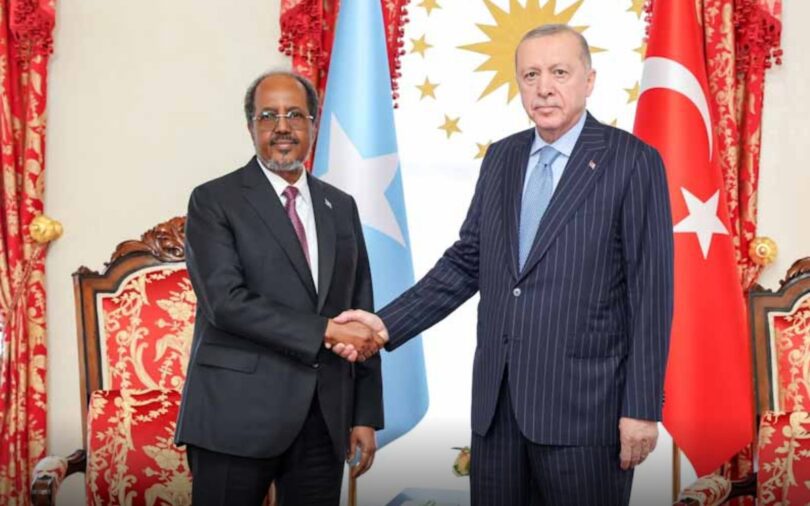

On 17 February 2026, the Turkish President Recep Tayyip Erdogan reiterated Turkey’s stance against Israel’s recognition of Somaliland in a joint press conference held in Addis Ababa with Ethiopian Prime Minister Abiy Ahmed. The Turkish President explicitly stated that Israel’s recognition “benefits nobody” and was dangerous for regional stability.
This development proceeded post Israel’s official acknowledgement of Somaliland as an independent state on 26 December 2025. This way it became the first UN member state to officially consider Somaliland as an independent sovereign, contrary to the international consensus which recognizes it as part of Somalia. Israel’s declaration was fiercely met with strong opposition from Turkey at the time, which continues to share deep political, military, and economic ties with Somalia as a part of its “Anchor State strategy”.
Israel’s move on the other hand can be attributed to its motivation for securing maritime routes against Houthi threats, countering Iranian influence, establishing a potential military / intelligence presence in the Horn of Africa, and expanding the Abraham Accords framework, besides reducing Turkey’s influence in Somalia.
In response to the Israeli declaration, Somaliland’s president dubbed the development “a historic moment”, but Mogadishu issued a sharp rebuttal, calling Israel’s move as an unlawful encroachment on Somali statehood.
Several nations such as Saudi Arabia and the African Union have criticised the Israeli declaration since then. China’s foreign ministry spokesperson Lin Jian stated that “No country should encourage or support other countries’ internal separatist forces for its own selfish interests.” The US, however, defended Israel’s decision at an emergency session of the UN Security Council. It critically highlighted the hypocrisy of various UN member states calling their lack of support for Israeli declaration of Independent Somaliland as a stark contradiction to the decision taken by them in recognising the Palestinian state, which the US had opposed.
The US deputy ambassador to the UN, Tammy Bruce, had stated “Earlier this year, several countries, including members of this council, made the unilateral decision to recognise a non-existent Palestinian state, and yet no emergency meeting was called to express this Council’s outrage”.
The United States’ backing of Israel at the UN on Somaliland can be comprehended as a strategic signalling rather than a policy shift. It displays its deep alignment with Israel, concern over Red Sea security, and the intention to counter rival powers in the Horn of Africa.
Simultaneously, Washington is balancing this support with its longstanding commitment to Somalia’s territorial integrity.
Israel’s national security strategy emphasizes upon forward positioning giving Israel a leverage by ensuring “security beyond borders”. Somaliland provides it with the required incentives, to offer it with a quid pro quo approach.
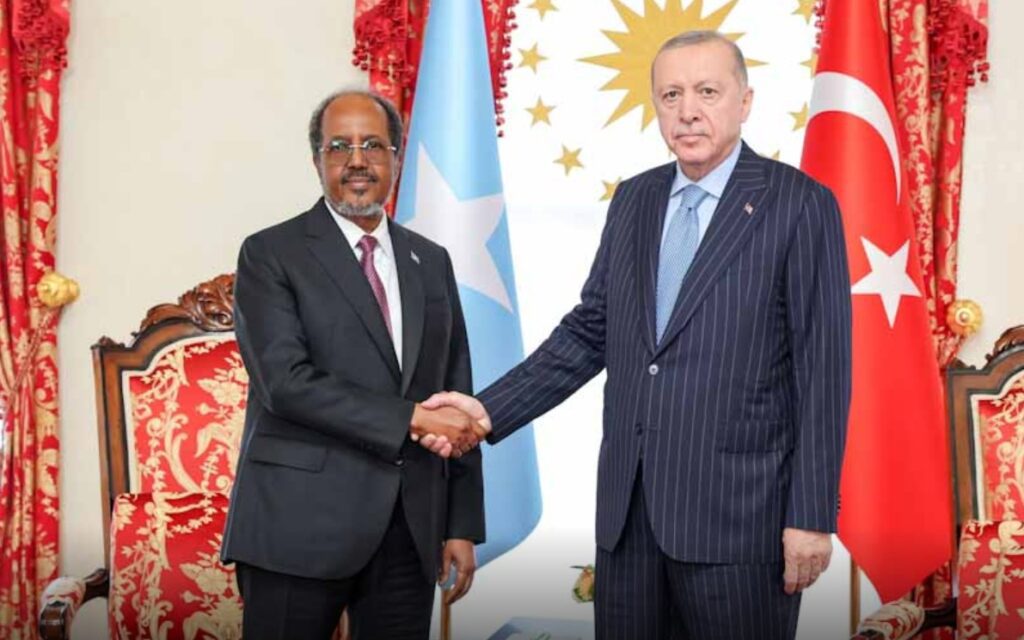
Istanbul’s opposition to Israel’s recognition of Somaliland and its strategic interest in Somalia
Israel’s recognition of Somaliland as an independent entity from Somalia has been deemed “unlawful” by Istanbul. Taking to X, the Turkish Foreign Ministry spokesperson Oncu Keceli censured Tel Aviv’s action by calling it a “new example of the Netanyahu government” aimed at creating instability regionally and globally. Furthermore, Keceli called this development as Israel’s strategy to impede the recognition of the State of Palestine.
It is imperative to mention, the ruling AKP party in Turkey is heavily invested in political Islam, making the Palestinian cause as a focal issue to its strategic plan. It has consistently projected Hamas as a liberation group. The other reinforcing factor to support Somalia stems from Turkey’s desire to position itself as a paladin of justice for the Global South and the Muslim world, against West’s support for Israel.
Additionally, Turkey aligns with the UN / African Union norm of maintaining colonial-era borders to avoid fragmentation, stressing that borders should not change unilaterally and the decisions must rest with Somali determination in the case of Somaliland. Apart from Istanbul’s concern leading to fragmentation of Somali state, it cannot be denied the probability of secessionist elements which can be triggered due to domino effects and possibly increasing tensions among Somalia, Ethiopia and other Gulf actors, thus leading to instability in the area.
It can be inferred that Turkish reasoning is owed to its own investments in Somalia which rely heavily on ensuring the stability of the region. Israel on the other hand, can be gauged from its own opportunity driven geopolitics by reducing the Turkish influence in the region.
Turkey is known to operate its largest overseas military base Camp TURKSOM in Mogadishu, since 2017. The base was built and is operated by the Turkish Armed Forces. The base’s primary utilisation is to train the Somali National Army (SNA) with also a strong focus on the development of an elite Somali unit known as “Gorgor” (Eagle) commandos.
This provides Turkey with an opportunity to engage in the restructuring of Somalia’s military institutions, advise the Federal Government of Somalia on defence policy, support command structures and provide equipment, uniforms, and infrastructure. Turkish strategic interest is not limited to land operations, Istanbul’s interest in Somalia’s coastline and maritime security is also indicative of its wider Indian Ocean / Red Sea access strategy. Control of critical maritime routes helps monitor maritime trade, counter piracy, instability while competing with Gulf states, Western navies, emerging rivals such as Israel and China. This is the reason for its interest in the Horn of Africa, which is located near the Red Sea and Bab el-Mandeb Strait, which happens to be one of the world’s most important chokepoints.
Turkey is not merely present in the Horn of Africa; it is strategically defending an entire regional strategy it has spent over a decade constructing.
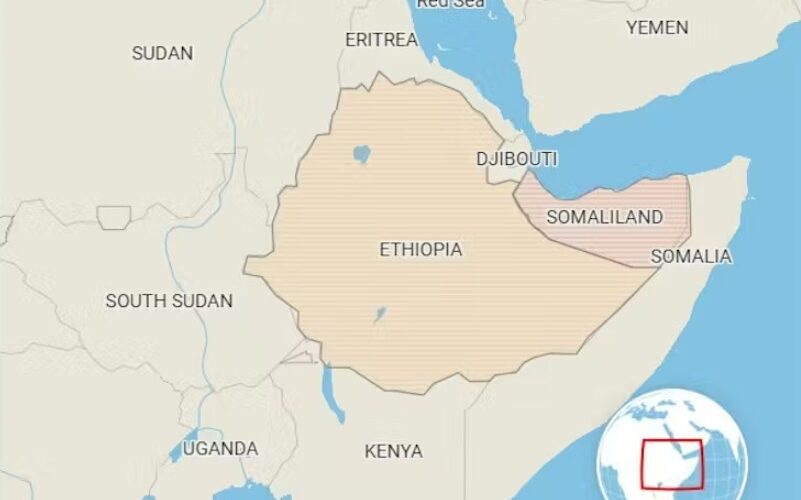
Israel’s strategy relies on reshaping the status quo rather than preserving it. Somaliland presents an opportunity of a relatively stable, self-governing entity in an unstable region, situated along one of the world’s most critical maritime corridors. Hence acknowledging its sovereignty secures Tel Aviv’s access to strategic geography near the Red Sea while simultaneously increasing its diplomatic footprint in Africa.
Somalia’s realignment toward Qatar, Turkey’s military signalling, and rising tensions involving Gulf actors all point to a region entering a phase of structured competition. The question of Somaliland’s status has swiftly transformed from a regional contest to a broader one which involves multiple external powers.
The possibility of the Horn of Africa shifting from a zone of fragile cooperation into a theatre of sustained geopolitical rivalry remains likely.
Conclusion
Somalia’s strategic importance lies in its location. Stretching along Africa’s longest coastline, the country sits adjacent to one of the world’s most critical maritime corridors: the route linking the Red Sea to the Indian Ocean. This passage, anchored by the Bab el-Mandeb strait, carries an extensive portion of global trade, including vital energy shipments. Presumably any state with influence over Somalia is able to maintain a proximity to this chokepoint. This gives a leverage point in monitoring or potentially shaping maritime flows between Europe, Asia, and the Middle East.
Since the collapse of the Somalian central government in 1991, the nation has strived to rebuild cohesive governance. Federal structures remain weak, authority is unevenly distributed, and security threats persist. This environment facilitates the probability of a “permeable state,” where external actors can engage deeply with political, military, and economic systems.
Somalia, contrary to centralized states such as Ethiopia, offers multiple entry points for influence. Foreign governments are able to partner with national institutions, regional administrations, or security forces, often simultaneously. This allows external powers not only to engage but to shape outcomes in ways that would be far more difficult elsewhere.
Turkey has established one of the most comprehensive engagements in the country, combining military training, infrastructure development, and humanitarian assistance.
Contrarily, the United States, views Somalia predominantly through a security framework. Its involvement is focused on counterterrorism operations, particularly against militant groups that threaten regional stability.
The United Arab Emirates has focused on commercial and logistical influence. Through port development and infrastructure projects, UAE seeks to control key nodes in regional trade networks. This strategy also aligns with the vision of dominating maritime commerce across the Red Sea corridor similar to Turkish aspirations.
China also has been seen pushing its interests in the region through infrastructure financing and integration into global trade routes.
The Israel–Turkey rift over Somaliland is more than a diplomatic dispute, it’s a high-stakes contest for influence in the Horn of Africa. Israel seeks strategic footholds and maritime access, while Turkey defends Somalia’s territorial integrity and its own regional interest. In a region that controls critical trade routes and chokepoints, the outcome of this rivalry will shape not only Somaliland’s future but the balance of power across the Horn of Africa.
More on Turkey’s foreign policy:
Turkey’s Transnational Jihad: Proxy Warfare, SADAT and Terror Financing: https://www.thestrategicperspective.org/turkeys-transnational-jihad-proxy-warfare-sadat-and-terror-financing/
Turkey Extends Syria and Iraq Military Mandate to 2028: https://www.thestrategicperspective.org/turkey-extends-syria-and-iraq-military-mandate-to-2028/
US deports a disconcerted Pakistan Ambassador KK Ahsan Wagan: https://www.thestrategicperspective.org/us-deports-a-disconcerted-pakistan-ambassador-kk-ahsan-wagan/
Pakistan-Turkey Strategic Talks: https://www.thestrategicperspective.org/pakistan-turkey-strategic-talks/