
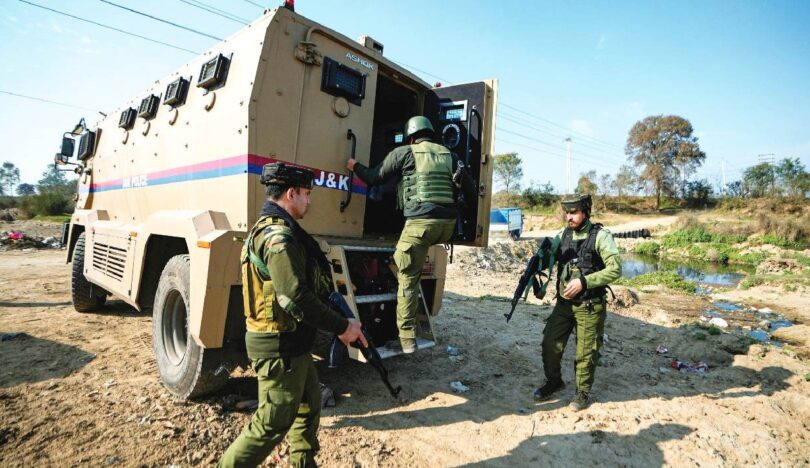

On 23 February 2026, India concluded Operation Trashi-I was a major counter-terrorism mission.
The Initial Launch of the operation (Jan 14–18): According to reports the preliminary movements under the operation commenced around 14 January 2026 in Kishtwar, with the formal code-named operation and first direct contact with terrorists occurring on 18 January 2026.
Engagements: Contact was re-established on multiple occasions between January and February (notably Jan 22, Jan 25, Jan 31, Feb 4, and Feb 8) as forces continued to maintain surveillance and track approximately seven individuals from the Jaish-e-Mohammad (JeM) outfit.
On 23 Feb 2026), the operation was declared a success after 326 days of tracking and neutralising all seven targeted terrorists in the rugged, mountain terrain of the Chatroo forest belt.
Target of the Operation
It was conducted to dismantle the “Saifullah Gang” a group of Jaish-e-Mohammed (JeM) terrorists operating in the area.
The operation is a successful example of intelligence-led missions in one of the region’s most challenging terrains.
A Carefully Planned Intelligence-Based Operation
Operation Trashi was a meticulously designed operation with coordinated intelligence inputs gathered over time. Agencies tracked militant movement through a combination of local human intelligence and technical surveillance. Once the presence of a group linked to Jaish-e-Mohammed was ascertained, including a high-value commander, forces reacted and mobilised swiftly to carry the operation.
The designated area was sealed overnight to prevent the terrorists from evading capture, with multiple teams positioned strategically along possible exit points. Such planning is essential in Kishtwar, where dense vegetation and mountainous terrain can easily allow militants to slip through gaps if operations are not tightly coordinated.
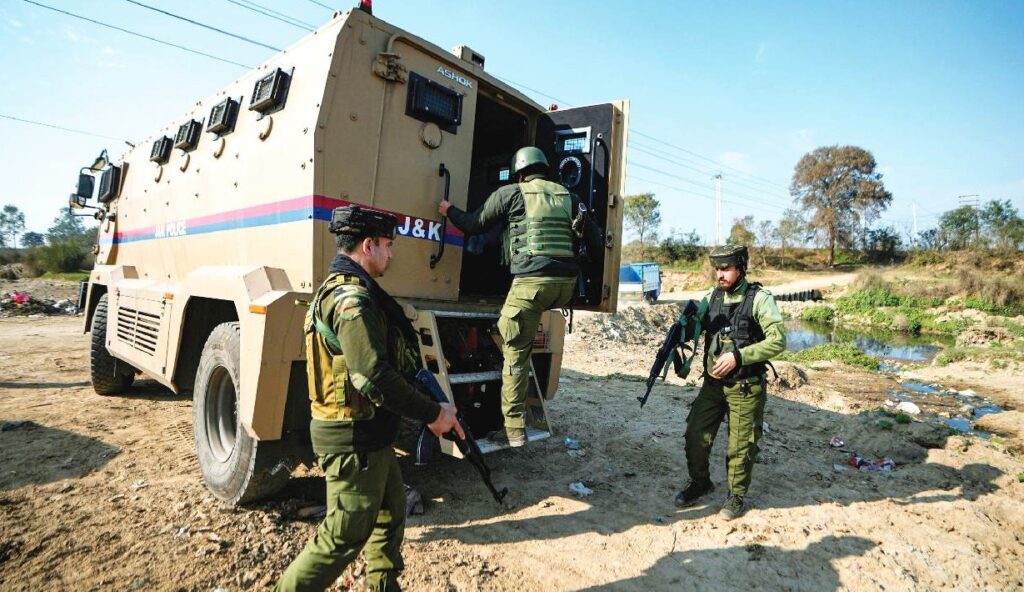
The Encounter and Elimination of Militants
After cordoning the area, security forces initiated contact. The militants retaliated with gunfire, leading to a controlled but intense clash. The Indian forces maintained tactical discipline, ensuring minimal risk to civilians while applying precise force.
The encounter resulted in the neutralization of three terrorists. Among those terminated was Saifullah, identified as a key commander within JeM and who was considered as a major operational asset for the outfit. His role reportedly was to plan attacks and coordinating terrorist activity in the region.
The identities of the other two militants have not yet been officially disclosed and may be pending verification and further intelligence assessment.
Leadership Recognition and Strategic Messaging
Post the success of the counter terrorism operation, Lieutenant General Pratik Sharma, General Officer Commanding-in-Chief of Northern Command, visited Kishtwar to assess the situation on the ground. During his visit, he commended the troops, police personnel, and supporting agencies for their “swift and precise action.”
He stressed on the importance of joint operations and commended the high level of professionalism displayed. The visit also signalled a reinforced strategic message: the continued commitment of Indian security forces to ensuring a peaceful and terror-free Jammu and Kashmir.
The Role of Terrain: Why Kishtwar Is Critical
Kishtwar is a tactically sensitive zone. Its topography supporting the rugged mountains, heavily forested areas and limited accessibility make it a conducive hideout and transit corridor for terror outfits. These geographical features make surveillance and prolong operations difficult. Hence the requirement for a specialized and an exceptional coordination from security forces.
The effectiveness and success of such operations disrupt militant mobility, restrict regrouping, and break down logistical networks.
Meet Tyson: The 2 Para SF K9 who stared danger in the face, sculpted by DBTS Taralu, @crpfindia. 🐾
— 🇮🇳CRPF🇮🇳 (@crpfindia) February 23, 2026
During a high-stakes Op by 2 Para SF in J&K, Tyson was the first to charge the terrorist hideout. Despite sustaining a bullet wound, this elite German Shepherd never faltered.… pic.twitter.com/7KTTiTBsjB
Tyson: K9 Warrior Behind the Lines
The Central Reserve Police Force (CRPF), highlighted the courage of one of its canine warriors Tyson, a German Shepherd K9 who sustained injuries while leading the counterterror operation in Jammu and Kashmir. A post was shared on X by the official CRPF handle mentioning Tyson. Tyson played an important role by charging first into a terrorist hideout despite the hostile terrain and weather conditions. The brave K9 continued the mission despite sustaining a bullet injury to his paw, contributing to the successful termination of three terrorists.
K9 dogs like Tyson are trained for high-risk roles, which include tracking militants through dense forests, detecting hidden threats, and guiding forces through unpredictable terrain. In terrains such as the one found in Kishtwar, where visibility is limited and technology has constraints, the K9 groups play an essential role due to their instincts.
Tyson’s story symbolizes the courage, discipline, and silent service that support every successful mission.
What Follows After Such Operations
Operations of this scale are rarely isolated. After the encounter:
The area is likely to be thoroughly searched for weapons and digital evidence.
Intelligence agencies will be expected to analyse the recovered material to track wider networks.
Surveillance is intensified in nearby zones to deter regrouping of individuals from terror outfits/groups.
Follow-up operations may happen which will help to capitalize on the disruption caused in the terror activity.
Operation Trashi stands as a clear example of how coordination, intelligence, and tactical discipline can yield decisive outcomes even in the most challenging environments. While the elimination of three militants suggests a tactical success, the larger objective remains ongoing to maintain a long-term stability in Jammu and Kashmir.
Counter-insurgency regarding Jaish-E-Mohammad:
Jaish-e-Mohammad (JeM) terrorist eliminated in Udhampur: https://www.thestrategicperspective.org/jem-terrorist-eliminated-in-udhampur/
From Gaza to Kashmir: Jihadist convergence of Hamas and Pakistan based Terror groups: https://www.thestrategicperspective.org/from-gaza-to-kashmir-jihadist-convergence-of-hamas-and-pakistan-based-terror-groups/
Turkey’s Transnational Jihad: Proxy Warfare, SADAT and Terror Financing: https://www.thestrategicperspective.org/turkeys-transnational-jihad-proxy-warfare-sadat-and-terror-financing/
White-collared terrorists and their Pakistan-loving Kashmiri predecessors: https://www.thestrategicperspective.org/white-collar-terrorists-and-their-pakistan-loving-kashmiri-predecessors/
The Nowgam Blast: https://www.thestrategicperspective.org/the-nowgam-blast/