

Turkish Aerospace Industries (TUSAS/TAI) is set to accelerate its expansion into Southeast Asia, as it announced its defence cooperation with Malaysia during the Defence Services Asia (DSA) 2026 exhibition in Kuala Lumpur.
The DSA 2026 took place between 20 – 23 April 2026 in Kuala Lumpur, Malaysia. It is a biennial (every two years) defence exhibition which focuses on bringing together global defence companies, military officials, and government representatives.
TAI Chief Executive Officer Mehmet Demiroğlu described Malaysia as a “key strategic partner,” indicating Ankara’s interest in building a long-term industrial and military collaboration in the region.
Mehmet Demiroğlu also highlighted that the company had strong relations with Malaysia, specifically since the delivery of three ANKA unmanned aerial vehicles (UAVs) to the Malaysian Air Force.
“Our work with Malaysia continues with UAVs and the Hürjet program,” he stated. He further added “We have a TAI office in the country with more than 120 workers, serving as a bridge between Turkey and Malaysia.”
It is apparent that Ankara is focused on bolstering its defence export footprint across ASEAN, leveraging Malaysia as both a customer and a regional hub for future projects.
From Buyer to Strategic Partner
Defence cooperation between Turkey and Malaysia have grown gradually over the years. This was further reinforced post Kuala Lumpur’s acquisition of TAI’s ANKA unmanned aerial vehicles (UAVs). The drones which are utilized primarily for maritime surveillance, marked a significant milestone in bilateral defence cooperation and established TAI as a reliable supplier in the region.
As expected, the relationship seems to be evolving beyond procurement and additionally into an industrial collaboration.
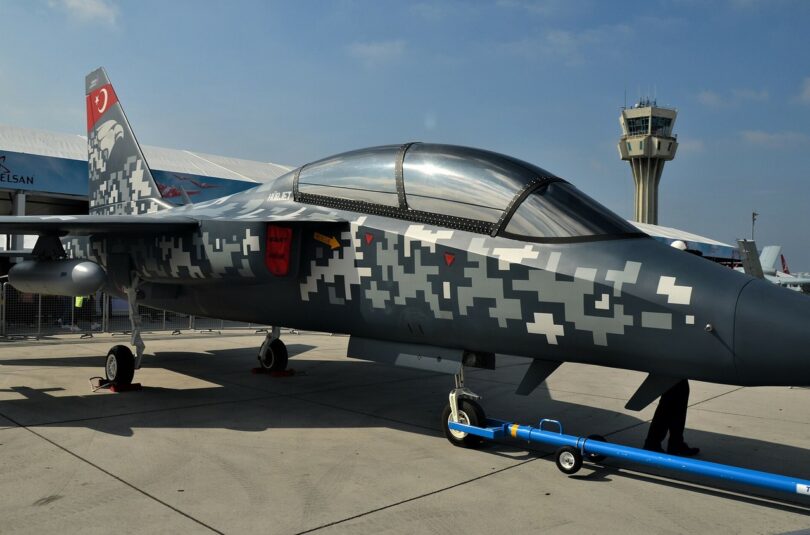
Turkey’s TAI is promoting its HÜRJET advanced jet trainer and light attack aircraft to Kuala Lumpur, while conducting meetings and talks including potential local industry participation and technology transfer. A symbolic endorsement came during DSA 2026, when Malaysian Prime Minister Anwar Ibrahim signed a full-scale model of the aircraft at the exhibition.
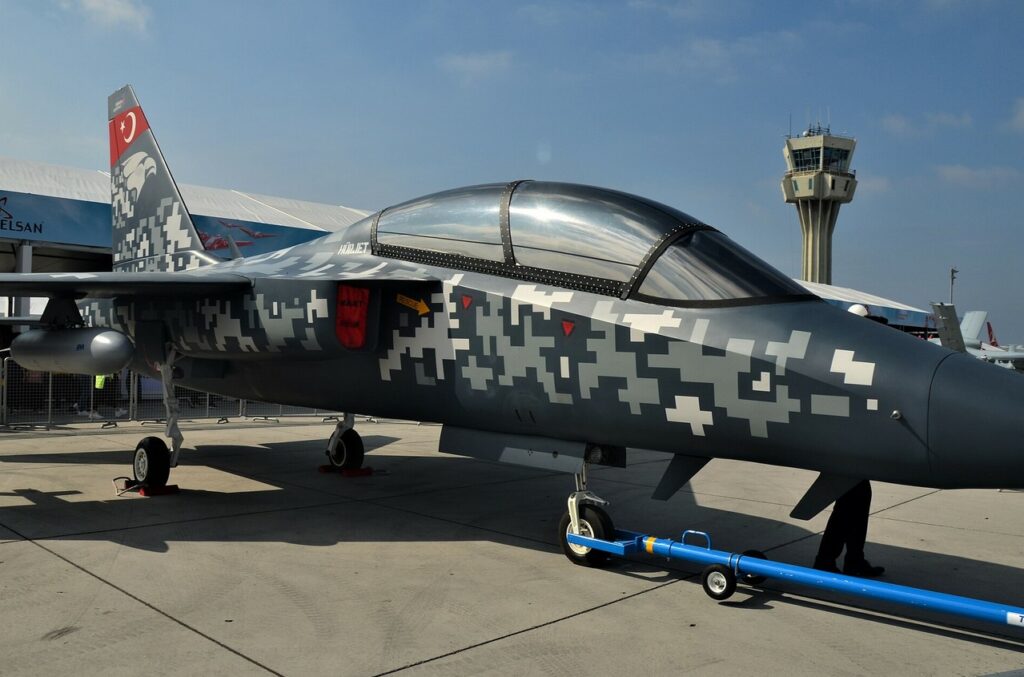
HÜRJET is Turkey’s domestically developed supersonic jet trainer, designed to prepare pilots for next-generation fighter aircraft while also serving as a light combat platform. This makes it a versatile and cost-effective option for emerging air forces.
HÜRJET is being marketed internationally not only to Malaysia but possibly Spain with whom Ankara seeks potential cooperation.
Initially, Malaysia previously opted for South Korea’s FA-50 for its light combat aircraft program. However, TAI’s engagement suggests a long-term strategy focused on partnership rather than single contract wins.
TAI has already employed more than 100 personnel in a local office which supports engineering, logistics, and partnership development. This on-the-ground footprint can be expected to become a crucial factor in facilitating new agreements and sustaining existing programs.
Furthermore, TAI’s subsidiary CTech signed a new agreement with Malaysian firm AR Eastern during the exhibition. The deal focuses on secure satellite communications and anti-jamming technologies, expanding the scope of cooperation into defence electronics and cyber-resilient systems.
The agreement indicates that TAI’s strategy is to diversify beyond platforms such as aircraft and UAVs into integrated defence solutions.
Turkey is viewing Malaysia as a gateway to influence a larger ASEAN defence market which is anticipated to be one of the fastest-growing regions for military modernization.
Despite the Turkish aspirations, the competition in the region remains intense. Regional procurement programs have attracted strong interest from South Korean, European, and Chinese defence manufacturers, all looking to expand their influence in ASEAN’s growing security landscape.
Against this backdrop, Turkey’s strategy emphasizes flexibility, technology transfer, and partnership-driven growth. These factors may resonate with countries seeking to develop their domestic defence industries.
The TAI officials have expressed confidence in the ongoing discussions, which will translate into larger projects in the coming years.
From the recent developments, it can be inferred that TUSAS is not just selling platforms, but it is positioning itself as a long-term partner in the region’s defence ecosystem.
More on Turkey’s strategic policies:
Turkey’s Incirlik and NATO security arrangement: https://www.thestrategicperspective.org/turkeys-incirlik-and-nato-security-arrangement/
Somaliland Sparks Turkey–Israel Clash: https://www.thestrategicperspective.org/somaliland-sparks-turkey-israel-clash/
Turkey Explores Joining Saudi–Pakistan Defence Pact: https://www.thestrategicperspective.org/turkey-explored-joining-saudi-pakistan-defence-pact/
Turkey’s TPAO Enters Pakistan’s Hydrocarbon Frontier: Strategic Stakes Beyond Headlines: https://www.thestrategicperspective.org/turkeys-tpao-enters-pakistans-hydrocarbon-frontier-strategic-stakes-beyond-headlines/
Turkey Extends Syria and Iraq Military Mandate to 2028: https://www.thestrategicperspective.org/turkey-extends-syria-and-iraq-military-mandate-to-2028/
Turkey’s Transnational Jihad: Proxy Warfare, SADAT and Terror Financing: https://www.thestrategicperspective.org/turkeys-transnational-jihad-proxy-warfare-sadat-and-terror-financing/
Turkey-Egypt Agreement to jointly produce VTOL drones in Cairo: https://www.thestrategicperspective.org/turkey-egypt-agreement-to-jointly-produce-vtol-drones-in-cairo/
Pakistan-Turkey Strategic Talks: https://www.thestrategicperspective.org/pakistan-turkey-strategic-talks/