
India has been actively targeting colonial vestiges to foster national identity rooted in indigenous heritage. Politically, this decolonization led by the current administration aims to erase symbols of imperial rule, British-era names are continually being phased out, for example; Delhi’s Rajpath is renamed Kartavya Path. But the government is loath to change the British-era name of “India” to “Bharat” or “Hindustan”, ducking under the cover that the preamble of the Constitution says “India, that is Bharat”. This, despite India’s Constitution amended 106 times since its enactment in 1950, Ceylon changing its name to Sri Lanka in 1972, and Burma changing its name to Myanmar in 1989.
The service chiefs are vying with each other to change British-era uniforms and non-uniform attire, and hundreds of British-origin names in Army cantonments have been changed. But the ‘Peaked Cap’ of colonial-era remains with the military and police forces. Surprisingly, there is no move to replace the Peaked Cap with the side cap that Field Marshal Sam Manekshaw wore, the like of which even Netaji Subhash Chander Bose sported.
The British looted USD 47 trillion and perpetrated horrific atrocities in India during British rule. There is talk of Britain returning the Kohinoor diamond (which Queen Camilla reportedly doesn’t sport) to India because of Prime Minister Narendra Modi’s efforts. There is speculation as to where the Kohinoor be kept if returned to India, will it be stolen like the gold sandals and necklace of Lord Ram in Ram Mandir, or substituted with a fake. However, India remains part of the British Commonwealth, which should be renamed British Common-Looted Wealth, and the India-UK Free Trade Agreement (FTA) is scheduled to come into effect on July 15, 2026.
The debate over India’s decolonization efforts ranges from instilling national pride to a low-effort emotion-driven strategy by the government to deflect attention from its inability to solve current problems and scams, as well as the name-changing game. The piecemeal changing of British and Mughul-era names, with accompanied fanfare, is considered politically beneficial, especially close to elections, rather than a once-for-all overhaul, which is easy in Digital India.
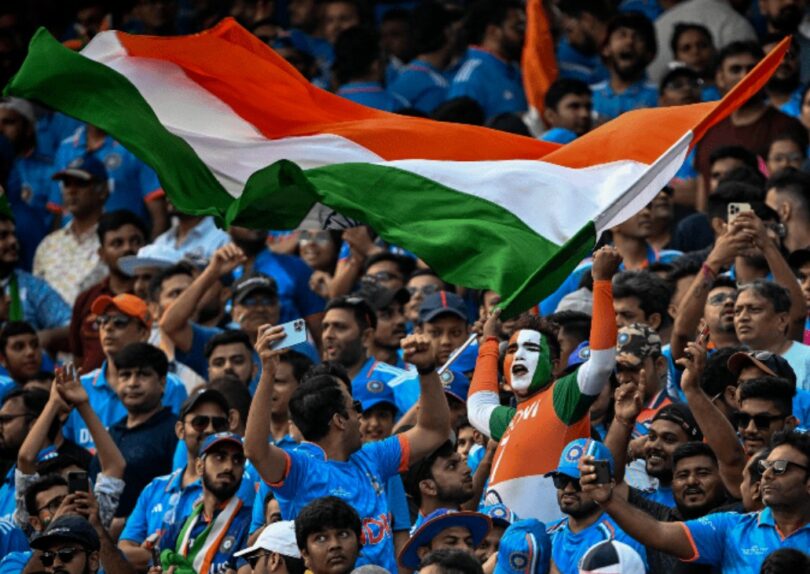
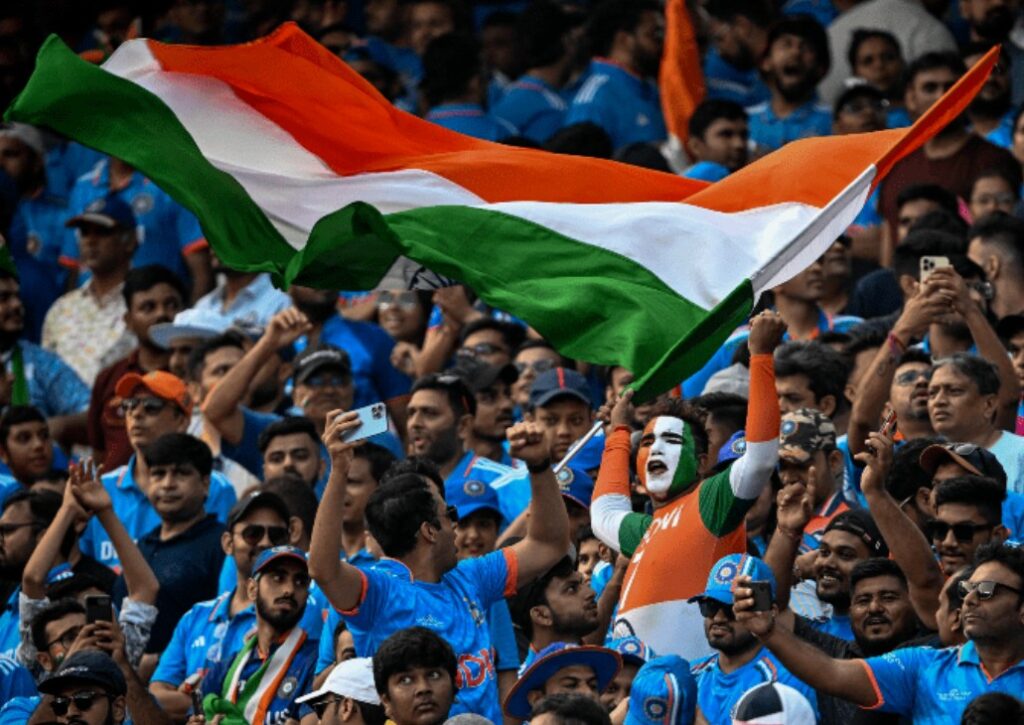
But what stands out as the turd in a punchbowl amid the Indian government’s down with colonialism campaign is its demonstratively effusive love for cricket. Cricket is very much a colonial game, which originated in England, and spread across the globe primarily through expansion of the British Empire; the British introduced the sport to their colonies as both a recreational pastime for soldiers and settlers and an instrument to instil British cultural values. Cricket was promoted to bind the vast British Empire together; creating a shared cultural language among diverse territories, from the Caribbean to South Asia and Australasia, becoming what many historians call the “Sport of the Empire".
The government’s love for cricket is focused on money, money and more money – using cricket as the goose that lays golden eggs. The Board of Control for Cricket in India (BCCI) is the richest cricket board globally, generating annual revenues between INR 12,000 to INR 20,000 crore and boasting a surplus exceeding INR 20,000 crore. It pays zero direct corporate income tax on these profits because it is officially registered as a charitable organization under Section 12A of India's Income Tax Act. As long as the BCCI's revenues, like those from the Indian Premier League (IPL) and media rights, are reinvested back into the development and promotion of cricket, they are exempt from income tax; although there have been concerns about how the reinvestment is actually done. Mayank Shrivastava, IISc Bengaluru Professor, has pointed out that a 40% tax on IPL profits could raise INR 15,000 crore (enough to fund 10 new IITs or a deep-tech innovation fund), and with franchise profits added, nearly INR 6,000 crore a year could be redirected to research; India’s investment in R&D is abysmally low, but adopting Shrivastava’s recommendations may be considered weakening the cash cow.
Jay Shah, son of Union Home Minister Amit Shah, serves as the Chairman of the International Cricket Council (ICC), since December 1, 2024, after being elected unopposed as the youngest leader in the organization's history. Prior to this, he served as the Honorary Secretary of the BCCI starting in October 2019, as well as the President of the Asian Cricket Council (ACC). Instead of a fixed monthly salary, Jay Shah’s earnings are structured around substantial per-diem allowances and premium travel coverages. He receives a daily allowance of INR 84,000 (USD 1,000) for international meetings/tours and is entitled to INR 40,000 per day for domestic meetings in India. In addition, he receives INR 30,000 per day for board-related travel not tied to formal meetings. All operations include business-class air travel and accommodation bookings in premium luxury hotel suites. Jay Shah’s estimated net worth is approximately INR 124 crore (around USD 15 million); good achievement for 37-year-old who never held a cricket bat.
Rajeev Shukla, seen shuffling around in Parliament during the Congress rule, is the Vice-President of the BCCI. He is a prominent Congress leader, having served as a Rajya Sabha MP, member of the Congress Working Committee (CWC), as also Union Minister of State for Parliamentary Affairs and Planning. He previously served as the Chairman of IPL. Shukla has been continuously involved with the BCCI since the early 2000s. He does not receive a fixed annual salary for his honorary position. Like other principal office bearers, however, his estimated net worth is a measly INR 77 Crore, and he earns daily allowances and travel perks for his board duties. Shukla is unaffected amid BJP’s down with Congress campaign, with speculation he knows too many secret.
It may be recalled that on March 9, 2023, Prime Minister Narendra Modi and Australian Prime Minister Anthony Albanese drove around the Narendra Modi Stadium in Ahmedabad on a golf cart. The two leaders then attended the first day of the fourth Test match of the Border-Gavaskar Trophy. Modi advanced the India-Australia cricket camaraderie further by visiting the Melbourne Cricket Ground (MCG), accompanied by Albanese and Victoria Premier Jacinta Allan, during his recent visit to Australia, and himself posting on Facebook his cheerful high-five with Australia's official mascot, Ruby the Roo.
Former cricketer Steve Waugh, Lisa Sthalekar and other Australian sporting legends were present at the MCG, where Modi and Albanese jointly unveiled the India-Australia Sports Collaboration Roadmap, aimed at expanding cooperation in sports training and capacity building, sports science and technology, and the sports industry and investment sectors. The roadmap also proposes the organisation of an India-Australia Youth Sports Festival.
Congratulating Australia on its women’s cricket World Cup victory, India set to host the Commonwealth Games in 2030 and Australia preparing to host the Brisbane Olympic Games in 2032, Modi said both countries were entering a significant decade in international sports, sports play a unique role in bringing people together and the roadmap would help diversify and strengthen the sporting partnership between India and Australia.
With his passion for changing dresses, headgear, photo ops and sports, Modi was recently seen playing football with young boys and girls in Gangtok, Sikkim, during his two-day visit for Sikkim's golden jubilee statehood celebrations.
This generated speculation that India may participate in FIFA World Cup 2027. But Modi may be next seen padded up, batting on the cricket field, and hitting a AI-enabled sixer to beat Shahid Afridi’s world record of the longest six in international cricket history; 153 metres (502 feet).
Hockey was considered the national game of India, but India’s Ministry of Youth Affairs and Sports has clarified that the government does not designate any specific sport as a national game. This could be because India won eight Olympic gold medals in hockey, but none after the 1980 Moscow Olympics. One view is that India may be considering Cricket as the national game, however, the recent first-time series loss to Ireland and the 5-T20 whitewash against England doesn’t bode well. But the next Summer Olympics in Los Angeles (July 14-30, 2028) includes cricket in T20 format, and the US is importing Australian pitches for it.
Afghanistan is set to host India for an historic three-match T20 International series in New Delhi in September; September 13, 16, and 19, marking the first time Afghanistan will officially host India in international cricket. India could have possibly arranged this in Afghanistan (footing the bill and giving the credit to Taliban) but Donald Trump may could order Pete Hegseth to bomb the venues, akin to the US recently bombing Iran’s Chabahar Port, including the Shahid Beheshti terminal, which India heavily invested in and was operating. Trump’s favourite pooch, Pakistan’s army chief Asim Munir would also do his utmost to disrupt the India-Afghanistan series in Afghanistan.
China is keen on a new SAARC to include Afghanistan. India could have established a South Asia Cricket Association, but for its ‘Neighbours First’ policy that remains more on paper. The Trump Administration has buried the “Indo-Pacific’, but with India going Indo-Pacific in trade, defence ties and what not, India could perhaps assist countries like Japan, South Korea, Indonesia, even China to create world class cricket teams.
The latest is that the opening match of Australia’s Big Bash League, between Perth Scorchers and Melbourne Renegades will be played in Chennai on December 12, 2026. This may be just the start of Cricket Leagues of other countries also to play their league matches in India, enjoying the cuisine and ethnicity of India. This in turn may encourage the powers that be to build roads and highways without potholes, bridges/tunnels that don’t collapse within a few months of becoming operational and infrastructure, including airports that can withstand rains.
All said and done, while cricket cannot shed its colonial tag, it undeniably is a crowd puller and akin to the mythological Kamadhenu in terms of being a money spinner. Defence Minister Rajnath Singh has been saying Pakistan Occupied Kashmir (POK) will automatically fall into his lap – so that worry of India is taken care of. But with the ongoing cricketing initiatives, the BCCI may become so rich, it could spearhead the buyback of Aksai Chin from China, if not the independence of Tibet.
The author is an Indian Army veteran. Views expressed are personal.