
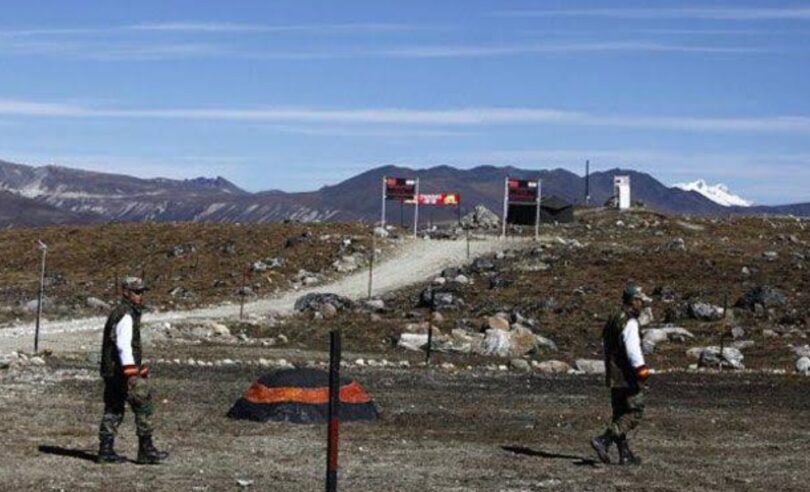
Reports continue to pour in of Chinese ingress in Arunachal Pradesh. However, these cover past decades, with the more recent Chinese incursion being China’s PLA denying Indian forces access to key patrolling points in the Taksing area of Arunachal Pradesh. A fact-finding committee (FFC) deputed by the People's Party of Arunachal (PPA) has reported that the PLA troops are effectively denying Indian forces access to key patrolling points in the Taksing area (Upper Subansiri District) in Arunachal Pradesh; incrementally expanding control over traditional grazing and hunting grounds of the locals along the Line of Actual Control (LAC).
The four-member committee, headed by former minister and PPA chief adviser Kahfa Bengia, visited Taksing on July 10, 2026. According to locals, after a physical confrontation between Indian and Chinese troops at Shera 5 Point in 2023, PLA troops dismantled the Indian markers and have since blocked Indian patrols from accessing the point. According to the team, Indian patrolling is largely confined to the April-October window due to harsh winter and heavy snowfall. Porters for carrying supplies are also not engaged in winter months.
The FFC has pressed for the following: accelerating the BRO road construction from Nacho to Taksing; prioritising the proposed 68-km BRO road from Galemo to Pokorla; expediting the Taksing-Pokorla road via Yaja and Huri under a time-bound schedule; construct a helipad at CP2 (Rest Point) and establish permanent Army base camps at CP4 and CP6; provide reliable power supply (instead of diesel generators) and functional telephone/network connectivity in forward locations like Maza and Galemo. Both jawans and local residents flagged poor power and communication links as major demotivating factors to the committee.
The Nah Welfare Society (NWS) has also claimed that the PLA is encroaching on Indian territory near Taksing in Upper Subansiri District. In a letter addressed to the deputy commissioner of the district, the NWS claimed that the PLA is expanding its presence by occupying new areas of Indian territory along the border, saying “They have constructed roads, bridges, and set up military camps at many locations along the border in our ancestral lands, which were our hunting grounds where we freely roamed and collected forest produce just a few years ago. Our cattle grazing areas are now under the occupation of the Chinese PLA,” the society alleged. The NWS further claimed that PLA activities along the border areas of Taksing circle have increased manifold over the last 10 to 15 years”.
The society further alleged that areas such as Oying (2445) in the Asaphila area, Paniar (Chujarta area), Marpan (Marnafe), Portrang (Lake), and Tingdingtang (TG) – all located close to Taksing – have been captured by the PLA and they have set up a military camp. It claimed that some of these areas were under Indian control before 2020.
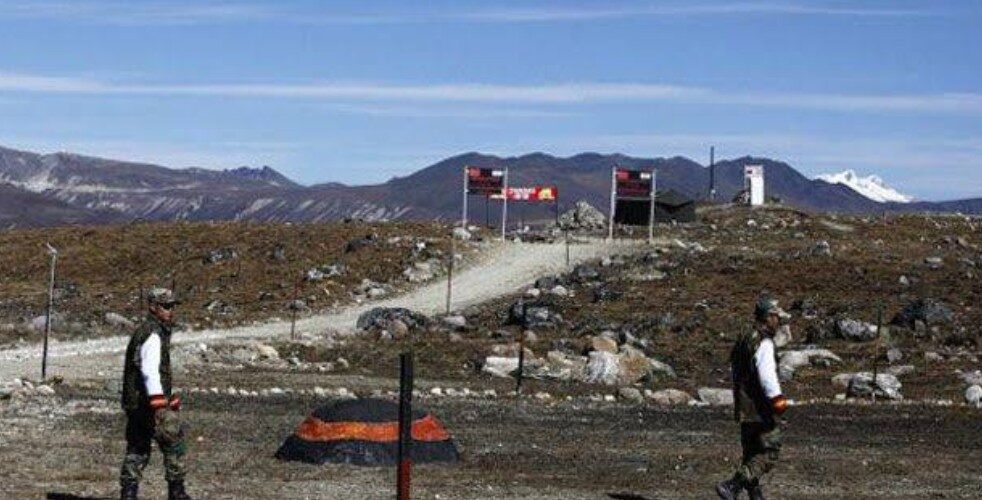
The NWS has urged the deputy commissioner to take up the matter with the state government and the Government of India. “The intention behind and the pace of the present activities of the Chinese PLA in the Taksing area are very alarming and a matter of grave concern for us. We are losing our land inch by inch every day. On behalf of the entire people of Taksing circle, we request the government to immediately take necessary steps to safeguard our land from the Chinese PLA,” the society added. The deputy commissioner did not respond to queries sent via WhatsApp (https://arunachaltimes.in/article/chinese-pla-encroaching-on-indian-territory-near-taksing-claims-group).
On September 29, 2023, the NWS submitted another memorandum to Governor KT Parnaik, highlighting various issues, including alleged frequent PLA trespass into the ancestral land traditionally used for yak rearing in high-altitude grazing grounds, particularly in Kejula and Sagamla areas; reiterating its demand for the establishment of defence outposts and security check posts at vulnerable locations, including Yamranchu, Pokalra, Pyabro Nyodi, Kejula and the Yaja-Pindogo river junction. It stated that, despite repeated appeals, no concrete action has been taken. The 2023 memorandum had also urged the government to construct a strategic road connecting Redding village in Taksing circle of Upper Subansiri district with Huri in Damin circle of Kurung Kumey district. According to the society, the proposed road would provide the shortest route from Assam, strengthen defence logistics, and improve connectivity between the two regions. It added that a similar proposal had earlier been submitted to Union Minister Kiren Rijiju, but the project is still awaiting approval. The NWS has also demanded construction of porter tracks, log bridges, ladder bridges and suspension bridges between Yaja village under Taksing circle and Gelomo/Bidak village under Limeking circle via the Korolosi-Pyabro Nyodi area to improve connectivity in the remote border region.
NPP leader and former MLA Paknga Bage has expressed serious concern over the claim made by the NWS that the PLA has captured Indian territory in the Taksing area. In a statement, Bage said the report has sparked fear among the people of the district, evoking memories of the 1962 war. “With photographic evidence, the NWS has asserted that the Chinese Army has taken control of Oying, Pantera, Marian, Portland Lakhs, and Kingman villages, erecting permanent structures in the area. The affected villagers are in a state of panic, fearing a recurrence of the 1962 conflict,” said Bage.
Bage requested the state government under the leadership of Chief Minister Pema Khandu to take immediate steps by taking cognisance of the claim made by the NWS. “I urge the state government to press the central government to formulate a strategic military response to recover the captured villages. This situation transcends a local issue in Upper Subansiri and poses a significant threat to national security,” said Bage. He added that the people of India expect a categorical statement from the prime minister, the defence minister, members of Parliament, and the chief minister of Arunachal Pradesh on the government’s stand regarding Chinese activities along the Line of Actual Control (LAC) in the Taksing area (https://arunachaltimes.in/article/fmr-mla-expresses-concern-over-alleged-pla-incursion).
Reports of youth from Arunachal Pradesh being abducted by the PLA have emerged in multiple high-profile incidents since 2015. In 2015, an elderly local hunter, Tapor Pullom, went missing and was allegedly abducted near the border. In September 2020, five youths belonging to the Tagin community went missing from the forest of Sera-7 near the LAC in the Upper Subansiri District. In January 2022, a 17-year-old youth was reportedly captured by the PLA while out hunting near the Lungta Jor area in the Upper Siang District. In August 2022, two youth (cousins) went missing from the Chaglagam area in the Anjaw District while gathering medicinal herbs close to the LAC.
On September 12, 2020, following hot-line communication between the Indian Army and the PLA, five Arunachal youth were handed back to Indian authorities at Wacha near Kibithu. Similarly, one youth was handed back to Indian authorities on January 27, 2022 at the Watcha-Damal interaction point 9-days after he went missing. Three youths last seen near the LAC in August 2022 still remain missing. Despite ongoing appeals by family members and local leaders, the PLA has not acknowledged their presence in Chinese territory. The family of Tapor Pullom continues to campaign for information, alleging he has been in PLA captivity since 2015.
Tapir Gao, BJP MP from Arunachal Pradesh had told the Parliament in November 2019 that China has intruded 50-60 km inside Arunachal Pradesh. In August 2026, amid local concerns over Chinese activities in the Upper Subansiri District, Gao revived his warnings, stating that subsequent events had vindicated his past alarms. Gao's recent warnings are heavily informed by local border villagers (such as in Taksing and Limeking) who report Chinese infrastructure, such as roads, bridges, and even model "Xiaokang" villages, being built in areas that locals historically used for hunting or herb gathering.
Union Minister Kiren Rijiju has rejected the narrative of a recent 50–60 km deep Chinese encroachment. His argument reflects the official stance of the Government of India and the Indian Army. Rijiju clarified that no newly established or effectively administered Indian villages have been captured. Because the 3,488-km LAC is not mutually demarcated on the ground, both India and China have completely different perceptions of where the border lies. Rijiju explained that both the Indian Army and PLA patrol up to their respective perceived borders. Chinese troops frequently enter undermarketed zones to leave behind marks, paint rocks, or abandon food wrappers to assert a presence.
At the same time, while China has systematically built military outposts and civilian infrastructure in specific friction points (like Longju or the Subansiri Valley), the Indian government points out that China has effectively held or controlled these specific pockets since 1959 and the aftermath of the 1962 war. But why is the local anxiety increasing? One explanation is that Chinese infrastructure development has accelerated significantly. Areas that were once isolated, high-altitude buffers are now seeing heavy PLA activity and Chinese road networks.
The point of serious concern should be PLA troops effectively denying Indian forces access to key patrolling points in the Taksing area (Upper Subansiri District) in Arunachal Pradesh from 2023. If this is true, it matches the Chinese tactics of keeping India under pressure with incremental salami slicing or territory – same as in Eastern Ladakh, where our troops still cannot patrol as earlier in areas like north bank of Pangong Tso, and where Sonam Wangchuk wanted to take out the ‘Pashmina March’ in Ladakh to highlight the local grazing grounds gone under PLA control.
All this also indicates that despite all the rhetoric, much more needs to be done by way of developing infrastructure in remote areas of Arunachal Pradesh; roads, tracks, bridges, helipads, forward security and logistics posts, and providing better telecommunication cover. We always talk about people in Gilgit-Baltistan jealous of the development on the India side. Do we want the public of Arunachal Pradesh to feel the same looking across the border? Arunachal Pradesh is a sensitive border state in the crosshairs of China. Hopefully, we are not classifying them as Cockroaches or Dimagi Naxals.
On August 7, 2026, the Ministry of Home Affairs (MHA) formally identified 27 locations in Arunachal Pradesh with their standard names on the official Survey of India (SoI) map, emphasizing that the move was aimed at ensuring accurate recognition and raising public awareness about these areas. This was in response to China giving Chinese names to 23 locations in Arunachal Pradesh recently. China refers to Arunachal Pradesh as "Zangnan" or "South Tibet". China hit back at this Indian move, calling it an attempt to reinforce territorial claims and insisting that the state is part of the ‘Zangnan’ region within the Tibet Autonomous Region. However, China has renamed 112 places/locations in Arunachal Pradesh beginning Aprill 2017 in six batches, and we have given 27 standard names only now. One view is that the uproar in Arunachal Pradesh led to this MHA action. Not surprising, Defence Minister Rajnath Singh has made no comments, instead choosing institutional action to address the public anger in Arunachal Pradesh.
The author is an Indian Army veteran. Views expressed are personal.