
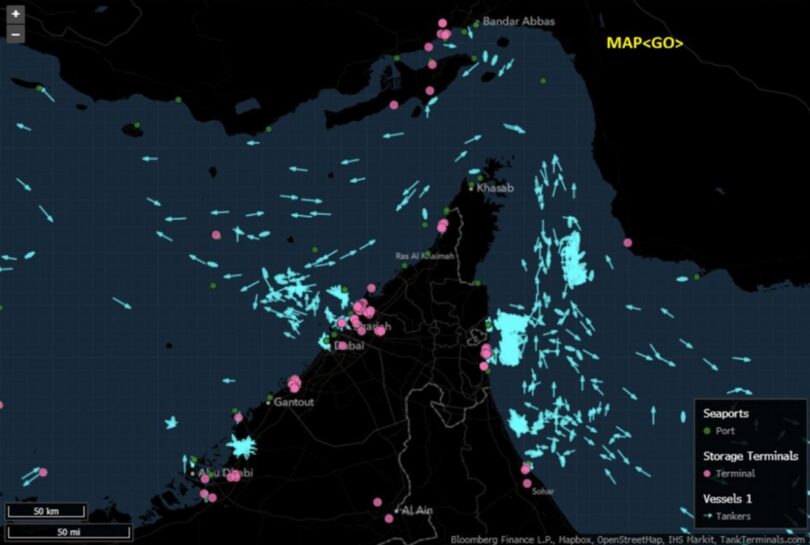

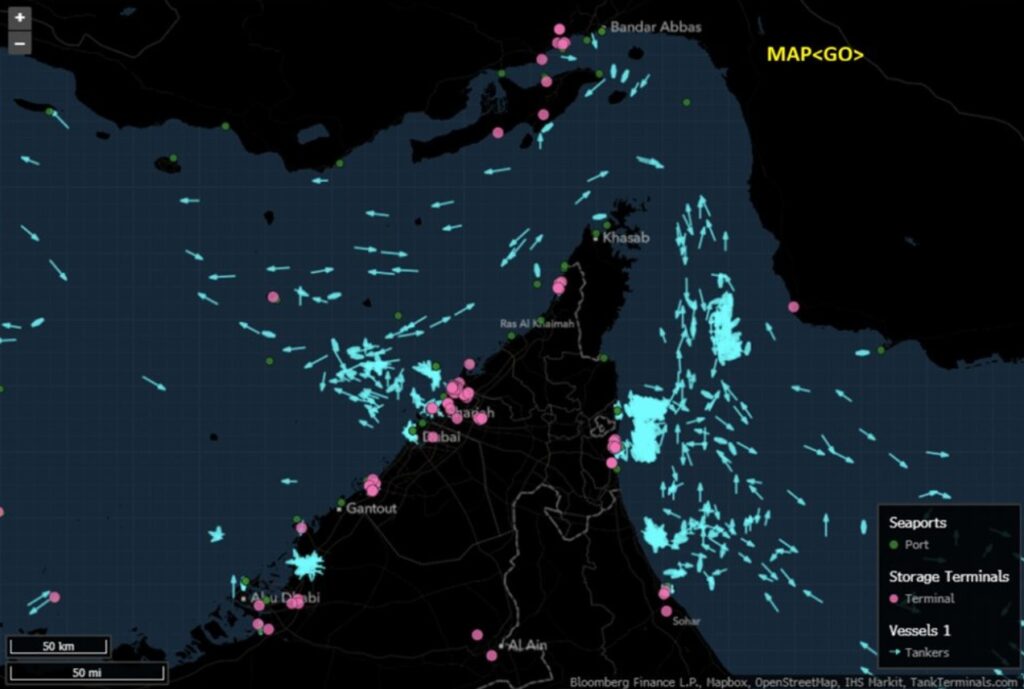
Since the Russia Ukraine war in 2022, the 28 February 2026 break out of the US-Israel-Iran war, followed by Iran's consequent closure of the Strait of Hormuz, has presented a critical challenge to South Asian energy security.
Based on reports, since early September 2026, the daily transits have plummeted to 6–12 vessels, which is still a stark decline from the pre-war baseline of 85–130 vessels. Subsequently, this acute supply side disruption has pushed the Brent crude to approximately $96 per barrel.
Despite a shared dependency on imported hydrocarbons, India, Pakistan, Bangladesh, and Sri Lanka possess vastly different financial buffers, diplomatic leverage, and shipping vulnerabilities. This disproportionality has allowed India to emerge as the region’s primary energy guarantor, providing a distinct alternative to Beijing’s string attached assistance.
In an analytical op-ed titled “How fuel-importing countries in South Asia can survive the next global conflict,” by Muhammad Hassan Dajana and Omais Abdur Rehman published in July 2026 on platforms like Dialogue Earth and later syndicated by regional media such as Scroll.in and the Dhaka Courier, the duo clearly remarked about China’s conditional assistance stating “The bill landed on the doors of Dhaka, Islamabad and Colombo long before it reached Washington or Brussels”.
BACKGROUND
The escalation can be traced back to February 28, 2026, when U.S. and Israeli forces struck Iranian military and nuclear facilities. The attacks led to Iranian retaliation throughout the Gulf, followed by missile and drone strikes on maritime shipping. The situation exacerbated on 27 March 2026, when the IRGC officially closed the Hormuz Strait to any vessel linked to the U.S., Israel, or their allies. Rather than a complete, consistent shutdown, the waterway became subject to a capricious pattern of temporary openings and sudden re-closures, with responsibility for each disruption heavily disputed by competing sources.
Date Development
28 Feb 2026: US-Israeli strikes on Iran are initiated. Iranian retaliation extends across the Gulf.
27 Mar 2026: IRGC declares the Strait closed to vessels linked to the US, Israel and allies; mines reported laid.
13 Apr – 29 May: US imposes a naval blockade on Iranian port. CENTCOM reports redirecting over 140 ships.
17 Jun 2026: US-Iran MoU reopens the Strait toll-free and traffic recovers only partially.
8 Jul 2026: Truce collapses after renewed attacks on commercial vessels, including an LNG carrier. Iran re-closes the Strait.
7 Sep 2026: Strait “effectively closed” to routine commercial shipping; convoys move under naval escort.
It is important to mention, Iranian and Western accounts of the Strait's status have frequently diverged.
Tehran has periodically described a “selective blockade” operating through a permission-based transit system favouring “friendly” flag states, including India's, while shipping trackers have generally described the waterway as functionally closed to normal commercial traffic regardless of formal declarations.
REGIONAL EXPOSURE: A SHARED CHOKEPOINT, UNEQUAL VULNERABILITY
Approximately, 20 to 25 percent of the world's oil trade and around a fifth of global LNG usually transits the Strait of Hormuz. Asia absorbs the staggering majority of that volume. South Asia's four largest economies highlight just how inequitably “dependence” translates into vulnerability.
Country | Hormuz Exposure | Principal Impact | Buffer / Response |
India | ~50–55% of crude and LNG imports | ~$22bn additional oil & gas import bill (Mar–Aug); record LPG spot prices | ~9.5 days of SPR cover (74 days incl. industry stocks); pivot to record Russian crude (~44% of imports, ~5m bpd June intake) |
Pakistan | Majority of LNG via Qatar/UAE | Spot LNG at $20–22/mmBtu (73–107% above contract); +$1.3bn fuel import bill (Mar–Jul) | Coal-fired generation share rose to ~30%; diplomacy with Iran/Qatar for cargo passage |
Bangladesh | ~20–23% of imported fuel oil; ~80% of energy needs West Asia–linked | 11 LNG cargoes (Mar–May) at ~$21.35/mmBtu, ~$880m, roughly double pre-war cost | India-Bangladesh Friendship Pipeline activated (Numaligarh diesel); diplomatic reset with Delhi |
Sri Lanka | ~90% of oil & gas imports | 8% retail fuel price rise; food-price risk (~15% projected surge); fertiliser and palm-oil exposure | Fuel rationing revived; 4-day work week; India delivered 38,000 MT emergency shipment via Lanka IOC |
Figures are drawn from multiple independent sources and reporting windows and should be read as indicative ranges rather than a single reconciled dataset; several — India's precise import share in particular — vary from 40% to 55% depending on the source and month cited
Pakistan: From LNG Surplus to Emergency Buying
Pakistan entered 2026 with a substantial LNG surplus, having diverted dozens of contracted Qatari and Eni cargoes throughout 2025 due to poor domestic power demand.
However, due to increasing prices connected with the Strait of Hormuz conflict nearly doubled, Islamabad was forced into emergency spot market purchases. To alleviate the impact from the crisis, Pakistan pivoted to fuel switching—boosting coal-fired generation's share to nearly 30% during March and April, while initiating direct diplomacy with Tehran to guarantee safe passage for Qatari vessels. This makeshift arrangement ultimately left Pakistan's energy security highly contingent on a delicate, trilateral dynamic among Doha, Tehran, and Islamabad.
Bangladesh: A Crisis That Became an Opening
Bangladesh’s reliance on West Asian energy, which supplies nearly 80% of its needs led to nationwide factory closures and severe logistical disruptions. Relief arrived when India activated diesel deliveries through the India-Bangladesh Friendship Pipeline via the Numaligarh Refinery, supplying approximately 15,000 tonnes by late March, with plans for expansion. This emergency energy support accelerated a deeper diplomatic realignment between Dhaka and New Delhi.
Sri Lanka: A Second Shock on an Unhealed Wound
Sri Lanka was reported to be the region’s most vulnerable economy, relying on the Strait of Hormuz for roughly 90% of its oil and gas imports. The impact was reported to be immediate, compelling the government to reintroduce fuel rationing, a four-day workweek for public offices, and remote schooling on Wednesdays. India intervened rapidly, post a call between President Anura Kumara Dissanayake and Prime Minister Narendra Modi. According to reports, a 38,000-tonne shipment of diesel and petrol arrived via Lanka IOC on 29 March 2026.
India as a Regional Stabilizer
The most important dimension of this crisis lies not in the immediate supply shock, but in the divergent responses of external powers. India swiftly mobilized pre-existing infrastructure and bilateral frameworks such as the India-Bangladesh Friendship Pipeline and Lanka IOC to deliver unconditional fuel aid to Sri Lanka, Bangladesh, Nepal, and Bhutan. Regional commentators have compared this with Beijing’s more transactional posture, framing the crisis as a definitive trial between competing models of regional energy leadership.
A second Choke point: The Bab Al Mandab complication
The Hormuz disruption does not exist in a vacuum. South Asia’s alternative western supply route via the Bab al-Mandab Strait and the Red Sea has also endured parallel strain from the intensifying conflict between Saudi-aligned forces and Houthi militants.
To secure this corridor, India has efficiently expanded its naval and airfield infrastructure at Minicoy and Agalega.
These simultaneous developments of these two primary westward maritime arteries may be effective, with the resolution in Gulf, the Red Sea shipping risks may remain untouched, and vice versa.
Structural Conclusions: Vulnerability and Realignment
Under-priced Concentration Risk: it is important to highlight that South Asia's single-corridor dependency on Hormuz would have sooner or later present a dilemma especially at the times of crisis. This is clearly evident from the recent velocity of the 2026 Hormuz conflict which has certainly outpaced any contingency planning. This has critically exposed the delicate foreign-exchange buffers of Sri Lanka and Pakistan.
Resilience Beyond Strategic Reserves: India’s 9 day Strategic Petroleum Reserve (SPR) proved unstable on its own. The actual resilience emerged from a combination of robust commercial stockholding, refining flexibility, and diversified sourcing.
Accelerating Structural Shifts: The crisis has solidified existing trends. Traders now view India’s intake of Russian crude as a permanent fixture rather than a temporary expedient. Meanwhile, Pakistan’s accelerated pivot towards the subsidized solar energy may permanently exhaust its long-term LNG demand.
Conclusion
To reinforce durable resilience, regional think tanks advocate for solar-powered irrigation, diversified LNG contracts separate from rigid Gulf agreements, and deepened intra-regional grid and pipeline networks. However, these projects require years to mature, contrasting sharply with the immediate timeline of the crisis.
With both the Strait of Hormuz and Bab al-Mandab compromised as of September 2026, South Asian energy security remains captive to decisions in Tehran, Washington, and Riyadh.
More on related topics:
Trump, Hormuz, and Strategic Exaggeration: https://www.thestrategicperspective.org/trump-hormuz-and-strategic-exaggeration/
Greece Eyes Hormuz Security Mission: https://www.thestrategicperspective.org/greece-eyes-hormuz-security-mission/
China-Linked Tankers Cross Hormuz: https://www.thestrategicperspective.org/china-linked-tankers-cross-hormuz/
China’s Water Threats, India’s Malacca Leverage and Growing Indo-Pacific Contestation: https://www.thestrategicperspective.org/chinas-water-threats-indias-malacca-leverage-and-growing-indo-pacific-contestation/
US-Iran Conflict Boosts India's Naval Role: https://www.thestrategicperspective.org/us-iran-conflict-boosts-indias-naval-role/
Attack on Thai Cargo Ship in Strait of Hormuz Signals Escalating Maritime Crisis: https://www.thestrategicperspective.org/attack-on-thai-cargo-ship-in-strait-of-hormuz-signals-escalating-maritime-crisis/