
In May 2026, China deployed the world's first commercial, large-scale wind-powered underwater data centre (UDC) by HiCloud Technology in the Lingang area, off the coast of Shanghai. China's UDC is primarily to solve the massive energy, water, and land constraints caused by the global artificial intelligence boom. Land-based data centres face major environmental and infrastructural bottlenecks as under, which subsea installations naturally bypass:
- Requirement of massive Heating, Ventilation, and Air Conditioning (HVAC) systems and chillers to stop servers from overheating; spending up to 50% of total electricity only for air conditioning.
- Billions of gallons of freshwater for evaporative cooling of servers; clashing against human survival needs like drinking water and agriculture, especially in dry regions.
- Requirement of vast plots of real estate. In dense coastal AI hubs like Shanghai, land is exceptionally scarce and expensive.
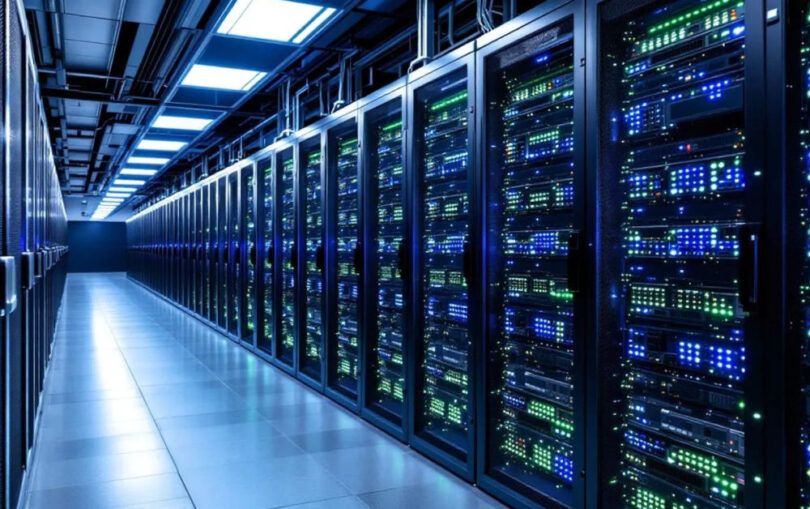
China's UDC comprises thousands of high-performance servers (including GPU clusters for advanced AI workloads) packed into heavy, pressure-resistant, sealed steel cabins resembling mini-submarines. The facility draws over 95% of electricity directly from nearby offshore wind farms via subsea cables. It features a sealed copper-pipe heat exchange system that continuously circulates seawater to absorb server heat and vent it directly into the ocean. Its key advantages include: energy efficiency; zero freshwater use, 90% land savings; 95% plus green powered; enhanced security – natural submersion offers protection from extreme weather, physical tampering, vandalism and land-based natural disasters.
On October 1, 2026, Google launched its first prototype satellite aboard a SpaceX Falcon 9 rocket, carrying custom AI Tensor Processing Units (TPUs) into low-Earth orbit (LEO); expanding its AI infrastructure under Project 'Suncatcher', the plan being to utilise sunlight available around the clock to power AI data centres. The prototype satellite has the power of a single server. The satellite will circle Earth for up to six years and then burn up in the atmosphere. SpaceX and Blue Origin say space-based data centres are the new reality. Elon Musk and Jeff Bezos have proposed orbital AI computing by deploying specialised satellite constellations.
Behind Google's Project 'Suncatcher' is the explosive growth of large language models that has triggered an unprecedented terrestrial infrastructure crisis. On Earth, a single hyperscale AI data centre can consume as much electricity as a small city, triggering intense community backlash, local power grid strains, and severe water resource depletion. Google is exploring orbital space to completely bypass Earth's physical, environmental, and regulatory bottlenecks. However, Project 'Suncatcher' must be viewed in the following backdrop:
- Solar Efficiency. Satellites deployed in Sun-synchronous dawn-dusk orbits receive near continuous, unfiltered sunlight, generating up to eight times more power than terrestrial panels. But while space is freezing, the vacuum lacks air or water to conduct Heat can only escape via thermal radiation, requiring massive heavy and complex radiator panels.
- Land & Water. Moving computing off planet Earth frees premium real estate and saves billions of gallons of freshwater otherwise lost to evaporative cooling towers. But high-energy cosmic rays cause bit-flips and fry microchips, because of which satellites require heavy shielding or specialized software redundancies to survive.
- Data Proximity. Orbital data centre can process massive military satellite imagery, weather data, and Earth observation directly in orbit, sending only vital insights back down. However, the hardware cannot be physically upgraded or repaired. All this is compounded by rocket launch costs – Google estimates financial viability won't be reached until the mid-20230s when launch costs fall towards USD 200 per kg.
Establishing a fully operational space-based data centre requires a multi-phased engineering pipeline: beaming raw terabytes of data from Earth to space is bottlenecked by radio-frequency limits, AI models are pre-loaded into the hardware prior to launch; instead of one giant space station, Google is designing an initial 81-satellite constellation; individual satellites will communicate with one another using ultra-precise, high-bandwidth Space Optical Lasers to share the computational load; Earth-bound users beam up brief AI queries (via a smartphone or terminal) while the orbital TPU processes the request and beams the answer back down almost instantly.
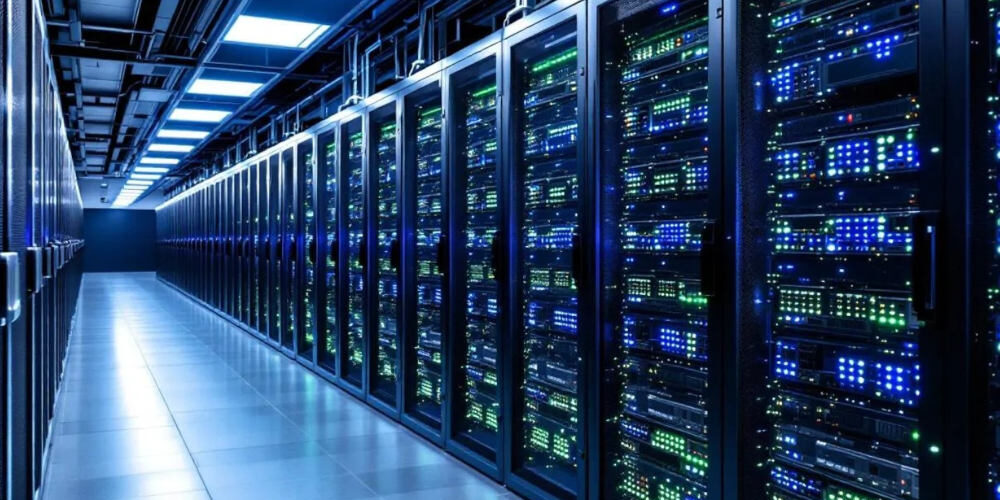
An orbital data centre could be disrupted or compromised through multiple methods: ground-launched missiles or co-orbital kamikaze satellites can physically detonate near a data satellite, killing it instantly; ground or space-based lasers to blind a satellite's optical communication arrays or firing High-Power Microwave (HPM) weapons to permanently fry the internal TPUs without physically destroying the chassis; shatter an old satellite in a matching orbit - cloud of shrapnel traveling at 17,500 mph causing a chain reaction to shred the data centre constellation; hijack data streams mid-air, inject malicious data or intercept sensitive AI outputs since the infrastructure relies on laser and radio links: military inspector satellites equipped with robotic arms or capture nets.
India presently has between 142 and 153 operational, standalone data centre facilities, which translate into 1.57 GW to 1.8 GW of operational power capacity; digital infrastructure market akin to Japan and Australia in Asia-Pacific. India’s operational capacity is officially projected to cross 2 GW by end 2026, entering a multi-billion-dollar cycle with an ultimate capacity target of 8-10 GW by 2030.
An additional 110 data centres are in planning/under construction pan-India. The market is heavily concentrated around subsea cable landing stations for global connectivity; Mumbai and Navi Mumbai over 52% and Chennai (18%), followed by Hyderabad, Bengaluru, Noida and upcoming hubs like Jamnagar. The domestic landscape is led by major joint ventures and hyper-scalers including ST Telemedia Global Data Centre (STT GDC), Nxtra by Airtel, CtrlS, NTT DATA, Yotta Data Services and AdaniConneX.
The US hosts between 4,000 and 5,400 operational data centres. Google operates a massive network of data centres across the US, featuring dozens of active and upcoming hyperscale campuses designed to power Google Search, YouTube, and Google Cloud AI workloads. On October 14, 2025, Google and its joint venture partners (AdaniConneX and Bharti Airtel are core infrastructure partners) announced the USD 15 billion Data Centre investment project, followed by a formal Memorandum of Understanding (MoU) with the Andhra Pradesh government. Breaking ground for the Visakhapatnam (Vizag) AI data centre quickly followed on April 28, 2026.
The reason for a Google's data centre in India is being cited because data cannot travel across the world instantly for a market of over 800 million internet users. To support this demand, Google is building its largest overseas AI data centre outside the US. Data travels at the speed of light through fiber-optic cables, but distance still creates latency. If an Indian user triggers a Google Search, a YouTube stream or AI model inference, routing the query to Iowa/Virginia and back takes hundreds of milliseconds. This is a weird excuse one can think of – is latency of hundreds of milliseconds so critical? The second excuse of enhanced data security within Indian borders is equally absurd when the control remains with Google.
The real reason is that America's major data centre hubs are facing grid saturation, power shortage delays, and heavy community pushback, while India offers massive land plots, lower operational costs, and government incentives for tech infrastructure. This allows Google to deploy the massive clusters of specialized Tensor Processing Units (TPUs) and GPUs required for deep learning next to its fastest-growing user base. But why does Google require an exclusive data centre when India's own data centres are growing exponentially?
Vizag State statistics show the city requires roughly 480 million litres of water per day but only receives 410 million litres from its reservoirs and rivers, making water rationing a frequent reality for its 2.5 million residents. Activists from groups like Green Visakha and the Human Rights Forum point out that Court disclosures estimate that Google Data Centre water requirement are over 300 kilolitres per day. Also, the 600-acre site is just 120 meters from a local reservoir and relies heavily on local rural water supplies. Civilians fear that massive water diversion will dry out agricultural wells and residential taps.
The Google data centre campus sits less than 860 metres from the edge of the Kambalakonda Wildlife Sanctuary, a protected eco-sensitive zone home to leopards and pangolins. Activists have flagged extensive hill cutting, deforestation, and heavy construction noise inside the catchment area of the Mudasarlova Reservoir, threatening local biodiversity. Interestingly, the Assam Government recently proposed reducing the Eco-Sensitive Zone (ESZ); home to a massive population of elephants and rhinos, from 10 km to mere 1-3 km, inviting questions whether elephants and rhinos will be trained to climb trees?
The legal conflict over the Google data centre peaked when an environmental activist filed a Public Interest Litigation (PIL) in the Andhra Pradesh High Court challenging the project; arguing that the State used its "single-window clearance system" to fast-track the project, effectively bypassing central government approvals, public consultations, and deep Environmental Impact Assessments (EIAs). State regulators have conceded that the Environmental Clearance (EC) granted on June 10, 2026, was technically issued for a building structure rather than the heavy-industrial operations of a hyperscale data centre. The Court stated there would be "no relaxation of environmental norms" for the project, but refused to halt construction, ruling that Google's development entity could proceed entirely "at its own risk and cost."
With parallel cases now reaching the National Green Tribunal (NGT), both Google and the state government are responding as follows: one, Google says it will use advanced air-cooling technology instead of water-based evaporative cooling at the Vizag hub – not mentioning how much of the over 300 kilolitres of water required per day will be reduced – the fact that 2.5 million population of Vizag already faces a daily shortage of 70 million litres is of no consequence; two, the Andhra Pradesh government has dismissed the activists' claims as misleading, explicitly stating that no rural, residential, or local reservoir water will be diverted to power the data hub (sic), championing that the project will generate 188,000 direct and indirect jobs and USD 688 million in annual economic activity.
Google did not buy the land directly from the Andhra Pradesh Government. The State government allocated the 601.4 acres land heavily subsidized (25% discount from standard market rate) through the Andhra Pradesh Industrial Infrastructure Corporation (APIIC) to Adani Infra (India) Limited, designated infrastructure partner for Google's subsidiary, Raiden Infotech India Pvt. Ltd. Reports indicate that large portions of the project site involve free land or state-backed acquisitions where the government itself pays the local farmers. What kickbacks the State Government received from what sources will naturally remain unknown.
Maries Antoinettes, the last queen of France before the French Revolution, had supposedly said, "Qu'lls mangent de la brioche" (meaning "Let them eat brioche - bread made with a high content of eggs and butter"). The Andhra Pradesh Government might as well tell the population of Vizag "if you don't have drinking water, drink beer or Kallu (toddy), and if you don't have water for agriculture, order cooked food from Zomato/Swiggy".
Finally, will the Centre remain a spectator because Sundar Pichai is CEO of Google and/or some in the political hierarchy consider tech-development way above human needs and values, leaving aside issues like environment? If Google is so fixated to establish a data centre in India, why can't it be subsea, like China has off the coast of Shanghai?
The author is an India n Army veteran. Views expressed are personal.
More on related topics:
Cyber Insecurity: https://www.thestrategicperspective.org/cyber-insecurity/
Graded Wafers – Boosting Progress: https://www.thestrategicperspective.org/graded-wafers-boosting-progress/
Managing Autonomous Warfare: https://www.thestrategicperspective.org/managing-autonomous-warfare/
Race for Indigenous GPS: https://www.thestrategicperspective.org/race-for-indigenous-gps/
ISRO Cacophony: https://www.thestrategicperspective.org/isro-cacaphony/