
Tensions in the Middle East continue to rise as Yemen’s Houthis claim attacks on Saudi infrastructure, while the Saudi-led coalition reports intercepting missiles and drones targeting the kingdom. Meanwhile, Iran has warned that renewed military action by Israel and the US would not change Tehran’s position. An interesting development is Iran joining talks with the Mecca Defence Pact members – Saudi Arabi, Pakistan and Turkey, albeit how it pans out in the long-run remains to be seen, considering: Pakistan is adhering to the US sanctions against Iran; Syria under Bashar al-Assad was earlier welcomed by the Arab world.
The US military has quietly begun withdrawing troops from bases in the Middle-East, while Washington is ordering diplomatic personnel to leave several missions in the region. US troops stationed in Jordan, Qatar, and Kuwait are among those being relocated. The State Department has also ordered non-essential personnel and their families to leave Saudi Arabia.
NBC News reports US military has quietly begun withdrawing troops from bases across the Middle East, while Washington is ordering diplomatic personnel to leave several missions in the region.
— Brig V Mahalingam (@BrigMahalingam) October 23, 2026
US troops stationed in Jordan, Qatar, and Kuwait are among those being relocated,…
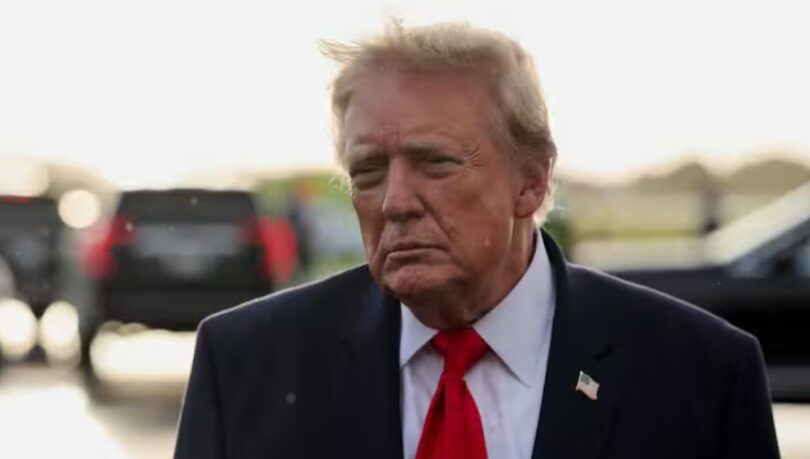
All this while Trump plans renewed attacks on Iran. Trump is deploying roughly 9,000 additional troops and a massive naval buildup, including a third aircraft carrier strike group, to the Middle East amid escalating tensions; pushing the total US naval presence past 20,000 personnel alongside over 50,000 US land-based troops in surrounding nations like Kuwait, Qatar, Bahrain, Jordan, the UAE, and Saudi Arabia. The deployment includes the USS Theodore Roosevelt carrier strike group, the USS Makin Island amphibious group, and additional warships joining carrier strike groups already operating in the area to bring a total of three aircraft carriers toward the region.
Trump and the Pentagon have reportedly weighed potential military options targeting Iranian infrastructure, including nuclear sites, ballistic missile launch sites, and energy facilities, though Trump has indicated that major escalations or strikes could be timed for after the November 3 midterm elections. Iranian Foreign Minister Abbas Araqchi publicly dismissed the US strike threats, stating that previous military actions did not alter Tehran's strategic policies and warning that foreign warships would not be permitted unrestricted access to regional waters. Iran's Revolutionary Guard Corps (IRGC) has maintained high alert and reported actions against vessels using disputed shipping lanes in the Strait of Hormuz, causing Brent crude oil prices to surge past USD 113 per barrel.
What headway renewed US-Israel attacks on Iran will make remains ambiguous albeit Trump doesn't seem to have learnt anything from 20 years of US troops presence in Afghanistan, besides deployment of ground troops are likely to invite considerable number of casualties. However, renewed US-Israel attacks om Iran will definitely increase the pressure on already stressed global supply chains and energy supplies. Trump's obvious concern is Chinese and Russian support to Iran, because of which he wants to meet both Chinese President Xi Jinping and Russian President Vladimir Putin when he visits Beijing next month.
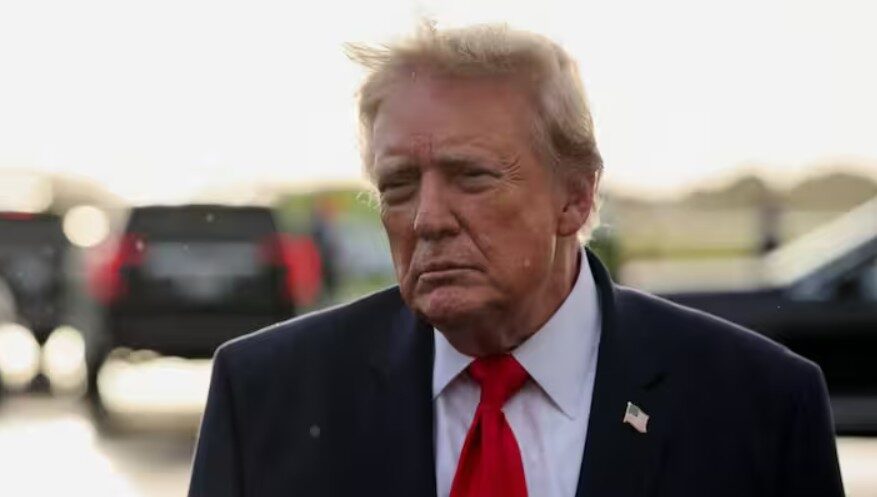
Trump's cries for being denied the Nobel Peace Prize are laughable; His so-called Board of Peace that he himself heads is a disaster, save the fact that he is pocketing all the money. There is no peace in Lebanon and he has little concern about Houthis attacking Saudi Arabia. Most important is the fact that the US-led West has always aimed for strategic defeat of Russia. This will remain unchanged notwithstanding the peace tantrums of Trump. If that was not the case, Volodymyr Zelensky could have been forced out by Trump long back, ensuring peace in the region. While the bulk of the money pumped into Ukraine flows back to the US, Zelensky is tasked to orchestrate a Russia-Europe war while the US sits on the fence. Trump and Zelensky are both chameleons under the skin.
To think that Trump really wants peace would be the dumbest act. The strategic defeat of Russia will always remain the aim of the US-led West. Former German chancellor Gerhard Schröder explains why the war in Ukraine is being endlessly prolonged and it is unlikely to change.
Schröder, ehemaliger Kanzler, LEGT DIE WAHRHEIT OFFEN: „Frieden sabotiert!
— Prof. Matthias Moosdorf MdB (@moosdorfmdb) October 22, 2026
Schröder äußert sich: „Warum der Krieg endlos in die Länge gezogen wird. Es ist das größte Skandalon unserer Zeit: Während täglich Menschen in der Ukraine sterben, Städte in Trümmern liegen und die… pic.twitter.com/C8KjoUGmUJ
The dram of Starlink restraining Ukrainian operations was short-lived. First Zelensky complained and Trump said he gave no such order. Then came news that the instruction was from the White House, followed by admission by Elon Musk. But speed of Starlink has been restored to 400 kph and Zelensky is free from worries, with France, Germany and the UK supporting him full hilt. Zelensky should, therefore, be expected to accelerate deep strikes in Russia, in addition to false flag operations, placing all the blame on Moscow to keep the pot boiling.
Germany released its first standalone military strategy document since 1955, titled "Verantwortung für Europa" (Responsibility for Europe). The doctrine officially names Russia as the primary threat to European peace and security, citing the Kremlin’s hybrid warfare, cyber intrusions, and sabotage networks targeting European infrastructure. Germany's Federal Intelligence Service (BND) warned that Russia is restructuring its society toward a war economy and could possess the military capability to physically strike or test NATO territory by 2029 or 2030.
The German Bundestag has passed a law establishing a selective system. Starting in 2026, all 18-year-old men are legally required to fill out a digital military service questionnaire and selected candidates from those questionnaires will be called in for mandatory physical fitness and medical exams. The program strongly relies on financial incentives to attract voluntary enlistment to grow the active force to 260,000 soldiers and 200,000 reservists by the mid-2030s. But defense officials have explicitly warned that if these voluntary quotas fail to meet targets, Germany will have to pivot back to a compulsory conscription. Germany is pouring €750 billion into defence spending between 2026 and 2030; including USD 14 billion plan to purchase and develop deep-strike conventional cruise missiles and hypersonic glide defence systems.
The UK has officially launched its "Be Ready" public preparedness campaign, urging households to stockpile a three-day supply of non-perishable food, bottled water, and basic emergency gear. The government has said that the advice is a proactive, common-sense resilience measure rather than a call to panic-buy. The initiative is designed to help the country cope with 72-hour disruptions to vital services caused by severe climate events, cyberattacks, or hostile state actions. Officials like Defence Secretary Wes Streeting have pointed to rising risks of hybrid warfare, state-sponsored cyberattacks targeting power and water grids, and supply-chain vulnerabilities. But it is obvious that these actions are more because of Russia's warming that if Europe continues to arm and support Zelensky for attacking Russai, they would have to face retaliatory Russian strikes.
French President Emmanuel Macron has positioned France as a core pillar of Western support to Ukraine, advocating for autonomous European security and committed defence assistance, which also helps Macron divert attention from the massive student protests within France. Macron has fast-tracked the delivery of interceptor missiles to counter Russia’s intensifying strikes on civilian infrastructure and energy sectors. Macron is championing a European Anti-Missile Coalition and accelerating the deployment of SAMP/T defence systems as robust European alternatives to US-supplied Patriots, while supplying a steady stream of advanced tactical military hardware. Macron has offered to integrate non-nuclear European partners into French nuclear drills and coordinate crisis exercises to build a robust European "nuclear shield" independent of US reliance.
Finally, with Trump's whimsical temperament and rouge leadership of the West, the world should be ready to face unlimited wars, not only in the Middle-East and Ukraine, but also in the Indo-Pacific and elsewhere.
The author is an Indian Army veteran, Views expressed are personal.