


There are some parts of India that never really leave you. For me, the Naga Hills are one of them. Over the course of my military career, I spent many years serving in Nagaland and the Naga-inhabited areas of Manipur. As a young officer, I learnt the difficult realities of insurgency in these rugged mountains. Years later, I returned as the Director General of the Assam Rifles, entrusted with the responsibility of maintaining security while preserving the delicate relationship that had gradually evolved between the security forces and the Naga people. My final appointment in the region, as Chairman of the Ceasefire Monitoring Group, perhaps shaped my understanding more than any other. It allowed me to work closely with every major Naga insurgent organisation that had entered into a ceasefire with the Government of India, while simultaneously engaging with tribal HoHos, Church leaders, village elders, student organisations and civil society institutions that form the moral backbone of Naga society.
Those relationships were not built in conference halls or through official communiqués. They were forged over years of dialogue, mutual respect and the willingness to understand each other’s fears, aspirations and compulsions. Trust grew slowly, often painfully, but it grew because both sides honoured their commitments. That trust eventually became the invisible foundation upon which one of independent India’s most remarkable peace processes was constructed.
It is for this reason that the recent violence in Senapati district fills me with profound sadness and genuine concern. I do not see it merely as another episode in Manipur’s continuing cycle of ethnic unrest. I see it as an early warning that the foundations of the Naga peace process are beginning to experience strains that cannot be ignored. Peace processes rarely collapse dramatically. They erode gradually, almost imperceptibly, until one day people begin to lose faith in dialogue itself. India cannot afford to allow that to happen.
Importance of Senapati
Senapati has always occupied a unique place in the political and emotional geography of the Naga people. It is far more than an administrative district of Manipur. It represents the southern gateway of the Naga homeland, linking Nagaland with the Naga-inhabited districts of Manipur. Historically, it has served as a centre of political mobilisation, cultural identity and social cohesion. Decisions taken in Senapati resonate across the Naga world, extending well beyond the geographical boundaries of Manipur.
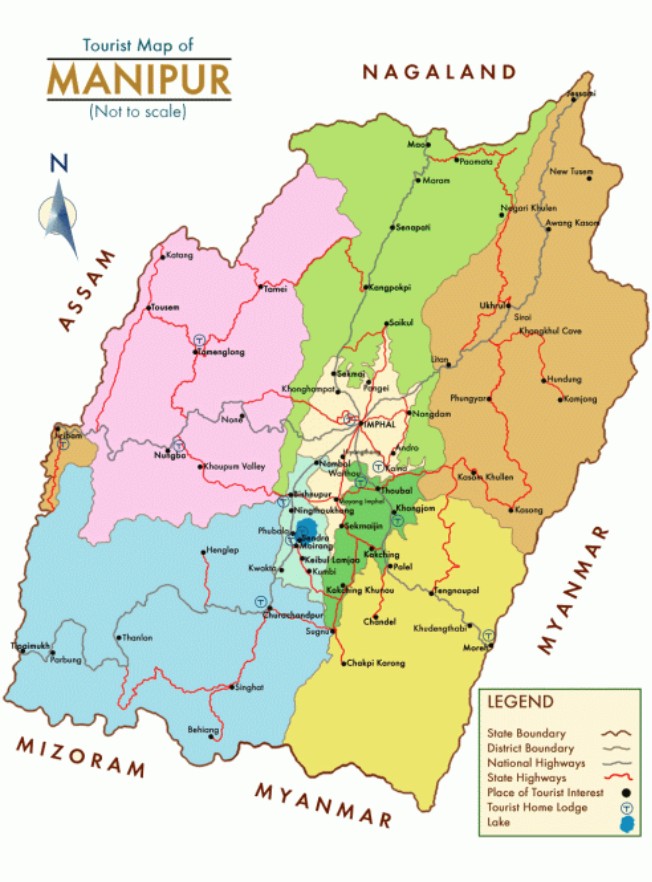
This is precisely why the recent killings of six Naga civilians have generated such widespread anguish. Their abduction and subsequent murder have shaken public confidence and reignited anxieties that many believed had gradually receded during the years of ceasefire. The protests, shutdowns and demands for justice that followed were not merely emotional reactions to a tragic crime. They reflected a deeper fear that the security environment in the hill districts is becoming increasingly uncertain.
To understand the significance of these events, one must first recognise that the violence unfolding in Senapati is fundamentally different from the Meitei-Kuki confrontation that has dominated national attention since 2023. The Naga community has, by and large, remained outside that conflict despite sharing borders with both communities. This restraint has not been accidental. It reflects a conscious political decision by Naga civil society and the Naga armed organisations to preserve the sanctity of the ceasefire and avoid being drawn into a widening ethnic confrontation. That restraint should never be mistaken for indifference.
A More Complex Cast of Actors
The principal actors in the present crisis are more complex than they first appear. Naga civil society organisations, including the United Naga Council, tribal bodies, church institutions and student organisations, have emerged as the principal voices demanding justice and protection for their communities. Their concerns extend beyond the immediate tragedy. They seek reassurance that Naga villages will remain secure and that the Government continues to recognise its responsibility to protect every community impartially.
Across the divide are a variety of Kuki armed formations whose distinctions are often poorly understood outside the region. It is important to separate the Suspension of Operations groups from local village defence volunteers, criminal elements and unaffiliated armed groups. Treating them as a single entity only obscures the complexity of the security environment. Yet the unfortunate reality is that these distinctions often disappear in the minds of ordinary villagers when violence erupts. Fear rarely differentiates between uniforms.
The Naga underground organisations themselves occupy an especially delicate position. For nearly three decades, they have remained committed to the ceasefire framework despite the absence of a final political settlement. That restraint has required considerable political maturity. However, every incident that raises doubts about the security of Naga villages inevitably generates pressure within sections of Naga society for these organisations to assume a more active protective role. That would fundamentally alter the security calculus across the region.
Why This Moment Is Strategically Significant
This is where the present violence assumes strategic significance. The greatest danger is not the possibility of isolated retaliatory attacks. The greater danger lies in the gradual erosion of confidence in the ceasefire itself. Every peace process ultimately depends upon the belief that negotiations will eventually deliver results, that agreements will be honoured, and that the State remains both capable and willing to ensure justice. Once those beliefs begin to weaken, the political space occupied by moderates gradually shrinks while more radical voices find renewed legitimacy. History repeatedly reminds us that insurgencies rarely return because people suddenly choose violence. They return when people lose confidence in peaceful alternatives.
The situation is further complicated by developments across India’s eastern frontier. The continuing instability in Myanmar has fundamentally altered the strategic environment. The collapse of effective governmental authority in large parts of Sagaing Region has increased the movement of armed groups, refugees and illegal weapons across a border that has always been difficult to regulate. Ethnic relationships that predate modern boundaries continue to shape local realities. Consequently, events within Manipur can no longer be analysed in isolation from the wider instability unfolding across Myanmar.
This has important implications for India’s broader national security interests. The hill districts of Manipur occupy a central position in India’s Act East Policy. National Highway-2, which passes through Senapati, remains one of the principal arteries connecting the Imphal Valley with Nagaland and beyond. Any prolonged instability affects not only local security but also regional connectivity, economic development and India’s long-term engagement with Southeast Asia.
The Assam Rifles has, over decades, emerged as perhaps the most trusted security institution across much of the region because it has consistently balanced firmness with sensitivity. That institutional credibility must continue to be preserved. In deeply divided societies, perceptions often matter as much as actions. The security forces must therefore remain visibly impartial, firmly focused on protecting civilians irrespective of ethnicity and equally committed to preventing retaliatory violence from any quarter.
Preserving a Peace That Was Hard Won
Every crisis presents a choice. It can become the beginning of a downward spiral, where fear replaces trust and every act of violence justifies another. Or it can become a moment of reflection, prompting governments and communities alike to recognise the warning signs before they become irreversible. The events in Senapati have brought India to precisely such a moment.
The immediate priority is clear. Justice must not only be done but must be seen to be done. Those responsible for the brutal killings must be identified, prosecuted and punished through a transparent legal process, irrespective of affiliation or ethnicity. In societies fractured by ethnic tensions, perceptions often matter as much as outcomes. A credible investigation, conducted without fear or favour, is therefore essential not merely for the victims’ families but for restoring confidence across the Naga Hills. Justice delayed in such circumstances is interpreted not as administrative inefficiency but as political indifference.
Equally important is the visible protection of vulnerable communities. Security forces must reassure every village that the State remains both capable and determined to prevent further violence. This reassurance cannot be delivered through the deployment of troops alone. It must come through continuous engagement with village authorities, tribal institutions, Church leaders and civil society organisations whose influence within their communities is often greater than that of any government official.
The Government of Manipur also carries a special responsibility. It must ensure that the tragedy in Senapati does not become another casualty of the larger ethnic confrontation that has engulfed the state since 2023. Every community in Manipur today measures governmental actions through the prism of trust. Decisions that appear routine in peaceful states acquire profound political significance in societies experiencing deep communal divisions. Sensitivity, therefore, becomes as important as administrative efficiency.
Renewing the Indo-Naga Peace Process
The challenge before New Delhi extends far beyond restoring law and order. The Indo-Naga peace process itself needs renewed political attention. Nearly three decades have passed since the ceasefire fundamentally changed the trajectory of the conflict. During those years, an entire generation has grown up without experiencing the scale of violence that once defined life in the Naga Hills. Many young Nagas have attended universities, travelled across India and pursued careers that would have been unimaginable during the height of insurgency. Roads have improved, markets have expanded, and communication has transformed isolated communities into active participants in national life. These achievements should never be underestimated. They represent the true dividends of peace.
However, prolonged negotiations inevitably generate expectations. Younger generations increasingly ask why a political settlement remains elusive despite decades of dialogue. That question cannot simply be ignored. Political processes lose momentum when they cease to inspire confidence among those who have the greatest stake in their success. The Government of India must therefore inject fresh political energy into the peace process, not merely to conclude negotiations, but to reassure the Naga people that dialogue continues to represent the most credible pathway towards a just and honourable settlement. Strategic patience must not become strategic drift.
At the same time, there is an equally urgent need to strengthen the institutional architecture that has sustained peace for nearly three decades. The Ceasefire Monitoring Group should continue to function not merely as a mechanism for addressing violations but as a forum for continuous communication between the Government and the Naga Political Groups, as I had tried to move it to. Experience has repeatedly shown that misunderstandings become dangerous only when communication breaks down. Regular dialogue, even during periods of disagreement, remains the most effective confidence-building measure available.
The role of the Assam Rifles will continue to be central. Throughout my years in uniform, I came to appreciate that its greatest strength lay not simply in its operational effectiveness but in the confidence it inspired among ordinary people. Unlike many security organisations, the Assam Rifles developed deep institutional relationships with remote communities, often becoming the first point of contact between the State and isolated villages. That reservoir of goodwill is a strategic asset that must never be squandered. Professionalism, impartiality and sensitivity must remain the guiding principles of every deployment.
No discussion of the Naga peace process would be complete without acknowledging the extraordinary contribution of civil society. Throughout the years of insurgency, and equally during the years of negotiation, the civil society members provided far more than just guidance. They became a moral institution capable of speaking simultaneously to the Government, to insurgent organisations and to ordinary citizens. At moments when negotiations appeared deadlocked, and frustration threatened to overwhelm patience, these leaders consistently appealed for restraint and reconciliation, reminding all sides that peace was not merely a political objective but a moral responsibility.
The Forum for Naga Reconciliation, the Naga Mothers’ Association, tribal HoHos, student organisations, village councils and countless community leaders performed similarly invaluable roles. Their efforts rarely attracted headlines, yet they repeatedly prevented local tensions from escalating into wider confrontations. These institutions remain indispensable partners in preserving peace. They should be engaged not as observers but as stakeholders whose wisdom and credibility have already been tested over decades.
The present crisis also offers an opportunity to rethink how peace processes are managed in India. Too often, we measure success by agreements signed, committees constituted, or meetings held. Those are important milestones, but they are not the essence of peace. Peace ultimately resides in the confidence of ordinary people, in the belief that justice will prevail, that dialogue will continue and that governments will honour both the letter and the spirit of their commitments. That confidence must be nurtured continuously. It cannot be summoned only when violence erupts.
Conclusion
As I reflect upon my years in these hills, I do not remember only the operations or the negotiations. I remember the countless conversations in village homes, the quiet wisdom of village elders, the tribal leaders who chose dialogue when confrontation would have been easier, the young officers who risked their lives to prevent violence rather than provoke it, and even the insurgent leaders who, after decades in the jungle, decided that the future of their people lay across a negotiating table rather than behind the barrel of a gun. None of that happened by accident. It was built patiently over years through courage, restraint and trust. That trust is now under strain.
The tragedy in Senapati should not be dismissed as another unfortunate incident in Manipur’s troubled history. It is a warning that confidence in one of India’s most successful peace initiatives can begin to erode if communities feel that their security concerns are no longer understood or addressed. Once that confidence is lost, rebuilding it becomes immeasurably more difficult.
The Naga peace process represents one of independent India’s finest achievements in conflict resolution. It transformed a battlefield into a dialogue, replacing decades of violence with a framework that, despite its imperfections, saved countless lives and offered generations of young Nagas an opportunity to imagine a future beyond conflict. It would be a national tragedy if that achievement were allowed to unravel — not because peace itself had failed, but because those entrusted with safeguarding it lacked the understanding, the sensitivity or the urgency to preserve it.
Peace cannot survive on yesterday’s successes. It requires constant political attention, informed leadership and institutions that continue to command the confidence of all sides. Above all, it requires people who understand that peace is not maintained by agreements alone but by relationships painstakingly built over decades.
Having devoted a significant part of my professional life to these hills and to the people who call them home, I remain convinced that the majority of Naga people still believe in dialogue. They have sacrificed too much to desire another generation of conflict. They seek dignity, security and the assurance that their faith in dialogue has not been misplaced. India owes them nothing less.
Let us not allow decades of patient work, immeasurable sacrifice and hard-earned trust to be squandered through complacency, incompetence or a failure to understand the fragile nature of peace. Peace in the Naga Hills was never a gift. It was earned, slowly and together. History will not remember how many meetings were convened in Delhi or Kohima, nor how many ceasefire agreements were signed. It will remember whether, at this moment of uncertainty, we had the wisdom to preserve them.
The article was first published under the personal account at Substack of Lt. Gen Shokin Chauhan on 15 July 2026 and can be accessed here.
More on Manipur:
Defending the Siliguri Corridor: Securing India’s Strategic Lifeline to the Northeast: https://www.thestrategicperspective.org/defending-the-siliguri-corridor-securing-indias-strategic-lifeline-to-the-northeast/
Bleeding Manipur: https://www.thestrategicperspective.org/bleeding-manipur/
Terrorist groups create India’s second war front from the East: https://www.thestrategicperspective.org/terrorist-groups-create-indias-second-war-front-from-the-east/
Mothballing Manipur: https://www.thestrategicperspective.org/mothballing-manipur/
Continuing Manipur Charade: https://www.thestrategicperspective.org/continuing-manipur-charade/
Voodoo-Man of Manipur: https://www.thestrategicperspective.org/voodoo-man-of-manipur/
Bad Santa of Manipur: https://www.thestrategicperspective.org/visual-composer-1657/
Border Issues: https://www.thestrategicperspective.org/border-issues/