

BREAKDOWN
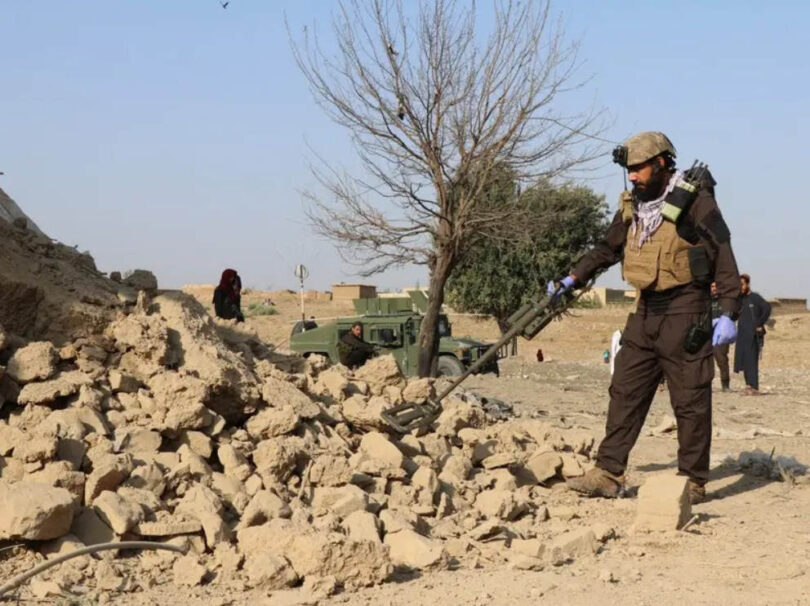
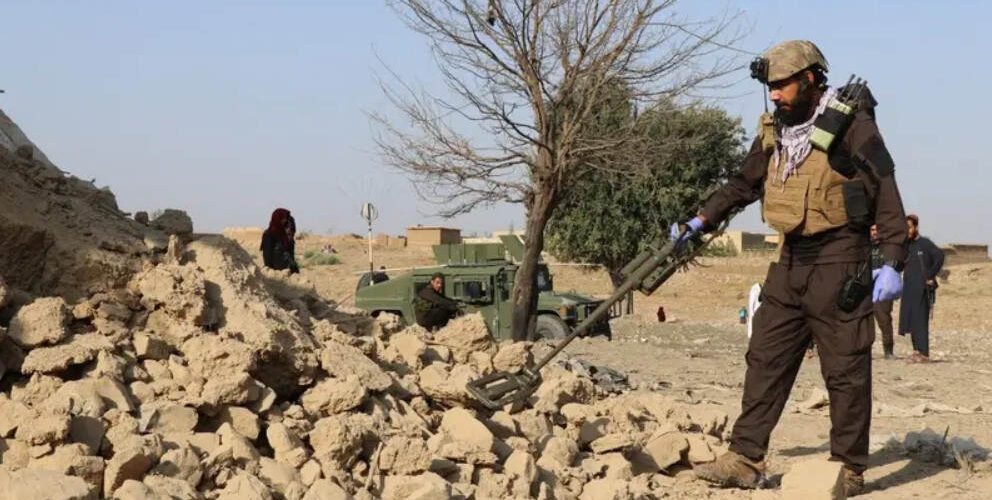
- Afghanistan's defence ministry has stated that its security forces killed 28 fighters and wounded 32 in Kamdesh district, Nuristan, on 26 September, after the group consisting if the Islamic State outfit infiltrated from Pakistan with an effort to carry out attacks.
- Kabul further claimed that the Pakistani armed personnel and militia coordinated with the fighters before withdrawing once the fighting began, and that Pakistani ISI had separately relocated, trained and deployed former Afghan security personnel toward Nuristan.
- Islamabad's information ministry has rejected the claims as "frivolous, baseless and devoid of any truth" and refuted the claim that its forces, intelligence services or militias were involved.
- It is imperative to note that this incident is not an isolated flare-up. It happened six days post Pakistani airstrikes on Kunar and Paktika, which supposedly killed 28 militants by Islamabad's count and three civilians by the UN's. This is a pattern of cross-border strikes and incursions has recurred roughly every six to eight weeks since a serious clash in February 2026.
- Furthermore, the attacks happened the same weekend as a major TTP attack within Pakistan. On Saturday 26 September, a suicide bomber detonated an explosives-laden vehicle at the Aman Mela police checkpoint in Darazinda, Dera Ismail Khan district. According to Al Jazeera's police sources, 12 are pronounced dead and 30 wounded, other outlets claim the death toll to be 11. Reportedly most of the deceased were police, customs and forest-department personnel. The TTP claimed responsibility. The near-simultaneity of a major domestic TTP bombing and the Kamdesh cross-border incident is itself worth noting. Islamabad's blatantly alleges that TTP operates from Afghan sanctuary, while Kabul's Kamdesh claim inverts that by alleging Pakistani sponsorship of fighters crossing the other way.
KABUL’S CLAIMS
According to the Afghan defence ministry's account, the group crossed into Kamdesh district of Nuristan on Saturday, with the declared intent of carrying out attacks inside Afghan territory. Afghan forces launched an operation against them. According to Taliban, the survivors are said to have retreated back across the border, toward positions held by Pakistani-aligned militia. Kabul's states that majority of the individual members in the group were former Afghan government security personnel along with the Islamic State cadre. Kabul has implied that the members of the pre-2021 Afghan National Army or police who fled after the Taliban takeover. If accurate, it would mean Pakistan is actively cultivating and directing a proxy force drawn from the old republic's security establishment, rather than simply hosting existing militant networks.
A FIFTH ROUND OF CONFRONTATION
Pakistan–Afghanistan relations have been on an a shifty track for roughly a year, punctuated by a series of discrete flashpoints rather than sustained conflict:
- February 2026 — the two sides fought what multiple outlets described as their worst clash in years, the first in the current cycle of confrontation.
- 9–10 June 2026 — Pakistan struck targets in Khost, Kunar and Paktika, saying it killed 26 TTP-linked militants, while Kabul said 13 civilians, including 11 children, died, a toll UNAMA later confirmed.
- 28–29 June 2026 — Pakistan carried out a further round of strikes across Paktia, Paktika and Kunar, this time claiming up to 29 militants killed. UNAMA independently verified at least 28 civilian deaths and 49 injuries, while the Afghan government put civilian deaths as high as 38, calling it one of the deadliest single incidents.
- 21 September 2026 — Pakistani fighter jets struck sites in Kunar and Paktika before dawn. Islamabad claims 28 militants were killed, while UNAMA confirmed three civilian deaths (a man, a woman and a girl) and four injuries. The strikes broke nearly three months of relative peace and prompted Kabul to summon Pakistan's chargé d'affaires and vow a response.
- 26 September 2026 — a TTP suicide bomber struck the Aman Mela police checkpoint in Darazinda, Dera Ismail Khan district, on the Dera Ismail Khan–Quetta road, killing at least 11–12 people (accounts vary) and injiring around 30, most of them police, customs and forest-department personnel. TTP claimed responsibility within hours. The district sits at the junction of Khyber Pakhtunkhwa, Balochistan and Punjab and borders South Waziristan, long a TTP hub.
- 26–27 September 2026— the Kamdesh incident, which is the first episode in this sequence where Kabul, rather than Islamabad, alleges to have inflicted the casualties, and the first where it claims direct battlefield coordination between Pakistani state or para-state actors and the crossing group.
It is important to note, there is a sharp divergence in the reported fatality and civilian-casualty figures from both the governments. Pakistan reporting militant kills in the twenties to thirties, while Afghanistan reporting claims civilian deaths in similar or higher numbers with UNAMA's independently verified figures generally sitting closer to, but still below, Kabul's claims and well above Islamabad's acknowledgment of civilian harm. UNAMA has separately said it has documented over 1,100 civilian deaths and injuries from cross-border incursion in 2026 alone, and repeatedly has called on both sides to respect the international humanitarian law principles of distinction and proportionality.
- Established: Pakistan struck Afghan territory on 21 September, killing an Islamabad-claimed 28 militants against an UN-confirmed 3 civilians; that this is part of a documented six-to-eight-week cycle of strikes and incursions running back to at least February 2026; and that mediation efforts by China, Russia and Turkey.
ASSESSMENT
From the developments, it is essential to monitor three threads rather than the incident in isolation. First, the pattern is not the single incident. It must be comprehended as the fifth distinct escalatory episode within a year, and each has followed a broadly similar script of Pakistani strikes or an alleged incursion, sharply divergent casualty claims, and an UN figure that lands between the two governments' numbers.
Second, Kabul's allegation of direct coordination between Pakistani state or para-state actors and IS-branded fighters contradicts Islamabad's own framing of its operations as counter-TTP strikes, since it implies Pakistani tolerance, or worse, of the very IS-Khorasan-adjacent networks it has separately blamed for attacks on its own territory.
Third, the failure of Chinese, Russian, Turkish and Saudi mediation to yield a temporary ceasefire after a year of consistent strikes indicate that neither side currently has an incentive structure that favours de-escalation.
More on Afghanistan-Pakistan relations:
Trade Pivot Weakens Pakistan’s Grip on Afghanistan, as Others Move in: https://www.thestrategicperspective.org/trade-pivot-weakens-pakistans-grip-on-afghanistan-as-others-move-in/
Heavy exchange of fire at the Chaman (Pakistan) / Spin Boldak (Afghanistan) crossing: https://www.thestrategicperspective.org/heavy-exchange-of-fire-at-the-chaman-pakistan-spin-bodak-afghanistan-crossing/
Iran to Host Pakistan–Afghanistan De-Escalation Talks: https://www.thestrategicperspective.org/iran-to-host-pakistan-afghanistan-de-escalation-talks/
India-Afghanistan Talks in Dubai set off Alarms in Pakistan: https://www.thestrategicperspective.org/india-afghanistan-talks-in-dubai-set-off-alarms-in-pakistan/
India sends fresh aid to Afghanistan via Chabahar: https://www.thestrategicperspective.org/india-sends-fresh-aid-to-afghanistan-via-chabahar/