

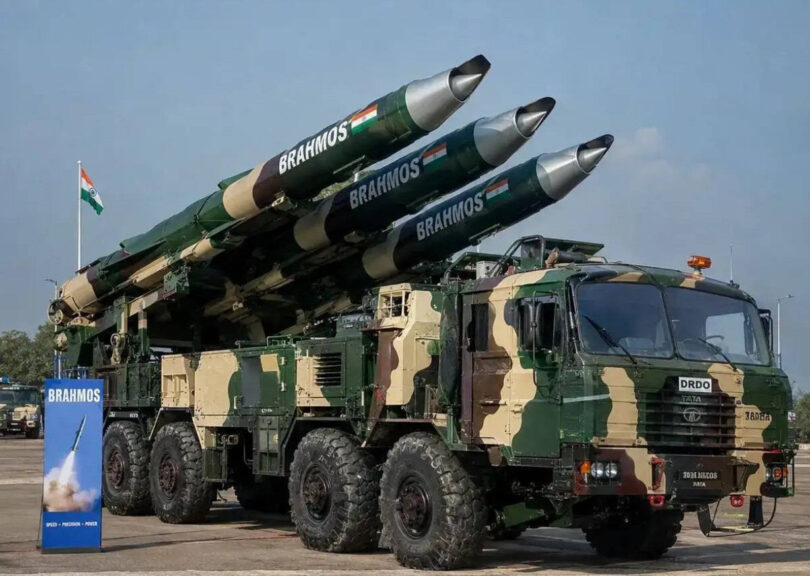

India is in talks to sell five more BrahMos systems to Philippines which is approximated to 60 missiles, in a deal reportedly worth $700 million to $800 million, based on three sources reported by Reuters on 5 November 2026. This would be about double the $374.96 million contract of January 2022, which made Manila the first BrahMos export customer. At the moment there is no official statements made by either government with regards to the quantity or the price. However, the officials from both nations have ascertained that Philippines is seeking to acquire more BrahMos units while acknowledging India as a credible source of defence technology.
What has been reported, and what has not
Point | Status | Basis |
Talks are in the final stage | Reported, not officially confirmed by India | Reuters, citing three sources with direct knowledge (5 Nov 2026) |
About 5 systems, nearly 60 missiles | Reported by two Indian sources | Reuters |
Value $700-800 million (about Rs 6,300-7,200 crore) | Reported but no official figure has been stated by both nations. | Reported by Reuters. Indian authorities have not publicly confirmed value or quantity (Clash Report) |
President Marcos wants more BrahMos | On the record | Defence Department spokesperson Arsenio Andolong, stated in an interview with Reuters |
Philippines sent India a "wish list" of changes for local conditions | On the record | Defence Secretary Gilberto Teodoro Jr stated at 3rd Delhi Defence Dialogue, 4 Nov 2026 (Philstar) |
Deliveries under the 2022 contract are nearly complete | Reported | Reported by Reuters. Ambassador Josel Ignacio said deliveries are "ongoing" on 12 Aug 2026 (ANI) |
Two figures circulate that do not match while Reuters mentions five systems and about 60 missiles, which implies roughly twelve missiles per system, the report from ANI from 12 August 2026 refers to "reports" that Manila wants up to nine additional batteries, and Ambassador Ignacio gave no number or timeline.
What officials have said
Official | Position | Date and source |
Gilberto Teodoro Jr., Philippine Defence Secretary | Stated that Manila hopes to increase its BrahMos numbers and called India's supply a "seal of good housekeeping", meaning New Delhi judged the Philippines responsible and defensive. Noted that weak roads and bridges and no railways make transport hard. | Delhi Defence Dialogue, 4 Nov 2026 (Philstar, 6 Nov) |
Arsenio Andolong, Philippine Department of National Defense (DND) spokesperson | Confirmed Marcos wants more BrahMos missiles; gave no details. | Reuters, 5 Nov 2026 (via The Week) |
Josel F. Ignacio, Philippine Ambassador to India | Called BrahMos "credible deterrence" and said Manila expects to look more to India for procurement. Also raised co-production and learning from India's indigenous industry. | ANI, 12 Aug 2026; Philstar, 6 Nov 2026 |
Periasamy Kumaran, Secretary (East), Ministry of External Affairs | Stated that Marcos thanked Prime Minister Modi for defence-industry cooperation including BrahMos, and that India's coastal and maritime platforms suit Manila's archipelagic defence concept. | MEA briefing, 5 Aug 2025 (ANI) |
India-Philippines Joint Declaration | Strategic partnership. Have pledged co-development and co-production of defence equipment, and more joint maritime exercises. | 5 Aug 2025, MEA statement (ANI) |
Gen. Romeo Brawner Jr., AFP chief of staff | Described India as a vital partner and spoke of joint manufacturing, technology transfer and local production. | Raisina Dialogue, as reported by the Inquirer, 2025 |
Jonathan Malaya, National Security Council | Called the BrahMos and Typhon acquisitions defensive, strategic and calibrated responses to real threats. | PNA, 29 Apr 2025 |
Wu Qian, Chinese Defence Ministry | Said defence cooperation between states should not harm third parties or regional stability. | 25 Apr 2024 (Daily Excelsior) |
India's Defence Secretary Rajesh Kumar Singh made a public statement with regards to BrahMos exports on 30 May 2026 at the Shangri-La Dialogue, but specifically about Vietnam and Indonesia, not the Philippines.
Background: the 2022 contract and deliveries
Date | Event |
Dec 2019 - Mar 2020 | Then Defence Secretary Delfin Lorenzana backs the acquisition. The two defence ministries sign an implementing agreement on 2 March 2020 (GlobalSecurity) |
28 Jan 2022 | Philippines signs a $374.96 million contract (about P18.9 billion) with BrahMos Aerospace for three shore-based anti-ship batteries, training and logistics. India's first BrahMos export (Gulf News, Philippine press) |
Feb 2023 | Philippine Navy personnel complete operator training in India (Rappler) |
Apr 2024 | First battery delivered by IAF transport aircraft. Hindustan Times reported an earlier hold-up over a non-disclosure agreement (via Rappler) |
Apr 2025 | Second battery delivered by ship; Teodoro confirms on 23 Apr 2025 (PNA, Reuters) |
7 Nov 2025 | Philippine Marine Corps unveils its first operational battery at its 75th anniversary (USNI News) |
Aug 2026 | Third and final battery reported as being delivered (Wikipedia list of Marine Corps equipment); Ignacio says deliveries are ongoing |
It is important to note that the third battery's completion has not been officially announced and remains yet to be confirmed.
The system and where it sits
- The shore-based anti-ship BrahMos has a reported range of about 290 km and a speed near Mach 2.8 (Inquirer; Naval Technology). According to other sources, the family reaches 290-400 km and the export variant is the 290 km one.
- The Marine Corps' Coastal Defense Regiment, in its Shore-based Anti-ship Missile Battalion. The first battery is in Western Luzon, and the 4th Marine Brigade in Ilocos Norte has plans for a similar site (USNI News).
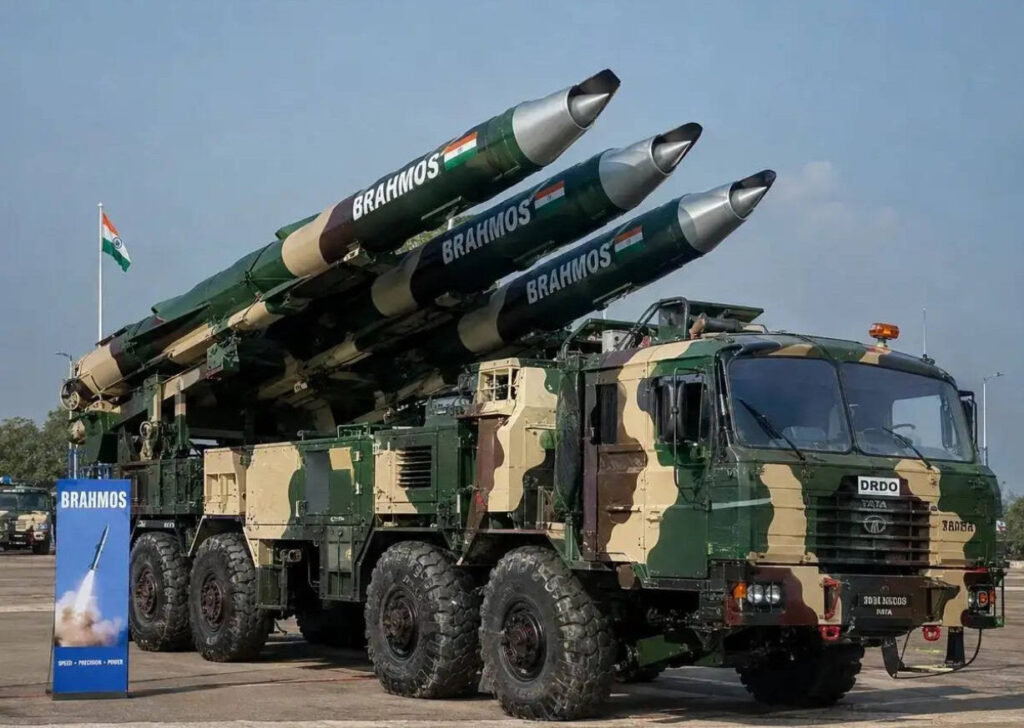
- Battery composition is reported inconsistently. USNI News, citing the regiment, says two mobile launchers, a radar vehicle, a reloader and a command truck. The Inquirer says at least three firing units while RTV says three missiles per launcher.
- Use in drills. The Philippines simulated a maritime strike with the system during Balikatan 2026, and China's foreign ministry voiced concern (newkerala, April 2026).
The deployment of India’s BrahMos supersonic cruise missile system across Southeast Asia can be attributed as a massive shift in Indo-Pacific geopolitics. What began by the Philippines, and now joined by Vietnam and Indonesia, a missile-backed defensive perimeter is actively shaping into play which threatens Beijing’s maritime dominance in the contested South China Sea.
Why China Opposes the BrahMos Supply
Based on China’s history, Beijing has consistently issued formal warnings stating that the defense cooperation 'should not harm the interests of any third party and harm regional stability.' In the garb of diplomacy, it is ascertained that the Chinese military may be facing tactical hurdles:
- Striking Distance Over Disputed Waters: The BrahMos export variant features a range of roughly 290 kilometers (180 miles). Fired from coastal batteries, the missiles place flashpoints like Scarborough Shoal and critical sea lanes entirely within target range.
- High Supersonic Speed: The Brahmos is considered amongst the world’s fastest cruise missiles, known to travel at Mach 2.8 to Mach 3. Its extreme speed cuts down the reaction time available for a Chinese warship's radar and air defenses to track and intercept it.
- Asymmetric Deterrence: Historically outmatched by the People's Liberation Army Navy (PLAN), Southeast Asian nations are shifting to a 'deterrence-through-denial' posture. Mobile, land-based launchers can hide easily using natural geography, introducing immense risk for Chinese surface vessels.
- Disrupting 'Gray Zone' Tactics: China is infamously known to utilize its coast guard ships and maritime militias to build pressure on its neighbors without triggering formal military pacts. Lethal anti-ship missiles would force Beijing to recalibrate its assertiveness, as a miscalculation could ignite a kinetic clash.
The Philippines' Strategy & The U.S. 'Kill Chain'
Based on reports it is indicated that under the oversight of defense officials like DND Spokesperson Arsenio Andolong, the Armed Forces of the Philippines (AFP) have successfully pioneered the regional BrahMos integration.
Strategic Deployment Locations
- Western Luzon (Zambales): Stationed at Naval Station Leovigildo Gantioqui, placing Scarborough Shoal directly in the crosshairs.
- Northern Luzon (Cagayan Province): Located at Camp Cape Bojeador, facing the Luzon Strait and Bashi Channel to secure the gateway to the Western Pacific and the southern approaches to Taiwan.
- Palawan: Future batteries are designated here to secure the West Philippine Sea and cover the Spratly Islands.
The U.S. Military Role
- The BrahMos is being woven into US-Philippine training, but only in simulation so far.
- Balikatan 2026. The Philippines used BrahMos in a simulated maritime strike alongside US and Japanese systems, in what a Marine Corps officer called a “constructive environment” . Even though no live missile firing took place, China’s foreign ministry voiced concern.
- August 2026 drill took place in Northern Luzon. US and Philippine Marines worked at Camp Bojeador on building a strike chain. Philippine Air Force Hermes drones tracked a notional Chinese formation of two Type 052D destroyers, a Type 054A frigate and a Type 901 support ship, and planners turned that into targeting data for a ground-launched BrahMos (Army Recognition, citing USNI News; Defence Security Asia). Defence Security Asia notes that the sensors, data links and communications pathway for a real engagement are not publicly established.
- US Marines deployed a NMESIS launcher to Itbayat during Balikatan 2026, extending anti-ship coverage into the Luzon Strait (Army Recognition).
The Expanding Web: Vietnam and Indonesia
India's 'Act East' policy has efficiently and prolifically expanded this defensive ring by securing major procurement contracts with two other vital ASEAN nations:
- Vietnam's Coastal Defense Pact
- The Deal: An officially finalized package valued at roughly $629 million.
- The Scope: Secures six shore-based coastal defense batteries, complete with missiles, training, and logistical support.
- Strategic Intent: The deployment allows Hanoi to enforce an independent asymmetric deterrent along its extensive coastline, backed by Indian assistance in upgrading Vietnam's existing Russian-built Su-30 fighter jets and Kilo-class submarines.
- 2. Indonesia's Chokepoint Defense
- The Deal: Officially signed in Jakarta during an Indian state visit, cementing Indonesia as the third major ASEAN customer.
- Strategic Intent: Indonesia is deploying the system to safeguard its extensive archipelagic sea lanes and critical global maritime chokepoints.
- Geopolitical Complexities: Because Indonesia recently joined a defense cooperation agreement alongside Pakistan, a close ally of China. Indian defense planners enforce strict technology-safeguarding protocols to ensure the sensitive BrahMos guidance software is protected from leaks or reverse-engineering.
Furthermore, India’s National Security Adviser (NSA) Ajit Doval recently conducted a high-stakes diplomatic visit to Vietnam (November 1–2, 2026), which has accelerated the strategic momentum of the Southeast Asian missile shield.
Doval’s meetings in Hanoi with President To Lam and Defence Minister General Phan Van Giang is reported to have focused on operationalizing their upgraded Enhanced Comprehensive Strategic Partnership.
Doval’s high-level consultations have ironed out final commercial and technical terms, putting the $629 million BrahMos deal on track to be finalized within the next two months. According to reports, Doval has managed to push the defense partnership beyond selling hardware to creating an active network of “soft balancing” against China’s maritime claims.
The Vietnamese government has suggested a pact for real-time intelligence sharing and mutual access to classified military information. This would allow India and Vietnam to swap data on Chinese naval and maritime militia tracking in the South China Sea. Doval coordinated with Vietnam’s Ministry of Public Security to build joint capacity in cybersecurity and law enforcement, targeting state-sponsored cyber threats that often target Southeast Asian defense networks.
With regards to Indonesia, since it signed Badr Defense Cooperation agreement with Pakistan (a Chinese ally), it would be vital for India to tread cautiously and view Badr as a signaling concern with respect to Indonesia.
It would be crucial to keep technology tightly controlled. India must make that the contract’s end-use and no re-transfer clauses in it which are enforceable, with audits or inspection rights.
More on related topics:
BrahMos Fire Control Systems and Launchers for the Indian Navy: https://www.thestrategicperspective.org/brahmos-fire-control-systems-and-launchers-for-the-indian-army/
The BrahMos Bubble: https://www.thestrategicperspective.org/the-brahmos-bubble/
MoD clears big arms deals, including BrahMos, armed drones, worth Rs 67,000cr: https://www.thestrategicperspective.org/mod-clears-big-arms-deals-including-brahmos-armed-drones-worth-67000cr/
World’s Fastest, Farthest And Hardest Hitting Made In India Brahmos Missile Gets Exported: https://www.thestrategicperspective.org/worlds-fasters-farthest-and-hardest-hitting-made-in-india-brahmos-missile/
Golden Dome, Iron Dome, Steel Dome: Comparative Report: https://www.thestrategicperspective.org/golden-dome-iron-dome-steel-dome-comparative-report/
Managing Autonomous Warfare: https://www.thestrategicperspective.org/managing-autonomous-warfare/