
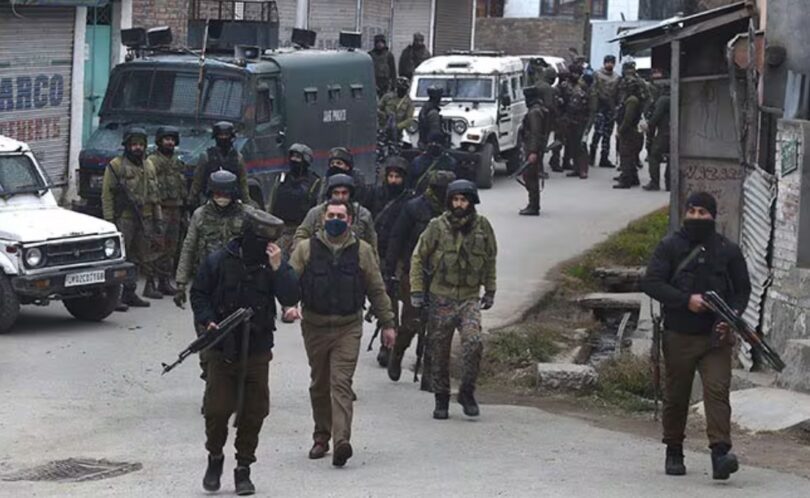
The term white-collared terrorists became current since October 2025, when a network of Kashmiri doctors got discovered possessing materials for making highly lethal chemical explosives for anti-India terrorist attacks and one of them triggered off an incomplete but still very deadly bomb in a car near Delhi’s historic Laal Qilaa aka Red Fort.
While this terror group of Kashmiri doctors got exposed after over five years since the abrogation of Articles 370 and 35A, it should not at all have been a great surprise because the abrogation did not stop Pakistan supported terror. It reduced but continued, nonetheless. And those three decades were full of not only educated and well-to-do Kashmiri youth being radicalised and recruited into anti-India terrorism supported by Pakistan, but also some categories of Kashmiris, who while being outrightly or secretly pro-Pakistan, propagated or approved, or organised or aided and abetted the terrorism which included the massacre of hundreds and purge of over 400,000 Kashmiri Pandits.
It is relevant to describe ‘Kashmiri Pandit’. Kashmiri Pandits are Hindu Kashmiris native to the Kashmir Valley, and the only remaining Hindu Kashmiris after the large-scale conversion of the Valley's population to Islam during medieval times. All those mentioned as Kashmiris in this article are Kashmiri Muslims and descendants of those Kashmiris who got converted.
Historical records and research indicate that Sikhs, Dogras, and other non-Muslim communities were also targeted by Pakistani and Kashmiri terrorists in the Kashmir Valley from the late 1980s onwards, alongside the well-documented exodus and killings of Kashmiri Pandits. While the mass displacement of Kashmiri Pandits was the most prominent event, other minority groups faced similar threats and violence, contributing to a climate of fear.
Sikhs faced violence, including targeted killings. The 2000 Chittisinghpura massacre, where 36 Sikh males were assembled and killed by militants, is a notable example of the targeting of the community. Despite the threats, many Sikhs remained in the Valley due to factors like land ownership, government jobs, and strong sentimental attachments to their ancestral homes. Many of the Dogras, from Duggar , the historical and cultural region around Jammu and known for their martial traditions, who had moved to the Valley for economic opportunities, also faced threats and violence. A large number of them subsequently moved out of the Valley, often getting overlooked by the government for rehabilitation schemes, which focused primarily on Kashmiri Pandits. Other Hindus and non-local labourers were also targeted in specific attacks aimed at non-Muslims. Massacres in villages like Wandhama (1998), Prankote (1998), and Nadimarg (2003) targeted entire Hindu communities.
The broader insurgency-turned-terror movement aimed to create a "minority-free Kashmir" and establish an administration based on Sharia law, which led to a systematic campaign of terror against all non-Muslims, as well as Muslims who opposed the terrorists.
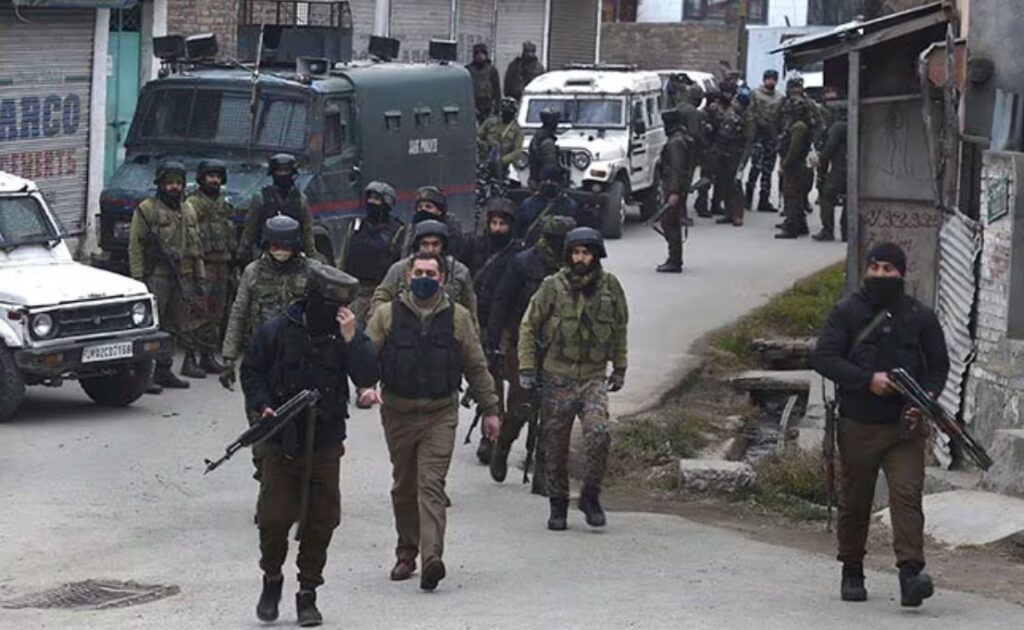
Allegations regarding the role of the Abdullah and Mufti families in the terrorism in Jammu and Kashmir and the 1990 Kashmiri Pandit exodus largely stem from accusations of administrative failures, political missteps, and alleged negligence during their time in power. Responsibility for the 1990 exodus and associated violence is a subject of significant debate and political blame-shifting. The prevailing narrative points to failures in governance, a collapse of the state administration, and the rise of Pakistan-backed terrorists primarily the Jammu Kashmir Liberation Front (JKLF). The primary perpetrators of the targeted killings and the atmosphere of terror were terrorists mainly from the JKLF and Hizbul Mujahideen, who used mosque loudspeakers to issue threats of "Ralive, Tsaliv ya Galive" (convert, leave, or die).
The governments led by the Abdullahs and Muftis failed to protect the Kashmiri Pandits. They did not take strong steps to counter terrorism, and this negligence allowed the situation to escalate into widespread fear and forced migration. There are many reports of these two families being more interested in political power than ensuring peace and security. In fact, their policies were very damaging for the Kashmiri Pandits.
The 1989 kidnapping of Mufti Mohammad Sayeed's daughter, Rubaiya Sayeed, and the subsequent release of five terrorists in exchange is widely considered a major event that emboldened separatist groups and fuelled the rise of terrorism in the Valley. Farooq Abdullah’s reported remarks on Kashmiri Pandit killings, such as "hua tho hua" (if it happened, so be it) leave no doubt about the attitude of the Abdullah and Mufti families who were in power during periods of immense turmoil, including the peak of the 1990 exodus.
Demands for a judicial probe into the 1990 events in J&K, especially the ethnic cleansing of Kashmiri Pandits, have persisted, with Kashmiri Pandits and others calling for a high-level commission, but serious investigation has been hampered by time, lack of political will, and judicial reluctance, though the Supreme Court in 2023 recommended a Truth and Reconciliation Commission to look into violations since the 1980s, a move which was never implemented. The Congress party, which was in power till December 2, 1989, when the V.P. Singh government took over, was also blamed for ignoring early warnings of rising extremism in the mid-to-late 1980s.
White collar terrorists are certainly not new in the Kashmir Valley. One classic case is Yasin Malik, heading the JKLF) who spearheaded the separatist ideology and violent activities in the valley since 1988, when the term white collar terror was not current. He was the mastermind behind the purging of Kashmiri Pandits and was responsible for their genocide and exodus of at least 4,00,000 of them from the Kashmir valley. He and his colleagues were known to boast about murdering Indian Air Force officers and many innocent non-Muslims. And after all that they masqueraded as ‘separatists’ and enjoyed being hosted at taxpayers’ expense by Congress governments.
On August 5, 2019, the Central Government of India revoked the special status of Jammu and Kashmir (J&K) by abrogating most provisions of Article 370 of the Constitution and reorganizing the state into two separate Union Territories: J&K and Ladakh. The night before the abrogation was announced, Farooq and Omar Abdullah of the National Conference leaders and Mehbooba Mufti, chief of Peoples Democratic Party and many other mainstream and separatist political leaders were placed under house arrest and detained to prevent any political backlash or widespread protests in the region.
While after the abrogation, there was a reduction in Pakistan army/ISI supported terror in J&K, it certainly did not end and continued. After five years, in 2024, the Supreme Court ruled that there should be elections in J&K. The same political leaders who had ruled J&K in earlier years and who allowed the massacres/purge of Kashmiri Pandits to happen, returned to power again, elected by an electorate which is still-till date- radicalised. Displaced Kashmiri Pandits, who interacted with this writer and are not being named, felt strongly that the Supreme Court should have been advised by the Centre that J&K is not ready for polls yet.
And sure enough, that got proved when Pakistani terrorists heinously attacked Hindu tourists in Pahalgam in April 2025. What was very unusual the small area in Pahalgam called Baisaran Valley was that there was neither any presence of police and nor Army personnel. So it was cakewalk for the Pakistani terrorists to go about their attacking the tourist. The arrival, stay, movements etc of the Pakistani terrorists were known/supported by all local shopkeepers/pony-operators. In a media interview, Lt Gen D.P. Pandey (Retd) argued that the judiciary, making decisions from a "five-star environment" without firsthand experience of the on-ground security challenges, often intervenes in matters of national security, which can hamper anti-terrorism efforts. He suggested that visiting the site of the attack in Pahalgam would help the judges understand the "inhumanity of terrorists" and the sacrifices made by security forces. The statement implied that the court's push for early elections, possibly seen by some as premature given the security situation, was indirectly linked to such incidents, and the judges should be accountable for the consequences. He advocated for allowing the government and military more autonomy in handling national security matters.
Next came the white-collar terrorists, again from Kashmir. On October 19, 2025, when Jammu & Kashmir (J&K) Police began an investigation into Jaish-e- Mohammed (JeM) posters threatening attacks on security forces appearing in Srinagar’s Nowgam area, a terror network involving Kashmiri doctors got exposed. Some persistent police-work including analysis of CCTV footage led to the identification and arrest of three local overground workers (OGWs) with prior records of stone-pelting. Their interrogation led the police to a cleric and former paramedic named Maulvi Irfan Ahmad from Shopian. Irfan’s interrogation revealed a wider Jaish-e-Mohammed network operating across multiple states, including J&K, Haryana, and Uttar Pradesh. He had allegedly used his position as an imam to radicalize educated professionals, including doctors. Maulvi Irfan's phone contacts included several doctors, raising police’s suspicion. His interrogation, along with that of another arrested individual, Zameer Ahmad Ahanger, exposed the network of radicalized medical professionals. Based on these leads, police conducted a series of raids across different states.
Dr. Adeel Ahmad Rather was arrested in Saharanpur, UP, where he had moved after working at Government Medical College (GMC), Anantnag. An AK-47 rifle was recovered from his old locker at GMC and his interrogation led the police to Dr. Muzammil Ganaie at Al-Falah University in Faridabad, Haryana.
Raids on two houses rented by Ganaie in Faridabad uncovered a massive cache of explosives - nearly 2,900 kg of materials, including ammonium nitrate, two AK-series rifles, and other bomb-making equipment.
The multi-agency crackdown caused panic among the network members, which it is believed, led to another doctor, Dr. Umar Ul Nabi, who worked with Drs. Adeel and Muzammil, to prematurely detonate a vehicle-borne explosive device near Delhi's Red Fort on November 10, 2025, resulting in 13 fatalities and his own death. On November 10, 2025 at about 6:52 pm, a white Hyundai i20 car, parked near the Red Fort Metro rail station in Delhi exploded, killing at least eight people and injuring many more. Reportedly a probable reason was that its driver, Dr. Umar Nabi, whose accomplishes were already under investigation and some of them arrested, may have panicked and prematurely caused a detonation of the device.
Immediately afterwards, Delhi Police, forensics teams, and fire engines rushed to the scene. CCTV footage from the scene and nearby areas was collected to trace the car's movements and ownership. On November 11, 2025, Ministry of Home Affairs handed over the probe to the National Investigation Agency (NIA), indicating that it was being treated as a terror attack. J&K Police collected DNA samples from Nabi's family in Pulwama for matching with the remains from the blast site. On November 12, 2025, DNA results confirmed that Dr. Umar Nabi was the driver and sole occupant of the exploded car. It was revealed that Drs. Nabi and Ganaie had visited the Red Fort in January 2025, possibly for reconnaissance. A red Ford EcoSport car linked to the accused was also found in Haryana. On November 13, 2025, J&K Police's Counter Intelligence Kashmir wing conducted further raids at 13 locations across the Kashmir Valley in connection with the terror module.
On November 15, 2025, an explosion occurred inside the Nowgam police station in Srinagar while police and forensic teams were handling the seized explosive materials brought from Faridabad as evidence in the Red Fort case, resulting in nine deaths and numerous injuries among police personnel and civilians.
It is believed that Nabi’s panicked actions inadvertently set of an explosion and thereby prevented a larger, planned series of attacks in many other parts of the country.
Wider investigations also revealed Dr. Shaheen Saeed, a lady doctor and teacher from Lucknow, who raised Rs. 20 lakhs for procuring raw materials for IEDs; Amir Rashid Ali, arrested for arranging the Hyundai i20 car used in the attack and helping prepare the explosives and Jasir Bilal Wani, a technician tasked with exploring ways to attach explosives to drones. Authorities also reportedly questioned over 50 doctors in Kashmir in connection with the case, including Drs. Sajjad Ahmed, and Sajad Malik. The doctors were reportedly radicalized through online channels like Telegram and through trips to countries like Turkey. Funds were allegedly raised under the guise of social or charitable causes.
Al-Falah University, a private university in Faridabad, Haryana, established in 2014 by the Al-Falah Charitable Trust, is headed by Jawad Ahmad Siddiqui, chairman-cum-chancellor of Al-Falah University and the founder of the Al-Falah Group. While it aims to provide “quality education, promote research, and prepare students for successful careers” and is officially recognized by the University Grants Commission, it has been a hub of Kashmiri doctors involved in terror.
A major course correction very vital for India’s security by New Delhi should be (a) revert J&K back to a long-term President’s Rule, (b) ensure a long-term organised and effective deradicalisation programme, (c) increase permanent Army presence in Kashmir valley/hinterland with many more cantonments and (d) ensure that elections are held in J&K only when there are enough candidates, particularly including Kashmiri Pandits, Dogras, Sikh and/or any other Hindu community who inhabited the State.
WordSword Features
The author, a strategic affairs analyst and former spokesperson, Defence Ministry and Indian Army, can be contacted at wordsword02@gmail.com, https://www.linkedin.com/in/anil-bhat-70b94766/ and @ColAnilBhat8252, https://www.youtube.com/channel/UCPJKaZOcAt9K8fcDkb_onng
More on Kashmir related topics:
Pakistan’s Forged Alliance with ISIS-K: https://www.thestrategicperspective.org/pakistans-forged-alliance-with-isis-k/
Between Partnership and Antagonism: Pakistan–Taliban Relations since 2021: https://www.thestrategicperspective.org/between-partnership-and-antagonism-pakistan-taliban-relations-since-2021/
India’s military tri-service exercise Trishul: https://www.thestrategicperspective.org/indias-military-tri-service-exercise-trishul/
India-Afghanistan Reconnect: https://www.thestrategicperspective.org/india-afghanistan-reconnect/
The Nowgam Blast: https://www.thestrategicperspective.org/the-nowgam-blast/
Dr Uman Un Nabi (Pulwama, Jammu & Kashmir): https://www.thestrategicperspective.org/dr-uman-un-nabi-pulwama-jammu-and-kashmir/
AQIS and Lashkar Suicide Bombers prepping for Mission Kashmir: https://www.thestrategicperspective.org/aqis-and-lashkar-suicide-bombers-prepping-for-mission-kashmir/